 U.S. Secretary of Defense Pete Hegseth delivers a speech at an all-forces commander meeting convened at Marine Corps Base Quantico on the 30th (local time). AP=Yonhap News.
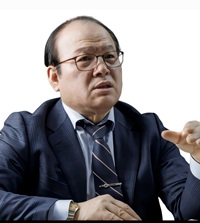 Joo Eun-sik, President of the Korea Research Institute for National Strategy On September 30, at the Marine Corps auditorium in Quantico, Virginia, some 800 U.S. military generals, admirals, and top-ranking staff officers were seated in their dress uniforms. Standing on stage was the new 45-year-old Secretary of Defense, Pete Hegseth—15 to 20 years younger than many of the generals before him. He was resolute from the very start: “The era of the Department of Defense is over. The era of the Department of War has returned.”
The core of his speech can be summarized into four key points.
First, restoring the military’s primary mission. “We have been trapped in endless reporting and social engineering experiments. Now, the U.S. military must return to preparing for and winning wars.” Second, rejecting politics and bureaucracy. He lashed out at the reality where "politicized agendas" like PC culture and DEI have been prioritized over combat readiness. Third, restoring command authority and the warrior spirit. He emphasized reducing the intermediate reporting structure that hinders field judgment and combat leadership, and reviving the "Warrior Ethos." Fourth, explicit threat recognition. By naming China, Russia, Iran, and North Korea, he warned, “America has awakened. If you challenge us, we will certainly defeat you.”
For over 40 minutes, he paced across the stage, delivering his convictions clearly without a stutter. The tone permeating the entire speech was one of determination and militant confidence. He did not rely on a manuscript, and his logical progression was so sharp that the generals and admirals had no choice but to pay attention. In a sense, this scene overlapped with the memories of “The Soldier and the State,” as it marked the most dramatic moment since President Truman dismissed General MacArthur during the Korean War for challenging government policy in defiance of the principle of civilian control.
The Generals' Sentiment - Pride and Discomfort, Yet a Moment to Listen
Most of those sitting in the audience are career professionals who have spent 30 to 40 years in the military. To those who have endured the Gulf War, Afghanistan, Iraq, and Indo-Pacific operations, the mid-40s Secretary might have appeared as a "civilian leader who knows nothing of war." Furthermore, the assembly was called without prior approval from the Commander-in-Chief, the President, with the form of post-facto ratification; Trump effectively broke the spirit of the generals who had challenged his policies during his first term. It seemed to demonstrate a message: even if the Secretary is the one convening and educating you, will you still challenge him? Those currently commanding operations in the mainland, Europe, and the Indo-Pacific were summoned to the Washington area overnight.
The pride of career soldiers who have been through the ringer was naturally wounded. It would be impossible not to have internal thoughts like, “Who did we learn strategy from? Are we being lectured by this young Secretary?” While the U.S. military traditionally respects civilian control, a unilateral summons that ignores the military’s expertise sparked resentment. The U.S. has historically been based on a militia-style organization that maintains minimal military power to protect democracy while rallying its forces to defeat enemies in times of crisis.
Nevertheless, the atmosphere shifted once the speech began. Although Hegseth paced excessively on the podium, distracting the audience, he moved with confidence and presented a clear view of war and reality instead of emotional agitation. Many nodded during the part about reawakening the military's essential mission of "winning wars." Even amidst the discomfort and a sense of humiliation, the message of restoring the warrior spirit struck a chord with the military heart.
The Reason for the Unprecedented Summons of 800 - The Desperation of a "Crisis-Stricken America"
This gathering was not merely an "inaugural performance." Publicly reviving the name "Department of War" instead of the "Department of Defense" was symbolic. Three factors are intertwined in the background.
Rapid Deterioration of the Strategic Environment
The war in Ukraine has exposed Russia’s "intelligent warfare" and the fatigue of Western support. The Taiwan Strait has become unstable due to the expansion of Chinese naval power, and the U.S. Indo-Pacific strategy faces criticism as being hollow. In the Middle East, tensions between Iran and Israel are rising, and attacks on U.S. military bases have become frequent. The U.S. is burdened with a sense of crisis that it is difficult to maintain military superiority in multiple theaters simultaneously.
Shift in the Defense Direction of the Trump 2nd Administration
President Trump advocates for "MAGA Defense," intending to re-examine the purpose of U.S. forces stationed globally and shift the policy toward "homeland-first" defense and "victory in war." Judging that the existing bureaucratic Pentagon structure was delaying this, he sought to personally realign the ranks of the generals.
Restructuring Pol-Mil (Political-Military) Relations
Trump had conflicts with some generals who were critical of his command in the past. This summons was a form of rebuilding authority and checking loyalty. However, at the same time, it is also a political performance aimed at stimulating the military's morale and combat pride to boost mobilization. Such a mass assembly of major commanders from across the military was shocking, as it is a method often favored by totalitarian states like those of Hitler, Stalin, or Mao Zedong.
Trump was reported to after the summons, and the President provided late ratification. Hegseth effectively threw out the political message of "preparing for total war" first, and Trump officially endorsed it from behind the scenes.
Meaning and Challenges of the Speech
This speech is the starting signal for the U.S. to rapidly pivot its strategic direction from "peaceful deterrence" to "preparing for war victory." Although it was a method destined to invite mockery and backlash, it was simultaneously an attempt to reawaken the warrior culture and decisive posture that the U.S. military has lost over the past 20 years.
Internal friction is inevitable in that it wounded the generals' pride. However, the logical consistency and charisma of the speech were clearly impressive. In that he convincingly articulated what the essence of the military is and why it must again become a "winning army," Hegseth deserves to be evaluated not just as a political appointee, but as a "strategist who knows how to deliver a message." The biggest winner through this speech is Hegseth.
The question is whether this declaratory speech can actually lead to reform in strategy, budget, and organization. The impact on alliance management, particularly the ROK-U.S. alliance, is bound to be significant. If the U.S. becomes preoccupied with preparing for war, it will demand greater contributions and strategic decisions from South Korea. It remains to be seen how the administration will navigate these difficulties and achieve its goals while the federal government is in a state of shutdown.
This gathering is a desperate gesture by the Trump administration to realign the entire military back into a "war-fighting organization" amidst the uncertainty of global strategy and concerns over weakening defense capabilities. The reason for gathering 800 people, even at the cost of uncomfortable procedures and wounded military morale, is the desperation to return the U.S. to a military that "can win."
The speech was clear despite the controversy, and Secretary Hegseth’s convictions were strong. His declaration of the "return of the Department of War" foreshadows changes in the future culture of the U.S. military and the ROK-U.S. alliance, including tensions and adjustments in overlapping theaters, despite congressional resolutions that fixed the size of U.S. Forces Korea. The remaining questions are whether these movements can overcome the Neutrality Act and whether it is feasible to demand that female soldiers, who make up over 17% of the U.S. military, achieve the same level of combat physical fitness as the top male soldiers.
Joo Eun-sik, President of the Korea Research Institute for National Strategy

 Iranian Foreign Ministry: "Continuing Message Exchanges with the U.S. and Activities of Mediating Countries"
Esmaeil Baghaei, Spokesperson for the Iranian Ministry of Foreign Affairs [Xinhua, Yonhap News file photo]Esmaeil Baghaei, spokesperson for the Iranian Ministry of Foreign Affairs, stated on the 26th
Iranian Foreign Ministry: "Continuing Message Exchanges with the U.S. and Activities of Mediating Countries"
Esmaeil Baghaei, Spokesperson for the Iranian Ministry of Foreign Affairs [Xinhua, Yonhap News file photo]Esmaeil Baghaei, spokesperson for the Iranian Ministry of Foreign Affairs, stated on the 26th
 President Yoon: "Do You Think You Are Safe from the Special Counsel?"... Final Statement Video Released
President Yoon Suk Yeol rebuking the special prosecutor on the 24th. [Court video / @birds_justice X account subtitle GIF] A video of President Yoon Suk Yeol's closing statement at his trial rega
President Yoon: "Do You Think You Are Safe from the Special Counsel?"... Final Statement Video Released
President Yoon Suk Yeol rebuking the special prosecutor on the 24th. [Court video / @birds_justice X account subtitle GIF] A video of President Yoon Suk Yeol's closing statement at his trial rega
 President Yoon, regarding the first-instance ruling on the Public Official Election Act: “An excessive political verdict that distorts the facts… We will appeal immediately.”
The first-instance sentencing hearing for President Yoon Suk Yeol regarding violations of the Public Official Election Act is being broadcast live at Seoul Station on the 27th. [Photo=Yonhap News]Pres
President Yoon, regarding the first-instance ruling on the Public Official Election Act: “An excessive political verdict that distorts the facts… We will appeal immediately.”
The first-instance sentencing hearing for President Yoon Suk Yeol regarding violations of the Public Official Election Act is being broadcast live at Seoul Station on the 27th. [Photo=Yonhap News]Pres
 WSJ: "SK Hynix ADR Premium Is a Sign of AI Trading Overheat"
Advertisement for SK Hynix ADR listing in New York's Times Square [Reuters=Yonhap News file photo]The Wall Street Journal (WSJ) has pointed out that the price of SK Hynix’s American Depositary Recei
WSJ: "SK Hynix ADR Premium Is a Sign of AI Trading Overheat"
Advertisement for SK Hynix ADR listing in New York's Times Square [Reuters=Yonhap News file photo]The Wall Street Journal (WSJ) has pointed out that the price of SK Hynix’s American Depositary Recei
 'Godfather of Japanese Mystery Novels' Keigo Higashino Passes Away After Battle with Cancer at 68
Famous Japanese mystery novelist Keigo Higashino [AFP=Yonhap News]It has been belatedly reported that Keigo Higashino, the "godfather of Japanese mystery novels" and author of bestsellers such as "The
'Godfather of Japanese Mystery Novels' Keigo Higashino Passes Away After Battle with Cancer at 68
Famous Japanese mystery novelist Keigo Higashino [AFP=Yonhap News]It has been belatedly reported that Keigo Higashino, the "godfather of Japanese mystery novels" and author of bestsellers such as "The
 [Park Pil-kyu Security Column] To the Ignorant Trying to Clothe a Beast in Sheep's Clothing
Rep. Kim Byung-joo of the Democratic Party of Korea [Photo=Yonhap News]“The Air Force Academy doesn't teach you how to fly a plane!” “The Army, Navy, and Air Force academies are exactly the
[Park Pil-kyu Security Column] To the Ignorant Trying to Clothe a Beast in Sheep's Clothing
Rep. Kim Byung-joo of the Democratic Party of Korea [Photo=Yonhap News]“The Air Force Academy doesn't teach you how to fly a plane!” “The Army, Navy, and Air Force academies are exactly the
 [Issue Diagnosis] Two Effects of the Election Petition Review
 [Photo] Evidence of Election Fraud Flooding U.S. Media… Trump Had 2.7 Million Votes Stolen
 [Video] U.S. Semiquincentennial Air Show... 'Art in the Sky' streaks across New York
 [Editorial Cartoon] A Draconian Law That Undermines Freedom of Expression

 List
List









