정당이 현직 공무원을 대신해 언론을 형사고발한 것은 전례 없는 사례로, 헌법이 보장한 언론의 자유와 권력 비판의 권리를 정면으로 침해한 행위입니다. 한미일보는 본 사설을 통해 ‘비판의 자유’의 철학적·법적 의미를 되짚고, 이번 사안이 갖는 헌정적 함의를 짚고자 합니다. <편집자 주>
 A pen bound by the handcuffs of the law, symbolizing freedom of the press being stifled by a political party's accusations. Han-Mi Daily Graphic
The press's role in verifying facts and monitoring those in power is the bare minimum mechanism for democracy. However, the decision by the Democratic Party of Korea on October 16 to file a criminal complaint for defamation by false facts against reporters from the Han-Mi Daily—who published critical reports on Kim Hyun-ji, Head of the First Annex of the Presidential Office—directly contradicts this fundamental principle.
It is unprecedented for a political party to file a complaint and hold a press conference on behalf of a public official, and this can only be interpreted as a political act for the self-defense of power.
Without being able to refute the factual content of the reports, the Democratic Party took issue with the interpretations and expressions contained therein. Harsh terms such as "fake news" and "character assassination" were mobilized, yet no specific evidence was provided to clarify which parts were allegedly false.
Not a single line containing words like "adultery," "extramarital child," "childbirth," or "misuse of state funds" exists anywhere in the articles in question. Nevertheless, the party's pressure on the press through criminal charges is an attempt to use the sword of the law to judge the freedom of interpretation and criticism.
More serious is the fact that this incident reveals a breakdown in the boundaries between political parties and public officials, reaching beyond a simple conflict between the media and politics.
As the Head of the First Annex, Kim Hyun-ji is a high-ranking incumbent official directly assisting the President, and is subject to the State Public Officials Act, which prohibits political activity. Despite this, the ruling party holding a press conference in its own name and filing a complaint alleging "defamation of Kim Hyun-ji" is clear political interference.
The principle of political neutrality for public officials, as stipulated by the Constitution, has effectively been dismantled by the party's actions.
Political power is always uncomfortable with the press. However, leaders of civilized nations maintain the legitimacy of their power by enduring that discomfort.
Former President Kim Dae-jung stated, "There is no exception before the law" when allegations of his son’s corruption arose, and former President Kim Young-sam said, "If my son committed a crime, he must take responsibility," when Kim Hyun-chul was arrested.
Conversely, the Democratic Party under the Lee Jae-myung administration has taken direct legal action against the press for criticizing high-ranking officials within the power structure. That difference defines the dignity of a democracy.
Freedom of criticism is both the right of the press and the right of the people. The British philosopher John Stuart Mill stated in 'On Liberty':
“To refuse a hearing to an opinion, because they are sure that it is false, is to assume that their certainty is the same thing as absolute certainty. All silencing of discussion is an assumption of infallibility.”
Criticism is the process of social self-purification toward the truth. That very discomfort is the hallmark of freedom and a sign of a healthy democracy.
The Supreme Court of the Republic of Korea has also embodied this philosophy into legal principles.
“Even if reports on public officials contain some exaggeration or distortion, they are not illegal if they pertain to matters of public interest.” (Supreme Court, Jan. 22, 2002, ruling 2000Da37524)
Furthermore, the Supreme Court ruled that “media evaluations and commentary on public figures are meant to realize the public's right to know, and expressions of opinion—rather than statements of fact—do not constitute the elements of defamation.”
This is a legal declaration of the constitutional spirit that 'freedom of criticism is the essential prerequisite for democracy.'
This principle applies directly to the reports by the Han-Mi Daily as well.
The Han-Mi Daily did not expose the private life of the Head of the First Annex, Kim Hyun-ji; rather, it raised questions about how a high-ranking official—who is a close aide to the President and stands at the gateway of public decision-making—affects the private operation of power and the transparency of personnel and budget decisions.
In other words, it was a report dealing with "public suspicions veiled in private life." If a public official’s personal relationships can influence the President’s decision-making, official discipline, and the use of state resources, it is clearly a matter of public interest and an area the press must monitor.
The format of the reporting was also not an assertion of specific facts or false information, but rather an expression of opinion interpreting the suspicions and circumstances raised within political circles.
This is clearly distinct from "defamation by false facts" under Article 307 of the Criminal Act. Therefore, the Democratic Party’s complaint can only be interpreted as a political act of pressure aimed at suppressing freedom of the press. This is not about reporting on private life, but rather a political retaliation against reporting that monitors power.
The moment a political party attempts to suppress critics of power through criminal complaints, democracy is left with only its procedures, while its spirit vanishes. Freedom of the press is more than the rights of reporters; it is the public's right to know and the final bulwark for controlling power.
This issue will not end with political retaliation against a specific media outlet. If the precedent of silence is set, no media will attempt to monitor power in the future.
The Han-Mi Daily will choose to record the truth rather than succumb to fear. Criticism generates discomfort, but that discomfort is the evidence of freedom. A society where a political party muzzles the press is no longer a democracy.
What is needed now is not complaints, but the humility of those in power.
#HanMiDaily #Editorial #FreedomOfThePress #FreedomOfCriticism #Defamation #KimHyunJi #LeeJaeMyungAdministration #DemocraticPartyComplaint #PublicInterestReporting #MonitoringPower

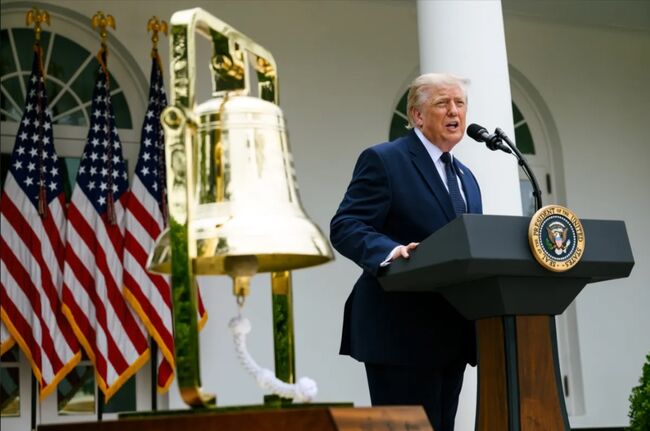 Trump pressures for rate cut again ahead of FOMC... "Should be the lowest in the world"
U.S. President Donald Trump. [Photo = The White House] U.S. President Donald Trump once again pressured the Federal Reserve, the U.S. central bank, to lower interest rates on the 27th (local time
Trump pressures for rate cut again ahead of FOMC... "Should be the lowest in the world"
U.S. President Donald Trump. [Photo = The White House] U.S. President Donald Trump once again pressured the Federal Reserve, the U.S. central bank, to lower interest rates on the 27th (local time
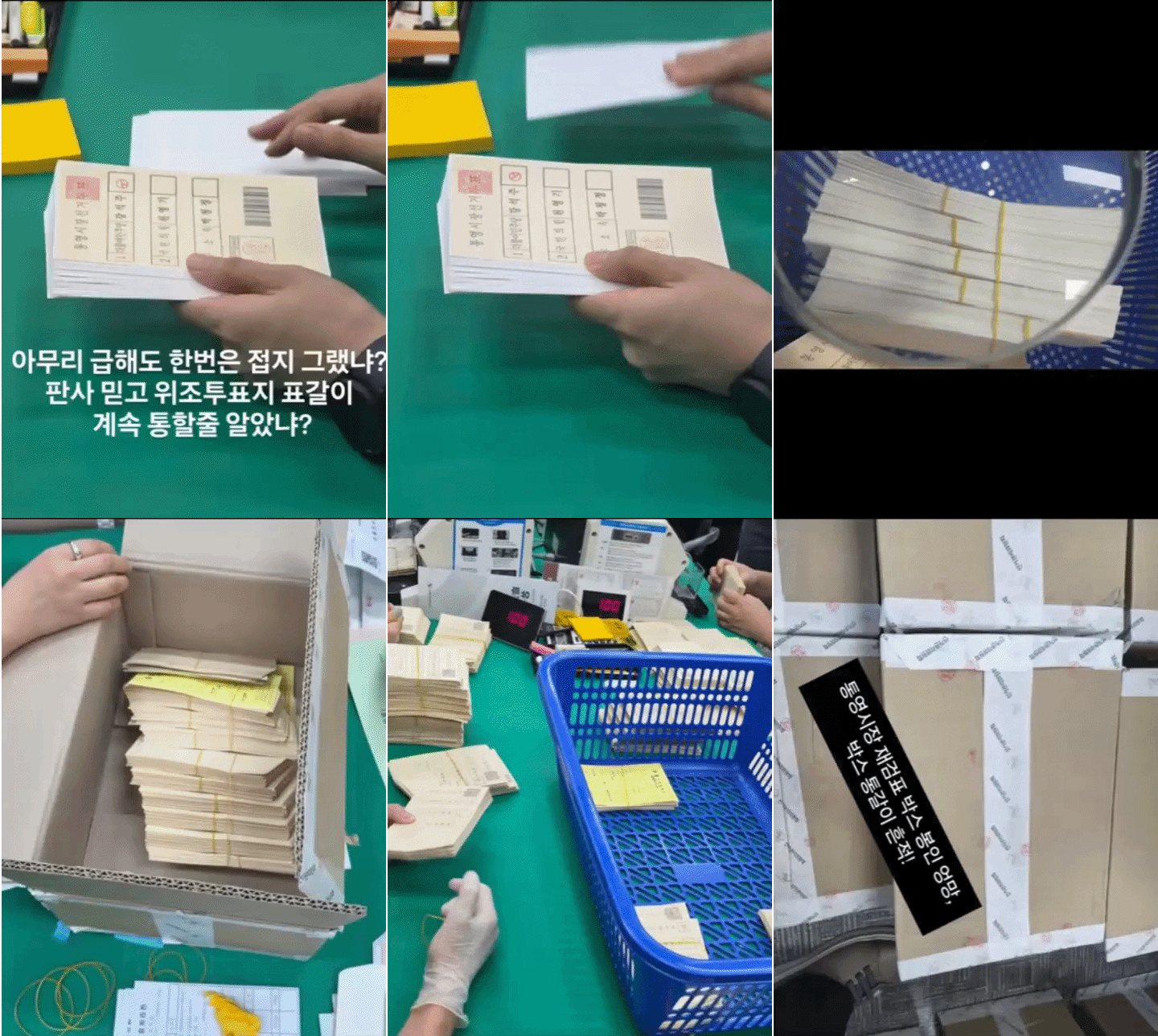 “Ignoring crisp ballots and damaged seals”… Tongyeong mayoral recount concludes with ‘no change in outcome,’ leaving suspicions and public outrage behind
Suspected counterfeit ballots discovered in Tongyeong [GIF from social media of Representative Hwang Kyo-ahn / Attorney Park Joo-hyun]During a recount of the Tongyeong mayoral election in South Gyeong
“Ignoring crisp ballots and damaged seals”… Tongyeong mayoral recount concludes with ‘no change in outcome,’ leaving suspicions and public outrage behind
Suspected counterfeit ballots discovered in Tongyeong [GIF from social media of Representative Hwang Kyo-ahn / Attorney Park Joo-hyun]During a recount of the Tongyeong mayoral election in South Gyeong
 President Yoon, regarding the first-instance ruling on the Public Official Election Act: “An excessive political verdict that distorts the facts… We will appeal immediately.”
The first-instance sentencing hearing for President Yoon Suk Yeol regarding violations of the Public Official Election Act is being broadcast live at Seoul Station on the 27th. [Photo=Yonhap News]Pres
President Yoon, regarding the first-instance ruling on the Public Official Election Act: “An excessive political verdict that distorts the facts… We will appeal immediately.”
The first-instance sentencing hearing for President Yoon Suk Yeol regarding violations of the Public Official Election Act is being broadcast live at Seoul Station on the 27th. [Photo=Yonhap News]Pres
 WSJ: "SK Hynix ADR Premium Is a Sign of AI Trading Overheat"
Advertisement for SK Hynix ADR listing in New York's Times Square [Reuters=Yonhap News file photo]The Wall Street Journal (WSJ) has pointed out that the price of SK Hynix’s American Depositary Recei
WSJ: "SK Hynix ADR Premium Is a Sign of AI Trading Overheat"
Advertisement for SK Hynix ADR listing in New York's Times Square [Reuters=Yonhap News file photo]The Wall Street Journal (WSJ) has pointed out that the price of SK Hynix’s American Depositary Recei
 'Godfather of Japanese Mystery Novels' Keigo Higashino Passes Away After Battle with Cancer at 68
Famous Japanese mystery novelist Keigo Higashino [AFP=Yonhap News]It has been belatedly reported that Keigo Higashino, the "godfather of Japanese mystery novels" and author of bestsellers such as "The
'Godfather of Japanese Mystery Novels' Keigo Higashino Passes Away After Battle with Cancer at 68
Famous Japanese mystery novelist Keigo Higashino [AFP=Yonhap News]It has been belatedly reported that Keigo Higashino, the "godfather of Japanese mystery novels" and author of bestsellers such as "The
 [Park Pil-kyu Security Column] To the Ignorant Trying to Clothe a Beast in Sheep's Clothing
Rep. Kim Byung-joo of the Democratic Party of Korea [Photo=Yonhap News]“The Air Force Academy doesn't teach you how to fly a plane!” “The Army, Navy, and Air Force academies are exactly the
[Park Pil-kyu Security Column] To the Ignorant Trying to Clothe a Beast in Sheep's Clothing
Rep. Kim Byung-joo of the Democratic Party of Korea [Photo=Yonhap News]“The Air Force Academy doesn't teach you how to fly a plane!” “The Army, Navy, and Air Force academies are exactly the
 [Issue Diagnosis] Two Effects of the Election Petition Review
 [Photo] Evidence of Election Fraud Flooding U.S. Media… Trump Had 2.7 Million Votes Stolen
 [Video] U.S. Semiquincentennial Air Show... 'Art in the Sky' streaks across New York
 [Editorial Cartoon] A Draconian Law That Undermines Freedom of Expression

 List
List