Representative of the Union for Freedom and Unification, Ph.D. in Public Administration Introduction
The Soviet Union collapsed in 1990, about 70 years after the Bolshevik Revolution of 1917 established a communist regime. The fall of the Soviet Union shocked China, another communist state, prompting Deng Xiaoping to shift toward reform and opening, adopt a model of state capitalism, and integrate into the international trade order by joining the WTO in 2001; however, a one-party dictatorship remains in place there.
In contrast, North Korea has strictly adhered to a policy of isolation. During the "Arduous March" in the mid-1990s, this resulted in three million deaths by starvation. Since then, the regime has oscillated between opening and closing whenever it feels threatened by the influx of external aid and the air of freedom. It continues to maintain an oppressive governing system, leaving the freedom and human rights of North Korean citizens ignored. Since 2020, the regime has enacted laws such as the "Law on Rejecting Reactionary Thought and Culture," punishing even young students for exposure to "subversive" foreign culture.
In 2014, the United Nations Commission of Inquiry (COI) concluded in its report that the human rights abuses perpetrated by the North Korean regime constitute "crimes against humanity." According to the Office of the United Nations High Commissioner for Human Rights (OHCHR), the situation has not only failed to improve over the subsequent decade but has worsened to the point of being called a "lost decade." The North Korean regime continues to control its people by strengthening surveillance, forced labor, and harsh punishments within its totalitarian system, and reports indicate that COVID-19-related restrictions—which lasted until 2023—severed income sources and exacerbated famine.
North Koreans are fellow people who historically share the same bloodline and language. It is natural to feel compassion (侧隐之心) when seeing the suffering and oppression of our North Korean brethren. Beyond the political system, the international community expresses deep concern and anxiety regarding this as a fundamental issue of human life.
The State and Human Rights
Freedom and human rights are God-given and inalienable; they formed the foundation of the American and French Revolutions, and through the democratic revolutionary era of the 19th century, universal individual rights became established.
Article 1 of the 1948 Universal Declaration of Human Rights states, "All human beings are born free and equal in dignity and rights." The International Bill of Human Rights refers to the International Covenant on Civil and Political Rights (ICCPR) and the International Covenant on Economic, Social and Cultural Rights (ICESCR) adopted by the United Nations.
The state is the most powerful organization created by humans, possessing the legal authority to coerce, punish, and execute individuals. Yet, paradoxically, the state—which holds the primary responsibility to protect the human rights of its citizens—is often the very entity that infringes upon them.
The Human Rights Situation in North Korea
North Korea’s governance structure is based on a leader-centric, one-party dictatorship sustained by the three-generation hereditary succession of Kim Il-sung, Kim Jong-il, and Kim Jong-un, with the Juche idea and Military-First politics (Songun) as its core ideologies. This system is composed of the Ten Principles for the Establishment of a Monolithic Ideological System, the Workers' Party of Korea Charter, the Socialist Constitution, and supporting institutions such as the Cabinet and the Prosecutor's Office. Thus, the one-man rule and the supporting Party constitute the actual governing power.
Private property is not recognized, there are no basic freedoms of speech, press, assembly, or association, and labor union activities are unimaginable in North Korea.
North Korea is a massive garrison state where men must serve 10 years and women 7 years in the military. Recently, North Korea dispatched troops to the Ukraine-Russia war, resulting in heavy casualties among North Korean soldiers in a war they cannot win against the 32 NATO member states.
According to a 2024 report by the Database Center for North Korean Human Rights (NKDB), the number of prisoners in political prison camps in North Korea is still estimated at 70,000 to 120,000, and forced labor, public executions, and purges continue. Furthermore, the border closures since 2023 have reduced attempted defections by over 80%, further restricting the free movement of residents.
North Korean Defectors: Unification Pioneers
The Constitution of the Republic of Korea stipulates that "The territory of the Republic of Korea shall consist of the Korean peninsula and its adjacent islands." Therefore, when North Korean defectors enter the Republic of Korea of their own free will, they are recognized as citizens of the Republic of Korea. As of October 2025, the cumulative number of arrivals is approximately 34,400. They are living witnesses who can speak to the North Korean system and human rights situation. Because they crossed the line of death in search of freedom, the Republic of Korea has a duty to welcome them warmly and provide all possible support.
To support the resettlement of defectors, the Republic of Korea operates job training, psychological counseling, and community-linkage programs through institutions like the Hana Centers. As of 2024, approximately 2,000 defectors have found stable employment, and some have become successful entrepreneurs, breaking social prejudices.
As of 2025, 80% of defectors rate their lives as "stable," but 30% report feeling "gaze and prejudice," experiencing social discrimination through isolation and depression. Additionally, institutional thresholds—such as an average income 70% of the national average, a 20% unemployment rate, and restrictions on bank loans—are reportedly delaying their successful settlement.
The North Korean Human Rights Act
The North Korean Human Rights Act (Act on the Promotion and Support of North Korean Human Rights) was enacted in 2016 to protect and promote the human rights of North Korean residents. Government measures following the act's passage included the appointment of an Ambassador for North Korean Human Rights, the establishment of a documentation center, and the creation of the North Korea Human Rights Foundation; however, the launch of the foundation has been delayed due to the failure to appoint board members.
The Center for North Korean Human Rights Records was established under the Ministry of Unification in 2017 and later transferred to the Ministry of Justice. At the private level, the NKDB records and preserves North Korean human rights abuses based on defector testimonies. This center was modeled after the Salzgitter Central Registration Office for human rights abuses in East Germany. The Salzgitter office served as a central agency during the West German era (1961–1992) to record and document the systematic human rights abuses of the East German regime; it registered over 42,000 cases of violence and rights violations and built an index of 80,000 names, providing critical evidence for post-reunification trials and vetting for new public officials in the East German legal system.
Since 2017, the Ministry of Unification has published an annual report on North Korean human rights, and in 2023, the report was made public for the first time in seven years.
South Korea’s Stance on UN Human Rights Resolutions
Since 2005, the UN General Assembly has adopted resolutions on the human rights situation in North Korea every year. These resolutions criticize North Korea’s systematic human rights abuses and call for the implementation of the COI’s recommendations. As of 2024, the resolution has been adopted for the 20th consecutive year (A/RES/79/181).
South Korea voted in favor of the resolutions in 2005–2006, supporting them, but abstained during the Roh Moo-hyun administration in 2007. Since 2008, South Korea has co-sponsored and voted in favor of the resolutions, a stance maintained by the Lee Myung-bak, Moon Jae-in, and Yoon Suk-yeol administrations. Each year, South Korea co-proposes the draft resolution with the EU, emphasizing the improvement of North Korean human rights and the repatriation of abductees.
The United Nations adopts various measures to address state-sponsored human rights abuses, including a systematic approach to promote human rights protection and international cooperation.
First, "human rights dialogue" is a primary method for resolving human rights issues through inter-state consultations, such as the UN Universal Periodic Review (UPR) or deliberations by the Human Rights Council. Second, international pressure is applied through "naming and shaming" strategies, which create critical public opinion in the international community by publicly pointing out specific human rights violations. Third, the International Criminal Court (ICC) prosecutes individuals who have committed grave human rights abuses (e.g., war crimes, crimes against humanity), while the "Responsibility to Protect (R2P)" doctrine specifies a state's responsibility to protect its people from serious abuses such as genocide, war crimes, and ethnic cleansing, justifying international intervention if the state fails to act. "Humanitarian Intervention" refers to measures aimed at alleviating humanitarian crises through military or non-military intervention in situations where human rights abuses are extreme.
In addition, "smart sanctions" have recently been utilized to respond to the North Korean regime's human rights abuses, exerting pressure through measures like asset freezes against the responsible individuals.
Conclusion
It is difficult to substantively improve the human rights situation in North Korea through international resolutions or condemnations alone. China’s forced repatriation of defectors who left of their own free will is a violation of humanitarianism and international human rights covenants. It is important to utilize various digital technologies to facilitate the influx of external information, informing North Korean citizens of the outside world and fostering human rights awareness. Furthermore, initiatives such as revitalizing the jangmadang (local markets) and transparent humanitarian aid are required to improve their standard of living.
The international community is working tirelessly to improve the freedom and human rights situation of North Korean residents, and I believe it is appropriate for the Republic of Korea to actively participate in these efforts.
Shin Dong-chun, Representative of the Union for Freedom and Unification, Ph.D. in Public Administration

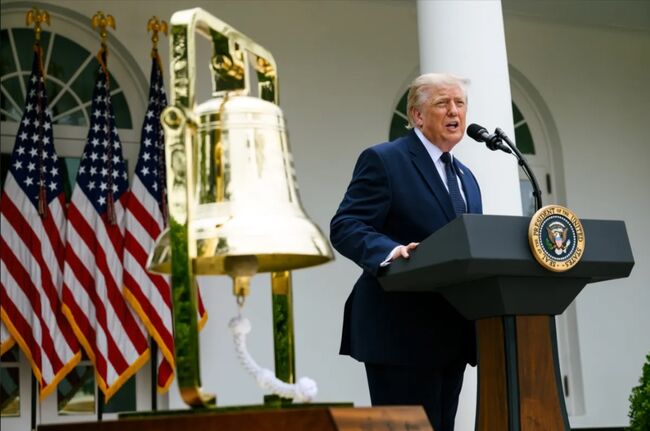 Trump pressures for rate cut again ahead of FOMC... "Should be the lowest in the world"
U.S. President Donald Trump. [Photo = The White House] U.S. President Donald Trump once again pressured the Federal Reserve, the U.S. central bank, to lower interest rates on the 27th (local time
Trump pressures for rate cut again ahead of FOMC... "Should be the lowest in the world"
U.S. President Donald Trump. [Photo = The White House] U.S. President Donald Trump once again pressured the Federal Reserve, the U.S. central bank, to lower interest rates on the 27th (local time
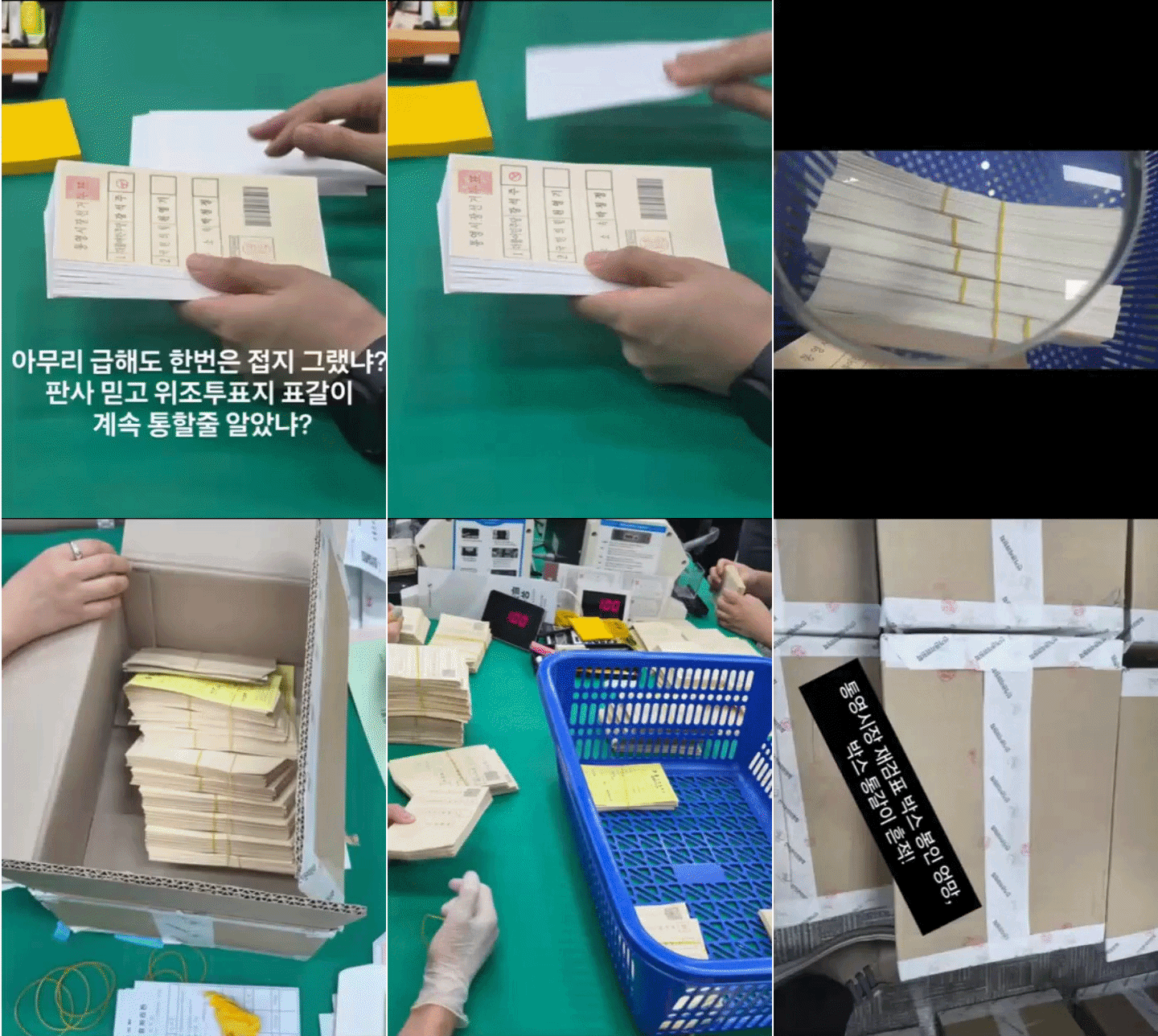 “Ignoring crisp ballots and damaged seals”… Tongyeong mayoral recount concludes with ‘no change in outcome,’ leaving suspicions and public outrage behind
Suspected counterfeit ballots discovered in Tongyeong [GIF from social media of Representative Hwang Kyo-ahn / Attorney Park Joo-hyun]During a recount of the Tongyeong mayoral election in South Gyeong
“Ignoring crisp ballots and damaged seals”… Tongyeong mayoral recount concludes with ‘no change in outcome,’ leaving suspicions and public outrage behind
Suspected counterfeit ballots discovered in Tongyeong [GIF from social media of Representative Hwang Kyo-ahn / Attorney Park Joo-hyun]During a recount of the Tongyeong mayoral election in South Gyeong
 President Yoon, regarding the first-instance ruling on the Public Official Election Act: “An excessive political verdict that distorts the facts… We will appeal immediately.”
The first-instance sentencing hearing for President Yoon Suk Yeol regarding violations of the Public Official Election Act is being broadcast live at Seoul Station on the 27th. [Photo=Yonhap News]Pres
President Yoon, regarding the first-instance ruling on the Public Official Election Act: “An excessive political verdict that distorts the facts… We will appeal immediately.”
The first-instance sentencing hearing for President Yoon Suk Yeol regarding violations of the Public Official Election Act is being broadcast live at Seoul Station on the 27th. [Photo=Yonhap News]Pres
 WSJ: "SK Hynix ADR Premium Is a Sign of AI Trading Overheat"
Advertisement for SK Hynix ADR listing in New York's Times Square [Reuters=Yonhap News file photo]The Wall Street Journal (WSJ) has pointed out that the price of SK Hynix’s American Depositary Recei
WSJ: "SK Hynix ADR Premium Is a Sign of AI Trading Overheat"
Advertisement for SK Hynix ADR listing in New York's Times Square [Reuters=Yonhap News file photo]The Wall Street Journal (WSJ) has pointed out that the price of SK Hynix’s American Depositary Recei
 'Godfather of Japanese Mystery Novels' Keigo Higashino Passes Away After Battle with Cancer at 68
Famous Japanese mystery novelist Keigo Higashino [AFP=Yonhap News]It has been belatedly reported that Keigo Higashino, the "godfather of Japanese mystery novels" and author of bestsellers such as "The
'Godfather of Japanese Mystery Novels' Keigo Higashino Passes Away After Battle with Cancer at 68
Famous Japanese mystery novelist Keigo Higashino [AFP=Yonhap News]It has been belatedly reported that Keigo Higashino, the "godfather of Japanese mystery novels" and author of bestsellers such as "The
 [Park Pil-kyu Security Column] To the Ignorant Trying to Clothe a Beast in Sheep's Clothing
Rep. Kim Byung-joo of the Democratic Party of Korea [Photo=Yonhap News]“The Air Force Academy doesn't teach you how to fly a plane!” “The Army, Navy, and Air Force academies are exactly the
[Park Pil-kyu Security Column] To the Ignorant Trying to Clothe a Beast in Sheep's Clothing
Rep. Kim Byung-joo of the Democratic Party of Korea [Photo=Yonhap News]“The Air Force Academy doesn't teach you how to fly a plane!” “The Army, Navy, and Air Force academies are exactly the
 [Issue Diagnosis] Two Effects of the Election Petition Review
 [Photo] Evidence of Election Fraud Flooding U.S. Media… Trump Had 2.7 Million Votes Stolen
 [Video] U.S. Semiquincentennial Air Show... 'Art in the Sky' streaks across New York
 [Editorial Cartoon] A Draconian Law That Undermines Freedom of Expression

 List
List