이 칼럼은 최근 헌재 결정, 대법원 판결, 특검 논란 등에서 드러난 ‘절차의 신성화’ 현상을 다룬다. 법과 제도가 민주주의의 수단이 아니라 스스로 목적이 되어가고 있는 현실을 비판하며, 자유민주주의의 회복을 위해 시민과 정치권이 어떤 책임을 져야 하는지를 묻는다. <편집자 주>
 A decision is not an article of faith, but a beginning. Democracy is sustained by questions. Hanmi Ilbo Graphics
Laws and procedures are not tools to justify power, but a process to demonstrate public trust. However, in Korean society today, rulings and decisions are treated like articles of faith, and questioning them is seen as blasphemy. The moment a decision is viewed as the end, democracy halts; it only comes back to life when questions begin.
“A decision is not an article of faith, but a beginning. Democracy is sustained by questions.”
This statement most accurately describes the reality of South Korea today.
Whenever a court delivers a ruling or the Constitutional Court makes a decision, the political sphere and the media join their voices: “It is over. Stop now.” But only the procedure has ended. Trust has yet to begin.
Over the past few years, we have witnessed the “theologization of decisions” several times. When the Supreme Court stated that “there is no direct evidence of election fraud,” many constitutional scholars and citizens asked, “If so, why did administrative failures occur, and how should the system be improved?”
However, the political establishment remained silent on those questions. That silence was merely another name for evading responsibility. Hannah Arendt once said, “Evil begins in the failure to think.” Power that stops thinking always wields violence in the name of justice.
Since that day, anyone who asked questions became a “conspiracy theorist,” and voices calling for verification were branded “unconstitutional.” The moment legality masks debate, the procedure may remain, but democracy loses its breath.
The Constitutional Court’s decision to remove the President from office was no different.
More important than the content of the decision was the attitude that followed. It is natural for opinions to be divided. The problem was that society accepted the decision as a “manifesto of faith” rather than a “starting point for verification.”
At the time, countless constitutional scholars and citizens asked, “Was that procedure truly fair?” but the political establishment closed the debate by declaring, “The decision is the conclusion.” As a result, while the Constitution remained alive, constitutional governance came to a standstill.
The controversy over special prosecutors is the same.
Whenever the government changes, a special prosecutor is appointed in the name of “realizing justice,” but the process is always obscured by political interpretation. Rather than the investigation’s content, the primary focus is on “who appointed them” and “who it favors.” Citizens do not seek the truth; they first calculate which side the special prosecutor serves.
At this point, law and justice are no longer a common language but a weapon for factions. In such a landscape, the phrase “It was done according to the law” is used like an incantation for justification. The state offers no explanation, and the media concludes its reports with that very phrase.
However, the law gains legitimacy only through public understanding. The rule of law without explanation is just another name for governance. Justice that the people cannot understand is, in itself, incomplete.
The core of democracy is the “right to doubt.”
Albert Camus said, “Freedom is the right to doubt.”
A society without doubt is no longer free. More important than the freedom to believe in truth is the freedom to doubt it. When that freedom disappears, society goes quiet. But that silence is not peace; it is the silence of submission. We are currently standing on the threshold of that dangerous silence.
A decision must be a departure, not an end. The law may deliver a ruling, but the people complete its legitimacy. The people's questions keep the Constitution alive, and doubt strengthens the system. The phrase “It was done according to the law” should not be the final word on justice, but a promise that the government will begin to explain itself to the people.
Democracy is not sustained by belief. It is sustained only by questions.
“A decision is not an article of faith, but a beginning.” That beginning does not require grand actions; it starts with the act of asking again. When reading the news, hearing a verdict, or encountering the language of politics, the moment one asks, “Is that statement correct? Is that decision reasonable?” the citizen becomes a sovereign once again.
The starting point of democracy is not a system, but the courage of a single questioning citizen. However, it is the duty of politics to respond to those questions.
The current political sphere, especially the opposition party, must not ignore this responsibility. If they use legal procedures as a shield to remain silent or judge public suspicion through political calculations, they instantly cease to be monitors and become enablers. When citizens raise questions, the reason for the opposition’s existence is to translate those questions into institutional discussion and political solutions.
If politics stops responding, the citizen’s courage is isolated; if citizens stop asking, politics becomes self-righteous. Democracy only moves again when questioning citizens and responding politicians take responsibility together.
The restoration of liberal democracy begins not with institutional reform, but with politics regaining the courage to respond to the public’s doubts. That courage is the final measure of trust that the opposition party must prove while on the test stand.
#EndofLiberalDemocracy #WhenDecisionsBecomeFaith #KimYoungHanColumn #ElectionFraudControversy #ConstitutionalCourtRemovalDecision #LegitimacyOfSpecialProsecutor #HannahArendt #AlbertCamus #TheologizationOfLaw #OppositionResponsibility #HanmiIlbo

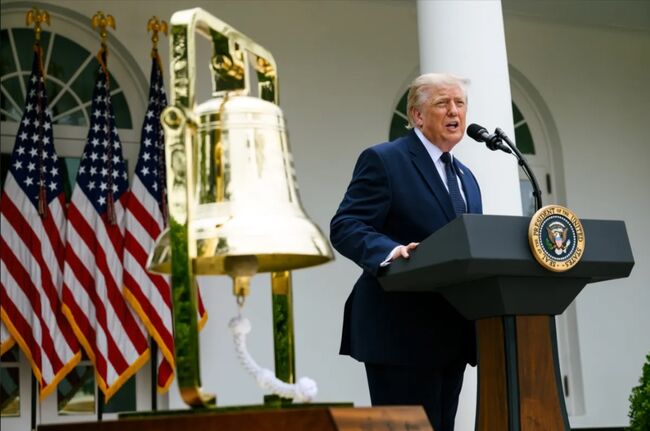 Trump pressures for rate cut again ahead of FOMC... "Should be the lowest in the world"
U.S. President Donald Trump. [Photo = The White House] U.S. President Donald Trump once again pressured the Federal Reserve, the U.S. central bank, to lower interest rates on the 27th (local time
Trump pressures for rate cut again ahead of FOMC... "Should be the lowest in the world"
U.S. President Donald Trump. [Photo = The White House] U.S. President Donald Trump once again pressured the Federal Reserve, the U.S. central bank, to lower interest rates on the 27th (local time
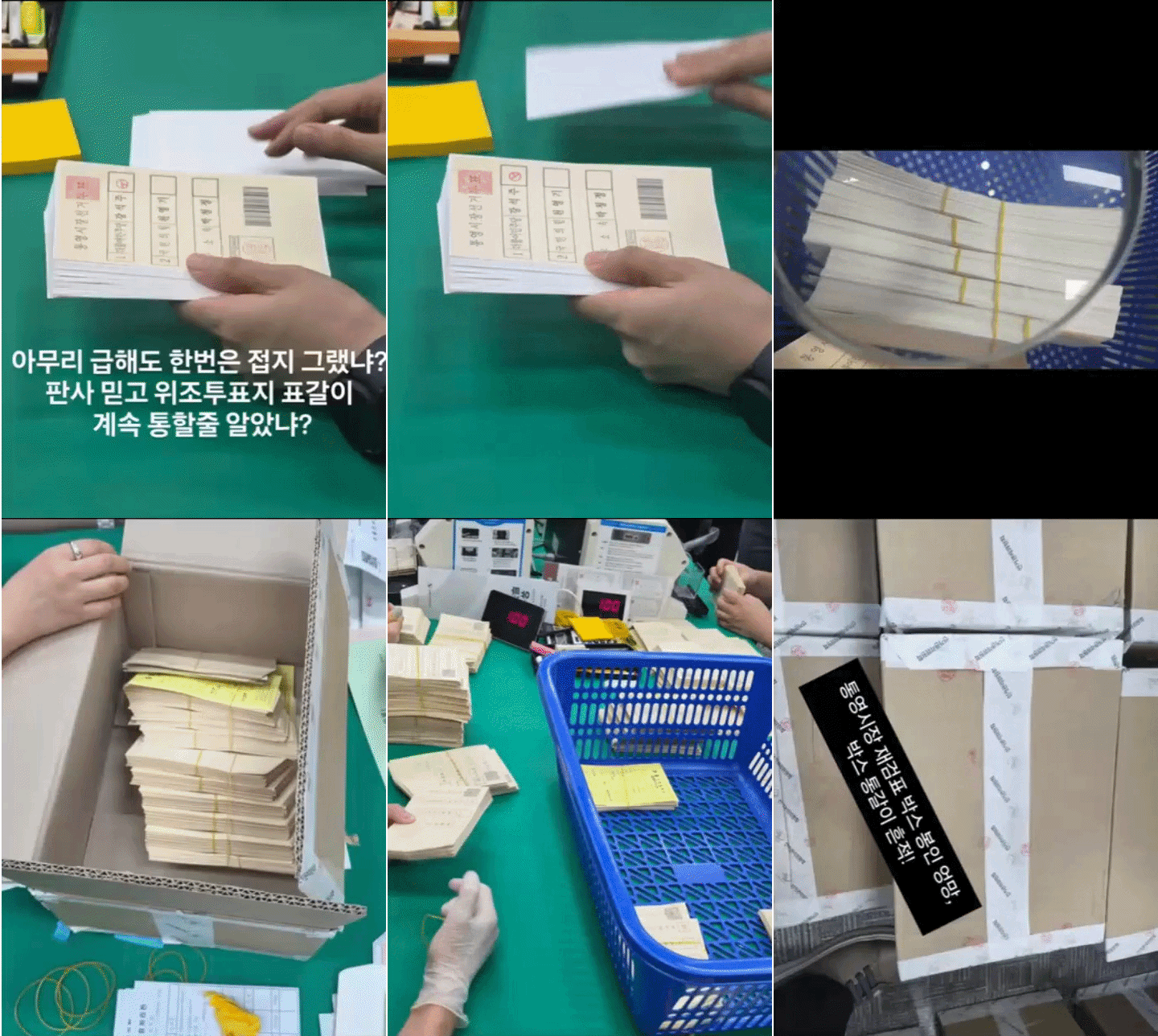 “Ignoring crisp ballots and damaged seals”… Tongyeong mayoral recount concludes with ‘no change in outcome,’ leaving suspicions and public outrage behind
Suspected counterfeit ballots discovered in Tongyeong [GIF from social media of Representative Hwang Kyo-ahn / Attorney Park Joo-hyun]During a recount of the Tongyeong mayoral election in South Gyeong
“Ignoring crisp ballots and damaged seals”… Tongyeong mayoral recount concludes with ‘no change in outcome,’ leaving suspicions and public outrage behind
Suspected counterfeit ballots discovered in Tongyeong [GIF from social media of Representative Hwang Kyo-ahn / Attorney Park Joo-hyun]During a recount of the Tongyeong mayoral election in South Gyeong
 President Yoon, regarding the first-instance ruling on the Public Official Election Act: “An excessive political verdict that distorts the facts… We will appeal immediately.”
The first-instance sentencing hearing for President Yoon Suk Yeol regarding violations of the Public Official Election Act is being broadcast live at Seoul Station on the 27th. [Photo=Yonhap News]Pres
President Yoon, regarding the first-instance ruling on the Public Official Election Act: “An excessive political verdict that distorts the facts… We will appeal immediately.”
The first-instance sentencing hearing for President Yoon Suk Yeol regarding violations of the Public Official Election Act is being broadcast live at Seoul Station on the 27th. [Photo=Yonhap News]Pres
 WSJ: "SK Hynix ADR Premium Is a Sign of AI Trading Overheat"
Advertisement for SK Hynix ADR listing in New York's Times Square [Reuters=Yonhap News file photo]The Wall Street Journal (WSJ) has pointed out that the price of SK Hynix’s American Depositary Recei
WSJ: "SK Hynix ADR Premium Is a Sign of AI Trading Overheat"
Advertisement for SK Hynix ADR listing in New York's Times Square [Reuters=Yonhap News file photo]The Wall Street Journal (WSJ) has pointed out that the price of SK Hynix’s American Depositary Recei
 'Godfather of Japanese Mystery Novels' Keigo Higashino Passes Away After Battle with Cancer at 68
Famous Japanese mystery novelist Keigo Higashino [AFP=Yonhap News]It has been belatedly reported that Keigo Higashino, the "godfather of Japanese mystery novels" and author of bestsellers such as "The
'Godfather of Japanese Mystery Novels' Keigo Higashino Passes Away After Battle with Cancer at 68
Famous Japanese mystery novelist Keigo Higashino [AFP=Yonhap News]It has been belatedly reported that Keigo Higashino, the "godfather of Japanese mystery novels" and author of bestsellers such as "The
 [Park Pil-kyu Security Column] To the Ignorant Trying to Clothe a Beast in Sheep's Clothing
Rep. Kim Byung-joo of the Democratic Party of Korea [Photo=Yonhap News]“The Air Force Academy doesn't teach you how to fly a plane!” “The Army, Navy, and Air Force academies are exactly the
[Park Pil-kyu Security Column] To the Ignorant Trying to Clothe a Beast in Sheep's Clothing
Rep. Kim Byung-joo of the Democratic Party of Korea [Photo=Yonhap News]“The Air Force Academy doesn't teach you how to fly a plane!” “The Army, Navy, and Air Force academies are exactly the
 [Issue Diagnosis] Two Effects of the Election Petition Review
 [Photo] Evidence of Election Fraud Flooding U.S. Media… Trump Had 2.7 Million Votes Stolen
 [Video] U.S. Semiquincentennial Air Show... 'Art in the Sky' streaks across New York
 [Editorial Cartoon] A Draconian Law That Undermines Freedom of Expression

 List
List










