Seoul Apartment Sales Transactions Plummet to One-Tenth After 10/15 Measures... Clear Contraction
October 10-15: 2,102 cases → October 16-21: 235 cases… Significant decrease across all of Seoul
Gap investment demand turns attention to the auction market, not subject to land transaction permits… Increasing successful bid ratios
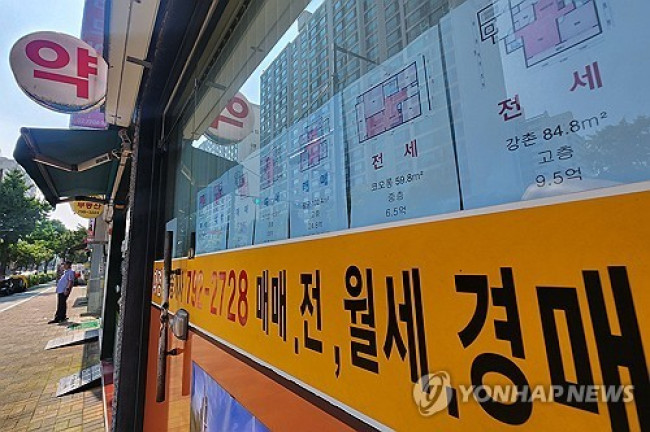
About a week after the announcement of the 10/15 real estate measures, which designated all of Seoul and 12 areas in Gyeonggi Province as regulated zones (adjustment target areas, speculative overheated districts) and land transaction permit zones, a clear contraction in transactions is evident in the apartment market due to strengthened loan regulations and the imposition of actual residency requirements.
In contrast, the auction market, which is not affected by the designation of land transaction permit zones, shows a contrasting trend with growing interest from gap investors as a niche channel to secure properties in preferred areas.
 [Yonhap News Agency file photo]
According to the real transaction price disclosure system of the Ministry of Land, Infrastructure and Transport, as of today, the number of Seoul apartment sales transactions reported up to this day shows that 235 transactions were contracted during the six days from October 16 to 21, when the regulated zone designations began to take effect.
This is 11.2% of the 2,102 cases in the preceding six days (October 10-15), including the day the measures were announced.
Looking at the trend of transaction volume by autonomous district during this period, a significant decrease was observed across all of Seoul, with Yeongdeungpo-gu decreasing by 99.2%, followed by Guro-gu (-97.5%), Nowon-gu (-95.6%), Dongjak-gu (-93%), Dongdaemun-gu (-90.1%), Seongbuk-gu (-89.8%), Mapo-gu (-87.5%), Gwangjin-gu (-85.7%), Seongdong-gu (-83.5%), and Yangcheon-gu (-79.4%).
While the figures may change as residential property sales transactions are required to be reported within 30 days of the contract date according to relevant laws, it is possible to interpret that the overall market trend has clearly shifted towards contraction since the announcement of the measures.
The 10/15 measures strengthened the loan-to-value (LTV) ratio for non-homeowners and homeowners subject to disposition from the previous 70% to 40% in regulated zones. Furthermore, for homes exceeding 1.5 billion won, the maximum loan amount is applied differentially from 200 million to 400 million won, making it even more difficult to finance the purchase of high-priced homes through loans.
With the designation of land transaction permit zones, in addition to regulated zones, imposing a two-year actual residency requirement, the demand for gap investment (buying with an existing tenant's lease) that had been heating up around the Han River belt, including Seongdong-gu, Mapo-gu, and Gwangjin-gu, has also been blocked. Only seven transactions have been reported so far for October 20 and 21, when the land transaction permit zone designation began.
Experts predict that with the implementation of unprecedentedly strong demand suppression measures, such as the simultaneous designation of a wide range of areas as regulated zones and land transaction permit zones, price adjustments and the effects of the measures are expected to continue into the first half of next year.
Park Won-gap, Senior Real Estate Expert at KB Kookmin Bank, said, "Given that these measures include the drastic step of designating land transaction permit zones, their effects could last from three to as long as six months. However, as the recent market trend is centered around 'upgrading to a superior location,' the ripple effect into areas excluded from regulation is unlikely to be as significant as in the past."
 [Yonhap News Agency file photo]
On the other hand, the auction market in these areas is not subject to land transaction permit regulations, showing signs of attracting gap investment demand.
According to Jiji Auction, a company specializing in real estate and auction data, the successful bid ratio (ratio of successful bid price to appraised value) for apartments in Seoul and Gyeonggi Province within land transaction permit zones recorded 100.1% and 101.9%, respectively, from October 20 to today.
These figures are higher than the average successful bid ratios for apartments in Seoul and Gyeonggi Province last month, which were 99.5% and 86.9%.
This is analyzed as a phản ứng effect from the expansion of land transaction permit zone designations in the current measures.
As Seoul's 25 autonomous districts and 12 areas in Gyeonggi Province have been designated as land transaction permit zones since October 20, a two-year actual residency requirement has been imposed, and official permission is required to purchase housing. However, when a property is won through auction, the land transaction permit regulations do not apply, thus exempting the buyer from the actual residency requirement.
For investors with strong cash reserves, the auction market effectively serves as a niche.
Forena Songpa's 66㎡ unit in Geo-yeo-dong, Songpa-gu, Seoul, was successfully bid on October 20 by 59 bidders at 1.41888 billion won, with a successful bid ratio of 121.3%.
Sin gil-dong Sin gil-woosung's 74㎡ unit in Yeongdeungpo-gu, Seoul, found a buyer today with 26 bidders, selling for 962,999,999 won, which is 112.6% of the appraised value (855 million won).
A 84㎡ unit in Botdeul Village, Sampyeong-dong, Bundang-gu, Seongnam-si, Gyeonggi Province, was sold on October 20 for 1.8599999999 billion won, which is 117.7% of the appraised value (1.58 billion won).
Lee Ju-hyun, a specialist at Jiji Auction, diagnosed, "In Seoul, auction demand is increasing, leading to strong successful bid ratios, while in Gyeonggi Province, the price hurdle is relatively lower, and with the designation as land transaction permit zones, expectations for price increases seem to have grown even larger."
He added, "While there are likely genuine buyers in the auction market, it appears that investors whose gap investments were blocked have turned to the auction market, leading to higher successful bid ratios." Yonhap News Agency

 Iranian Foreign Ministry: "Continuing Message Exchanges with the U.S. and Activities of Mediating Countries"
Esmaeil Baghaei, Spokesperson for the Iranian Ministry of Foreign Affairs [Xinhua, Yonhap News file photo]Esmaeil Baghaei, spokesperson for the Iranian Ministry of Foreign Affairs, stated on the 26th
Iranian Foreign Ministry: "Continuing Message Exchanges with the U.S. and Activities of Mediating Countries"
Esmaeil Baghaei, Spokesperson for the Iranian Ministry of Foreign Affairs [Xinhua, Yonhap News file photo]Esmaeil Baghaei, spokesperson for the Iranian Ministry of Foreign Affairs, stated on the 26th
 President Yoon: "Do You Think You Are Safe from the Special Counsel?"... Final Statement Video Released
President Yoon Suk Yeol rebuking the special prosecutor on the 24th. [Court video / @birds_justice X account subtitle GIF] A video of President Yoon Suk Yeol's closing statement at his trial rega
President Yoon: "Do You Think You Are Safe from the Special Counsel?"... Final Statement Video Released
President Yoon Suk Yeol rebuking the special prosecutor on the 24th. [Court video / @birds_justice X account subtitle GIF] A video of President Yoon Suk Yeol's closing statement at his trial rega
 President Yoon, regarding the first-instance ruling on the Public Official Election Act: “An excessive political verdict that distorts the facts… We will appeal immediately.”
The first-instance sentencing hearing for President Yoon Suk Yeol regarding violations of the Public Official Election Act is being broadcast live at Seoul Station on the 27th. [Photo=Yonhap News]Pres
President Yoon, regarding the first-instance ruling on the Public Official Election Act: “An excessive political verdict that distorts the facts… We will appeal immediately.”
The first-instance sentencing hearing for President Yoon Suk Yeol regarding violations of the Public Official Election Act is being broadcast live at Seoul Station on the 27th. [Photo=Yonhap News]Pres
 WSJ: "SK Hynix ADR Premium Is a Sign of AI Trading Overheat"
Advertisement for SK Hynix ADR listing in New York's Times Square [Reuters=Yonhap News file photo]The Wall Street Journal (WSJ) has pointed out that the price of SK Hynix’s American Depositary Recei
WSJ: "SK Hynix ADR Premium Is a Sign of AI Trading Overheat"
Advertisement for SK Hynix ADR listing in New York's Times Square [Reuters=Yonhap News file photo]The Wall Street Journal (WSJ) has pointed out that the price of SK Hynix’s American Depositary Recei
 'Godfather of Japanese Mystery Novels' Keigo Higashino Passes Away After Battle with Cancer at 68
Famous Japanese mystery novelist Keigo Higashino [AFP=Yonhap News]It has been belatedly reported that Keigo Higashino, the "godfather of Japanese mystery novels" and author of bestsellers such as "The
'Godfather of Japanese Mystery Novels' Keigo Higashino Passes Away After Battle with Cancer at 68
Famous Japanese mystery novelist Keigo Higashino [AFP=Yonhap News]It has been belatedly reported that Keigo Higashino, the "godfather of Japanese mystery novels" and author of bestsellers such as "The
 [Park Pil-kyu Security Column] To the Ignorant Trying to Clothe a Beast in Sheep's Clothing
Rep. Kim Byung-joo of the Democratic Party of Korea [Photo=Yonhap News]“The Air Force Academy doesn't teach you how to fly a plane!” “The Army, Navy, and Air Force academies are exactly the
[Park Pil-kyu Security Column] To the Ignorant Trying to Clothe a Beast in Sheep's Clothing
Rep. Kim Byung-joo of the Democratic Party of Korea [Photo=Yonhap News]“The Air Force Academy doesn't teach you how to fly a plane!” “The Army, Navy, and Air Force academies are exactly the
 [Issue Diagnosis] Two Effects of the Election Petition Review
 [Photo] Evidence of Election Fraud Flooding U.S. Media… Trump Had 2.7 Million Votes Stolen
 [Video] U.S. Semiquincentennial Air Show... 'Art in the Sky' streaks across New York
 [Editorial Cartoon] A Draconian Law That Undermines Freedom of Expression

 List
List









