Guest Columnist, Korea Military Academy Class of '84National security is built on the firm mission to protect the country, a security philosophy that creates superior strength through alliances, and advanced weaponry. However, our security has always been in a state of instability, swayed by the tides of politics. With every change of administration, defense policy has lost its direction, budgets have been wasted, and the military has become a victim of political disputes.
In the 1980s, the military was at the center of politics, and since the 1990s, politics has controlled the military, leading to a collapse in security balance as a counteraction. With each North Korean provocation, the policies of "dialogue first" and "strong response" have wavered depending on the administration, causing confusion among the public. In the early 2000s, military spending decreased under the guise of the "Sunshine Policy," and even after the sinking of the Cheonan in 2010, the political sphere was more preoccupied with partisan conflict than with investigating the cause. In 2018, through the September 19 Military Agreement, which prioritized peace, we acted as pawns of the enemy, blinding our security and tying our hands.
By placing national security, which protects the lives of citizens, on the political stage and shaking it, by treating security organizations as mere tools of politics, and by making the military itself an object of political bargaining, the military's morale has wavered, the ROK-US alliance has weakened, and public trust has collapsed. Sensing this, some wealthy individuals and foreigners are beginning to leave.
1. Phenomena of Strategic Security Gaps Caused by Politics
Today, the security of the Republic of Korea stands on two pillars of crisis. One is a strategic gap that prevents us from responding to external threats, and the other is a psychological gap caused by distorting our security history and undermining the military's honor, thereby crushing its morale. Although these two gaps approach from different directions, they ultimately threaten the nation's continuity and the lives of its citizens. We are witnessing a phenomenon where the nation's will collapses before the enemy's bullets fly.
In October 2025, the new submarine 'Jang Yeongsil,' lauded as a symbol of Korea's pride, was launched. However, the President did not attend this historic moment. While masked as a mere scheduling conflict, this incident exposed a void in national security resolve on a globally watched stage.
Northeast Asia has entered an era of 'maritime dominance competition.' Japan is considering the introduction of nuclear-powered submarines, and North Korea has declared test runs of its nuclear-powered submarines. China is already moving its nuclear-powered submarines and aircraft carriers through the Yellow Sea and East China Sea. Yet, we ourselves have voluntarily forfeited opportunities to publicly showcase our strategic assets, citing 'diplomatic sensitivities.' Immediately after, North Korea interpreted our lack of deterrence and security resolve as a 'weakness' and retaliated with ballistic missile provocations. The enemy is reading our strategic gaps and confidently repeating its provocations.
Weakening of Sovereign Response: The void extends to the seas. The complete cut of the 'proportional response' budget for illegal structures and submersible activities by China, which violate our Yellow Sea sovereignty, is not merely administrative savings but approaches an act of sovereignty surrender. National sovereignty is not a subject for compromise. Once we retreat, the other party accepts that retreat as a 'fait accompli.' When politics curtails security for the sake of diplomatic advantages, both the principal enemy and hypothetical enemies attack the strategic vacuum with sharp spears.
2. Phenomena of Psychological Gaps Caused by Distortion of Security History
If strategic gaps are phenomena that disperse and destroy national strength through the disjointed actions of security, diplomacy, intelligence, and response, then psychological gaps are phenomena that dismantle the military's identity, mission, and morale through the distortion of security history entangled in political logic. More frightening than external gaps is the loss and collapse of the will to fight due to psychological gaps. The military is the nation's last shield, but the recent early retirement applications by officers are evidence that the pride of serving as a shield for national defense is faltering.
Distortion of History and Identity Crisis: Military history is not a break but a succession. The fighting spirit of the independence army and the dedication of the ROK armed forces spring from the same roots. However, attempting to find the military's legitimacy in the independence army, which the nation did not have, is an act that belittles the ROK armed forces' contributions to the suppression of communist guerrillas, the repulsion of communist forces during the Korean War, and counter-infiltration operations.
Testimony of General Choi Seok-shin, a survivor of the Yeosu Incident: Emphasizing that the essence of the Yeosu Incident was a communist uprising, he stated, "It was the Southern Labor Party that aimed guns at the people," yet made statements that justified the mutiny of the Yeosu rebels. Such distortions undermine the morale of service members and confuse the military's identity.
In the National Assembly audit, the Chairman of the Joint Chiefs of Staff and the Commander of the Ground Operations Command stated that "the military had participated in insurrection in the past," drawing the entire military into historical debate. Although these statements were likely made under political pressure, that single remark sent a signal to hundreds of thousands of service members that "the country you defended was not legitimate," destroying their pride and breaking the chain of command, which is a quasi-religious order.
When the morale of service members, the reason for 'why I must fight,' is shaken, the military's psychological and combat capabilities rapidly weaken. A force stronger than weapons is conviction. When that conviction is shaken by the language of politics, the will to fight and win, even when holding a rifle in an emergency, disappears. If psychological gaps are not healed, we cannot protect the lives of citizens in times of emergency.
Past wrongdoings should be evaluated, but such evaluations should not undermine present missions. The military is not a laboratory for politics but the last bulwark that upholds the Constitution. The way to prevent psychological gaps and shocks is for the military to maintain its self-esteem and honor without being swayed by political power.
3. The Military Must Secure and Protect the Absolute Sanctuary of Security
We now stand before a dual crisis of external strategic gaps and internal psychological gaps. The moment politics continues to destabilize security, the nation will first collapse from internal fissures. Security belongs neither to any particular administration nor to any ideology. It is an absolute sanctuary, irrespective of party lines, where the survival of the nation is at stake. For a soldier, there is no neutral ground in security. Therefore, security policy must be decided not by the political calculations of those in power, but based on preventing war, national interest, and the lives of the citizens.
The ruling power must confidently showcase strategic assets to the public through security demonstrations. It must respond resolutely to foreign provocations and thoroughly protect the military's identity and morale. Furthermore, the political sphere must not use the military as a tool for partisan conflict, and the military itself must remain faithful to its inherent duties and protect the sanctuary of security. That is precisely the defense line that guards the sovereignty of the Republic of Korea.
The time for choice has come: will we continue to leave security to the manipulation of spies? Will the military sense the crisis and revive the mission of national survival? Facing fundamental questions, the military must find wise solutions and security principles. Public sentiment and military sentiment hope that the military will return to its original posture and be reborn as a robust organization that guarantees a safe future.
Park Pil-kyu, Guest Columnist

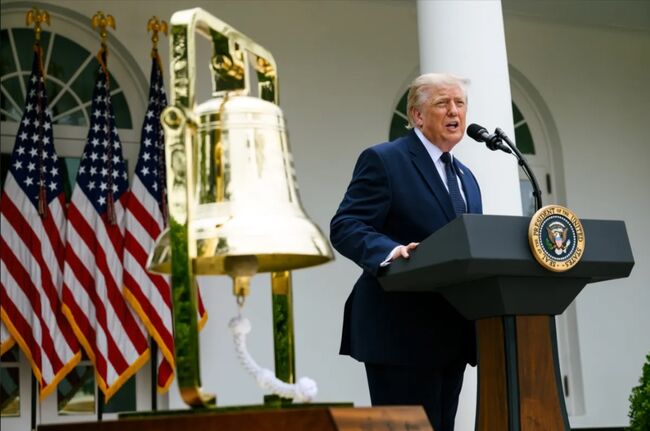 Trump pressures for rate cut again ahead of FOMC... "Should be the lowest in the world"
U.S. President Donald Trump. [Photo = The White House] U.S. President Donald Trump once again pressured the Federal Reserve, the U.S. central bank, to lower interest rates on the 27th (local time
Trump pressures for rate cut again ahead of FOMC... "Should be the lowest in the world"
U.S. President Donald Trump. [Photo = The White House] U.S. President Donald Trump once again pressured the Federal Reserve, the U.S. central bank, to lower interest rates on the 27th (local time
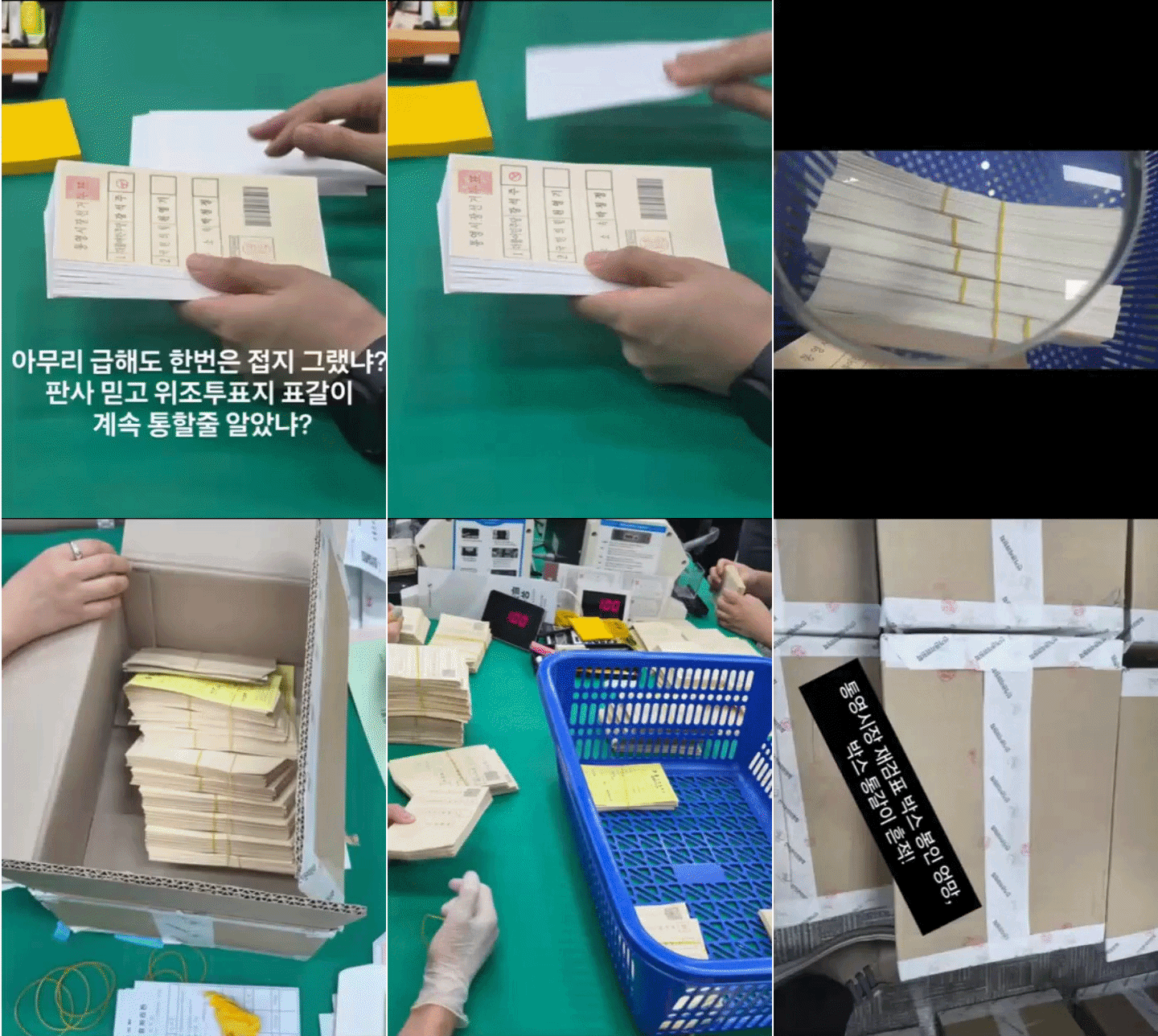 “Ignoring crisp ballots and damaged seals”… Tongyeong mayoral recount concludes with ‘no change in outcome,’ leaving suspicions and public outrage behind
Suspected counterfeit ballots discovered in Tongyeong [GIF from social media of Representative Hwang Kyo-ahn / Attorney Park Joo-hyun]During a recount of the Tongyeong mayoral election in South Gyeong
“Ignoring crisp ballots and damaged seals”… Tongyeong mayoral recount concludes with ‘no change in outcome,’ leaving suspicions and public outrage behind
Suspected counterfeit ballots discovered in Tongyeong [GIF from social media of Representative Hwang Kyo-ahn / Attorney Park Joo-hyun]During a recount of the Tongyeong mayoral election in South Gyeong
 President Yoon, regarding the first-instance ruling on the Public Official Election Act: “An excessive political verdict that distorts the facts… We will appeal immediately.”
The first-instance sentencing hearing for President Yoon Suk Yeol regarding violations of the Public Official Election Act is being broadcast live at Seoul Station on the 27th. [Photo=Yonhap News]Pres
President Yoon, regarding the first-instance ruling on the Public Official Election Act: “An excessive political verdict that distorts the facts… We will appeal immediately.”
The first-instance sentencing hearing for President Yoon Suk Yeol regarding violations of the Public Official Election Act is being broadcast live at Seoul Station on the 27th. [Photo=Yonhap News]Pres
 WSJ: "SK Hynix ADR Premium Is a Sign of AI Trading Overheat"
Advertisement for SK Hynix ADR listing in New York's Times Square [Reuters=Yonhap News file photo]The Wall Street Journal (WSJ) has pointed out that the price of SK Hynix’s American Depositary Recei
WSJ: "SK Hynix ADR Premium Is a Sign of AI Trading Overheat"
Advertisement for SK Hynix ADR listing in New York's Times Square [Reuters=Yonhap News file photo]The Wall Street Journal (WSJ) has pointed out that the price of SK Hynix’s American Depositary Recei
 'Godfather of Japanese Mystery Novels' Keigo Higashino Passes Away After Battle with Cancer at 68
Famous Japanese mystery novelist Keigo Higashino [AFP=Yonhap News]It has been belatedly reported that Keigo Higashino, the "godfather of Japanese mystery novels" and author of bestsellers such as "The
'Godfather of Japanese Mystery Novels' Keigo Higashino Passes Away After Battle with Cancer at 68
Famous Japanese mystery novelist Keigo Higashino [AFP=Yonhap News]It has been belatedly reported that Keigo Higashino, the "godfather of Japanese mystery novels" and author of bestsellers such as "The
 [Park Pil-kyu Security Column] To the Ignorant Trying to Clothe a Beast in Sheep's Clothing
Rep. Kim Byung-joo of the Democratic Party of Korea [Photo=Yonhap News]“The Air Force Academy doesn't teach you how to fly a plane!” “The Army, Navy, and Air Force academies are exactly the
[Park Pil-kyu Security Column] To the Ignorant Trying to Clothe a Beast in Sheep's Clothing
Rep. Kim Byung-joo of the Democratic Party of Korea [Photo=Yonhap News]“The Air Force Academy doesn't teach you how to fly a plane!” “The Army, Navy, and Air Force academies are exactly the
 [Issue Diagnosis] Two Effects of the Election Petition Review
 [Photo] Evidence of Election Fraud Flooding U.S. Media… Trump Had 2.7 Million Votes Stolen
 [Video] U.S. Semiquincentennial Air Show... 'Art in the Sky' streaks across New York
 [Editorial Cartoon] A Draconian Law That Undermines Freedom of Expression

 List
List