 Cambodia Criminal Complex 'Prince Compound'. / Yonhap News.
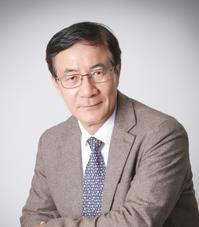 Representative of the National Union for Free Unification and Doctor of Public Administration Shocking Cambodian Situation and Victims
The entire nation is in shock over the Cambodian situation, where thousands of our citizens are reportedly being held captive. Since 2022, the number of our citizens who have left for Cambodia, infamous as a killing field, and have not returned is approaching 10,000.
How could this happen to the Republic of Korea, which has claimed to be an economic powerhouse? The criminal organization Prince Group has long been based in Cambodia and has engaged in forced labor, human trafficking, money laundering, voice phishing financial fraud, and drug and organ trafficking throughout Southeast Asia. The victims include not only our citizens but also nationals from various Southeast Asian countries, and even from the United States, Japan, and European countries, committing an unprecedented international crime.
It is astonishing that in 2025 alone, our government provided 435.3 billion won in ODA funds to Cambodia, a country riddled with corruption involving numerous government officials.
A nation must exert its utmost efforts for the safety of its citizens. Is our government taking sufficient and necessary measures to protect its people? Are there measures in place to prevent similar incidents in the future?
Prince Group, chaired by CHEN ZHI, has recently faced large-scale sanctions from the United States and the United Kingdom. The U.S. Department of Justice stated in its indictment that CHEN ZHI leveraged the influence of Chinese public security and state security authorities to protect his organization from law enforcement. (“...The defendant CHEN ZHI and his co-conspirators used their political influence to protect the scam operations from law enforcement in multiple countries, including from the Chinese Ministry of Public Security (“MPS”) and Ministry of State Security (“MSS”)...“)
Through its Belt and Road Initiative, China lends money to Asian countries such as Cambodia, Myanmar, and Laos in exchange for infrastructure construction. If these countries cannot repay, China exercises influence to the extent that it can effectively control them.
At the National Assembly Education Committee's audit on October 22, 2025, the Confucius Institute operated by Kangwon National University became a focal point of questioning. Both ruling and opposition party members stated, "It is inappropriate for the influence of the Chinese Communist Party to permeate domestic universities," and demanded consideration for its closure. This serves as a stark warning against China's negative soft power.
According to French media reports on October 21, the Paris Prosecutor's Office arrested a 24-year-old Chinese woman in Barcelona, Spain, approximately two weeks after she allegedly broke into the Paris National Museum of Natural History on September 16 and stole four artifacts and a gold bar weighing a total of 6 kg, valued at 2.4 billion won. She has been preliminarily indicted on charges of organized theft and criminal conspiracy. Could such a crime truly be possible for an individual acting alone?
Furthermore, there are significant concerns regarding the current visa-free entry policy for Chinese nationals. With a massive influx of people from the world's most populous country, could there not be numerous problems if control and tracking become virtually impossible?
In this era of globalization, many countries have opened their borders or allowed mass immigration, resulting in numerous crimes and cultural clashes. Consequently, many countries, including the United States and European nations, are re-erecting their barriers to protect their sovereignty and territorial integrity. We express grave concern about the possibility that overwhelming foreign influence and transnational crime could undermine the social capital that our society has accumulated over decades with the blood and sweat of its citizens, thus shaking the foundations of our nation.
Social Capital
Social capital is a concept referring to the trust, principles, reciprocity, networks, and norms (such as credit, good faith, honesty, morality, common sense, legal systems, fair competition, transparency, etc.) among members of a nation and society. It is accumulated through the interaction between individuals and society and plays a crucial role in economic and social stability. Developed Western nations have formed and accumulated social capital over centuries since the modern era. For the Republic of Korea to become a truly advanced nation, it must continue to accumulate positive social capital and eliminate negative social capital.
The core social capital of the Republic of Korea, as defined by the Constitution, includes the liberal democratic basic order, a free market economy, human rights, the rule of law, and the separation of powers. The goal must be national and societal stability, growth, and prosperity, which have formed the basis of economic development and modernization.
After the Korean War, our people made relentless efforts to escape poverty and live well. They respected "living well, the spirit of Saemaul (diligence, self-help, cooperation), science and technology, laws and systems, common sense, morality, reason, truth, and facts." They valued trust and credit in export transactions, protected patents and intellectual property rights, fostered educational excellence and a competitive business environment, and became a trading power through networks with cooperating companies domestically and internationally. Efforts to maintain integrity, transparent accounting systems, fair judgments, conscientious diagnosis and treatment by doctors, military discipline, environmental conservation, and fiscal soundness of the government also fall under this category. Military discipline, training, and morale are always necessary to protect national sovereignty and independence, and this has been the foundation for maintaining and prospering the national community.
Furthermore, in terms of international social capital, accession to treaties, adherence to international norms and standards, and cooperation with free world nations such as the ROK-U.S. alliance and the 16 UN Korean War Allied and Supporting Nations are essential for national security.
A virtuous household is sure to have its excess blessings (積善之家 必有餘慶)
All these spiritual assets and social capital are the soft power that elevated the Republic of Korea to the ranks of advanced nations. Positive social capital has led to the outcome of "A virtuous household is sure to have its excess blessings."
Conversely, we have experienced numerous instances of negative social capital. Due to a lack of national community spirit, there's resistance to the siting of incinerators, crematoriums, radioactive waste disposal sites, power transmission lines, and military bases in one's own home or village. Other examples include student rights ordinances that disregard teacher authority, corruption, environmental absolutism, distortion of history and truth, concealment of facts, mad cow disease, THAAD electromagnetic waves, and lies about Fukushima contaminated water, among many others.
There are also elements that become forces of national destruction by engaging in fraud, false accusations, corruption, and selling their conscience and soul for wealth and advancement, undermining principles and order, even denying private property rights, and attempting to operate the government while addicted to fiscal spending.
Our society's social conflict is ranked among the top three among 30 OECD countries, and prolonged disputes (labor disputes, political protests, polarization, etc.) act as factors that amplify social costs.
In international relations, aggression, coercive diplomacy, state-sponsored criminal organizations, drug trafficking, organ harvesting, bribery, interference in internal affairs, predatory dumping, and unilateral state subsidies are acts that destroy the norms, order, and trust of the international community as well as of the 상대국 (affected nation).
A nation's overall dignity and level are not guaranteed to be that of an advanced country solely based on its scientific and technological level. Without quality social capital such as morality, honesty, respect for human rights, and the rule of law, it can never become a world-leading nation. When social capital strengthens criminal organizations or corrupt networks, it creates negative externalities for society as a whole. However, in the end, one must pay the price of "A wicked household is sure to have its excess calamities (積惡之家 必有餘殃)."
We must pay close attention to how we can preserve our territory and sovereignty while preventing a situation where the foundations of the Republic of Korea are undermined by the tide of disparate foreign systems, ideologies, and cultures.
National Community and Self-Reliance
Having endured numerous invasions and dominations by other countries such as China, Mongolia, and Japan for a long period until the end of the Joseon Dynasty, we established the Republic of Korea as an independent nation after liberation and achieved remarkable growth. However, we are now facing a time when the spirit of self-reliance is desperately needed once again. While businesses have overcome all kinds of adversities and grown by accumulating domestic and international social capital, the Republic of Korea is facing a crisis due to flawed politics and a crisis of trust. We must rally the nation's capabilities to further develop the positive social capital that forms the foundation of our national community.
Shin Dong-chun, Representative of the National Union for Free Unification and Doctor of Public Administration

 Trump pressures for rate cut again ahead of FOMC... "Should be the lowest in the world"
U.S. President Donald Trump. [Photo = The White House] U.S. President Donald Trump once again pressured the Federal Reserve, the U.S. central bank, to lower interest rates on the 27th (local time
Trump pressures for rate cut again ahead of FOMC... "Should be the lowest in the world"
U.S. President Donald Trump. [Photo = The White House] U.S. President Donald Trump once again pressured the Federal Reserve, the U.S. central bank, to lower interest rates on the 27th (local time
 “Ignoring crisp ballots and damaged seals”… Tongyeong mayoral recount concludes with ‘no change in outcome,’ leaving suspicions and public outrage behind
Suspected counterfeit ballots discovered in Tongyeong [GIF from social media of Representative Hwang Kyo-ahn / Attorney Park Joo-hyun]During a recount of the Tongyeong mayoral election in South Gyeong
“Ignoring crisp ballots and damaged seals”… Tongyeong mayoral recount concludes with ‘no change in outcome,’ leaving suspicions and public outrage behind
Suspected counterfeit ballots discovered in Tongyeong [GIF from social media of Representative Hwang Kyo-ahn / Attorney Park Joo-hyun]During a recount of the Tongyeong mayoral election in South Gyeong
 President Yoon, regarding the first-instance ruling on the Public Official Election Act: “An excessive political verdict that distorts the facts… We will appeal immediately.”
The first-instance sentencing hearing for President Yoon Suk Yeol regarding violations of the Public Official Election Act is being broadcast live at Seoul Station on the 27th. [Photo=Yonhap News]Pres
President Yoon, regarding the first-instance ruling on the Public Official Election Act: “An excessive political verdict that distorts the facts… We will appeal immediately.”
The first-instance sentencing hearing for President Yoon Suk Yeol regarding violations of the Public Official Election Act is being broadcast live at Seoul Station on the 27th. [Photo=Yonhap News]Pres
 WSJ: "SK Hynix ADR Premium Is a Sign of AI Trading Overheat"
Advertisement for SK Hynix ADR listing in New York's Times Square [Reuters=Yonhap News file photo]The Wall Street Journal (WSJ) has pointed out that the price of SK Hynix’s American Depositary Recei
WSJ: "SK Hynix ADR Premium Is a Sign of AI Trading Overheat"
Advertisement for SK Hynix ADR listing in New York's Times Square [Reuters=Yonhap News file photo]The Wall Street Journal (WSJ) has pointed out that the price of SK Hynix’s American Depositary Recei
 'Godfather of Japanese Mystery Novels' Keigo Higashino Passes Away After Battle with Cancer at 68
Famous Japanese mystery novelist Keigo Higashino [AFP=Yonhap News]It has been belatedly reported that Keigo Higashino, the "godfather of Japanese mystery novels" and author of bestsellers such as "The
'Godfather of Japanese Mystery Novels' Keigo Higashino Passes Away After Battle with Cancer at 68
Famous Japanese mystery novelist Keigo Higashino [AFP=Yonhap News]It has been belatedly reported that Keigo Higashino, the "godfather of Japanese mystery novels" and author of bestsellers such as "The
 [Park Pil-kyu Security Column] To the Ignorant Trying to Clothe a Beast in Sheep's Clothing
Rep. Kim Byung-joo of the Democratic Party of Korea [Photo=Yonhap News]“The Air Force Academy doesn't teach you how to fly a plane!” “The Army, Navy, and Air Force academies are exactly the
[Park Pil-kyu Security Column] To the Ignorant Trying to Clothe a Beast in Sheep's Clothing
Rep. Kim Byung-joo of the Democratic Party of Korea [Photo=Yonhap News]“The Air Force Academy doesn't teach you how to fly a plane!” “The Army, Navy, and Air Force academies are exactly the
 [Issue Diagnosis] Two Effects of the Election Petition Review
 [Photo] Evidence of Election Fraud Flooding U.S. Media… Trump Had 2.7 Million Votes Stolen
 [Video] U.S. Semiquincentennial Air Show... 'Art in the Sky' streaks across New York
 [Editorial Cartoon] A Draconian Law That Undermines Freedom of Expression

 List
List









