 U.S. President Donald Trump (left) and Japanese Prime Minister Daishiro Yamagiwa. Yonhap News.
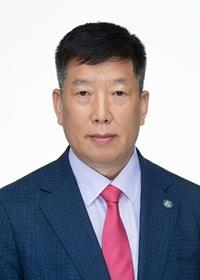 Guest Columnist, Korea Military Academy Class of '80 At this moment, is the path South Korea is taking one of secure survival? Or has it embarked on a perilous road to ruin? I am truly concerned. Through summit talks, the United States and Japan have presented a blueprint for a "Northeast Asian NATO (Technological Security Dialogue)" as a high-tech alliance, opening an era of a new US-Japan alliance with $550 billion in investments and supply chain reorganization.
President Trump has brought out the 'North Korea sanctions relief card' to lure North Korea to the negotiating table. While this approach will likely stay within the bounds of not undermining the overall framework of sanctions against North Korea, if it leads to 'Korea passing,' we must move beyond the question of 'What will we gain?' to consider 'What will we lose in terms of security leadership? How will we protect South Korea?' It is time to ponder these questions.
Amidst the grand triple waves of the US-China hegemonic war, North Korea's nuclear threat, and the current administration's lack of response, will Korea precipitate a crisis of strategic isolation? At this crucial crossroads, will it present a new alternative to overcome the triple threats? What strategy will the government truly choose, and how will it recover the lost initiative? This is an issue that will determine our future, and therefore, reservists must pay close attention.
1. Japan Chooses Survival, Opening an Era of a New US-Japan Alliance
The US-Japan summit on October 28th, which demonstrated the solidarity of the US-Japan alliance, was more than just a mere ceremony; it was an event that formalized the supply chains for advanced industries such as rare earths, AI, and shipbuilding, centered around the US and Japan. This signifies the evolution of a "values alliance" into a "technology alliance," demonstrating the solid foundation of a security community aimed at containing China.
While South Korea has created confusion in the ROK-US alliance with its dualistic stance between the US and China, the US and Japan have already begun concrete implementation plans with $550 billion in large-scale investments and MOUs in seven technology sectors. While the Lee Jae-myung administration remains committed to its pro-China stance, the US and Japan have reorganized their alliance with hard power—'interest' and 'security'—and North Korea, by leveraging its strategic position against great powers, is overcoming a near-collapse situation.
2. Is Trump's 'Reconciliation Gesture' Towards North Korea a Poison or an Antidote?
Trump's diplomacy is a 'deal' based on 'America First,' and resuming dialogue with North Korea risks exacerbating fears of 'Korea passing' and may aim for 'nuclear freeze' rather than 'denuclearization.' Should this be assessed as a 'potential risk of maximizing his diplomatic achievements by transferring strategic risks to allies'? Or is it a sophisticated strategy to preempt China and Russia's reasons for easing sanctions by opening the possibility of dialogue with North Korea and demonstrating efforts to the international community? This remains to be seen.
Kim Jong Un, conscious of Xi Jinping and Vladimir Putin, will not easily respond to President Trump's reconciliation gestures if the secretly agreed-upon benefits are greater. Kim Jong Un will focus on raising his own value by holding a trump card among the three great powers: the US, China, and Russia. If Trump uses dialogue as a bargaining chip with South Korea and Japan, his demands for defense contributions and investments will be easily accepted, and he will fully seize the initiative in negotiations. Acting against US interests will be akin to suicide for the time being.
At this juncture, analyzing the current administration's diplomacy and its response to Trump gives the impression of deliberately avoiding him. When key decision-makers are cut off from communication, it is tantamount to forfeiting their 'standing as a party to the Korean Peninsula issue.' President Trump's reconciliation gesture towards North Korea can lead to 'Korea passing' at any time, causing Korea to lose its position at the negotiating table. This is akin to Korea being excluded from the Korean War armistice agreement in 1953. It is like a class president being intimidated by a strict and principled homeroom teacher and then avoiding that teacher.
3. Where Is South Korea Heading?
Today, at the ROK-US summit, Trump likely seeks not a crown but a firm affirmation of the robust ROK-US alliance. If the current administration's avoidance of President Trump continues, his pressure will be beyond imagination, and Korea's standing on the diplomatic stage will be thoroughly disregarded. If Korea is ignored by the US, as it was by being late for a meeting with the Cambodian president, it will be shunned by all nations. The international community will watch with concern and regret as the South Korean government is ignored due to its stubborn response.
While South Korea remains trapped in controversy over its pro-China stance, losing national interests, the US and Japan are emerging as creators of a new economic security order through a 'hard power alliance.' As the US-Japan technology alliance accelerates, Korean companies will be marginalized from supply chains for rare earths and critical minerals, and will fall behind in the standardization of AI technology. If the US, China, and Russia attempt to exploit the North Korean regime for their own purposes, the North Korean regime will overcome its crisis of systemic collapse with the very nuclear weapons they dreamed of and may secure survival initiative by playing a mediating role.
Reservists fear the "Hong Kongization" of Korea if the Lee Jae-myung administration continues its pro-China path. If China were to subtly infiltrate Korea before Taiwan, as it is currently doing, we could end up living as slaves to China. Some argue that if Korea is to move towards rapid communism, it should become the 51st state of the United States. Of course, surrendering sovereignty is impossible at present and would be met with severe criticism.
The 'fear of South Korea's Hong Kongization' raised by some reservists reflects anxiety that the current administration's pro-China diplomacy may, in the long term, weaken South Korea's liberal democratic system and sovereignty, making it subservient to China's political and economic influence. It is a cautionary sentiment that South Korea could follow the path of Hong Kong, which lost its autonomy and rapidly Sinicized.
Opportunities for growth arise from crisis. We must maintain the ROK-US alliance as the unwavering foundation of our diplomacy and security, strengthen solidarity and cooperation with the liberal camp, and build a bulwark against forces coveting South Korea. We must enhance our technological sovereignty in semiconductors and advanced technologies, reduce economic dependence by lowering trade dependency on China, and solidify the free market economy and the rule of law domestically.
If we have the courage to make extreme statements like incorporating into the 51st state of the US, we must clear out the spy regime established by pro-North Korean and pro-China forces early on and revive South Korea through our own strength.
By Park Pil-kyu, Guest Columnist

 Iranian Foreign Ministry: "Continuing Message Exchanges with the U.S. and Activities of Mediating Countries"
Esmaeil Baghaei, Spokesperson for the Iranian Ministry of Foreign Affairs [Xinhua, Yonhap News file photo]Esmaeil Baghaei, spokesperson for the Iranian Ministry of Foreign Affairs, stated on the 26th
Iranian Foreign Ministry: "Continuing Message Exchanges with the U.S. and Activities of Mediating Countries"
Esmaeil Baghaei, Spokesperson for the Iranian Ministry of Foreign Affairs [Xinhua, Yonhap News file photo]Esmaeil Baghaei, spokesperson for the Iranian Ministry of Foreign Affairs, stated on the 26th
 President Yoon: "Do You Think You Are Safe from the Special Counsel?"... Final Statement Video Released
President Yoon Suk Yeol rebuking the special prosecutor on the 24th. [Court video / @birds_justice X account subtitle GIF] A video of President Yoon Suk Yeol's closing statement at his trial rega
President Yoon: "Do You Think You Are Safe from the Special Counsel?"... Final Statement Video Released
President Yoon Suk Yeol rebuking the special prosecutor on the 24th. [Court video / @birds_justice X account subtitle GIF] A video of President Yoon Suk Yeol's closing statement at his trial rega
 President Yoon, regarding the first-instance ruling on the Public Official Election Act: “An excessive political verdict that distorts the facts… We will appeal immediately.”
The first-instance sentencing hearing for President Yoon Suk Yeol regarding violations of the Public Official Election Act is being broadcast live at Seoul Station on the 27th. [Photo=Yonhap News]Pres
President Yoon, regarding the first-instance ruling on the Public Official Election Act: “An excessive political verdict that distorts the facts… We will appeal immediately.”
The first-instance sentencing hearing for President Yoon Suk Yeol regarding violations of the Public Official Election Act is being broadcast live at Seoul Station on the 27th. [Photo=Yonhap News]Pres
 WSJ: "SK Hynix ADR Premium Is a Sign of AI Trading Overheat"
Advertisement for SK Hynix ADR listing in New York's Times Square [Reuters=Yonhap News file photo]The Wall Street Journal (WSJ) has pointed out that the price of SK Hynix’s American Depositary Recei
WSJ: "SK Hynix ADR Premium Is a Sign of AI Trading Overheat"
Advertisement for SK Hynix ADR listing in New York's Times Square [Reuters=Yonhap News file photo]The Wall Street Journal (WSJ) has pointed out that the price of SK Hynix’s American Depositary Recei
 'Godfather of Japanese Mystery Novels' Keigo Higashino Passes Away After Battle with Cancer at 68
Famous Japanese mystery novelist Keigo Higashino [AFP=Yonhap News]It has been belatedly reported that Keigo Higashino, the "godfather of Japanese mystery novels" and author of bestsellers such as "The
'Godfather of Japanese Mystery Novels' Keigo Higashino Passes Away After Battle with Cancer at 68
Famous Japanese mystery novelist Keigo Higashino [AFP=Yonhap News]It has been belatedly reported that Keigo Higashino, the "godfather of Japanese mystery novels" and author of bestsellers such as "The
 [Park Pil-kyu Security Column] To the Ignorant Trying to Clothe a Beast in Sheep's Clothing
Rep. Kim Byung-joo of the Democratic Party of Korea [Photo=Yonhap News]“The Air Force Academy doesn't teach you how to fly a plane!” “The Army, Navy, and Air Force academies are exactly the
[Park Pil-kyu Security Column] To the Ignorant Trying to Clothe a Beast in Sheep's Clothing
Rep. Kim Byung-joo of the Democratic Party of Korea [Photo=Yonhap News]“The Air Force Academy doesn't teach you how to fly a plane!” “The Army, Navy, and Air Force academies are exactly the
 [Issue Diagnosis] Two Effects of the Election Petition Review
 [Photo] Evidence of Election Fraud Flooding U.S. Media… Trump Had 2.7 Million Votes Stolen
 [Video] U.S. Semiquincentennial Air Show... 'Art in the Sky' streaks across New York
 [Editorial Cartoon] A Draconian Law That Undermines Freedom of Expression

 List
List









