The U.S. nuclear-powered submarine Michigan arrives at the Port of Busan / Yonhap News
Only six countries possess nuclear-powered submarines (hereinafter referred to as 'nuclear submarines'): the United States, Russia, China, the United Kingdom, France, and India. They are all nuclear-armed states and major powers with nuclear technology. Recently, South Korea's possibility of becoming a nuclear submarine operating nation has increased with President Trump's approval for the construction of nuclear submarines. While many challenges remain before the actual deployment of nuclear submarines, the approval itself is a diplomatic and security triumph.
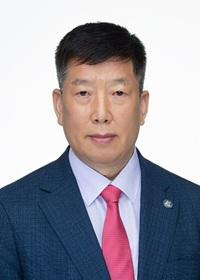 Guest Columnist, Korea Military Academy Class of 1996Given the materialized threat of North Korea's SLBMs (Submarine-Launched Ballistic Missiles), nuclear submarines serve as the ultimate weapon, a "silent deterrent," to deter nuclear attacks from North Korea, China, and Russia. The decision to approve nuclear submarines is not merely military cooperation but is assessed as a new evolutionary stage of the ROK-U.S. alliance.
1. Nuclear Submarine Approval Secures Sovereignty and Strategic Autonomy
Nuclear submarines are asymmetric assets capable of long-term, covert submersion to monitor enemy movements and respond immediately. Approval for nuclear submarines signifies the acquisition of national sovereignty and self-reliant deterrence, as well as strategic autonomy for self-preservation, based on the ROK-U.S. alliance. Broadening the meaning, the approval of nuclear submarines is the first step toward nuclear armament and a historical turning point for South Korea to transition from 'dependent security' to 'self-reliant security'.
The approval of nuclear submarines will realistically alleviate the constraints of the existing 'ROK-U.S. Atomic Energy Agreement'. Although President Trump mentioned on social media that nuclear submarines would be "built and brought over from U.S. shipyards," through practical review from the perspective of ROK-U.S. alliance role division, South Korea will now secure an official channel for obtaining nuclear fuel for military use. This will elevate the ROK-U.S. alliance from simple defense cooperation to an alliance of strategic trust.
2. Introduction of Nuclear Submarines Requires National Undertakings Proportional to Military Benefits
The biggest external challenge is securing the consent of the U.S. political establishment, passing an amendment to the 'ROK-U.S. Atomic Energy Agreement' containing an exceptional additional agreement in the U.S. Congress, and receiving support from the Trump administration's executive power. International norm conflicts must also be considered. South Korea must secure its nuclear fuel sovereignty by presenting a transparent nuclear material management system while adhering to the Non-Proliferation Treaty (NPT).
To assert control over nuclear fuel for nuclear submarines, South Korea must willingly accept the transparency, safeguards, and monitoring burdens required by the international community for nuclear materials and prove its reliability. Failure to manage the paradox of autonomy and monitoring could turn the possession of nuclear submarines into a new burden rather than a security asset. Nuclear sovereignty is respected by the international community only when it is based on responsibility.
Technical challenges are also significant. Safety is paramount for the small reactors used in nuclear submarines. While our technology appears to be at a considerable level, we must construct small reactors on land, accumulate sufficient operational data, and ensure technical stability and operational safety. Port and infrastructure certifications for nuclear fuel loading and maintenance must also meet international standards. Rushing to show results can lead to accidents, while caution breeds trust.
Technology can only be perfected through trust and maintaining security. President Trump's mention of "U.S. shipyards" during the ROK-U.S. summit's opening remarks, in response to the request for nuclear fuel supply for nuclear submarine construction, appears to be a sophisticated remark considering technological security. If suspicion arises that advanced propulsion technology for nuclear submarines could leak to North Korea or China, all promises and support will cease, and even the alliance could be shaken. The success or failure of introducing nuclear submarines depends on a stable ROK-U.S. alliance foundation and thorough management capabilities.
3. Nuclear Submarine Propulsion Requires a Strategy of War Prevention and Contribution to Human Peace
China is already showing reservations about the introduction of nuclear submarines. While China has operated nuclear submarines for a long time, Xi Jinping has emphasized denuclearization to us. Although China's concerns are irrelevant as nuclear submarine propulsion is a necessary and sufficient condition for our national survival, China's past THAAD retaliation is already being recalled and anticipated.
To proceed smoothly with nuclear submarines without obstruction, it is essential to project an image and will of a 'strategic state contributing to global peace' rather than simply enhancing military power. It should be positioned as a 'strategic asset' that contributes to regional stability, not just a symbol of military might. We must demonstrate wisdom and dignity by maintaining restraint greater than the power of nuclear weapons and adhering to the ultimate goal of 'war prevention' to contribute to world peace. The government and the nuclear submarine task force must realize that this U.S. approval is the most cost-effective strategy and a weighty mission bestowed upon South Korea.
For the visible, long-standing efforts towards nuclear armament to bear fruit, the military must be imbued with the conviction that nuclear submarines will change the destiny of the Republic of Korea and exert high-level propulsion. The National Assembly must cease political infighting and support legislative measures for national power enhancement that prevent war through our own strength and achieve further leaps. Security policy makers and leaders must prevent war through insightful approaches, ranging from the deterrence of nuclear submarines to complete nuclear armament, and advance national interests and peaceful inter-Korean unification. I propose and anticipate that all personnel involved in nuclear matters will demonstrate invisible patriotism, restraint, and endurance.
By Park Pil-gyu, Guest Columnist

 Iranian Foreign Ministry: "Continuing Message Exchanges with the U.S. and Activities of Mediating Countries"
Esmaeil Baghaei, Spokesperson for the Iranian Ministry of Foreign Affairs [Xinhua, Yonhap News file photo]Esmaeil Baghaei, spokesperson for the Iranian Ministry of Foreign Affairs, stated on the 26th
Iranian Foreign Ministry: "Continuing Message Exchanges with the U.S. and Activities of Mediating Countries"
Esmaeil Baghaei, Spokesperson for the Iranian Ministry of Foreign Affairs [Xinhua, Yonhap News file photo]Esmaeil Baghaei, spokesperson for the Iranian Ministry of Foreign Affairs, stated on the 26th
 President Yoon: "Do You Think You Are Safe from the Special Counsel?"... Final Statement Video Released
President Yoon Suk Yeol rebuking the special prosecutor on the 24th. [Court video / @birds_justice X account subtitle GIF] A video of President Yoon Suk Yeol's closing statement at his trial rega
President Yoon: "Do You Think You Are Safe from the Special Counsel?"... Final Statement Video Released
President Yoon Suk Yeol rebuking the special prosecutor on the 24th. [Court video / @birds_justice X account subtitle GIF] A video of President Yoon Suk Yeol's closing statement at his trial rega
 President Yoon, regarding the first-instance ruling on the Public Official Election Act: “An excessive political verdict that distorts the facts… We will appeal immediately.”
The first-instance sentencing hearing for President Yoon Suk Yeol regarding violations of the Public Official Election Act is being broadcast live at Seoul Station on the 27th. [Photo=Yonhap News]Pres
President Yoon, regarding the first-instance ruling on the Public Official Election Act: “An excessive political verdict that distorts the facts… We will appeal immediately.”
The first-instance sentencing hearing for President Yoon Suk Yeol regarding violations of the Public Official Election Act is being broadcast live at Seoul Station on the 27th. [Photo=Yonhap News]Pres
 WSJ: "SK Hynix ADR Premium Is a Sign of AI Trading Overheat"
Advertisement for SK Hynix ADR listing in New York's Times Square [Reuters=Yonhap News file photo]The Wall Street Journal (WSJ) has pointed out that the price of SK Hynix’s American Depositary Recei
WSJ: "SK Hynix ADR Premium Is a Sign of AI Trading Overheat"
Advertisement for SK Hynix ADR listing in New York's Times Square [Reuters=Yonhap News file photo]The Wall Street Journal (WSJ) has pointed out that the price of SK Hynix’s American Depositary Recei
 'Godfather of Japanese Mystery Novels' Keigo Higashino Passes Away After Battle with Cancer at 68
Famous Japanese mystery novelist Keigo Higashino [AFP=Yonhap News]It has been belatedly reported that Keigo Higashino, the "godfather of Japanese mystery novels" and author of bestsellers such as "The
'Godfather of Japanese Mystery Novels' Keigo Higashino Passes Away After Battle with Cancer at 68
Famous Japanese mystery novelist Keigo Higashino [AFP=Yonhap News]It has been belatedly reported that Keigo Higashino, the "godfather of Japanese mystery novels" and author of bestsellers such as "The
 [Park Pil-kyu Security Column] To the Ignorant Trying to Clothe a Beast in Sheep's Clothing
Rep. Kim Byung-joo of the Democratic Party of Korea [Photo=Yonhap News]“The Air Force Academy doesn't teach you how to fly a plane!” “The Army, Navy, and Air Force academies are exactly the
[Park Pil-kyu Security Column] To the Ignorant Trying to Clothe a Beast in Sheep's Clothing
Rep. Kim Byung-joo of the Democratic Party of Korea [Photo=Yonhap News]“The Air Force Academy doesn't teach you how to fly a plane!” “The Army, Navy, and Air Force academies are exactly the
 [Issue Diagnosis] Two Effects of the Election Petition Review
 [Photo] Evidence of Election Fraud Flooding U.S. Media… Trump Had 2.7 Million Votes Stolen
 [Video] U.S. Semiquincentennial Air Show... 'Art in the Sky' streaks across New York
 [Editorial Cartoon] A Draconian Law That Undermines Freedom of Expression

 List
List