 Photo of the South Korea-US summit. / Yonhap News.
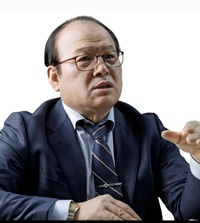 Director of the Institute for Korean Strategic StudiesAn Unrealistic 'Asymmetric Agreement' Announced
The South Korea-US trade agreement announced by the government on the 29th nominally promoted "reciprocal economic cooperation," but in reality, it formalized investment and purchase commitments desired by the US, while the benefits for South Korea were obscured by vague and opaque language.
The fact sheet released by the White House detailed specific amounts the US would receive, investment timelines, sectors, and conditions for capital recovery. In contrast, the South Korean government's announcement was filled with abstract terms like "mutual cooperation," "understanding," and "most-favored-nation treatment."
This imbalanced structure could lead to a triple vicious cycle that extends beyond mere trade issues, including the structural subordination of South Korea-US relations, accelerated disruption of trade with China, and strategic constraints on South Korean security. This is a typical imbalanced agreement made by a regime whose legitimacy is questioned or is vulnerable.
Impact on Trade with China - Supply Chain Distortion and Export Contraction
△ Accelerated Disruption of Supply Chains
While incorporating key industries such as semiconductors, shipbuilding, energy, and pharmaceuticals into the South Korea-US cooperation framework, this agreement inherently compels "de-Sinicization." It is highly probable that the US will include provisions restricting the participation of Chinese capital and technology in future discussions on MASGA (Maritime and Shipbuilding Alliance) and advanced industry investments. This will, in turn, reduce joint ventures and intermediate goods trade between South Korean companies and China, leading to increased production costs and weakened competitiveness for the South Korean manufacturing sector.
The demand for nuclear submarine technology, citing its necessity to counter China's naval power, is an overly transparent display of a diminished stance, and linking economics to security is also problematic.
△ Counteracting Export Market Diversification
China remains the largest market for South Korean exports, accounting for over 25%. However, by aligning with the US's supply chain logic through this agreement, South Korea risks being perceived as an "economic traitor" by China. If China weaponizes strategic resources such as rare earths, lithium, and battery materials, South Korean industries will be directly impacted. Consequently, the South Korea-US agreement could become a self-defeating move that sacrifices long-term export market expansion for short-term export stability.
△ Loss of Autonomy in Trade Policy
The phrase "commercial reasonableness" was included in the agreement. This implies that in the event of trade or investment disputes between South Korea and the US, adjustments will be made according to US commercial logic. This clause has the potential to subordinate South Korea's trade policy autonomy to US standards. In other words, it is problematic that South Korea may require prior approval or face political interference from the US in the future when pursuing expanded trade with China or Free Trade Agreements (FTAs) with third countries.
Impact on South Korea-US Relations - "Economic Alliance" or "Economic Subordination"
△ Deepening Asymmetry in South Korea-US Relations
The Trump administration immediately promoted this agreement as an achievement for "creating American jobs" and "revitalizing industry." The White House fact sheet specified the scale and timing of South Korea's purchases and investments in the US, along with detailed breakdowns by industry. In contrast, South Korea's expected "most-favored-nation treatment," "shipbuilding cooperation," and "understanding on nuclear submarine development" remained at the level of verbal agreements, not codified.
This imbalance indicates that the South Korea-US alliance is transforming from a mutually beneficial relationship into a subordinate alliance incorporated into a US-led trade bloc.
△ Erosion of Political Trust
If the public is only exposed to the phrase "mutual win-win" without understanding the substantive details of the agreement, it could lead to a collapse of trust in government pronouncements when the actual effects become apparent over time. If trust between South Korea and the US is not built on institutional transparency but relies on political gestures or unilateral announcements, the alliance risks degenerating into an "alliance of distrust."
△ Subordination of Economic Cooperation to Security
The agreement to place the shipbuilding cooperation body under the National Security Council (NSC) is a measure that confines economic discussions within a military and security framework. This signifies the relegation of South Korea-US economic cooperation to a subordinate structure of security policy and marks a structural turning point where South Korea's industrial policy decision-making power becomes dependent on the interests of the military alliance. Consequently, it will be difficult for South Korea to independently design its industrial, energy, and technology policies. The key question is whether these US actions will have a positive or negative impact on South Korea's security.
Impact on South Korean Security - Reduced Autonomy and Strategic Imbalance
△ Inappropriate Expression of the Reason for 'Possessing Nuclear Submarines'
The announcement stated that the US agreed with and approved South Korea's need for nuclear submarine development, but this issue requires substantive support such as technology transfer and nuclear fuel supply. In essence, South Korea managed to elicit US understanding, and the US, through its shipyards, added conditions for construction. However, according to submarine experts, South Korea's nuclear submarine technology was already at a level capable of independently installing small nuclear reactors by the end of next year, even without US assistance.
△ Omission of Concrete Measures for Strengthening Nuclear Deterrence
The phrase "strengthening the deterrence of the South Korea-US alliance" is a recurring rhetorical statement. In reality, this agreement does not include specific provisions on strengthening extended deterrence or nuclear sharing. Although economic cooperation appears to be linked with security, in substance, it remains at the level of security enhancements through political rhetoric, obtained by paying an economic price.
△ Regression of Strategic Autonomy
South Korea once played a buffer role between the US and China through "balanced diplomacy." However, this agreement has completely shifted that balance towards the US. Such a move could be seen as a betrayal of China, which enabled the Lee Jae-myung administration, and could provide grounds for attack by forces aiming for the next administration after Lee Jae-myung's. While this may earn the trust of the US as an ally in the short term, it will ultimately lead to South Korea's loss of autonomous diplomatic space in the East Asian strategic landscape in the long term.
△ An Agreement Without Restored Trust Limits Sustainability
Comparing the White House fact sheet and the Presidential Office's announcement, the South Korea-US trade agreement can only be evaluated as an imbalanced agreement where South Korea paid an economic price without securing clear benefits. The government's packaging of this as "reciprocal cooperation" is an act of betraying the public's trust. Without tangible benefits that the public can experience, the foundation of trust for a sustainable alliance will inevitably crumble.
The government must transparently present to the public not "how much was given to the US," but "what specific benefits South Korea secured in return." Diplomatic and economic agreements pursued without public consensus and tangible benefits will ultimately be recorded as failures of diplomacy and a retreat of sovereignty.
This agreement is an asymmetric deal that provides tangible benefits to the US while leaving South Korea with only opaque promises. If this imbalance persists, South Korea's trade with China will shrink, and its security will become more subordinate to the US framework.
The true value of an alliance lies in mutual trust and transparency. The upcoming points to watch will be the actions of figures like Jeong Cheong-rae, Woo Won-sik, and Kim Dong-yeon. Observing them will lead to an accurate evaluation. This trade agreement, which has brought relief to those in favor of the alliance concerning South Korean security, consternation to proponents of self-reliance, and worry to the general public, has placed the burden on the citizens and large corporations.
Ju Eun-sik, Director of the Institute for Korean Strategic Studies

 Iranian Foreign Ministry: "Continuing Message Exchanges with the U.S. and Activities of Mediating Countries"
Esmaeil Baghaei, Spokesperson for the Iranian Ministry of Foreign Affairs [Xinhua, Yonhap News file photo]Esmaeil Baghaei, spokesperson for the Iranian Ministry of Foreign Affairs, stated on the 26th
Iranian Foreign Ministry: "Continuing Message Exchanges with the U.S. and Activities of Mediating Countries"
Esmaeil Baghaei, Spokesperson for the Iranian Ministry of Foreign Affairs [Xinhua, Yonhap News file photo]Esmaeil Baghaei, spokesperson for the Iranian Ministry of Foreign Affairs, stated on the 26th
 President Yoon: "Do You Think You Are Safe from the Special Counsel?"... Final Statement Video Released
President Yoon Suk Yeol rebuking the special prosecutor on the 24th. [Court video / @birds_justice X account subtitle GIF] A video of President Yoon Suk Yeol's closing statement at his trial rega
President Yoon: "Do You Think You Are Safe from the Special Counsel?"... Final Statement Video Released
President Yoon Suk Yeol rebuking the special prosecutor on the 24th. [Court video / @birds_justice X account subtitle GIF] A video of President Yoon Suk Yeol's closing statement at his trial rega
 President Yoon, regarding the first-instance ruling on the Public Official Election Act: “An excessive political verdict that distorts the facts… We will appeal immediately.”
The first-instance sentencing hearing for President Yoon Suk Yeol regarding violations of the Public Official Election Act is being broadcast live at Seoul Station on the 27th. [Photo=Yonhap News]Pres
President Yoon, regarding the first-instance ruling on the Public Official Election Act: “An excessive political verdict that distorts the facts… We will appeal immediately.”
The first-instance sentencing hearing for President Yoon Suk Yeol regarding violations of the Public Official Election Act is being broadcast live at Seoul Station on the 27th. [Photo=Yonhap News]Pres
 WSJ: "SK Hynix ADR Premium Is a Sign of AI Trading Overheat"
Advertisement for SK Hynix ADR listing in New York's Times Square [Reuters=Yonhap News file photo]The Wall Street Journal (WSJ) has pointed out that the price of SK Hynix’s American Depositary Recei
WSJ: "SK Hynix ADR Premium Is a Sign of AI Trading Overheat"
Advertisement for SK Hynix ADR listing in New York's Times Square [Reuters=Yonhap News file photo]The Wall Street Journal (WSJ) has pointed out that the price of SK Hynix’s American Depositary Recei
 'Godfather of Japanese Mystery Novels' Keigo Higashino Passes Away After Battle with Cancer at 68
Famous Japanese mystery novelist Keigo Higashino [AFP=Yonhap News]It has been belatedly reported that Keigo Higashino, the "godfather of Japanese mystery novels" and author of bestsellers such as "The
'Godfather of Japanese Mystery Novels' Keigo Higashino Passes Away After Battle with Cancer at 68
Famous Japanese mystery novelist Keigo Higashino [AFP=Yonhap News]It has been belatedly reported that Keigo Higashino, the "godfather of Japanese mystery novels" and author of bestsellers such as "The
 [Park Pil-kyu Security Column] To the Ignorant Trying to Clothe a Beast in Sheep's Clothing
Rep. Kim Byung-joo of the Democratic Party of Korea [Photo=Yonhap News]“The Air Force Academy doesn't teach you how to fly a plane!” “The Army, Navy, and Air Force academies are exactly the
[Park Pil-kyu Security Column] To the Ignorant Trying to Clothe a Beast in Sheep's Clothing
Rep. Kim Byung-joo of the Democratic Party of Korea [Photo=Yonhap News]“The Air Force Academy doesn't teach you how to fly a plane!” “The Army, Navy, and Air Force academies are exactly the
 [Issue Diagnosis] Two Effects of the Election Petition Review
 [Photo] Evidence of Election Fraud Flooding U.S. Media… Trump Had 2.7 Million Votes Stolen
 [Video] U.S. Semiquincentennial Air Show... 'Art in the Sky' streaks across New York
 [Editorial Cartoon] A Draconian Law That Undermines Freedom of Expression

 List
List









