 North Korean ballistic missile launch. / KCNA, Yonhap News
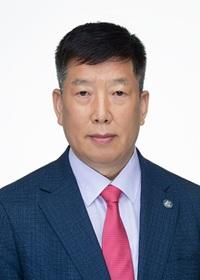 Contributing Editor, Korea Military Academy Class of '84A nation's security is a system that comprehensively guarantees its survival, the maintenance of a liberal democratic system, and the safety of its citizens. Security encompasses everything from military power to diplomacy, intelligence, economy, defense industry, technology, institutions, and the unity of its people.
Security is not about guns and bullets, but about trust and systems. If a "special prosecutor for domestic sedition" deems the normal deployment of drones in response to an enemy's preemptive drone attack as treason, military operations will become impossible. The act of the special prosecutor indicting treason itself aids the enemy. While rusted guns can be repaired, if the nation becomes entrenched in pacifist ideology and the political climate of "crushing domestic sedition" persists, the security system will collapse, and the nation will lose its reason for existence. While technology and weapon systems are evolving from "smart security" to "AI security," the security leadership operating and controlling them is leading "AI security" towards a safety breakdown.
1. The Reality of South Korean Security Moving Against its Definition
South Korea's security is heading towards a state where survival cannot be guaranteed. While advanced technologies like the retaking of wartime operational control (OPCON), the introduction of nuclear-powered submarines (SSNs), supersonic missiles, and AI weapon systems are touted as symbols of "self-reliant defense," the very brain that integrates and operates these weapons, the Joint Chiefs of Staff's operational system, is being dismantled. The act of dismantling the military chain of command and joint operations is akin to building the latest supercomputer while removing its central processing unit (CPU).
As seen in the Russia-Ukraine war, wars in the Fourth Industrial Revolution era blur physical boundaries, turning all spaces into battlegrounds. The battlefield is expanding into cyberspace, outer space, the deep sea, and unmanned systems. While advanced nations are strengthening jointness and expanding the Joint Chiefs of Staff's intelligence integration and operational command functions, we are engaging in regressive thinking, even discussing a complete overhaul of the Joint Chiefs of Staff's personnel. This is less about self-reliant defense and more akin to self-inflicted security harm.
The recent declassification of the military protection zone in Gimpo's "Baengma Island" poses a serious security vulnerability under the guise of regional development. No precise surveillance systems, access controls, or cooperation mechanisms between the military and local governments were established concurrently with the opening. The dismantling of the fence opens access to the lower Han River, weakening surveillance and vigilance, and raising concerns about the defense line of military facilities and information control networks.
The phrase "if North Korea uses nuclear weapons, the Kim Jong Un regime will face its end," a key component of nuclear deterrence in the 2025 ROK-US Security Consultative Meeting (SCM) joint statement, was deleted. This indicates a crack in the ROK-US will and expression regarding nuclear response. This is a dangerous fissure, prioritizing "political rhetoric" over "alliance trust," appearing as an alliance of differing ambitions.
2. The Politicization of Security Damages Military Power and Alliance Trust
With each change of administration, policies on North Korea and defense reforms are reversed, insubordination is disguised as upholding the Constitution, and the military's professionalism and order are readjusted accordingly. In this process, public trust plummets, and policy continuity is broken. Security crises always originate not from external enemies, but from internal confusion caused by dual security policies.
Reversals in security policy lead to repeated confusion. The opening of Gimpo's "Baengma Island" allows civilians access to sensitive areas close to North Korea, potentially enabling enemy submarines to approach underwater and creating a security vacuum. "Hambak Island" was illegally occupied by North Korea, but the government neglected it for years. The debate over restoring the September 19th Military Agreement also hinders the military's response, exacerbating security gaps. When security is swayed by political logic in this manner, the accumulated professionalism of the military and public trust crumble, and security crises will trigger various forms of warfare.
Double standards are also evident in the issue of nuclear-powered submarines (SSNs). SSNs are strategic assets that provide long-range operational capabilities and sustained deterrence. However, acquiring this technology requires overcoming U.S. nuclear non-proliferation policies and military technology protection clauses. Ultimately, the introduction of SSNs is not a simple arms deal but depends on the depth of strategic trust between South Korea and the United States.
If we request technological cooperation from the U.S. while internally maintaining a contradictory structure that weakens the Joint Chiefs of Staff's functions, it signals to the U.S.: "We want OPCON transfer and advanced weapons, but we will not establish integrated command capabilities." Such a dual attitude fails to gain the trust of the alliance. It is like trying to overcome darkness with light by clinging to darkness, even though no darkness can defeat light.
3. The Essence of Security is National Survival Spirit, Clear Chain of Command, and Integrated Systems
Is our current security heading towards preventing war, ensuring survival, and promoting national interests? Or the opposite? South Korea's security policies are losing balance. While there are calls for acquiring advanced weapons and expanding alliances, the internal chain of command and the consistency of political security are wavering. If the integrated command structure and the foundation of alliance trust crumble, advanced technological capabilities and weapon systems will become meaningless and powerless.
What is needed now is not the dismantling of the Joint Chiefs of Staff's functions. We must establish a Joint Chiefs of Staff command system that integrates and directs artificial intelligence, information warfare, cyber warfare, and space warfare to meet the demands of future battlefields. Security must be returned to the realm of national consensus, not political slogans. Advanced weapons are meaningful only when alliance trust is solid. Strategic trust, centered on the ROK-US alliance, must be transparently re-established first.
Security is not about guns and missiles, but about spirit and order. If the military's chain of command wavers and alliance trust fractures, advanced weapons become scrap metal. Security is not a decoration of politics. Security is the constitution of survival and the heart of a nation. The military must restore the security system, and the government must regain alliance trust to protect the Republic of Korea. We propose and urge the public sentiment and military sentiment regarding security.
Park Pil-kyu, Contributing Editor

 Iranian Foreign Ministry: "Continuing Message Exchanges with the U.S. and Activities of Mediating Countries"
Esmaeil Baghaei, Spokesperson for the Iranian Ministry of Foreign Affairs [Xinhua, Yonhap News file photo]Esmaeil Baghaei, spokesperson for the Iranian Ministry of Foreign Affairs, stated on the 26th
Iranian Foreign Ministry: "Continuing Message Exchanges with the U.S. and Activities of Mediating Countries"
Esmaeil Baghaei, Spokesperson for the Iranian Ministry of Foreign Affairs [Xinhua, Yonhap News file photo]Esmaeil Baghaei, spokesperson for the Iranian Ministry of Foreign Affairs, stated on the 26th
 President Yoon: "Do You Think You Are Safe from the Special Counsel?"... Final Statement Video Released
President Yoon Suk Yeol rebuking the special prosecutor on the 24th. [Court video / @birds_justice X account subtitle GIF] A video of President Yoon Suk Yeol's closing statement at his trial rega
President Yoon: "Do You Think You Are Safe from the Special Counsel?"... Final Statement Video Released
President Yoon Suk Yeol rebuking the special prosecutor on the 24th. [Court video / @birds_justice X account subtitle GIF] A video of President Yoon Suk Yeol's closing statement at his trial rega
 President Yoon, regarding the first-instance ruling on the Public Official Election Act: “An excessive political verdict that distorts the facts… We will appeal immediately.”
The first-instance sentencing hearing for President Yoon Suk Yeol regarding violations of the Public Official Election Act is being broadcast live at Seoul Station on the 27th. [Photo=Yonhap News]Pres
President Yoon, regarding the first-instance ruling on the Public Official Election Act: “An excessive political verdict that distorts the facts… We will appeal immediately.”
The first-instance sentencing hearing for President Yoon Suk Yeol regarding violations of the Public Official Election Act is being broadcast live at Seoul Station on the 27th. [Photo=Yonhap News]Pres
 WSJ: "SK Hynix ADR Premium Is a Sign of AI Trading Overheat"
Advertisement for SK Hynix ADR listing in New York's Times Square [Reuters=Yonhap News file photo]The Wall Street Journal (WSJ) has pointed out that the price of SK Hynix’s American Depositary Recei
WSJ: "SK Hynix ADR Premium Is a Sign of AI Trading Overheat"
Advertisement for SK Hynix ADR listing in New York's Times Square [Reuters=Yonhap News file photo]The Wall Street Journal (WSJ) has pointed out that the price of SK Hynix’s American Depositary Recei
 'Godfather of Japanese Mystery Novels' Keigo Higashino Passes Away After Battle with Cancer at 68
Famous Japanese mystery novelist Keigo Higashino [AFP=Yonhap News]It has been belatedly reported that Keigo Higashino, the "godfather of Japanese mystery novels" and author of bestsellers such as "The
'Godfather of Japanese Mystery Novels' Keigo Higashino Passes Away After Battle with Cancer at 68
Famous Japanese mystery novelist Keigo Higashino [AFP=Yonhap News]It has been belatedly reported that Keigo Higashino, the "godfather of Japanese mystery novels" and author of bestsellers such as "The
 [Park Pil-kyu Security Column] To the Ignorant Trying to Clothe a Beast in Sheep's Clothing
Rep. Kim Byung-joo of the Democratic Party of Korea [Photo=Yonhap News]“The Air Force Academy doesn't teach you how to fly a plane!” “The Army, Navy, and Air Force academies are exactly the
[Park Pil-kyu Security Column] To the Ignorant Trying to Clothe a Beast in Sheep's Clothing
Rep. Kim Byung-joo of the Democratic Party of Korea [Photo=Yonhap News]“The Air Force Academy doesn't teach you how to fly a plane!” “The Army, Navy, and Air Force academies are exactly the
 [Issue Diagnosis] Two Effects of the Election Petition Review
 [Photo] Evidence of Election Fraud Flooding U.S. Media… Trump Had 2.7 Million Votes Stolen
 [Video] U.S. Semiquincentennial Air Show... 'Art in the Sky' streaks across New York
 [Editorial Cartoon] A Draconian Law That Undermines Freedom of Expression

 List
List










