 The Democratic Party of Korea holds a launching ceremony for its task force on overcoming judicial distrust and normalizing judicial administration on the 3rd. Yonhap News.
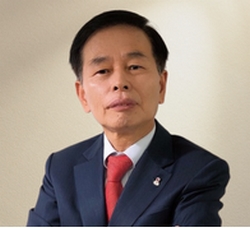 Professor at Wonkwang Digital UniversityThe ruling Democratic Party of Korea officially launched its "Task Force for Normalizing Judicial Administration" on the 3rd. The party announced its intention to push for the passage of the "Act on the Abolition of the Court Administration Division" within the year, which would abolish the Court Administration Division and establish a Judicial Administration Committee. The party also formalized its plans to propose seven key legislative bills within the year, including the Supreme Court Justice Augmentation Act, the introduction of a jury system (a four-tier trial system), and the "Law on Distortion of Law" (punishment and disciplinary action for erroneous application or interpretation of laws by prosecutors and judges) as part of amendments to the Criminal Act. By proposing judicial administration reform measures, the party is further intensifying its pressure on the judiciary.
The Supreme Court Justice Augmentation Act proposes increasing the number of Supreme Court justices from 14 to 26, including the Chief Justice. The Supreme Court is the highest court that makes final judgments on crucial legal disputes affecting citizens' fundamental rights and daily lives. The workload of each Supreme Court justice is so heavy, with each handling approximately 5,000 cases annually, that in-depth deliberation and consideration are becoming difficult. The current system, where a significant number of cases are dismissed without substantive review, is exacerbating public distrust in the appellate system and fundamentally hindering the Court's constitutional duty to provide remedies for citizens' rights.
There are reasons why I oppose the augmentation of Supreme Court justices. These include the potential erosion of judicial independence, concerns about the overuse of appeals, and the limitations of expansion without structural reform. Increasing the number of Supreme Court justices could undermine the independence of judicial appointments and the separation of powers. Concerns have been raised that an increase in Supreme Court justices could lead to an even greater influx of appeals, overwhelming the entire judicial system. The Court Administration Division itself has pointed out that "increasing only the number of Supreme Court justices without structural reforms to reduce the overuse of appeals could destabilize the entire judicial system," emphasizing the need to respect judicial autonomy.
Instead of simply increasing the number of Supreme Court justices, there have been consistent proposals suggesting that more fundamental solutions lie in reforming the appellate system itself, such as establishing appellate divisions in high courts. I believe that a cautious approach is necessary when considering an increase in Supreme Court justices to protect judicial independence and the overall stability of the judicial system. A Judicial Candidate Recommendation Committee should be established within the Supreme Court to recommend candidates for Supreme Court justices, to be nominated by the Chief Justice. It is also an issue that warrants in-depth consideration to amend the relevant law to remove the head of the Court Administration Division from the Judicial Candidate Recommendation Committee and add the secretary-general of the Constitutional Court.
Recently, the President's consideration of a candidate for a Constitutional Court justice who had previously served as his personal legal counsel has sparked public controversy. Concerns have been raised that if an individual who is or was the President's lawyer becomes the Chief Justice, a Supreme Court justice, or a Constitutional Court justice, it could lead to a collapse of public trust in the fairness, independence, and political neutrality of the judiciary.
It would be advisable to establish disqualification criteria for judicial appointments to uphold the fairness, independence, and political neutrality of trials, by stipulating that the President cannot appoint anyone who is or was their lawyer within the last five years as Chief Justice or Supreme Court justice.
The Democratic Party's current push for the "Act on the Abolition of the Court Administration Division" is interpreted as a signal of restraint towards Chief Justice Cho Hee-dae. Representative Jung Cheong-rae has directly mentioned suspicions of Chief Justice Cho's "political interference" and urged his resignation. This is interpreted as an intention to decentralize the Chief Justice's authority over appointments, budget, and administration. The abolition of the Court Administration Division and the establishment of a Judicial Administration Committee may conflict with the constitutional principle of judicial independence, and intense clashes are anticipated during parliamentary discussions.
Kim Dong-soo, Professor at Wonkwang Digital University
What do you think of this article?

 Iranian Foreign Ministry: "Continuing Message Exchanges with the U.S. and Activities of Mediating Countries"
Esmaeil Baghaei, Spokesperson for the Iranian Ministry of Foreign Affairs [Xinhua, Yonhap News file photo]Esmaeil Baghaei, spokesperson for the Iranian Ministry of Foreign Affairs, stated on the 26th
Iranian Foreign Ministry: "Continuing Message Exchanges with the U.S. and Activities of Mediating Countries"
Esmaeil Baghaei, Spokesperson for the Iranian Ministry of Foreign Affairs [Xinhua, Yonhap News file photo]Esmaeil Baghaei, spokesperson for the Iranian Ministry of Foreign Affairs, stated on the 26th
 President Yoon: "Do You Think You Are Safe from the Special Counsel?"... Final Statement Video Released
President Yoon Suk Yeol rebuking the special prosecutor on the 24th. [Court video / @birds_justice X account subtitle GIF] A video of President Yoon Suk Yeol's closing statement at his trial rega
President Yoon: "Do You Think You Are Safe from the Special Counsel?"... Final Statement Video Released
President Yoon Suk Yeol rebuking the special prosecutor on the 24th. [Court video / @birds_justice X account subtitle GIF] A video of President Yoon Suk Yeol's closing statement at his trial rega
 President Yoon, regarding the first-instance ruling on the Public Official Election Act: “An excessive political verdict that distorts the facts… We will appeal immediately.”
The first-instance sentencing hearing for President Yoon Suk Yeol regarding violations of the Public Official Election Act is being broadcast live at Seoul Station on the 27th. [Photo=Yonhap News]Pres
President Yoon, regarding the first-instance ruling on the Public Official Election Act: “An excessive political verdict that distorts the facts… We will appeal immediately.”
The first-instance sentencing hearing for President Yoon Suk Yeol regarding violations of the Public Official Election Act is being broadcast live at Seoul Station on the 27th. [Photo=Yonhap News]Pres
 WSJ: "SK Hynix ADR Premium Is a Sign of AI Trading Overheat"
Advertisement for SK Hynix ADR listing in New York's Times Square [Reuters=Yonhap News file photo]The Wall Street Journal (WSJ) has pointed out that the price of SK Hynix’s American Depositary Recei
WSJ: "SK Hynix ADR Premium Is a Sign of AI Trading Overheat"
Advertisement for SK Hynix ADR listing in New York's Times Square [Reuters=Yonhap News file photo]The Wall Street Journal (WSJ) has pointed out that the price of SK Hynix’s American Depositary Recei
 'Godfather of Japanese Mystery Novels' Keigo Higashino Passes Away After Battle with Cancer at 68
Famous Japanese mystery novelist Keigo Higashino [AFP=Yonhap News]It has been belatedly reported that Keigo Higashino, the "godfather of Japanese mystery novels" and author of bestsellers such as "The
'Godfather of Japanese Mystery Novels' Keigo Higashino Passes Away After Battle with Cancer at 68
Famous Japanese mystery novelist Keigo Higashino [AFP=Yonhap News]It has been belatedly reported that Keigo Higashino, the "godfather of Japanese mystery novels" and author of bestsellers such as "The
 [Park Pil-kyu Security Column] To the Ignorant Trying to Clothe a Beast in Sheep's Clothing
Rep. Kim Byung-joo of the Democratic Party of Korea [Photo=Yonhap News]“The Air Force Academy doesn't teach you how to fly a plane!” “The Army, Navy, and Air Force academies are exactly the
[Park Pil-kyu Security Column] To the Ignorant Trying to Clothe a Beast in Sheep's Clothing
Rep. Kim Byung-joo of the Democratic Party of Korea [Photo=Yonhap News]“The Air Force Academy doesn't teach you how to fly a plane!” “The Army, Navy, and Air Force academies are exactly the
 [Issue Diagnosis] Two Effects of the Election Petition Review
 [Photo] Evidence of Election Fraud Flooding U.S. Media… Trump Had 2.7 Million Votes Stolen
 [Video] U.S. Semiquincentennial Air Show... 'Art in the Sky' streaks across New York
 [Editorial Cartoon] A Draconian Law That Undermines Freedom of Expression

 List
List









