이재명 정부가 추진하는 감사원 개편, 공무원 검증, 검찰 구조조정, 대법원 증원 등 일련의 제도개혁은 ‘정치적 중립 강화’라는 명분 아래 진행되고 있지만, 실질적으로는 헌법이 보장한 권력 분립과 행정 견제 시스템의 재구성으로 이어지고 있다. <한미일보>는 이를 ‘개혁이라는 이름의 국가 권력 재설계’로 규정하고, 감사원·공무원·검찰·사법부의 제도 변화를 축으로 삼아 그 권력 집중의 메커니즘과 민주주의적 함의를 검증한다. 〈편집자 주〉
 The armband becomes power, and the flag becomes the standard of loyalty. Administration quietly, yet surely, transforms into an election organization. Hanmi Ilbo Graphics[Table of Contents]
① Reforms that Blinded the Board of Audit and Inspection
② Administrative State of Loyalty = Democratization Party's Election Organization
③ Those Who Disarmed the Prosecution
④ Judicial Personnel Politics, the Hidden Side of the Supreme Court Justice Expansion Act
⑤ The Language of Reform, the Grammar of Dictatorship
“Public officials must also be vetted. Administration that does not align with the government's direction will no longer be tolerated.”
This statement was reportedly made by a presidential secretary for personnel innovation during an internal meeting in early September. Following this statement, the government, under the guise of establishing a "public official vetting system," is pushing for a "job suitability assessment" system targeting all central and local government employees.
While the superficial reason is to prevent misconduct and inefficiency, there are growing concerns that a system of ideological vetting, which selects and excludes public officials based on their adherence to the regime's policies, is being introduced into national administration. Above all, the sense of crisis is mounting due to the potential for this structure to long-term reorganize the administrative apparatus into an "election organization for the regime."
The intensified vetting of public officials by the Lee Jae-myung administration is being packaged as a reform for administrative innovation. However, the core keywords that repeatedly appear in internal government documents are "loyalty," "policy uniformity," and "organizational control."
Contrary to the stated objective of strengthening public service ethics, a structure is being designed where adherence to the regime's policies becomes the central pillar of performance evaluation. This is expected to paralyze public officials' independent professional judgment and lead to administrative execution based on the regime's convenience.
The "Government Innovation TF" recently established under the Prime Minister's Office clearly reveals this structure. The government explains this as an "investigation of public officials involved in sedition," but the actual guidelines are reportedly much broader, including comprehensive investigations such as interviews (interrogations), written inquiries, and digital device checks.
There have been media reports of internal directives in some ministries requesting public officials to submit personal mobile phones or mentioning the possibility of forensic examination. With cases even emerging where reassignment to a waiting status or suspension of duties was considered for non-cooperation, the public service sector perceives this as a de facto coercive investigation. The government emphasizes "consent," but in a hierarchical structure, consent is tantamount to an "irrevocable consent."
This process conflicts with the foundations of the Constitution. It directly contradicts Article 7 of the Constitution on the political neutrality of public officials, Article 17 on the privacy of personal life, and Article 18 on the freedom of communication. The government's intention to access public officials' mobile phones and digital records goes beyond simply checking for misconduct; it is akin to ideological vetting to identify public officials uncooperative with the regime.
The "political reliability" item included in internal government documents, once reflected in actual personnel decisions, will transform the public service into an election organization that operates based on the regime's interests and re-election strategies, rather than those of the public.
The irony is that this vetting system directly clashes with the past remarks of President Lee Jae-myung himself. During prosecution investigations, he repeatedly argued, "Power should not seize mobile phones," and "Mobile phone forensics is an invasion of privacy and an abuse of power."
However, the current government is including personal mobile phones and digital records of public officials as objects of scrutiny and has created a structure that can utilize this as a tool to assess their loyalty to the regime. While he guarded against encroachment by power, he now demands proof of loyalty from public officials, demonstrating why this vetting system functions as a "regime preservation device."
This phenomenon also structurally resembles authoritarian phases in modern Korean history. The "public official loyalty test" during the Yushin regime, "official-backed election campaigns" by military regimes in the 1980s, and "election interference cases by local governments" in the 1990s are all precedents for using public officials as "election machinery for the regime."
The commonalities are clear.
First, vetting is introduced to filter out public officials who are critical of or hold dissenting views towards the regime.
Second, the scope of investigation is expanded to include public officials' expressions and private lives.
Third, the entire administrative organization is designed to operate according to the regime's re-election strategies.
The current vetting system is replicating this historical pattern, even leveraging technology and data.
The direction of this vetting system is not mere internal control. The "policy uniformity" spoken of by the regime is effectively substituted with "regime re-establishment uniformity," and the function of administration is transformed from serving the entire public to serving as an election organization for the defense, maintenance, and victory of the Democratic Party's regime.
In such a structure, statistics and reports that deviate from the regime's policies are self-censored, and policy choices and implementations are adjusted based on election strategies and the need for re-election. Administration loses its public nature and professionalism, degenerating into a vast organization that operates not for "national governance" but for "regime preservation."
Signs of election organization are already appearing throughout the administration.
Cases of sensitive policy statistics being re-timed, government criticism reports being neutralized internally, and public officials' internal tip-offs sensing pressure to alter expressions or modify data to align with the regime's direction, even on matters unrelated to elections, demonstrate that this structure is already becoming a reality.
Public officials are now showing a tendency to judge and act not based on "whether a policy is right or wrong" but on "whether it is favorable or unfavorable to the regime." This is the beginning of election organization and the most dangerous sign.
Vetting becomes control, control breeds silence, and silence transforms the administrative organization into an election organization machine subservient to the regime's will. The Lee Jae-myung administration's public official vetting system, though bearing the name of "administrative efficiency," is in reality a dangerous experiment that collapses democratic administration and reverts the nation to a "regime preservation election organization" state.
Control, initiated in the name of vetting, has always ended in a retreat of freedom, and South Korea stands at that crossroads today.
#PublicOfficialVetting #ElectionOrganizationState #AdministrativeStateofLoyalty #GovernmentInnovationTF #IdeologicalVetting #PoliticalNeutrality #ConstitutionArticle7 #DigitalForensics #RegimeControl #HanmiIlbo

 [Statement by the Seobeokka KMA Patriots Association] ㉛ Recount the ballots openly, as the previous recount covered up election fraud
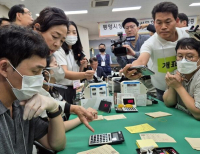
Recount of the Tongyeong mayoral election [Photo=Yonhap News]South Korea's liberal democracy is dying. The National Election Commission (NEC), which has degraded into a criminal organization through t
[Statement by the Seobeokka KMA Patriots Association] ㉛ Recount the ballots openly, as the previous recount covered up election fraud
Recount of the Tongyeong mayoral election [Photo=Yonhap News]South Korea's liberal democracy is dying. The National Election Commission (NEC), which has degraded into a criminal organization through t
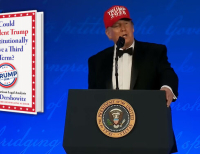
 What is the significance of the "Trump 2028" red hat that keeps reappearing?
It is noteworthy that while it is "highly likely" that President Donald Trump is "seriously considering" a run for the presidency in 2028, he is also "deliberately" fueling speculation regarding wheth
What is the significance of the "Trump 2028" red hat that keeps reappearing?
It is noteworthy that while it is "highly likely" that President Donald Trump is "seriously considering" a run for the presidency in 2028, he is also "deliberately" fueling speculation regarding wheth
 First U.S. Ambassador of Trump's Second Term to Arrive This Week… Will It Provide Momentum to Resolve Pending Issues?
U.S. Ambassador to South Korea Michelle Steel speaks at the opening ceremony of the Korea-U.S. Shipbuilding Cooperation Center held at the Mayflower Hotel in Washington, D.C., on the 23rd (local time)
First U.S. Ambassador of Trump's Second Term to Arrive This Week… Will It Provide Momentum to Resolve Pending Issues?
U.S. Ambassador to South Korea Michelle Steel speaks at the opening ceremony of the Korea-U.S. Shipbuilding Cooperation Center held at the Mayflower Hotel in Washington, D.C., on the 23rd (local time)
 President Yoon, regarding the first-instance ruling on the Public Official Election Act: “An excessive political verdict that distorts the facts… We will appeal immediately.”
The first-instance sentencing hearing for President Yoon Suk Yeol regarding violations of the Public Official Election Act is being broadcast live at Seoul Station on the 27th. [Photo=Yonhap News]Pres
President Yoon, regarding the first-instance ruling on the Public Official Election Act: “An excessive political verdict that distorts the facts… We will appeal immediately.”
The first-instance sentencing hearing for President Yoon Suk Yeol regarding violations of the Public Official Election Act is being broadcast live at Seoul Station on the 27th. [Photo=Yonhap News]Pres
 91% of Net Influx of MZ Generation Goes to Seoul Metropolitan Area… Population Migration Also Shows 'K-shaped Polarization' by Industry
[Provided by Leaders Index]Over the past four years, the MZ generation population has become increasingly concentrated in the Seoul metropolitan area and the Chungcheong region. While cities cen
91% of Net Influx of MZ Generation Goes to Seoul Metropolitan Area… Population Migration Also Shows 'K-shaped Polarization' by Industry
[Provided by Leaders Index]Over the past four years, the MZ generation population has become increasingly concentrated in the Seoul metropolitan area and the Chungcheong region. While cities cen
 'Godfather of Japanese Mystery Novels' Keigo Higashino Passes Away After Battle with Cancer at 68
Famous Japanese mystery novelist Keigo Higashino [AFP=Yonhap News]It has been belatedly reported that Keigo Higashino, the "godfather of Japanese mystery novels" and author of bestsellers such as "The
'Godfather of Japanese Mystery Novels' Keigo Higashino Passes Away After Battle with Cancer at 68
Famous Japanese mystery novelist Keigo Higashino [AFP=Yonhap News]It has been belatedly reported that Keigo Higashino, the "godfather of Japanese mystery novels" and author of bestsellers such as "The
 [Cho Yang-geon Column] The NEC: Facing a Fate of "Discarding the Dog After the Hunt"
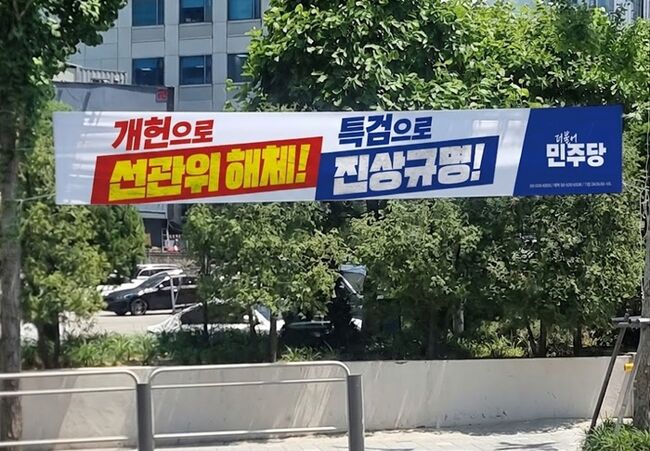
Banner calling for the "dissolution of the NEC" posted by the Democratic Party. [AI-generated image]Banners calling for the "dissolution of the National Election Commission (NEC)" posted by the Democr
[Cho Yang-geon Column] The NEC: Facing a Fate of "Discarding the Dog After the Hunt"
Banner calling for the "dissolution of the NEC" posted by the Democratic Party. [AI-generated image]Banners calling for the "dissolution of the National Election Commission (NEC)" posted by the Democr
 [Photo] Evidence of Election Fraud Flooding U.S. Media… Trump Had 2.7 Million Votes Stolen
 [Video] U.S. Semiquincentennial Air Show... 'Art in the Sky' streaks across New York
 [Editorial Cartoon] A Draconian Law That Undermines Freedom of Expression

 List
List