 Ministry of National Defense. Yonhap News
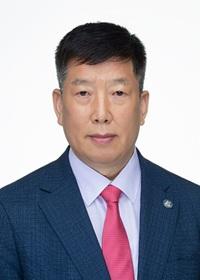 Guest Columnist, Korea Military Academy Class of '80 The Ministry of National Defense announced a large-scale personnel reshuffling on November 13, promoting 20 Major Generals in the Army, Navy, and Air Force to Lieutenant Generals. This is the largest promotion in the past decade. While the Ministry of National Defense cited "overcoming the martial law situation of December 12 and rebuilding the people's army" as the reason, the public's concern is whether the military has truly appointed generals in line with public expectations following the unprecedented personnel upheaval of the recent full replacement of Joint Chiefs of Staff generals, or if this is another repetition of favoritism and line-ups. The public harbors suspicions about the military's personnel appointment system.
Although the Ministry of National Defense announced that this general promotion increased the proportion of non-Korea Military Academy graduates and appointed experts in operations and advanced capabilities, the sentiment within the military is that generals in operations, strategy, and combined forces were excluded from promotion, and generals who were competent, principled, and respected by their subordinates were all sidelined. One member of the National Assembly even commented on the promotion review on Facebook, stating that the results were "as if Kim Jong-un of North Korea had reviewed them."
Is this not a just reward for past contributions to the military, but a political selection to suit the regime's taste? Is it not a strategic appointment for war preparedness, but a conditional gift from the regime, handed out like children playing with toy ranks amongst neighborhood seniors, based on loyalty to the regime? The military's sentiment (軍心) harbors doubts.
1. The old adage of military appointments is "the right person in the right place."
There is no principle more important than placing talented individuals in the most suitable positions. Promotions in the military are not merely personal rewards or job transfers. They are crucial personnel decisions to select the talent the military needs, assign necessary missions, and defend the nation and protect the lives of its citizens. If unfair appointments based on personal relationships and cronyism are repeated, even former top generals can be dubbed "poop generals" by the public.
General promotions are based on the "Military Personnel Act" and "Regulations on the Minister of National Defense's Personnel Authority." They are finalized after review by a promotion screening committee that comprehensively evaluates service records, capabilities, physical conditions, education, and disciplinary history, followed by presidential approval. However, if presidential office personnel vetting, which is not part of the screening process, and various unseen channels of petitioning and specific directives from the personnel authority intervene, the promotion screening process, principles, and legal basis are rendered ineffective.
General appointments under civilian control have frequently seen the selection of individuals who conform to the regime's trends, those who are docile, and those who reinforce a particular faction. We have often seen individuals who lack competence being selected through political considerations, and then acting according to the wishes of those in power due to a sense of obligation. The head of the personnel authority is summoned by a presidential secretary, and the Chairman of the Joint Chiefs of Staff, who has no personnel authority, rashly declares a complete replacement of generals. In such a structure, soldiers look only to the presidential office, not the enemy.
An organization that gets promoted by impressing those in power is no longer a military. If appointments are made with the regime's sustenance in mind rather than preparation for war, the military transforms into a private organization to protect the regime. General appointments influenced by politics turn the military into agents of power, not the people's army, ultimately undermining both the military's identity and combat effectiveness.
The power-driven screening structure inevitably involves political biases such as academic and regional affiliations, and loyalty. No matter how robust the screening process and principles are, the corrupt practice of power dictating lists to ensure their own people are appointed is repeated. To end this vicious cycle, an AI promotion and assignment screening system is needed to structurally block the weaknesses of biased rulers.
2. Reasons for Introducing AI Promotion and Assignment Screening
AI does not curry favor with power. It does not inflate scores for being docile or favor individuals belonging to a specific faction. AI only looks at personnel records. It can select and assign talent based on capabilities that can contribute to the nation and promote organizational unity by analyzing quantifiable data such as multifaceted individual and character evaluations, academic performance and potential, actual operational performance and training metrics, organizational contributions, disciplinary records, and professional specialization expansion, as well as the character and qualitative data within evaluation materials.
AI identifies talent suited for the environment of future warfare. Battlefields have already expanded beyond land, sea, and air to encompass space, cyber, and AI domains. However, our assignment placements remain stuck in the old paradigm of artillerymen being assigned to artillery and intelligence officers to intelligence. AI can precisely analyze the future capabilities required for specific positions and an individual's hidden talents to select the best leaders and most capable individuals.
3. AI Enhances the Authority and Legitimacy of Personnel Appointing Officials
This transparency mechanism does not weaken power; rather, it prevents its misuse. If technical trust in AI is established and an AI screening system is introduced, the rules of competition within the military will change. Capable and true soldiers who perform well will be selected, not those who are good at currying favor. Performance competition will become the standard, not loyalty competition, and the constitution and mission will become the criteria for appointments, not factions. Through the introduction of an AI screening system, we must reform the system to end political games and reclaim the people's army.
The military is not a subordinate organization of politics, looking to power. It must develop into a strong organization that observes and prepares for the enemy. The AI screening system, with its fairness, which prevents political intervention and influence, will inevitably be realized someday. AI screening can yield the fairest results within 24 hours by simply inputting appointment principles, procedures, and personnel qualifications.
We urge a halt to political soldier games orchestrated by the regime and a return to being a military trusted by the people. We call for the military to listen to the evaluation and public opinion regarding Lieutenant General promotions and, in future appointments, to eliminate the practice of line-ups and political biases, and to select true talents needed by the military and the nation through fair and professional personnel reviews.
Park Pil-kyu, Guest Columnist

 Iranian Foreign Ministry: "Continuing Message Exchanges with the U.S. and Activities of Mediating Countries"
Esmaeil Baghaei, Spokesperson for the Iranian Ministry of Foreign Affairs [Xinhua, Yonhap News file photo]Esmaeil Baghaei, spokesperson for the Iranian Ministry of Foreign Affairs, stated on the 26th
Iranian Foreign Ministry: "Continuing Message Exchanges with the U.S. and Activities of Mediating Countries"
Esmaeil Baghaei, Spokesperson for the Iranian Ministry of Foreign Affairs [Xinhua, Yonhap News file photo]Esmaeil Baghaei, spokesperson for the Iranian Ministry of Foreign Affairs, stated on the 26th
 President Yoon: "Do You Think You Are Safe from the Special Counsel?"... Final Statement Video Released
President Yoon Suk Yeol rebuking the special prosecutor on the 24th. [Court video / @birds_justice X account subtitle GIF] A video of President Yoon Suk Yeol's closing statement at his trial rega
President Yoon: "Do You Think You Are Safe from the Special Counsel?"... Final Statement Video Released
President Yoon Suk Yeol rebuking the special prosecutor on the 24th. [Court video / @birds_justice X account subtitle GIF] A video of President Yoon Suk Yeol's closing statement at his trial rega
 President Yoon, regarding the first-instance ruling on the Public Official Election Act: “An excessive political verdict that distorts the facts… We will appeal immediately.”
The first-instance sentencing hearing for President Yoon Suk Yeol regarding violations of the Public Official Election Act is being broadcast live at Seoul Station on the 27th. [Photo=Yonhap News]Pres
President Yoon, regarding the first-instance ruling on the Public Official Election Act: “An excessive political verdict that distorts the facts… We will appeal immediately.”
The first-instance sentencing hearing for President Yoon Suk Yeol regarding violations of the Public Official Election Act is being broadcast live at Seoul Station on the 27th. [Photo=Yonhap News]Pres
 WSJ: "SK Hynix ADR Premium Is a Sign of AI Trading Overheat"
Advertisement for SK Hynix ADR listing in New York's Times Square [Reuters=Yonhap News file photo]The Wall Street Journal (WSJ) has pointed out that the price of SK Hynix’s American Depositary Recei
WSJ: "SK Hynix ADR Premium Is a Sign of AI Trading Overheat"
Advertisement for SK Hynix ADR listing in New York's Times Square [Reuters=Yonhap News file photo]The Wall Street Journal (WSJ) has pointed out that the price of SK Hynix’s American Depositary Recei
 'Godfather of Japanese Mystery Novels' Keigo Higashino Passes Away After Battle with Cancer at 68
Famous Japanese mystery novelist Keigo Higashino [AFP=Yonhap News]It has been belatedly reported that Keigo Higashino, the "godfather of Japanese mystery novels" and author of bestsellers such as "The
'Godfather of Japanese Mystery Novels' Keigo Higashino Passes Away After Battle with Cancer at 68
Famous Japanese mystery novelist Keigo Higashino [AFP=Yonhap News]It has been belatedly reported that Keigo Higashino, the "godfather of Japanese mystery novels" and author of bestsellers such as "The
 [Park Pil-kyu Security Column] To the Ignorant Trying to Clothe a Beast in Sheep's Clothing
Rep. Kim Byung-joo of the Democratic Party of Korea [Photo=Yonhap News]“The Air Force Academy doesn't teach you how to fly a plane!” “The Army, Navy, and Air Force academies are exactly the
[Park Pil-kyu Security Column] To the Ignorant Trying to Clothe a Beast in Sheep's Clothing
Rep. Kim Byung-joo of the Democratic Party of Korea [Photo=Yonhap News]“The Air Force Academy doesn't teach you how to fly a plane!” “The Army, Navy, and Air Force academies are exactly the
 [Issue Diagnosis] Two Effects of the Election Petition Review
 [Photo] Evidence of Election Fraud Flooding U.S. Media… Trump Had 2.7 Million Votes Stolen
 [Video] U.S. Semiquincentennial Air Show... 'Art in the Sky' streaks across New York
 [Editorial Cartoon] A Draconian Law That Undermines Freedom of Expression

 List
List









