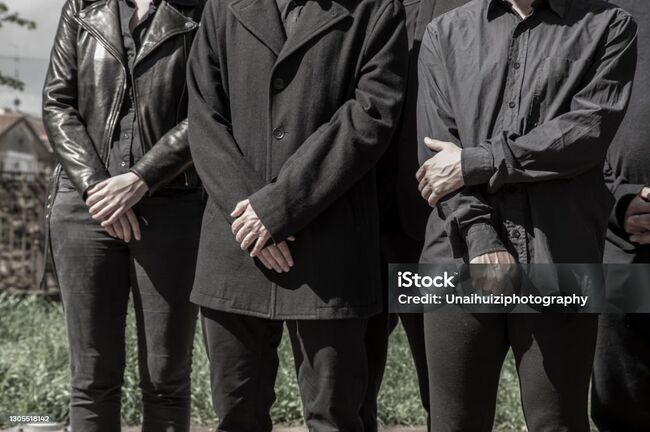
Is there another era when the term "political neutrality" sounds as noble yet hollow as this one? Even during past authoritarian regimes, this phrase was a kind of ideal. However, today, the fact that the prosecution and the courts, which are unelected powers, along with the media, which should be the eyes and ears of the public, have lost their political neutrality and are becoming powers themselves is even more precarious. South Korea is currently in a triple crisis. The fact that these three domains, referred to as constitutional institutions, are simultaneously distancing themselves from public trust is the most fundamental crisis of democracy.
The controversy over the politicization of the prosecution is not new. However, the prosecution's actions in recent years are undeniably difficult to escape the suspicion of "political interference through investigative powers." Unjust indictments of former presidents, staggered investigations into current high-ranking officials, and the leaking of suspects' details to the media have invited criticism that political calculations preceded the legitimacy of the investigations.
What is more serious is that the more these problems are repeated, the more even legitimate investigations can be labeled as "political investigations." If a particular faction resists by calling it "political revenge," the prosecution will lose its functionality, and ultimately, justice will become an empty name. If the prosecution does not restore its own neutrality, investigations will become politics, and trust in the law will disappear.
Even the courts, once considered the "last bastion of political neutrality," have entered the heart of ideological debate. With judges from specific inclination study groups such as the Korean Law Research Association and the International Human Rights Law Research Association dominating key positions, "political interpretations" frequently accompany court rulings.
Citizens' views of the courts are becoming increasingly skeptical. If rulings change depending on the administration, even for the same issue and similar circumstances, the public's "sense of justice" is bound to be distorted. The more rulings are made with political influence in mind, the more the courts will lose their essence of fairness, and judicial power will ultimately be retried in the court of public opinion.
The media is called the "Fourth Estate" for monitoring power. However, Korean media today is forgetting that responsibility. The reporting tone changes drastically depending on the administration's inclination, and "invisible pressure" such as the suspension of advertisements for critical media, tax investigations, and even prosecution investigations are becoming commonplace.
Conversely, a structure is solidifying where media outlets favorable to power "transcribe" the government's position without internal verification. Media bias is becoming structural, and autonomy and investigative journalism are facing a crisis. The portal-centered news consumption structure has blurred the identity of media companies, and the reality where click counts take precedence over truth is a snapshot of the media's regression.
The prosecution, the courts, and the media are institutions with their own unique functions, but they share an important commonality. They are checks and balances on democracy. If these institutions, which prevent the abuse of power, protect the rights of the people, and enable public discourse, simultaneously lose their neutrality and fail to function properly, democracy will effectively enter a state of collapse.
This dysfunction of the three institutions is particularly fatal at a time when the election system is shaken and the legitimacy of power is becoming a point of contention. While politics may be distrusted, a society where law and media are distrusted cannot be easily recovered.
The neutrality of constitutional institutions is not an option, but an obligation. The prosecution must be an enforcer of the law, not a subordinate of power. The courts must be judges of the law, not politicians catering to public opinion. The media must be a conveyor of truth, not an accomplice of power.
If they do not recover their proper roles, the situation will not change even if the administration changes. Reform requires internal awakening before external pressure. The gatekeepers of the constitution must no longer be instruments or refuges of politics.
#ConstitutionalInstitutions #PoliticalNeutrality #ProsecutionReform #CourtReform #FreedomOfPress #DemocraticCrisis #JudicialTrust #PoliticizationOfInvestigations #BiasedReporting #RestoringPublicTrust #KOREAJAPANUSNews

 Iranian Foreign Ministry: "Continuing Message Exchanges with the U.S. and Activities of Mediating Countries"
Esmaeil Baghaei, Spokesperson for the Iranian Ministry of Foreign Affairs [Xinhua, Yonhap News file photo]Esmaeil Baghaei, spokesperson for the Iranian Ministry of Foreign Affairs, stated on the 26th
Iranian Foreign Ministry: "Continuing Message Exchanges with the U.S. and Activities of Mediating Countries"
Esmaeil Baghaei, Spokesperson for the Iranian Ministry of Foreign Affairs [Xinhua, Yonhap News file photo]Esmaeil Baghaei, spokesperson for the Iranian Ministry of Foreign Affairs, stated on the 26th
 President Yoon: "Do You Think You Are Safe from the Special Counsel?"... Final Statement Video Released
President Yoon Suk Yeol rebuking the special prosecutor on the 24th. [Court video / @birds_justice X account subtitle GIF] A video of President Yoon Suk Yeol's closing statement at his trial rega
President Yoon: "Do You Think You Are Safe from the Special Counsel?"... Final Statement Video Released
President Yoon Suk Yeol rebuking the special prosecutor on the 24th. [Court video / @birds_justice X account subtitle GIF] A video of President Yoon Suk Yeol's closing statement at his trial rega
 President Yoon, regarding the first-instance ruling on the Public Official Election Act: “An excessive political verdict that distorts the facts… We will appeal immediately.”
The first-instance sentencing hearing for President Yoon Suk Yeol regarding violations of the Public Official Election Act is being broadcast live at Seoul Station on the 27th. [Photo=Yonhap News]Pres
President Yoon, regarding the first-instance ruling on the Public Official Election Act: “An excessive political verdict that distorts the facts… We will appeal immediately.”
The first-instance sentencing hearing for President Yoon Suk Yeol regarding violations of the Public Official Election Act is being broadcast live at Seoul Station on the 27th. [Photo=Yonhap News]Pres
 WSJ: "SK Hynix ADR Premium Is a Sign of AI Trading Overheat"
Advertisement for SK Hynix ADR listing in New York's Times Square [Reuters=Yonhap News file photo]The Wall Street Journal (WSJ) has pointed out that the price of SK Hynix’s American Depositary Recei
WSJ: "SK Hynix ADR Premium Is a Sign of AI Trading Overheat"
Advertisement for SK Hynix ADR listing in New York's Times Square [Reuters=Yonhap News file photo]The Wall Street Journal (WSJ) has pointed out that the price of SK Hynix’s American Depositary Recei
 'Godfather of Japanese Mystery Novels' Keigo Higashino Passes Away After Battle with Cancer at 68
Famous Japanese mystery novelist Keigo Higashino [AFP=Yonhap News]It has been belatedly reported that Keigo Higashino, the "godfather of Japanese mystery novels" and author of bestsellers such as "The
'Godfather of Japanese Mystery Novels' Keigo Higashino Passes Away After Battle with Cancer at 68
Famous Japanese mystery novelist Keigo Higashino [AFP=Yonhap News]It has been belatedly reported that Keigo Higashino, the "godfather of Japanese mystery novels" and author of bestsellers such as "The
 [Park Pil-kyu Security Column] To the Ignorant Trying to Clothe a Beast in Sheep's Clothing
Rep. Kim Byung-joo of the Democratic Party of Korea [Photo=Yonhap News]“The Air Force Academy doesn't teach you how to fly a plane!” “The Army, Navy, and Air Force academies are exactly the
[Park Pil-kyu Security Column] To the Ignorant Trying to Clothe a Beast in Sheep's Clothing
Rep. Kim Byung-joo of the Democratic Party of Korea [Photo=Yonhap News]“The Air Force Academy doesn't teach you how to fly a plane!” “The Army, Navy, and Air Force academies are exactly the
 [Issue Diagnosis] Two Effects of the Election Petition Review
 [Photo] Evidence of Election Fraud Flooding U.S. Media… Trump Had 2.7 Million Votes Stolen
 [Video] U.S. Semiquincentennial Air Show... 'Art in the Sky' streaks across New York
 [Editorial Cartoon] A Draconian Law That Undermines Freedom of Expression

 List
List









