북한 우라늄 공장의 방사성 폐수 유출 의혹에 대해 정부는 ‘기준치 이하’라는 조사 결과를 발표했지만, 구체적인 수치는 공개하지 않았습니다. 언론 역시 대부분 이를 축소 보도하거나 외면한 반면, 후쿠시마 오염수 땐 연일 공포를 조성했던 과거와 대조됩니다. 정부의 정보 비공개와 언론의 침묵이 낳는 신뢰 위기를 짚어봅니다.
 Democratic Party floor leader Park Kwang-on is holding a meeting of the parliamentary countermeasures group regarding Fukushima nuclear power plant wastewater at the National Assembly party office on the 27th. June 27, 2023. Yonhap News
Amid allegations that radioactive wastewater has leaked from North Korea's Pyongsan uranium plant, controversy is growing as the government has only announced that the levels are "below the standard" without disclosing specific radioactivity figures.
At the same time, major broadcasting companies have either barely covered the issue or limited their reporting to brief mentions. This has led to mounting criticism of a "double standard," especially when compared to the sensationalized and alarmist reporting during the discharge of Fukushima wastewater from Japan last year.
On the 18th, the Nuclear Safety and Security Commission, the Ministry of Oceans and Fisheries, and the Ministry of Environment announced the results of a detailed survey conducted at 10 locations, including Ganghwado Island and the Han River estuary, stating, "Key radioactive materials and heavy metals, such as uranium, cesium, cadmium, and mercury, were all either below the threshold or not detected."
However, the actual concentration levels (Bq/L or μg/L) of uranium or cesium—the data the public is most curious about—were not disclosed. The authorities merely repeated expressions such as "similar to or lower than past levels" and "not detected (ND)."
Regarding this government announcement, while some experts evaluated that "it is reassuring that no abnormal levels were detected," they also pointed out that "an announcement method that emphasizes 'normality' without specific measurement values makes it difficult to guarantee scientific credibility."
A Unification Ministry official stated to foreign media that "there is no meaningful change in radioactivity levels in the West Sea" (NK News), and the Turkish news agency Anadolu (AA) also reported the levels as "stable."
On the other hand, voices of concern have emerged from some political circles. People Power Party lawmaker Na Kyung-won argued, "Experts are warning that North Korean wastewater could flow into the Imjin River and the Han River," adding, "The government should not just repeat that it is 'normal' but must transparently disclose the measurement values and sample analysis data." She further added, "The media's response is also highly inadequate; follow-up reporting and verification are necessary in the interest of the public's right to know."
In fact, during the discharge of treated water from Japan's Fukushima Daiichi Nuclear Power Plant last year, major broadcasters analyzed tritium and cesium concentrations daily, producing reports claiming that "the public's dining table is in danger" and warning of a "marine ecosystem catastrophe."
From the first day of the Fukushima discharge, MBC produced news with headlines such as "Public anxiety is growing," while JTBC emphasized alarm by reporting that "cesium was detected in the waters off Tokyo." At the time, the Japanese government stated that the tritium concentration had been lowered to 730,000 Bq/L and cesium-137 to below 5.5 kBq/L after ALPS processing, and provided the figures in real-time in accordance with international standards, alongside the IAEA.
Conversely, regarding the North Korean nuclear wastewater allegations, even the South Korean government has not disclosed the concentrations, and there is no IAEA or third-party verification process in place. Some experts have merely estimated that "the levels are likely similar to the historical average uranium concentration of 0.1–0.4 μg/L," but the actual measured values from the 2025 survey remain undisclosed.
Above all, the silence of major media outlets regarding an issue of such national interest is fueling criticism.
The Korea Communications Commission includes criteria such as the "establishment of a 24-hour monitoring system" and the "rapid and accurate delivery of disaster information" in its broadcast evaluation standards for disaster and safety-related reporting. It particularly encourages detailed reporting, including quantitative figures, for issues directly related to public safety. However, major broadcasters such as MBC and JTBC have either not covered the issue in their main news programs or have limited their coverage to summarizing the government's announcement.
In comments on related articles and assessments from civil society, the prevailing criticism is that "the government’s failure to disclose figures is an issue that the media should step up to verify and demand," and that "the contrast—where the media fueled distrust even with IAEA verification during Fukushima, but remains consistent in its silence regarding North Korean nuclear wastewater allegations—is hypocritical."
The environment is not a political choice. Radiation risks must be judged by the data, and the intensity of reporting should not vary based on the source. The criticism that "media silence on inconvenient truths" is more dangerous than fear-mongering is once again gaining traction.
#NorthKoreaNuclearWastewater #RadioactivityDisclosure #MediaDoubleStandard #FukushimaWastewater #MediaSilence #EnvironmentalSafetyInfo #GovernmentTransparency #DisasterReportingResponsibility #IAEAVerification #KoreaUSJapanReporting

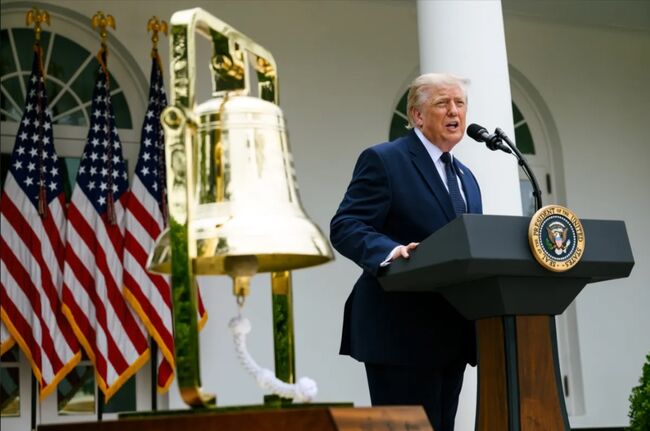 Trump pressures for rate cut again ahead of FOMC... "Should be the lowest in the world"
U.S. President Donald Trump. [Photo = The White House] U.S. President Donald Trump once again pressured the Federal Reserve, the U.S. central bank, to lower interest rates on the 27th (local time
Trump pressures for rate cut again ahead of FOMC... "Should be the lowest in the world"
U.S. President Donald Trump. [Photo = The White House] U.S. President Donald Trump once again pressured the Federal Reserve, the U.S. central bank, to lower interest rates on the 27th (local time
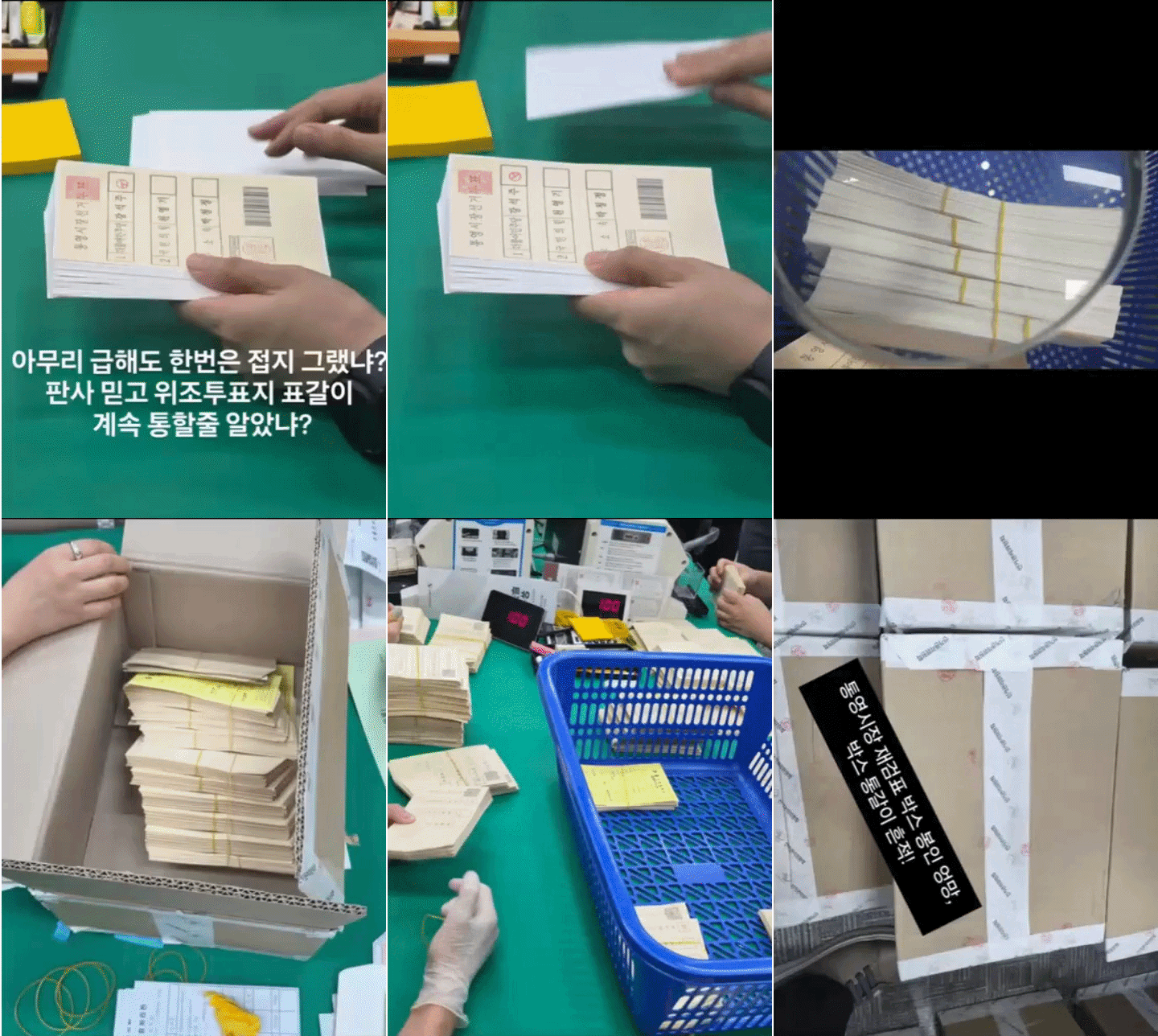 “Ignoring crisp ballots and damaged seals”… Tongyeong mayoral recount concludes with ‘no change in outcome,’ leaving suspicions and public outrage behind
Suspected counterfeit ballots discovered in Tongyeong [GIF from social media of Representative Hwang Kyo-ahn / Attorney Park Joo-hyun]During a recount of the Tongyeong mayoral election in South Gyeong
“Ignoring crisp ballots and damaged seals”… Tongyeong mayoral recount concludes with ‘no change in outcome,’ leaving suspicions and public outrage behind
Suspected counterfeit ballots discovered in Tongyeong [GIF from social media of Representative Hwang Kyo-ahn / Attorney Park Joo-hyun]During a recount of the Tongyeong mayoral election in South Gyeong
 President Yoon, regarding the first-instance ruling on the Public Official Election Act: “An excessive political verdict that distorts the facts… We will appeal immediately.”
The first-instance sentencing hearing for President Yoon Suk Yeol regarding violations of the Public Official Election Act is being broadcast live at Seoul Station on the 27th. [Photo=Yonhap News]Pres
President Yoon, regarding the first-instance ruling on the Public Official Election Act: “An excessive political verdict that distorts the facts… We will appeal immediately.”
The first-instance sentencing hearing for President Yoon Suk Yeol regarding violations of the Public Official Election Act is being broadcast live at Seoul Station on the 27th. [Photo=Yonhap News]Pres
 WSJ: "SK Hynix ADR Premium Is a Sign of AI Trading Overheat"
Advertisement for SK Hynix ADR listing in New York's Times Square [Reuters=Yonhap News file photo]The Wall Street Journal (WSJ) has pointed out that the price of SK Hynix’s American Depositary Recei
WSJ: "SK Hynix ADR Premium Is a Sign of AI Trading Overheat"
Advertisement for SK Hynix ADR listing in New York's Times Square [Reuters=Yonhap News file photo]The Wall Street Journal (WSJ) has pointed out that the price of SK Hynix’s American Depositary Recei
 'Godfather of Japanese Mystery Novels' Keigo Higashino Passes Away After Battle with Cancer at 68
Famous Japanese mystery novelist Keigo Higashino [AFP=Yonhap News]It has been belatedly reported that Keigo Higashino, the "godfather of Japanese mystery novels" and author of bestsellers such as "The
'Godfather of Japanese Mystery Novels' Keigo Higashino Passes Away After Battle with Cancer at 68
Famous Japanese mystery novelist Keigo Higashino [AFP=Yonhap News]It has been belatedly reported that Keigo Higashino, the "godfather of Japanese mystery novels" and author of bestsellers such as "The
 [Park Pil-kyu Security Column] To the Ignorant Trying to Clothe a Beast in Sheep's Clothing
Rep. Kim Byung-joo of the Democratic Party of Korea [Photo=Yonhap News]“The Air Force Academy doesn't teach you how to fly a plane!” “The Army, Navy, and Air Force academies are exactly the
[Park Pil-kyu Security Column] To the Ignorant Trying to Clothe a Beast in Sheep's Clothing
Rep. Kim Byung-joo of the Democratic Party of Korea [Photo=Yonhap News]“The Air Force Academy doesn't teach you how to fly a plane!” “The Army, Navy, and Air Force academies are exactly the
 [Issue Diagnosis] Two Effects of the Election Petition Review
 [Photo] Evidence of Election Fraud Flooding U.S. Media… Trump Had 2.7 Million Votes Stolen
 [Video] U.S. Semiquincentennial Air Show... 'Art in the Sky' streaks across New York
 [Editorial Cartoon] A Draconian Law That Undermines Freedom of Expression

 List
List