이재명정부가 추진하는 감사원 개편, 공무원 검증, 검찰 구조조정, 대법원 증원 등을 비롯한 일련의 제도 개혁은 ‘정치적 중립 강화’라는 명분 아래 진행되고 있다. 하지만 실질적으로는 헌법에 보장된 권력 분립과 행정 견제 시스템의 재구성으로 이어지고 있다. <한미일보>는 이를 ‘개혁이라는 이름의 국가 권력 재설계’로 규정하고, 감사원·공무원·검찰·사법부의 제도 변화를 축으로 삼은 권력 집중의 메커니즘과 그 민주주의적 함의를 검증한다. 〈편집자 주〉
 The reality of control revealed behind the wrapping paper of reform. Although four systems are being promoted under different names, they are all heading in one direction: the concentration of power. [Graphics=Hanmiilbo]
[Table of Contents]
① Reform that blinded the Board of Audit and Inspection
② The loyal administrative state = The Democratic Party's election organization
③ Those who disarmed the prosecution
④ Judicial personnel politics, the underside of the Supreme Court Justice Increase Act
⑤ The language of reform, the grammar of dictatorship
The word 'reform' is no longer a language of change. The Board of Audit and Inspection has been blinded, the civil servant organization has been reorganized based on loyalty, the prosecution has been reduced from an investigative agency to a prosecutor's office, and the judiciary has been shaken by personnel politics.
Although these appear to be reforms occurring in different systems, these four reforms are moving in the same direction.
The first pillar is the Board of Audit and Inspection. The abolition of policy audits was pushed under the guise of 'protecting policy judgments,' but in reality, it was a measure to close the last window of oversight over the administration. As external oversight weakened, the administration lost its institutional reason to check itself. The accountability structure became blurred, and transparency receded.
The second pillar is the reorganization of the civil servant system. While the civil servant vetting system was ostensibly about strengthening ethics, it was in reality closer to measuring loyalty. The public service will transform from an organization for the people into a political organization selected based on the regime's ideology and tendencies. The administration will change into a structure that operates in accordance with the regime's interests rather than the people's.
The third pillar is the prosecution. Prosecutorial reform is not a reallocation of authority, but a structural shift that downgrades the prosecution from an investigative agency to a prosecuting agency. The prosecution cannot design the flow of cases, and its power to correct judgments is blocked by restrictions on the right to appeal. Having lost its oppositional power, the prosecution has been reduced from an agency that oversees power to one that merely handles prosecutions for cases handed over by power.
The fourth pillar is the judiciary. The increase in the number of Supreme Court justices was presented as a rationale for efficiency, but it is read as an intention to open the door to personnel politics that can politically influence the structure of judgments. The independence of the judiciary can now be shaken by its members rather than by its institutions, and there is an increased risk that final judgments will move closer to the regime's will.
So, what is different about the grammar of dictatorship?
The reason why the changes in the four pillars align into one structure is that the grammar of reform and the grammar of dictatorship are fundamentally different. The two grammars diverge completely in five aspects of their operation.
First, the grammar of reform expands transparency, while the grammar of dictatorship eliminates transparency.
Reform requires strengthened audits, oversight, and disclosure of information, but dictatorship shrinks oversight functions under the guise of 'policy protection' or 'neutrality.' The weakening of the Board of Audit and Inspection's authority is a prime example of this grammar.
Second, the grammar of reform guarantees independence, while the grammar of dictatorship creates subordination.
Reform requires the prosecution, judiciary, and administration to check each other, but dictatorship places all systems within the chain of command of power. The civil servant vetting system is a way to transform an independent bureaucracy into a regime's organization.
Third, the grammar of reform disperses power, while the grammar of dictatorship concentrates power.
If reform involves acknowledging complex procedures for checks and balances, dictatorship rallies power into one hand under the pretense of efficiency and speed. The transformation of the prosecution into a prosecuting agency is a grammar of concentration, not dispersal of power.
Fourth, the grammar of reform places citizens above power, while the grammar of dictatorship places power above citizens.
Reform expands citizens' freedom and participation, but dictatorship regulates citizens' political freedoms and creates an administrative structure centered on power. This is why the civil servant organization is designed to be loyal to the regime, not the people.
Fifth, the grammar of reform strengthens institutions, while the grammar of dictatorship empties institutions and fills them with power.
When institutions are strengthened, power is constrained, but the grammar of dictatorship, while pretending to fix institutions, actually paralyzes them. Judicial personnel politics is a typical example of this institutional paralysis.
When these five aspects operate simultaneously, reform is no longer the language of democracy but the language of control.
Therefore, we arrive at the conclusion that the reforms of the Lee Jae-myung administration are not adjustments occurring in different systems, but a process of assembling a dictatorial structure under the guise of reform.
Consequently, self-deprecating criticisms emerge in political circles, such as "The Republic of Korea is boarding the express train to Venezuela." The current reality of the Venezuelan regime standing trial in the United States is the most direct example of the fate that befalls a nation that dismantles its institutional safeguards.
The moment a system loses independence and transparency, it transforms from an institution into a tool. Power, holding the tool in both hands, expands only in the direction of protecting itself. Checks disappear, leaving only control.
The reforms pursued by the Lee Jae-myung administration have not strengthened institutions but weakened them, and these weakened institutions have widened the gap for power to enter. The measures implemented under the name of reform were ultimately not for the restoration of institutions but for the consolidation of the regime, and as a result, democracy is being pushed aside from its original place.
Reform is a grammar that breathes life into institutions, but the grammar of dictatorship empties institutions and fills their place with power. And thus, dictatorship is perfected within institutions.
#LanguageOfReformGrammarOfDictatorship #PowerConcentration #AdministrativeDictatorship #BoardOfAuditAndInspectionReduction #CivilServantVetting #ProsecutionProsecutingAgencyTransformation #SupremeCourtJusticeIncrease #ConstitutionalCrisis #CollapseOfSeparationOfPowers #Hanmiilbo

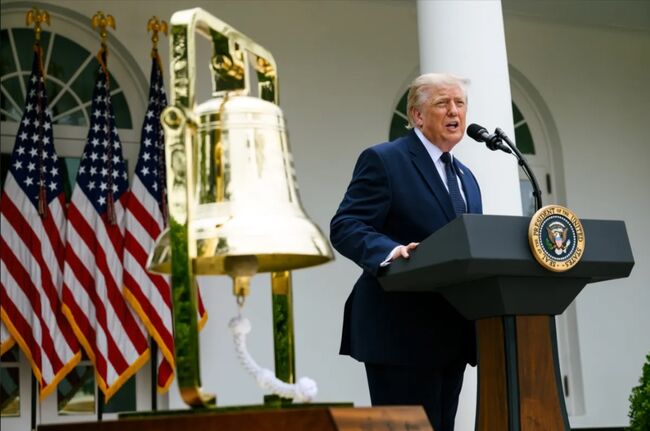 Trump pressures for rate cut again ahead of FOMC... "Should be the lowest in the world"
U.S. President Donald Trump. [Photo = The White House] U.S. President Donald Trump once again pressured the Federal Reserve, the U.S. central bank, to lower interest rates on the 27th (local time
Trump pressures for rate cut again ahead of FOMC... "Should be the lowest in the world"
U.S. President Donald Trump. [Photo = The White House] U.S. President Donald Trump once again pressured the Federal Reserve, the U.S. central bank, to lower interest rates on the 27th (local time
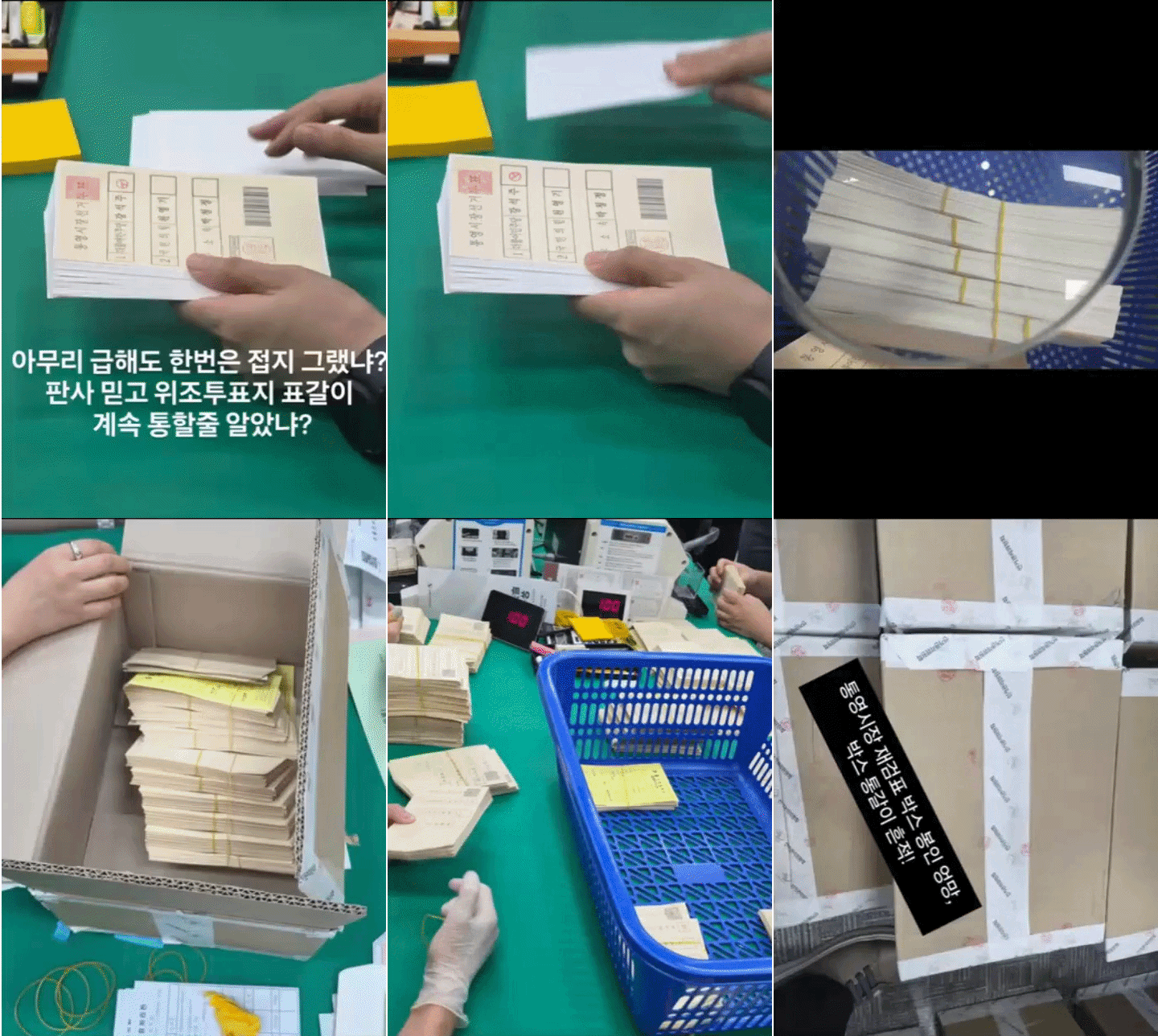 “Ignoring crisp ballots and damaged seals”… Tongyeong mayoral recount concludes with ‘no change in outcome,’ leaving suspicions and public outrage behind
Suspected counterfeit ballots discovered in Tongyeong [GIF from social media of Representative Hwang Kyo-ahn / Attorney Park Joo-hyun]During a recount of the Tongyeong mayoral election in South Gyeong
“Ignoring crisp ballots and damaged seals”… Tongyeong mayoral recount concludes with ‘no change in outcome,’ leaving suspicions and public outrage behind
Suspected counterfeit ballots discovered in Tongyeong [GIF from social media of Representative Hwang Kyo-ahn / Attorney Park Joo-hyun]During a recount of the Tongyeong mayoral election in South Gyeong
 President Yoon, regarding the first-instance ruling on the Public Official Election Act: “An excessive political verdict that distorts the facts… We will appeal immediately.”
The first-instance sentencing hearing for President Yoon Suk Yeol regarding violations of the Public Official Election Act is being broadcast live at Seoul Station on the 27th. [Photo=Yonhap News]Pres
President Yoon, regarding the first-instance ruling on the Public Official Election Act: “An excessive political verdict that distorts the facts… We will appeal immediately.”
The first-instance sentencing hearing for President Yoon Suk Yeol regarding violations of the Public Official Election Act is being broadcast live at Seoul Station on the 27th. [Photo=Yonhap News]Pres
 WSJ: "SK Hynix ADR Premium Is a Sign of AI Trading Overheat"
Advertisement for SK Hynix ADR listing in New York's Times Square [Reuters=Yonhap News file photo]The Wall Street Journal (WSJ) has pointed out that the price of SK Hynix’s American Depositary Recei
WSJ: "SK Hynix ADR Premium Is a Sign of AI Trading Overheat"
Advertisement for SK Hynix ADR listing in New York's Times Square [Reuters=Yonhap News file photo]The Wall Street Journal (WSJ) has pointed out that the price of SK Hynix’s American Depositary Recei
 'Godfather of Japanese Mystery Novels' Keigo Higashino Passes Away After Battle with Cancer at 68
Famous Japanese mystery novelist Keigo Higashino [AFP=Yonhap News]It has been belatedly reported that Keigo Higashino, the "godfather of Japanese mystery novels" and author of bestsellers such as "The
'Godfather of Japanese Mystery Novels' Keigo Higashino Passes Away After Battle with Cancer at 68
Famous Japanese mystery novelist Keigo Higashino [AFP=Yonhap News]It has been belatedly reported that Keigo Higashino, the "godfather of Japanese mystery novels" and author of bestsellers such as "The
 [Park Pil-kyu Security Column] To the Ignorant Trying to Clothe a Beast in Sheep's Clothing
Rep. Kim Byung-joo of the Democratic Party of Korea [Photo=Yonhap News]“The Air Force Academy doesn't teach you how to fly a plane!” “The Army, Navy, and Air Force academies are exactly the
[Park Pil-kyu Security Column] To the Ignorant Trying to Clothe a Beast in Sheep's Clothing
Rep. Kim Byung-joo of the Democratic Party of Korea [Photo=Yonhap News]“The Air Force Academy doesn't teach you how to fly a plane!” “The Army, Navy, and Air Force academies are exactly the
 [Issue Diagnosis] Two Effects of the Election Petition Review
 [Photo] Evidence of Election Fraud Flooding U.S. Media… Trump Had 2.7 Million Votes Stolen
 [Video] U.S. Semiquincentennial Air Show... 'Art in the Sky' streaks across New York
 [Editorial Cartoon] A Draconian Law That Undermines Freedom of Expression

 List
List