 An Army armored and engineer unit bridging operation training held on September 15, 2022, at Hwacheon Bridge, Hwacheon-gun, Gangwon Province. Yonhap News
 Editorial Board Member & Director of the Korea Strategy InstituteThere are seven armored brigades in the Republic of Korea Army. However, out of the three key positions (a total of 21 positions) in these seven brigades—brigade commander, chief of staff, and operations chief—only three officers, including one brigade commander, are from the armored corps. In other words, over 86% of the key command positions in armored brigades are held by officers from non-armored corps. The situation is the same for engineer brigades, with officers from infantry backgrounds commanding two engineer brigades. This is not merely an issue of personnel assignment. It is a structural failure of the ROK military's personnel system that disregards the essence of the battlefield, an anachronistic concept that ignores branch expertise, and ultimately a critical flaw that endangers the lives of soldiers and national security.
The Armored Branch Comes Alive at the Commander's Fingertips
Armored brigades are the operational core responsible for battlefield speed, maneuver, firepower, and deep penetration. Therefore, commanding an armored unit requires at least 10 years of accumulated experience and preparation.
This includes judging the proficiency of tank crews, understanding the types of track-laying vehicle malfunctions and maintenance requirements, coordinating mechanized infantry with tanks, measuring breakthrough angles and concentration points according to terrain and features, determining response times, coordinating combined arms operations with artillery, aviation, and engineers, and developing evasion and maneuver patterns against anti-tank threats. All of these are part of the expertise of the armored corps.
The problem is that commanders from non-armored backgrounds are limited in their ability to acquire this expertise. This is not something that can be learned through a few weeks of training before assuming command or by reading manuals. The practical sense of operating tanks, understanding their maneuver limitations, the sound of tracks, and battlefield formations is only gained through direct experience in that branch.
Yet, the Army uses armored brigades as testing grounds, entrusting them to non-specialists under the guise of "assignment rotation management." This is akin to assigning an obstetrics ward to an ophthalmologist in the medical field.
The Greatest Damage Caused by Non-Specialist Command: Collapse of Officer Training
One of the most crucial duties of an officer commanding an armored brigade is the training of subordinate officers.
For mechanized and armored units, equipment proficiency directly translates to combat power, and the training of company, platoon, and maintenance officers is the lifeblood of the unit.
However, when a non-specialist commander is appointed, the following phenomena occur:
① They don't know what to teach.
They fail to understand the training standards and evaluation metrics for armored units, the key points of company-level maneuver training, or the characteristics of tank and armored vehicle components. Consequently, they become commanders who "cannot teach."
② Equipment performance cannot be maximized.
Without understanding the operational methods, maintenance cycles, and terrain response of K1/K2 tanks and K21 armored vehicles, their performance can only be utilized at 60-70% of their capability.
Non-specialist commanders ultimately revert to safety-oriented, static training.
③ Officers' combat sense deteriorates.
As commanders lack confidence, staff officers also cease researching armored tactics. As a result, the entire brigade becomes a unit that "is armored but cannot conduct armored/mechanized training."
The moment mechanized and armored unit training collapses, the unit effectively becomes an empty shell. While this may not be apparent in peacetime, it leads to a major disaster in wartime.
The Core of Mechanized Warfare: "Combat is fought by the branch, not by the assignment."
In war, the enemy does not show leniency based on business cards or job titles.
Branch expertise, experience, and proficiency are what save units on the battlefield.
However, the ROK military is trapped in the following flawed mindset:
"Infantry officers can also command armored brigades with sufficient command experience."
"Staff officers only need to be good at paperwork."
"Rotating assignments regardless of branch is fair."
This is the logic of administrative organizations, not the logic of a military organization at war.
Armored and engineer brigades are units where the very concept of combat cannot be established without their inherent branch expertise. Appointing an infantry colonel as an engineer brigade commander, or an infantry artillery colonel with no experience in mechanized units as an armored brigade chief of staff, is no different from entrusting a submarine to a surface ship officer or an artillery brigade to someone from the military police.
In war, this contradiction leads to fatal consequences:
According to my training evaluation standards, the training level of ROK Army armored units is below passing.
Unable to perform high-speed deep penetration maneuvers; unable to conduct combat firing under armor enclosure; inexperienced in operating at maximum tactical speeds; unable to concentrate firepower due to dispersed tank operations; limited application of cover fire concepts during movement along axes of advance; restricted judgment of timing for forward and retrograde movements.
These failures directly lead to the annihilation of brigades, collapse of front lines, and massive casualties.
“Is a unit an armored unit just because it has tanks?” - The Reality of a Collapsing Unit Identity
The essence of armored and mechanized units lies not in their equipment but in their tactical culture and branch expertise.
However, when non-specialists are in command, units regress in the following ways:
Tanks and armored vehicles are treated as 'props for display' on the training ground; Training is conducted with tanks left idle due to crew shortages (without using substitute crews); Tactical discussions focus on infantry warfare; 'Infantry-style thinking' dominates the entire mechanized unit; Risk-averse training leads to the loss of armored units' offensive spirit.
Such units are no longer armored brigades. They become "mechanized infantry" that only possess tanks.
The Problem Ultimately Lies in Personnel Management—The Lack of Respect and Institutional Recognition for Branches
Why does this phenomenon repeat itself?
Personnel management that prioritizes "fairness in assignment rotation" over branch expertise; An unrealistic logic of balancing branches; Technical branches like armor and engineering are lightly perceived as merely "subordinate command experience"; The practice of viewing command positions as "career management opportunities"; Such personnel systems, beyond ignorance of branches, constitute an act of destruction against core foundational forces.
Officer assignments must be based on war. The focus should not be on balancing the peacetime organization but on who can save the unit in wartime.
The Core of the Problem: “Who is Responsible When War Breaks Out?”
For armored brigades to fight like armored units and engineer brigades to fight like engineer units, branch expertise is essential. However, if non-specialists continue to dominate brigade command staffs as they do now, they cannot answer the following questions:
Who is responsible for immediate tactical judgment upon encountering enemy tank units?
Who analyzes the threat from anti-tank missiles?
Who determines the axis of armored breakthrough?
Who is responsible for training company and platoon leaders?
How can we instill an "armored spirit" in soldiers?
The answer is clear: If the commander doesn't know, nobody knows. The commander's level is the unit's level.
This is not a matter of mere inconvenience but a life-or-death issue in wartime.
Armored and Engineer Commanders Are Not "Interchangeable Positions."
If the ROK military continues with personnel assignments that disregard branch expertise as it does now, armored and engineer brigades will be relegated to units incapable of fulfilling their roles in wartime.
Collapse of officer training; Failure to achieve full equipment performance; Tactical judgment failures; Loss of unit combat power; Increased soldier casualties.
The reason the nation spends trillions of won to build K2 tanks and maintain armored forces is singular: to entrust them to experts to fight effectively. The current personnel system is undermining this objective. Armored and engineer brigades are units imbued with the spirit of their branches, their technologies, and accumulated battlefield acumen. Placing non-specialists in charge of these units is dereliction of duty by the Army and a betrayal of the public.
War is unforgiving.
We only survive as much as we prepare.
Armor must be led by officers from the armored branch or those with experience in mechanized units.
Engineers must lead engineer units.
As long as this simple truth is ignored, our military's war preparedness will be a castle in the air.
Hanmi Ilbo Editorial Board Member & Director of the Korea Strategy Institute

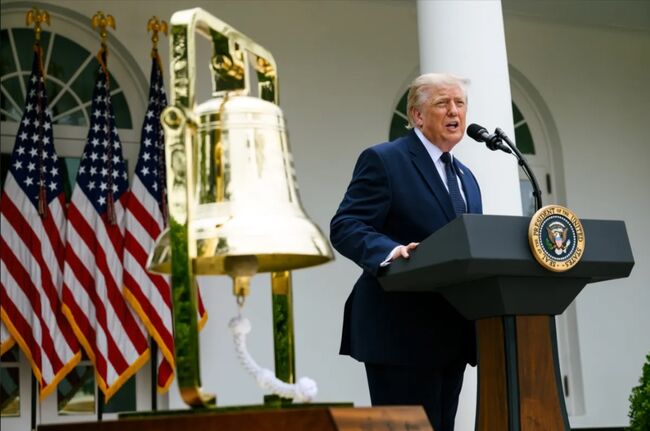 Trump pressures for rate cut again ahead of FOMC... "Should be the lowest in the world"
U.S. President Donald Trump. [Photo = The White House] U.S. President Donald Trump once again pressured the Federal Reserve, the U.S. central bank, to lower interest rates on the 27th (local time
Trump pressures for rate cut again ahead of FOMC... "Should be the lowest in the world"
U.S. President Donald Trump. [Photo = The White House] U.S. President Donald Trump once again pressured the Federal Reserve, the U.S. central bank, to lower interest rates on the 27th (local time
 “Ignoring crisp ballots and damaged seals”… Tongyeong mayoral recount concludes with ‘no change in outcome,’ leaving suspicions and public outrage behind
Suspected counterfeit ballots discovered in Tongyeong [GIF from social media of Representative Hwang Kyo-ahn / Attorney Park Joo-hyun]During a recount of the Tongyeong mayoral election in South Gyeong
“Ignoring crisp ballots and damaged seals”… Tongyeong mayoral recount concludes with ‘no change in outcome,’ leaving suspicions and public outrage behind
Suspected counterfeit ballots discovered in Tongyeong [GIF from social media of Representative Hwang Kyo-ahn / Attorney Park Joo-hyun]During a recount of the Tongyeong mayoral election in South Gyeong
 President Yoon, regarding the first-instance ruling on the Public Official Election Act: “An excessive political verdict that distorts the facts… We will appeal immediately.”
The first-instance sentencing hearing for President Yoon Suk Yeol regarding violations of the Public Official Election Act is being broadcast live at Seoul Station on the 27th. [Photo=Yonhap News]Pres
President Yoon, regarding the first-instance ruling on the Public Official Election Act: “An excessive political verdict that distorts the facts… We will appeal immediately.”
The first-instance sentencing hearing for President Yoon Suk Yeol regarding violations of the Public Official Election Act is being broadcast live at Seoul Station on the 27th. [Photo=Yonhap News]Pres
 WSJ: "SK Hynix ADR Premium Is a Sign of AI Trading Overheat"
Advertisement for SK Hynix ADR listing in New York's Times Square [Reuters=Yonhap News file photo]The Wall Street Journal (WSJ) has pointed out that the price of SK Hynix’s American Depositary Recei
WSJ: "SK Hynix ADR Premium Is a Sign of AI Trading Overheat"
Advertisement for SK Hynix ADR listing in New York's Times Square [Reuters=Yonhap News file photo]The Wall Street Journal (WSJ) has pointed out that the price of SK Hynix’s American Depositary Recei
 'Godfather of Japanese Mystery Novels' Keigo Higashino Passes Away After Battle with Cancer at 68
Famous Japanese mystery novelist Keigo Higashino [AFP=Yonhap News]It has been belatedly reported that Keigo Higashino, the "godfather of Japanese mystery novels" and author of bestsellers such as "The
'Godfather of Japanese Mystery Novels' Keigo Higashino Passes Away After Battle with Cancer at 68
Famous Japanese mystery novelist Keigo Higashino [AFP=Yonhap News]It has been belatedly reported that Keigo Higashino, the "godfather of Japanese mystery novels" and author of bestsellers such as "The
 [Park Pil-kyu Security Column] To the Ignorant Trying to Clothe a Beast in Sheep's Clothing
Rep. Kim Byung-joo of the Democratic Party of Korea [Photo=Yonhap News]“The Air Force Academy doesn't teach you how to fly a plane!” “The Army, Navy, and Air Force academies are exactly the
[Park Pil-kyu Security Column] To the Ignorant Trying to Clothe a Beast in Sheep's Clothing
Rep. Kim Byung-joo of the Democratic Party of Korea [Photo=Yonhap News]“The Air Force Academy doesn't teach you how to fly a plane!” “The Army, Navy, and Air Force academies are exactly the
 [Issue Diagnosis] Two Effects of the Election Petition Review
 [Photo] Evidence of Election Fraud Flooding U.S. Media… Trump Had 2.7 Million Votes Stolen
 [Video] U.S. Semiquincentennial Air Show... 'Art in the Sky' streaks across New York
 [Editorial Cartoon] A Draconian Law That Undermines Freedom of Expression

 List
List










