
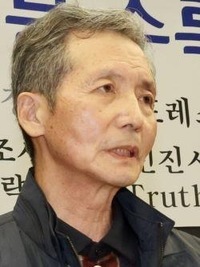
 Poet and ColumnistLee Jae-myung stated at a recent Cabinet meeting, "Hate speech or misinformation is not freedom of expression. We will impose strong penalties to foster national unity."
This news quickly spread abroad, with Germany (Disdose TV) reporting that "another dictator has emerged" in South Korea. In particular, the American media also paid close attention to Lee Jae-myung's remarks, viewing them as a warning from the President of the Republic of Korea to the United States.
The Washington Post, in particular, reported that not only Lee Jae-myung himself but also criticism or denunciation of China could be subject to punishment.
The deepening anti-China sentiment among Koreans is due to the rudeness and disorderliness of Chinese people, the Northeast Project, and the subjugation of the Republic of Korea, all of which are the responsibility of China and its people. Nevertheless, Lee Jae-myung viewed criticism of China as hate speech.
Therefore, Lee Jae-myung's remarks clearly indicate that the Lee Jae-myung administration is siding with China amidst the US-China conflict, and that he intends to punish even legitimate criticism of China and its people as hate speech.
This is a subservient act that reduces our Republic of Korea to a vassal state serving China as a superior. It is also an act of treason, changing allies at will without national consensus.
The crux of the issue is that Lee Jae-myung has declared strong penalties for the accumulated hate speech against himself within South Korean society. This is an attempt to shield himself from the numerous criminal charges and morally depraved acts he has committed. Therefore, the Democratic Party's defamation complaint clearly reflects Lee Jae-myung's intention to suppress freedom of expression.
Freedom of expression is one of the fundamental rights guaranteed by the Constitution. This freedom of expression is a core element of all nations that sustain a democracy. Lee Jae-myung should be seen as contemplating a dictatorship.
This means he intends to leave only those who endorse or praise Lee Jae-myung, and not allow criticism. Therefore, it appears certain that the Republic of Korea has already entered the initial stages of a dictatorship.
The standards and judgment of hate speech or misinformation are to be determined through free discussion among the people. They cannot be unilaterally decided by Lee Jae-myung and the Democratic Party. Furthermore, it cannot be resolved through criminal penalties.
Fundamental rights are not rights created by the state or the constitution, because they are natural rights. This means they cannot be coerced by the state or the constitution. Therefore, the outcome of a dictator attempting to control the people's fundamental rights by mobilizing the power of the prosecution and police was a disastrous downfall. That tragic end begins with popular resistance.
The international reaction to the current Lee Jae-myung administration is very sensitive. This is because the regression of democracy in the Republic of Korea, a developed OECD nation, is a significant event. As a result, the Republic of Korea may lose its qualifications as a democratic country.
Lee Jae-myung is an individual with a life philosophy devoid of repentance for over ten alleged criminal acts. Therefore, all of Lee Jae-myung's actions, including those for which he has received legal punishment, cannot be considered misinformation. Having feelings of aversion towards this is the natural right of the people, and expressing it is freedom of expression. Freedom of expression, as stipulated in Article 21 of the Constitution, falls under the fundamental rights that any human can possess.
Fundamental rights are rights that can never be permanently forfeited, and they are perpetual rights recognized for future generations. They cannot be abolished even through constitutional amendment procedures. This is called the perpetuity of fundamental rights. Furthermore, the essential content of fundamental human rights cannot be infringed upon by legislative power, let alone by executive and judicial powers.
If a president reacts against criticism directed at him, he should not carelessly exercise the authority granted by the people. Using the authority granted by the people to punish the people means suppressing the people's fundamental rights. Therefore, not allowing freedom of expression against oneself can be seen as a form of rebellion against the people.
Consequently, the statement "freedom of expression cannot be allowed for criticism and hate directed at Lee Jae-myung himself," regardless of who the president is, is judged to be a declaration of war against the people by the Lee Jae-myung administration, which seeks to trample even upon fundamental rights under Article 21 of the Constitution.
The world is currently watching to see how the citizens of the Republic of Korea are responding to the Lee Jae-myung administration's dictatorship. They will also be evaluating whether we are a nation of sheep and dogs who conform to dictatorship, or worthy citizens who can enjoy liberal democracy by protecting freedom of expression and freedom of religion.
Therefore, considering the refusal to tolerate criticism against Lee Jae-myung as a declaration of war against the people, the indicted Jeollado poet Jeong Jae-hak poses the following public questions:
1. Is Lee Jae-myung truly an innocent and blameless person?
2. Who determines the standards for criticism and hate directed at Lee Jae-myung?
3. How does severe punishment, rather than persuasion and embrace, achieve national unity?
4. Is the global reaction of "Lee Jae-myung's dictatorship begins!" misinformation?
5. Are the restrictions on freedom of expression made in accordance with Article 37 of the Constitution (national security, public order, public welfare)?
6. Regarding the restrictions on freedom of expression, what stance will the prosecution and police take between President Lee Jae-myung's directives and the people's fundamental rights?
7. How will the Democratic Party and Lee Jae-myung take responsibility for the consequences of all tragedies arising from the coercion of freedom of expression?
Reference
1) Freedom of speech refers to the freedom to express one's thoughts or opinions. While the term "freedom of expression" is not explicitly used in the Constitution of the Republic of Korea, the freedoms of speech and press, and assembly and association, as stipulated in Article 21 of the Constitution, correspond to freedom of expression.
2) Article 21 of the Constitution
① All citizens shall enjoy freedom of speech and the press and freedom of assembly and association.
② No authorization or censorship of speech and the press, nor authorization of assembly and association, shall be recognized.
③ The standards for facilities of communication and broadcasting, and the functions of newspapers, shall be determined by law.
④ Speech and the press shall not infringe upon the honor or rights of others, nor upon public morals or social ethics. Speech and the press which infringe upon the honor or rights of others shall be liable for damages.
Political expression is also a part of freedom of expression.
3) In accordance with Article 37 of the Constitution, the National Assembly shall determine the limits of freedoms by law.
Article 37 of the Constitution
① All freedoms and rights of the citizens may be restricted by law only when such restriction is necessary for national security, public order, or public welfare; and even in any case of restriction, the essential nature of the freedoms and rights shall not be violated.
Fundamental rights are rights that all human beings can universally enjoy, regardless of race, gender, social status, etc.
② They are inherent rights that humans should naturally enjoy to survive as human beings, and they are not rights created by the state or the constitution. The assertion of the inherent and transcendent nature of fundamental human rights stems from this inherent quality (inherence of fundamental rights).
③ They are rights that can never be permanently forfeited and are perpetual rights recognized for future generations. They cannot be abolished even through constitutional amendment procedures (perpetuity of fundamental rights).
④ As inviolable rights held by individuals, all state powers have the duty to respect and guarantee fundamental human rights to the maximum extent, and the essential nature of fundamental human rights cannot be infringed upon by legislative power, let alone by executive and judicial powers (inviolability of fundamental rights).
The subjects of fundamental rights are, in principle, the general citizenry. Whether it is the majority or a minority of citizens, "citizen" refers to all individuals who hold the nationality of the Republic of Korea.
Poet and Columnist

 Iranian Foreign Ministry: "Continuing Message Exchanges with the U.S. and Activities of Mediating Countries"
Esmaeil Baghaei, Spokesperson for the Iranian Ministry of Foreign Affairs [Xinhua, Yonhap News file photo]Esmaeil Baghaei, spokesperson for the Iranian Ministry of Foreign Affairs, stated on the 26th
Iranian Foreign Ministry: "Continuing Message Exchanges with the U.S. and Activities of Mediating Countries"
Esmaeil Baghaei, Spokesperson for the Iranian Ministry of Foreign Affairs [Xinhua, Yonhap News file photo]Esmaeil Baghaei, spokesperson for the Iranian Ministry of Foreign Affairs, stated on the 26th
 President Yoon: "Do You Think You Are Safe from the Special Counsel?"... Final Statement Video Released
President Yoon Suk Yeol rebuking the special prosecutor on the 24th. [Court video / @birds_justice X account subtitle GIF] A video of President Yoon Suk Yeol's closing statement at his trial rega
President Yoon: "Do You Think You Are Safe from the Special Counsel?"... Final Statement Video Released
President Yoon Suk Yeol rebuking the special prosecutor on the 24th. [Court video / @birds_justice X account subtitle GIF] A video of President Yoon Suk Yeol's closing statement at his trial rega
 President Yoon, regarding the first-instance ruling on the Public Official Election Act: “An excessive political verdict that distorts the facts… We will appeal immediately.”
The first-instance sentencing hearing for President Yoon Suk Yeol regarding violations of the Public Official Election Act is being broadcast live at Seoul Station on the 27th. [Photo=Yonhap News]Pres
President Yoon, regarding the first-instance ruling on the Public Official Election Act: “An excessive political verdict that distorts the facts… We will appeal immediately.”
The first-instance sentencing hearing for President Yoon Suk Yeol regarding violations of the Public Official Election Act is being broadcast live at Seoul Station on the 27th. [Photo=Yonhap News]Pres
 WSJ: "SK Hynix ADR Premium Is a Sign of AI Trading Overheat"
Advertisement for SK Hynix ADR listing in New York's Times Square [Reuters=Yonhap News file photo]The Wall Street Journal (WSJ) has pointed out that the price of SK Hynix’s American Depositary Recei
WSJ: "SK Hynix ADR Premium Is a Sign of AI Trading Overheat"
Advertisement for SK Hynix ADR listing in New York's Times Square [Reuters=Yonhap News file photo]The Wall Street Journal (WSJ) has pointed out that the price of SK Hynix’s American Depositary Recei
 'Godfather of Japanese Mystery Novels' Keigo Higashino Passes Away After Battle with Cancer at 68
Famous Japanese mystery novelist Keigo Higashino [AFP=Yonhap News]It has been belatedly reported that Keigo Higashino, the "godfather of Japanese mystery novels" and author of bestsellers such as "The
'Godfather of Japanese Mystery Novels' Keigo Higashino Passes Away After Battle with Cancer at 68
Famous Japanese mystery novelist Keigo Higashino [AFP=Yonhap News]It has been belatedly reported that Keigo Higashino, the "godfather of Japanese mystery novels" and author of bestsellers such as "The
 [Park Pil-kyu Security Column] To the Ignorant Trying to Clothe a Beast in Sheep's Clothing
Rep. Kim Byung-joo of the Democratic Party of Korea [Photo=Yonhap News]“The Air Force Academy doesn't teach you how to fly a plane!” “The Army, Navy, and Air Force academies are exactly the
[Park Pil-kyu Security Column] To the Ignorant Trying to Clothe a Beast in Sheep's Clothing
Rep. Kim Byung-joo of the Democratic Party of Korea [Photo=Yonhap News]“The Air Force Academy doesn't teach you how to fly a plane!” “The Army, Navy, and Air Force academies are exactly the
 [Issue Diagnosis] Two Effects of the Election Petition Review
 [Photo] Evidence of Election Fraud Flooding U.S. Media… Trump Had 2.7 Million Votes Stolen
 [Video] U.S. Semiquincentennial Air Show... 'Art in the Sky' streaks across New York
 [Editorial Cartoon] A Draconian Law That Undermines Freedom of Expression

 List
List









