Lee Jae-yong (left), chairman of Samsung Electronics, attends a public-private joint meeting following the Korea-U.S. trade negotiations held at the Presidential Office on the 16th. Yonhap News
The debate over the Samsung Life Insurance Act is not simply an issue of shareholding or financial matters. The essence of this debate is whether Samsung Electronics' strategic decision-making structure moves from the market to the regime, meaning whether the company's technological judgments fall under the regime's control.
The moment a strategic company falls within the regime's sphere of influence, Korea becomes a political state, not a technological state.
Samsung is not just a large corporation but a strategic foundation of Korea's industrial ecosystem, and core areas that constitute national sovereignty, such as semiconductors, telecommunications, AI, process technology, and data centers, are derived from it.
Therefore, if Samsung's strategy becomes governed by political logic rather than market logic, it will not be a mere change in governance structure but a loss of South Korea's future competitiveness.
This danger is a warning already demonstrated by historical experience, not mere speculation.
POSCO is a case in point. POSCO once aimed to dominate the global market with its hydroforming technology. The company's technological competitiveness, characterized by thin, strong, and unbreakable steel plates, transformed the production structures across automotive, aerospace, and energy industries, and its competitiveness lay in its technological instinct rather than thickness or price.
However, the situation reversed the moment politics replaced management.
Public relations became prioritized over technology, and the company transformed into one where regime narratives were more important than steel. POSCO, once a global innovator in hydroforming technology, was at some point trapped in the marketing packaging of being a "secondary battery company." This experience showed how a company changes once it loses its technological instinct.
If Samsung walks down that path, the damage will not be limited to Samsung.
Semiconductors are not like POSCO's steel. Semiconductors are the lifeline of a nation, the neural network of the Korean economy, and the foundation of future industrial sovereignty.
Therefore, the moment Samsung becomes politicized, it is not the company that becomes endangered, but Korea, and it becomes not a "Samsung issue" but a "national security issue."
Samsung is already a national company. This point is something Chairman Lee Jae-yong and his family should also engrave in their minds. The debate over the Samsung Life Insurance Act is also not a personal issue for Chairman Lee, but a question of whether Korea's future technological instinct can be protected.
The Korea, U.S., and Japan Daily do not accept advertisements from Samsung. This is not because they are on Samsung's side, but because they are on Korea's side. What we place at the center of our debate is not corporate logic but national survival strategy, and because of the fact that industry dies and the future disappears the moment strategic companies are placed within the regime's influence.
Ultimately, only one thing matters.
When technological instinct disappears, the nation disappears.
We must face the fact that the Samsung Life Insurance Act is not a matter of changing Samsung's governance structure, but a matter that shakes the future of South Korea. The moment the regime manipulates Samsung, the victim is not Lee Jae-yong, but Korea.
When the regime controls companies, industry dies and the future disappears. The real issue of the Samsung Life Insurance Act is not about shares but about national survival.
There is no future for a country where politics replaces technology.

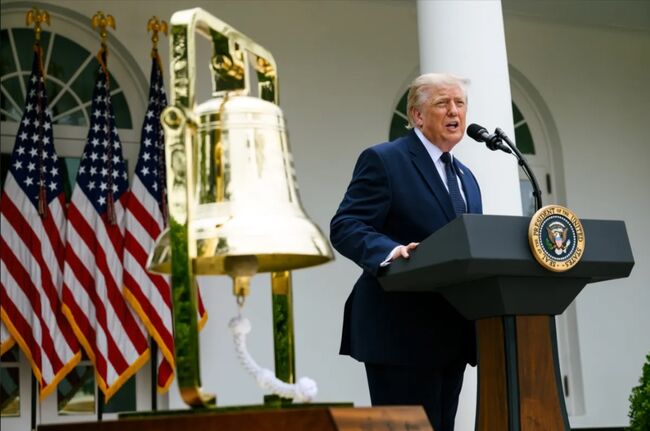 Trump pressures for rate cut again ahead of FOMC... "Should be the lowest in the world"
U.S. President Donald Trump. [Photo = The White House] U.S. President Donald Trump once again pressured the Federal Reserve, the U.S. central bank, to lower interest rates on the 27th (local time
Trump pressures for rate cut again ahead of FOMC... "Should be the lowest in the world"
U.S. President Donald Trump. [Photo = The White House] U.S. President Donald Trump once again pressured the Federal Reserve, the U.S. central bank, to lower interest rates on the 27th (local time
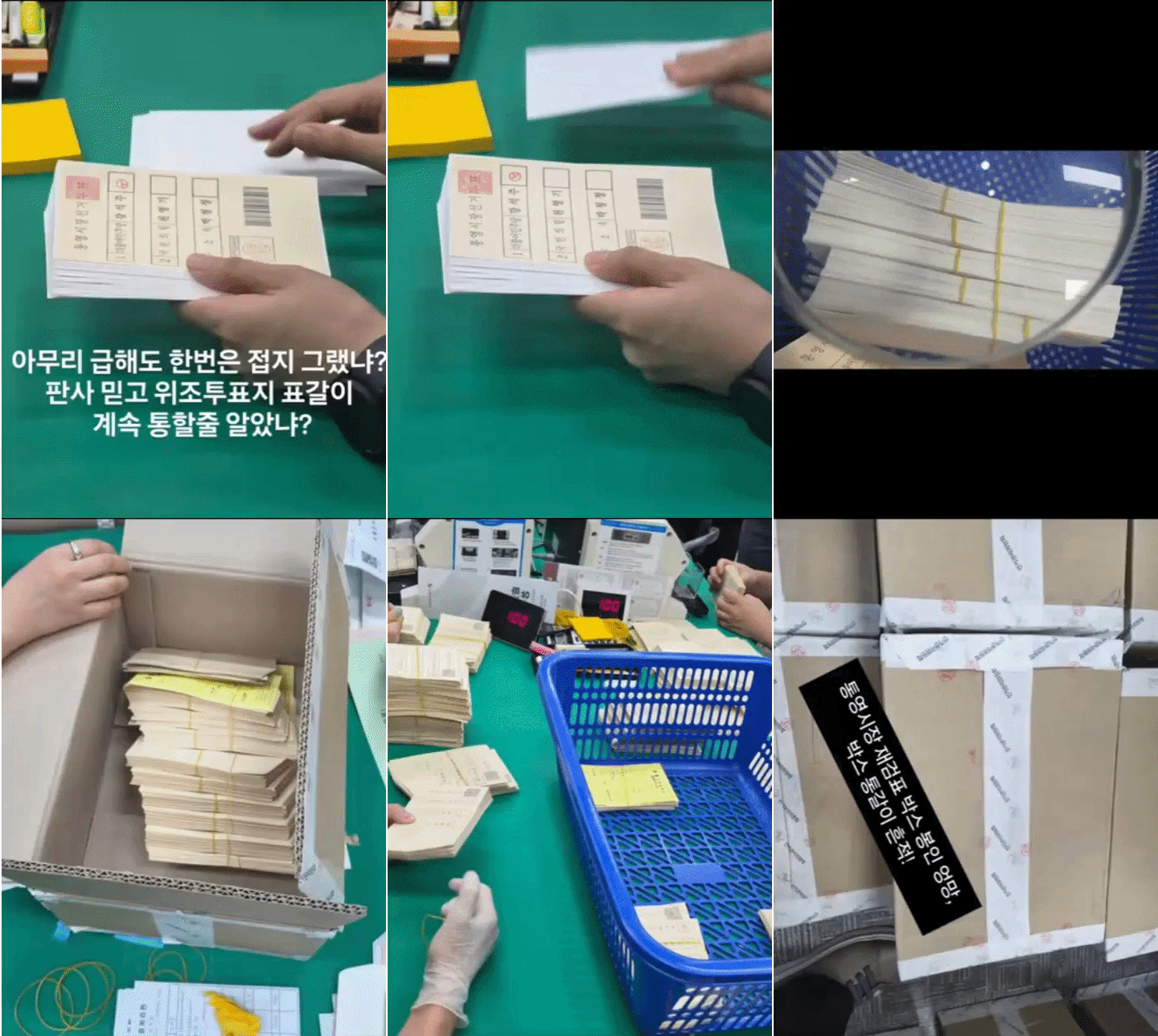 “Ignoring crisp ballots and damaged seals”… Tongyeong mayoral recount concludes with ‘no change in outcome,’ leaving suspicions and public outrage behind
Suspected counterfeit ballots discovered in Tongyeong [GIF from social media of Representative Hwang Kyo-ahn / Attorney Park Joo-hyun]During a recount of the Tongyeong mayoral election in South Gyeong
“Ignoring crisp ballots and damaged seals”… Tongyeong mayoral recount concludes with ‘no change in outcome,’ leaving suspicions and public outrage behind
Suspected counterfeit ballots discovered in Tongyeong [GIF from social media of Representative Hwang Kyo-ahn / Attorney Park Joo-hyun]During a recount of the Tongyeong mayoral election in South Gyeong
 President Yoon, regarding the first-instance ruling on the Public Official Election Act: “An excessive political verdict that distorts the facts… We will appeal immediately.”
The first-instance sentencing hearing for President Yoon Suk Yeol regarding violations of the Public Official Election Act is being broadcast live at Seoul Station on the 27th. [Photo=Yonhap News]Pres
President Yoon, regarding the first-instance ruling on the Public Official Election Act: “An excessive political verdict that distorts the facts… We will appeal immediately.”
The first-instance sentencing hearing for President Yoon Suk Yeol regarding violations of the Public Official Election Act is being broadcast live at Seoul Station on the 27th. [Photo=Yonhap News]Pres
 WSJ: "SK Hynix ADR Premium Is a Sign of AI Trading Overheat"
Advertisement for SK Hynix ADR listing in New York's Times Square [Reuters=Yonhap News file photo]The Wall Street Journal (WSJ) has pointed out that the price of SK Hynix’s American Depositary Recei
WSJ: "SK Hynix ADR Premium Is a Sign of AI Trading Overheat"
Advertisement for SK Hynix ADR listing in New York's Times Square [Reuters=Yonhap News file photo]The Wall Street Journal (WSJ) has pointed out that the price of SK Hynix’s American Depositary Recei
 'Godfather of Japanese Mystery Novels' Keigo Higashino Passes Away After Battle with Cancer at 68
Famous Japanese mystery novelist Keigo Higashino [AFP=Yonhap News]It has been belatedly reported that Keigo Higashino, the "godfather of Japanese mystery novels" and author of bestsellers such as "The
'Godfather of Japanese Mystery Novels' Keigo Higashino Passes Away After Battle with Cancer at 68
Famous Japanese mystery novelist Keigo Higashino [AFP=Yonhap News]It has been belatedly reported that Keigo Higashino, the "godfather of Japanese mystery novels" and author of bestsellers such as "The
 [Park Pil-kyu Security Column] To the Ignorant Trying to Clothe a Beast in Sheep's Clothing
Rep. Kim Byung-joo of the Democratic Party of Korea [Photo=Yonhap News]“The Air Force Academy doesn't teach you how to fly a plane!” “The Army, Navy, and Air Force academies are exactly the
[Park Pil-kyu Security Column] To the Ignorant Trying to Clothe a Beast in Sheep's Clothing
Rep. Kim Byung-joo of the Democratic Party of Korea [Photo=Yonhap News]“The Air Force Academy doesn't teach you how to fly a plane!” “The Army, Navy, and Air Force academies are exactly the
 [Issue Diagnosis] Two Effects of the Election Petition Review
 [Photo] Evidence of Election Fraud Flooding U.S. Media… Trump Had 2.7 Million Votes Stolen
 [Video] U.S. Semiquincentennial Air Show... 'Art in the Sky' streaks across New York
 [Editorial Cartoon] A Draconian Law That Undermines Freedom of Expression

 List
List