- Helps resolve 'export tax' controversy...Experts 'doubt' the effectiveness of the chip's own security review
- "U.S. government decides to export H200 considering Huawei's AI platform development"
 Jensen Huang, CEO of Nvidia, speaks with U.S. President Donald Trump about investments in the United States at the White House on April 30 (local time). AFP=Yonhap News
Nvidia chips cleared for export to China are expected to be shipped to China after undergoing security review in the United States.
Nvidia's H200 chips will undergo a special security review in the United States before being exported to China, the U.S. daily Wall Street Journal (WSJ) reported on the 9th (local time), citing government sources.
Since Nvidia's AI chips are almost entirely produced by TSMC in Taiwan, the H200 chips will likely have to be transported from Taiwan to the U.S. and then sent to China after the security review in the U.S.
This complex supply chain is interpreted as a measure taken in consideration of pressure that the export of Nvidia chips to China could harm national security in areas such as the AI hegemony competition between the two countries.
In fact, there are strong concerns about allowing the export of H200 chips to China, with the "Secure and Feasible Export Semiconductor Act" (SAFE Act) being introduced bi-partisanly in the U.S. Senate, which would prohibit the Secretary of Commerce from approving advanced chip exports to China for the next 30 months.
The legal issue of the government receiving 25% of sales if Nvidia chips are exported to China via the U.S. can also be resolved.
There have been arguments that President Donald Trump's plan to have semiconductor companies pay a certain percentage of their exports to China to the U.S. government is unconstitutional, as it imposes taxes on exported products.
However, this issue can be resolved if Nvidia chips are imported into the U.S. from Taiwan first, incurring tariffs or import duties, and then re-exported to China.
However, experts have expressed doubts about whether the security review of the chips themselves will have a practical effect, the WSJ reported.
This is because the core of the security issue is where the chips flow and how they are used.
While the U.S. Congress is concerned that Nvidia's AI chips could aid the Chinese military, Nvidia CEO Jensen Huang maintains that China will not use U.S. chips for its own military due to its own security concerns.
Meanwhile, Bloomberg News reported on the same day, citing sources, that President Trump's approval of H200 chip exports was based on the assessment that the security risk is low because Chinese company Huawei already offers AI systems with similar performance.
It was confirmed that Huawei's AI platform "Cloud Matrix 384," based on its latest "Ascend" chip, has performance comparable to Nvidia's NVL72, which is based on the latest "Blackwell" architecture.
Sources also stated that Huawei's expected ability to produce millions of Ascend chips next year also influenced the decision to allow exports.
President Trump is reportedly concluded that even if H200 is exported to China, the U.S. can maintain an 18-month technology gap, and China will remain dependent on the U.S. technology ecosystem.
However, Bloomberg reported that the Department of Commerce and Nvidia did not respond to requests for comment.
- 관련기사
-
What do you think of this article?

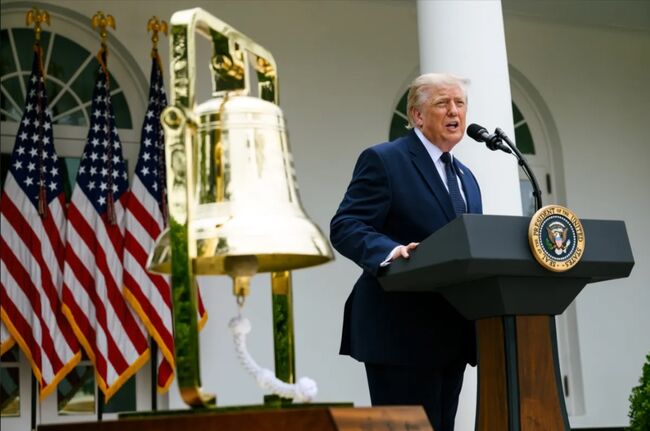 Trump pressures for rate cut again ahead of FOMC... "Should be the lowest in the world"
U.S. President Donald Trump. [Photo = The White House] U.S. President Donald Trump once again pressured the Federal Reserve, the U.S. central bank, to lower interest rates on the 27th (local time
Trump pressures for rate cut again ahead of FOMC... "Should be the lowest in the world"
U.S. President Donald Trump. [Photo = The White House] U.S. President Donald Trump once again pressured the Federal Reserve, the U.S. central bank, to lower interest rates on the 27th (local time
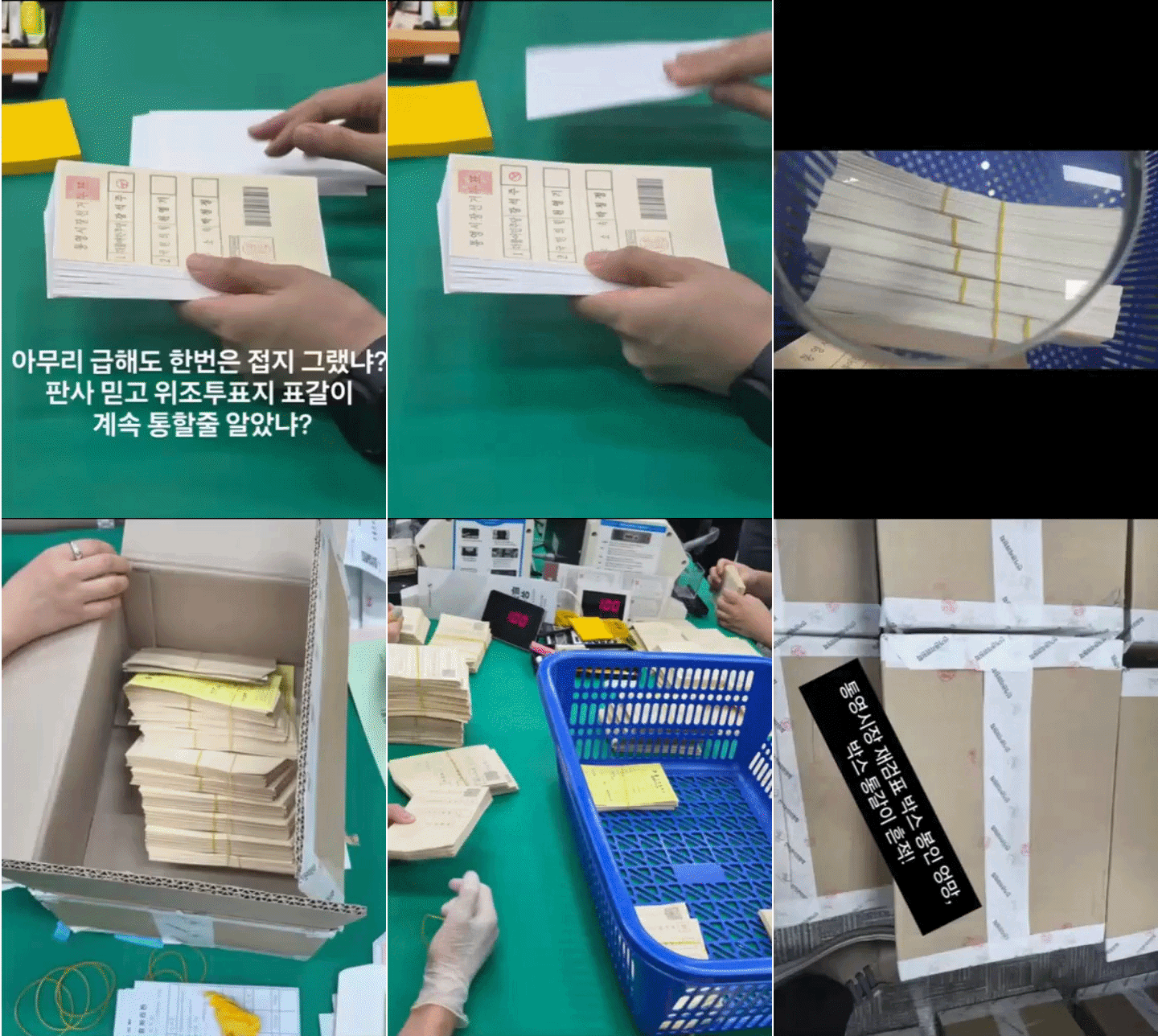 “Ignoring crisp ballots and damaged seals”… Tongyeong mayoral recount concludes with ‘no change in outcome,’ leaving suspicions and public outrage behind
Suspected counterfeit ballots discovered in Tongyeong [GIF from social media of Representative Hwang Kyo-ahn / Attorney Park Joo-hyun]During a recount of the Tongyeong mayoral election in South Gyeong
“Ignoring crisp ballots and damaged seals”… Tongyeong mayoral recount concludes with ‘no change in outcome,’ leaving suspicions and public outrage behind
Suspected counterfeit ballots discovered in Tongyeong [GIF from social media of Representative Hwang Kyo-ahn / Attorney Park Joo-hyun]During a recount of the Tongyeong mayoral election in South Gyeong
 President Yoon, regarding the first-instance ruling on the Public Official Election Act: “An excessive political verdict that distorts the facts… We will appeal immediately.”
The first-instance sentencing hearing for President Yoon Suk Yeol regarding violations of the Public Official Election Act is being broadcast live at Seoul Station on the 27th. [Photo=Yonhap News]Pres
President Yoon, regarding the first-instance ruling on the Public Official Election Act: “An excessive political verdict that distorts the facts… We will appeal immediately.”
The first-instance sentencing hearing for President Yoon Suk Yeol regarding violations of the Public Official Election Act is being broadcast live at Seoul Station on the 27th. [Photo=Yonhap News]Pres
 WSJ: "SK Hynix ADR Premium Is a Sign of AI Trading Overheat"
Advertisement for SK Hynix ADR listing in New York's Times Square [Reuters=Yonhap News file photo]The Wall Street Journal (WSJ) has pointed out that the price of SK Hynix’s American Depositary Recei
WSJ: "SK Hynix ADR Premium Is a Sign of AI Trading Overheat"
Advertisement for SK Hynix ADR listing in New York's Times Square [Reuters=Yonhap News file photo]The Wall Street Journal (WSJ) has pointed out that the price of SK Hynix’s American Depositary Recei
 'Godfather of Japanese Mystery Novels' Keigo Higashino Passes Away After Battle with Cancer at 68
Famous Japanese mystery novelist Keigo Higashino [AFP=Yonhap News]It has been belatedly reported that Keigo Higashino, the "godfather of Japanese mystery novels" and author of bestsellers such as "The
'Godfather of Japanese Mystery Novels' Keigo Higashino Passes Away After Battle with Cancer at 68
Famous Japanese mystery novelist Keigo Higashino [AFP=Yonhap News]It has been belatedly reported that Keigo Higashino, the "godfather of Japanese mystery novels" and author of bestsellers such as "The
 [Park Pil-kyu Security Column] To the Ignorant Trying to Clothe a Beast in Sheep's Clothing
Rep. Kim Byung-joo of the Democratic Party of Korea [Photo=Yonhap News]“The Air Force Academy doesn't teach you how to fly a plane!” “The Army, Navy, and Air Force academies are exactly the
[Park Pil-kyu Security Column] To the Ignorant Trying to Clothe a Beast in Sheep's Clothing
Rep. Kim Byung-joo of the Democratic Party of Korea [Photo=Yonhap News]“The Air Force Academy doesn't teach you how to fly a plane!” “The Army, Navy, and Air Force academies are exactly the
 [Issue Diagnosis] Two Effects of the Election Petition Review
 [Photo] Evidence of Election Fraud Flooding U.S. Media… Trump Had 2.7 Million Votes Stolen
 [Video] U.S. Semiquincentennial Air Show... 'Art in the Sky' streaks across New York
 [Editorial Cartoon] A Draconian Law That Undermines Freedom of Expression

 List
List