 A diorama depicting the event on December 24, 1950, when the Meredith Victory, the last ship of the Hungnam Evacuation, departed carrying 14,000 refugees. It is exhibited at the Geoje POW Camp Historic Park. ⒸHankuk Ilbo
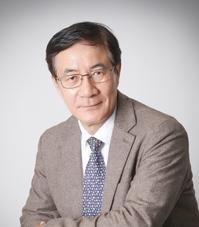 Shin Dong-chun, President of the National Union for Free Unification & Doctorate in Public AdministrationOn the morning of December 11, 2025, a ceremony was held in front of the statue of General MacArthur at Incheon Freedom Park to commemorate the 75th anniversary of the Battle of Chosin Reservoir. Patriotic citizens, elders, and figures from military, diplomatic, and religious circles gathered to reflect on the significance of the Battle of Chosin Reservoir and the Hungnam Evacuation, which defended freedom amidst harsh cold.
Lee Jae-chun, Standing Representative of the Chosin Reservoir Battle Commemoration Committee, emphasized that the Korean War was not a "forgotten war" but a "victorious war" that survived the threat of communism. Jang Kyung-duk, Co-representative, testified that his family history was the history of the Battle of Chosin Reservoir and the Hungnam Evacuation, stating that the sacrifices and contributions of the Korean military must not be forgotten.
The Battle of Chosin Reservoir (Battle of Chosin Reservoir) was a fierce battle between the U.S. and UN forces (approximately 30,000) and the Chinese forces (approximately 120,000) in the Chosin Reservoir region of northern Korea during the Korean War, from November 27 to December 13, 1950.
In the extreme cold of below -30 degrees Celsius, the U.S. forces, despite being overwhelmingly outnumbered, were engaged in a "Miracle of Retreat" as they withdrew, leaving behind the legend of the "Chosin Few." The UN forces suffered approximately 12,000 casualties, including about 4,385 killed or missing and 7,338 frostbite or wounded, while the Chinese forces sustained about 50,000 casualties.
The reason the U.S. forces called this battle the Battle of Chosin Reservoir was that the map used at the time was produced during the Japanese colonial era, and Jangjin (長津) was recorded as "Chosin" in the Japanese pronunciation. Chosin Reservoir is an artificial lake built during the Japanese colonial period by damming a river for hydroelectric power, and the battle was called the Battle of Chosin because the U.S. forces used Japanese maps for their operations.
After the outbreak of the Korean War on June 25, 1950, the UN forces, with the success of the Incheon Landing Operation, pushed the North Korean forces all the way to the Yalu River. Commander MacArthur launched a massive northward advance, vowing to "end the war before Christmas and send the soldiers home."
However, the UN forces, facing encirclement and strong attacks from the Chinese forces, prepared for a withdrawal. During this process, the U.S. 1st Marine Division desperately needed to move from Hagaru-ri to Koto-ri to secure roads and bridges for a safe withdrawal.
The UN forces spent a considerable amount of time repairing bridges destroyed by the Chinese forces or building detours, moving under artillery and mortar fire while securing bridges as quickly as possible.
The Star Over Koto-ri
One of the most touching and famous episodes during the Battle of Chosin Reservoir is the story of the Christmas star that appeared over Koto-ri airfield. The U.S. 1st Marine Division was withdrawing 120 kilometers south from Chosin Reservoir to Hungnam Port.
Koto-ri was located halfway along the only road connecting Chosin Reservoir and Hungnam, but the Chinese forces occupied the high ground around Koto-ri, preventing the Marines, who were transporting over 4,000 wounded soldiers, from moving further. The temperature dropped below -35℃, and the wounded were dying from frostbite and bleeding.
On the night of December 4, an incredibly bright star suddenly appeared in the sky over Koto-ri. The star remained stationary, hovering directly above the Koto-ri airfield. The Marines soon realized that the star was a magnesium flare attached to a large parachute dropped by a U.S. Air Force C-47 transport plane.
The flare illuminated the entire Koto-ri area as if it were daytime. Under the bright light, the U.S. Air Force managed to land eight transport planes consecutively at the Koto-ri airfield (a temporary runway about 800 meters long). From the night of December 4 to the early morning of December 5, a total of 4,689 wounded and frostbite victims were rescued by air transport. The Marines reported, "God has given us a star."
Not a "Retreat," but an "Advance in Another Direction"
Around December 4, 1950, as they were withdrawing to Hungnam Port, reporters asked if they were retreating. Major General Oliver P. Smith of the U.S. 1st Marine Division replied, "Retreat, hell! We’re not retreating, we’re just advancing in another direction."
There are almost no historical records of "retreat" in the U.S. Marine Corps. General Smith appears to have chosen his words carefully to prevent his subordinates from suffering the psychological shock of "defeat."
In Korea, it is widely known as "advancing backward." "Advancing backward" is an actual historical quote from General Oliver Smith, who broke through the Chinese encirclement at Chosin Reservoir and safely evacuated over 100,000 people (including Marines, Army, Korean forces, and civilians) to Hungnam. It remains a symbol of the combat spirit of the U.S. Marine Corps to this day.
At a reception following this year's commemoration ceremony, attendees watched a 1 hour and 50 minute video that included combat and evacuation scenes filmed by war correspondents and testimonies from survivors, witnessing vivid and moving moments of human triumph. (The original English video was translated by writer Min Seon-hong, and Secretary-General Jo Hyeong-gon provided subtitles and narration.)
Student Soldier Interpreter Lee Jong-yeon
Lee Jong-yeon was a U.S. Marine Corps interpreter and a student at Korea University during the Korean War, and he directly participated in the Battle of Chosin Reservoir. He endured frostbite on his toes and was at risk of amputation, but he moved while clinging to a U.S. military truck, breaking through Chinese ambushes.
He left behind testimony saying, "I buried my friends' bodies in the snow and, while dodging bullets, shouted 'Go! Go!' in English." After the war, he received a medal from the U.S. military. He moved to the United States and published his autobiography, "Old Chosin," in 2010, which became a bestseller.
The Miracle of Christmas
The U.S. X Corps (1st Marine Division, U.S. Army 3rd and 7th Divisions, etc.), which escaped from Chosin Reservoir, converged at Hungnam Port in South Hamgyong Province. The U.S. military undertook not only the withdrawal of military units but also the rescue of a large number of civilians. Approximately 100,000 military personnel and civilians were transported aboard 193 U.S. transport and landing ships.
The most famous scene is the departure of the last ship, the Meredith Victory, on December 24, 1950, carrying 14,000 refugees. A cargo ship designed for 12 people (60 including crew) is called the "Miracle Voyage" for carrying 14,000 people.
Five babies were born on board after departure, and they were named Kimchi 1, 2, 3, 4, and 5, respectively. Dr. Jang Kyung-duk, Co-representative of the Chosin Reservoir Battle Commemoration Committee, is also a beneficiary of this miracle and grace.
As the evacuation operation neared its end, at the recommendation of Dr. Hyun Bong-hak, his classmate from Severance Medical School, his father, who was practicing medicine in South Hamgyong Province at the time, boarded an LSD with his mother as the ship's doctor. Dr. Jang was a fetus in his mother's womb, about five months along, and safely arrived in Busan and was born. He is currently active as a patriotic physician.
The civilians rescued in this operation were mostly from North and South Hamgyong and Pyongan provinces. Fearing reprisal if they remained under communist rule, they risked their lives to follow. Ko Young-joo, President of the Liberal Democratic Party, who visited the site, reported that the miracle ship Meredith is currently preserved in the port of San Diego, USA.
He shared his recent experience of visiting the 1st Marine Division in San Diego during his trip to the United States. He was deeply moved when the division commander, fully equipped, stated, "If war breaks out in Korea, we will be the first to intervene," emphasizing that the will to defend the ROK-U.S. alliance and freedom is still alive.
The Hungnam refugees, particularly those with industrial backgrounds, played a crucial role in South Korea's early industrialization in sectors such as steel, chemicals, and fertilizers. It is known that approximately one million descendants of Hungnam refugees are alive today.
The evacuation, which began in the "valley of cold and death" at Chosin Reservoir, culminated in the "Miracle of Christmas," saving 100,000 lives at Hungnam Port.
"Be Brave, Geum Soon-ah"
"Through the howling blizzard and the cold Hungnam dock, I called out and searched. Geum Soon-ah, where did you go, lost and wandering? With tears of blood, I came alone after the First and Second World Wars..."
The popular song "Be Brave, Geum Soon-ah," sung by Hyun In, was a hit. Released in 1953, this trot song captures the pain of displaced people who were separated from their families and lovers during the Hungnam Evacuation.
A War That Never Truly Ended
The reason why the U.S. Marine Corps, as well as the Army, Veterans Association, and Ministry of National Defense, refer to the Korean War as "The Unfinished War" or "The Forgotten War that Never Really Ended" is threefold: first, the armistice agreement regime continues to this day; second, U.S. troops remain on combat alert; and third, the expression "unfinished war" continues to be used officially and unofficially within the U.S. military.
On November 7, 1950, General MacArthur presented five proposals to the Truman administration for the early annihilation of the Chinese forces, reminding attendees of this fact.
This strategy, which could have ended the war within a month by striking key Chinese bases, imposing a maritime and economic blockade, and allowing Chiang Kai-shek's forces to advance on the mainland, was opposed by key figures within the U.S. government at the time, and consequently, MacArthur's proposal was not accepted, according to Pastor Seong Jung-kyung.
Events of Remembrance and Commemoration
The American organization "The Chosin Few" holds large-scale reunions and commemoration events annually to preserve the memory of the battle, foster camaraderie, and pass on its legacy to future generations. They also hold wreath-laying ceremonies to honor fallen comrades at significant sites like the Korean War Memorial and dedicated the "Chosin Few" Battle Memorial at the National Museum of the Marine Corps. Through their efforts, 4,000 survivors received compensation for frostbite aftereffects in 1997.
The Chosin Reservoir Battle Commemoration Committee, a civilian organization in South Korea, has held annual commemoration ceremonies since the 70th anniversary event on December 11, 2020 (the day the battle ended) at Incheon Freedom Park.
They shed light on the sacrifices made amidst the harsh cold of the Battle of Chosin Reservoir each year by collecting interviews with surviving veterans and distributing educational materials on the war. They also convey the lessons of war through lectures for young people.
The 2020 commemoration event was simultaneously broadcast to the United States, and Seong Sang-hoon, Planning Committee Chairman, reported receiving feedback that members of the U.S. Congress, the Department of State, the Department of Defense, and intelligence agencies had watched the video.
Historical Significance of the Battle of Chosin Reservoir and the Hungnam Evacuation
The Battle of Chosin Reservoir is known as one of the three major winter battles in the world, alongside the Battle of Stalingrad and the Battle of Moscow during World War II, and it holds a very important place in military history for enduring extreme cold and enemy attacks simultaneously.
At this commemoration ceremony, former Assemblyman Lee Dong-bok stated, "Great battles in history are remembered not by the number of troops but by their spirit and meaning," citing the Battle of Thermopylae where the Spartans fought the Persian army with only 300 men, and the first battle of Jinju Fortress during the Imjin War. He emphasized that the Battle of Chosin Reservoir is a modern revival of this tradition.
The Battle of Chosin Reservoir also has great military significance. Despite the large-scale offensive by the Chinese forces, the UN forces broke through the encirclement and successfully executed an organized withdrawal, shattering the Chinese army's "invincible myth" in the early stages of the war. It is recorded as the most glorious battle in the history of the U.S. Marine Corps.
Furthermore, the "Hungnam Evacuation" was the largest civilian rescue operation during the Korean War. It is remembered not simply as a military operation but as one of the starting points of modern Korean history and a symbol of the ROK-U.S. alliance.
The fact that the U.S. military, even in a critical situation where they were withdrawing their own troops, did not abandon nearly 100,000 Korean civilians and rescued them ultimately established the moral foundation of the ROK-U.S. alliance.
The Battle of Chosin Reservoir and the Hungnam Evacuation revealed both the limitations and strengths of the U.S. military simultaneously, providing a crucial opportunity for the United States to strengthen its defense capabilities and expand its alliance system thereafter.
The Battle of Chosin Reservoir and the Hungnam Evacuation will forever remain in the history of South Korea as symbols of noble sacrifice made to protect "freedom and human dignity."
President of the National Union for Free Unification & Doctorate in Public Administration

 Iranian Foreign Ministry: "Continuing Message Exchanges with the U.S. and Activities of Mediating Countries"
Esmaeil Baghaei, Spokesperson for the Iranian Ministry of Foreign Affairs [Xinhua, Yonhap News file photo]Esmaeil Baghaei, spokesperson for the Iranian Ministry of Foreign Affairs, stated on the 26th
Iranian Foreign Ministry: "Continuing Message Exchanges with the U.S. and Activities of Mediating Countries"
Esmaeil Baghaei, Spokesperson for the Iranian Ministry of Foreign Affairs [Xinhua, Yonhap News file photo]Esmaeil Baghaei, spokesperson for the Iranian Ministry of Foreign Affairs, stated on the 26th
 President Yoon: "Do You Think You Are Safe from the Special Counsel?"... Final Statement Video Released
President Yoon Suk Yeol rebuking the special prosecutor on the 24th. [Court video / @birds_justice X account subtitle GIF] A video of President Yoon Suk Yeol's closing statement at his trial rega
President Yoon: "Do You Think You Are Safe from the Special Counsel?"... Final Statement Video Released
President Yoon Suk Yeol rebuking the special prosecutor on the 24th. [Court video / @birds_justice X account subtitle GIF] A video of President Yoon Suk Yeol's closing statement at his trial rega
 President Yoon, regarding the first-instance ruling on the Public Official Election Act: “An excessive political verdict that distorts the facts… We will appeal immediately.”
The first-instance sentencing hearing for President Yoon Suk Yeol regarding violations of the Public Official Election Act is being broadcast live at Seoul Station on the 27th. [Photo=Yonhap News]Pres
President Yoon, regarding the first-instance ruling on the Public Official Election Act: “An excessive political verdict that distorts the facts… We will appeal immediately.”
The first-instance sentencing hearing for President Yoon Suk Yeol regarding violations of the Public Official Election Act is being broadcast live at Seoul Station on the 27th. [Photo=Yonhap News]Pres
 WSJ: "SK Hynix ADR Premium Is a Sign of AI Trading Overheat"
Advertisement for SK Hynix ADR listing in New York's Times Square [Reuters=Yonhap News file photo]The Wall Street Journal (WSJ) has pointed out that the price of SK Hynix’s American Depositary Recei
WSJ: "SK Hynix ADR Premium Is a Sign of AI Trading Overheat"
Advertisement for SK Hynix ADR listing in New York's Times Square [Reuters=Yonhap News file photo]The Wall Street Journal (WSJ) has pointed out that the price of SK Hynix’s American Depositary Recei
 'Godfather of Japanese Mystery Novels' Keigo Higashino Passes Away After Battle with Cancer at 68
Famous Japanese mystery novelist Keigo Higashino [AFP=Yonhap News]It has been belatedly reported that Keigo Higashino, the "godfather of Japanese mystery novels" and author of bestsellers such as "The
'Godfather of Japanese Mystery Novels' Keigo Higashino Passes Away After Battle with Cancer at 68
Famous Japanese mystery novelist Keigo Higashino [AFP=Yonhap News]It has been belatedly reported that Keigo Higashino, the "godfather of Japanese mystery novels" and author of bestsellers such as "The
 [Park Pil-kyu Security Column] To the Ignorant Trying to Clothe a Beast in Sheep's Clothing
Rep. Kim Byung-joo of the Democratic Party of Korea [Photo=Yonhap News]“The Air Force Academy doesn't teach you how to fly a plane!” “The Army, Navy, and Air Force academies are exactly the
[Park Pil-kyu Security Column] To the Ignorant Trying to Clothe a Beast in Sheep's Clothing
Rep. Kim Byung-joo of the Democratic Party of Korea [Photo=Yonhap News]“The Air Force Academy doesn't teach you how to fly a plane!” “The Army, Navy, and Air Force academies are exactly the
 [Issue Diagnosis] Two Effects of the Election Petition Review
 [Photo] Evidence of Election Fraud Flooding U.S. Media… Trump Had 2.7 Million Votes Stolen
 [Video] U.S. Semiquincentennial Air Show... 'Art in the Sky' streaks across New York
 [Editorial Cartoon] A Draconian Law That Undermines Freedom of Expression

 List
List










