 Hanwha Q CELLS' Dalton, Georgia plant in the United States. Yonhap News
Hanwha Q CELLS, which manufactures solar modules in the U.S. using imported raw materials, has filed a lawsuit against the Trump administration to reclaim tariffs.
This is the first confirmed instance of a Korean company filing a tariff refund lawsuit.
According to the U.S. Court of International Trade (USCIT) on the 21st (local time), Hanwha Q CELLS' U.S. subsidiary filed a lawsuit against Customs and Border Protection (CBP) on the 18th, requesting that the tariffs imposed by President Trump under the International Emergency Economic Powers Act (IEEPA) be invalidated.
Hanwha Q CELLS also requested the court to issue a preliminary injunction to prevent CBP from imposing further tariffs and to order a full refund of tariffs already paid by the company.
The amount of tariffs to be refunded was not disclosed.
Various tariffs imposed by President Trump under IEEPA have previously been ruled unlawful by lower courts, and the case is currently under review by the Supreme Court.
Following doubts expressed by a majority of Supreme Court justices regarding the administration's logic in a hearing on November 5th, there have been observations that a ruling on the unlawfulness of the tariffs is highly probable.
Subsequently, numerous companies in the U.S., Japan, and other countries, which had previously hesitated to file lawsuits due to concerns about the Trump administration's stance, have filed tariff refund lawsuits. Hanwha Q CELLS is reportedly the first Korean company to do so.
A review of the lawsuits filed with the USCIT by Yonhap News as of this date revealed no other Korean companies apart from Hanwha Q CELLS.
Hanwha Q CELLS argued in its complaint that even if the IEEPA tariffs are invalidated by the Supreme Court, there is no guarantee that importers, including Hanwha Q CELLS, will receive a refund. Therefore, legal relief through this lawsuit is necessary.
The company also stated that a USCIT order is necessary to preserve its right to a refund, as the CBP, which collects the tariffs, finalizes the tariff settlement, making it irreversible.
Under U.S. import regulations, importers pay an estimated tariff based on their tariff declaration. Subsequently, CBP reviews the declaration and determines the final tariff amount, a process known as liquidation.
Regulations stipulate that liquidation should occur within one year, but CBP typically performs it 314 days after customs clearance. The plaintiff claims that after final liquidation, it may become impossible to receive a tariff refund.
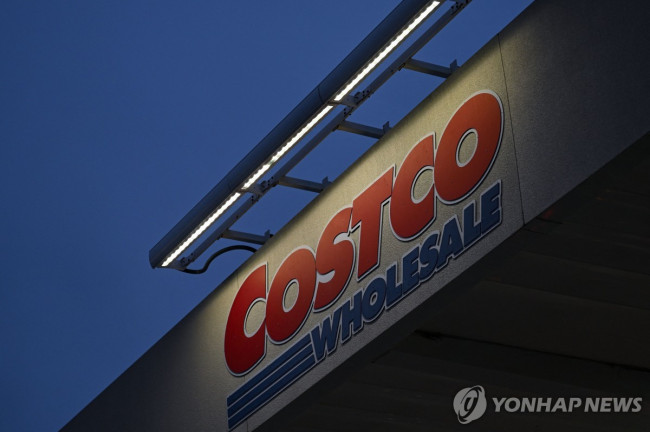 U.S. retailer Costco. AFP Yonhap News
Tariff refund lawsuits gained attention when U.S. retail giant Costco filed one last month.
Costco's lawsuit was based on the same grounds as Hanwha Q CELLS'. However, on the 15th, the USCIT dismissed Costco's preliminary injunction request, stating that the company failed to prove irreparable harm.
The USCIT explained that the Trump administration had stated it would not oppose a reassessment of tariffs if the Supreme Court ruled them unlawful, meaning the plaintiff could receive a refund without filing this lawsuit.
Given the substantial similarity in the lawsuits, it appears likely that the court will also dismiss Hanwha Q CELLS' preliminary injunction request.
Hanwha Q CELLS manufactures solar modules in the United States by importing polysilicon.
According to a statement submitted by Hanwha Q CELLS to the U.S. Department of Commerce in August, the company procures all of its polysilicon for its U.S. plant from Malaysia.
Furthermore, solar cells made from Malaysian polysilicon are imported into the U.S. from South Korea and Malaysia and then manufactured into solar modules.
On April 2nd, President Trump declared a national emergency, citing the U.S.'s chronic, large-scale trade deficit as a major threat to national security and the economy, and announced the imposition of "reciprocal tariffs" on various countries based on IEEPA.
At the time, South Korea was subject to a 25% IEEPA tariff. However, South Korea later reduced this tariff to 15% in exchange for a commitment to invest $350 billion in the U.S.
Malaysia's initial tariff was 25%, but it was subsequently reduced to 19% through negotiations.

 Iranian Foreign Ministry: "Continuing Message Exchanges with the U.S. and Activities of Mediating Countries"
Esmaeil Baghaei, Spokesperson for the Iranian Ministry of Foreign Affairs [Xinhua, Yonhap News file photo]Esmaeil Baghaei, spokesperson for the Iranian Ministry of Foreign Affairs, stated on the 26th
Iranian Foreign Ministry: "Continuing Message Exchanges with the U.S. and Activities of Mediating Countries"
Esmaeil Baghaei, Spokesperson for the Iranian Ministry of Foreign Affairs [Xinhua, Yonhap News file photo]Esmaeil Baghaei, spokesperson for the Iranian Ministry of Foreign Affairs, stated on the 26th
 President Yoon: "Do You Think You Are Safe from the Special Counsel?"... Final Statement Video Released
President Yoon Suk Yeol rebuking the special prosecutor on the 24th. [Court video / @birds_justice X account subtitle GIF] A video of President Yoon Suk Yeol's closing statement at his trial rega
President Yoon: "Do You Think You Are Safe from the Special Counsel?"... Final Statement Video Released
President Yoon Suk Yeol rebuking the special prosecutor on the 24th. [Court video / @birds_justice X account subtitle GIF] A video of President Yoon Suk Yeol's closing statement at his trial rega
 President Yoon, regarding the first-instance ruling on the Public Official Election Act: “An excessive political verdict that distorts the facts… We will appeal immediately.”
The first-instance sentencing hearing for President Yoon Suk Yeol regarding violations of the Public Official Election Act is being broadcast live at Seoul Station on the 27th. [Photo=Yonhap News]Pres
President Yoon, regarding the first-instance ruling on the Public Official Election Act: “An excessive political verdict that distorts the facts… We will appeal immediately.”
The first-instance sentencing hearing for President Yoon Suk Yeol regarding violations of the Public Official Election Act is being broadcast live at Seoul Station on the 27th. [Photo=Yonhap News]Pres
 WSJ: "SK Hynix ADR Premium Is a Sign of AI Trading Overheat"
Advertisement for SK Hynix ADR listing in New York's Times Square [Reuters=Yonhap News file photo]The Wall Street Journal (WSJ) has pointed out that the price of SK Hynix’s American Depositary Recei
WSJ: "SK Hynix ADR Premium Is a Sign of AI Trading Overheat"
Advertisement for SK Hynix ADR listing in New York's Times Square [Reuters=Yonhap News file photo]The Wall Street Journal (WSJ) has pointed out that the price of SK Hynix’s American Depositary Recei
 'Godfather of Japanese Mystery Novels' Keigo Higashino Passes Away After Battle with Cancer at 68
Famous Japanese mystery novelist Keigo Higashino [AFP=Yonhap News]It has been belatedly reported that Keigo Higashino, the "godfather of Japanese mystery novels" and author of bestsellers such as "The
'Godfather of Japanese Mystery Novels' Keigo Higashino Passes Away After Battle with Cancer at 68
Famous Japanese mystery novelist Keigo Higashino [AFP=Yonhap News]It has been belatedly reported that Keigo Higashino, the "godfather of Japanese mystery novels" and author of bestsellers such as "The
 [Park Pil-kyu Security Column] To the Ignorant Trying to Clothe a Beast in Sheep's Clothing
Rep. Kim Byung-joo of the Democratic Party of Korea [Photo=Yonhap News]“The Air Force Academy doesn't teach you how to fly a plane!” “The Army, Navy, and Air Force academies are exactly the
[Park Pil-kyu Security Column] To the Ignorant Trying to Clothe a Beast in Sheep's Clothing
Rep. Kim Byung-joo of the Democratic Party of Korea [Photo=Yonhap News]“The Air Force Academy doesn't teach you how to fly a plane!” “The Army, Navy, and Air Force academies are exactly the
 [Issue Diagnosis] Two Effects of the Election Petition Review
 [Photo] Evidence of Election Fraud Flooding U.S. Media… Trump Had 2.7 Million Votes Stolen
 [Video] U.S. Semiquincentennial Air Show... 'Art in the Sky' streaks across New York
 [Editorial Cartoon] A Draconian Law That Undermines Freedom of Expression

 List
List









