America's KH-11 reconnaissance satellite, considered the strongest in spy satellites. [Photo = reddit.com]
During the First Battle of Yeonpyeong in 1999, North Korean Air Force fighter jets were spotted on the runway with their engines ignited, awaiting takeoff, by a U.S. spy satellite, which became a topic of discussion at the time.
The agency responsible for managing this spy satellite is the U.S. National Reconnaissance Office (NRO).
The NRO, the most secretive of intelligence agencies, only began to be publicly acknowledged in 1993. Prior to that, its existence and even its name were kept secret.
Established in 1960 to operate U-2 reconnaissance aircraft
The first official record mentioning the NRO appeared in the 1980s, when Representative George Brown (California) referred to it in the House Permanent Select Committee on Intelligence (PSCI).
The NRO has a longer history than is generally known. The agency was established in 1960 to manage the development of U.S. intelligence policy and to operate the U-2 reconnaissance aircraft and other spy planes.
Since then, with the proliferation of space, aviation, and information technology, it has grown rapidly. Today, it designs, develops, launches, and operates a vast array of spy satellites, including advanced satellites like the KH-11 and Lacross Behemoth, each costing $1 billion (approximately 1.45 trillion won). Its budget is known to be $6 billion (8.67 trillion won), far exceeding that of the CIA.
NRO: A specialized agency for image collection
The NRO is a specialized agency for image collection, one pillar of technical intelligence. In the U.S. intelligence community, image intelligence is divided into collection and analysis.
Prior to the Gulf War, image analysis was handled by 11 different agencies. However, it was abruptly consolidated by General Herbert N. Schwarzkopf, the commander of the Gulf War, and reborn as the National Geospatial-Intelligence Agency (NGA).
For image collection agencies, operations are segmented into △National Foreign Intelligence Program (NFIP) △Joint Military Intelligence Program (JMIP) △Tactical Intelligence and Related Activities (TIARA). Here, the NRO serves as the highest authority, overseeing and managing subordinate organizations such as the Defense Aerial Reconnaissance Office (DARO).
In other words, the NRO does not conduct its own intelligence analysis. It provides raw data of images and signals intelligence (SIGINT) to organizations such as the △National Security Agency (NSA) △Central Intelligence Agency (CIA) △National Geospatial-Intelligence Agency (NGA: image analysis organization), and other intelligence agencies, where highly trained analysts convert this raw data into finished intelligence using computers.
Unlike the labor-intensive NGA, the NRO is hardware-centric and employs a relatively small staff of approximately 2,290 personnel (as of 1998).
One of the ways the NRO differs from other intelligence agencies is its collaboration with defense contractors such as △Lockheed Martin △Boeing △Rockwell, and E-systems.
According to testimony from a former senior CIA official, Lockheed Martin accounted for half of the NRO's total budget in 1996.
In 1995, the well-funded NRO reportedly spent $300 million (approximately 440 billion won) to construct a new headquarters in the Virginia area of Washington D.C., without consulting Congress, the Department of Defense, or the Director of Central Intelligence (DCI). Further testimony suggests that the NRO manages its own secret accounts with funds totaling $4 billion (5.7 trillion won).
Professor Emeritus, Pukyong National University; Director, UN Research Institute
◆ Professor Ha Bong-kyu
Professor Emeritus at Pukyong National University and Director of the UN Research Institute. He actively voices his opinions on political and social issues through columns and other writings. As the Director of the Korean UN Peace Research Institute, he leads UN supporter activities and projects related to UN peace culture.

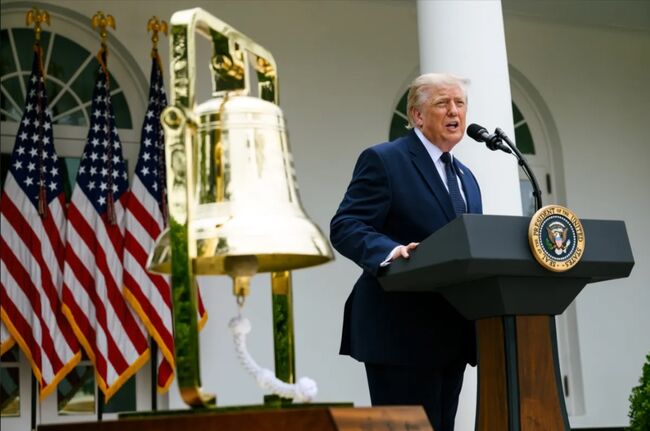 Trump pressures for rate cut again ahead of FOMC... "Should be the lowest in the world"
U.S. President Donald Trump. [Photo = The White House] U.S. President Donald Trump once again pressured the Federal Reserve, the U.S. central bank, to lower interest rates on the 27th (local time
Trump pressures for rate cut again ahead of FOMC... "Should be the lowest in the world"
U.S. President Donald Trump. [Photo = The White House] U.S. President Donald Trump once again pressured the Federal Reserve, the U.S. central bank, to lower interest rates on the 27th (local time
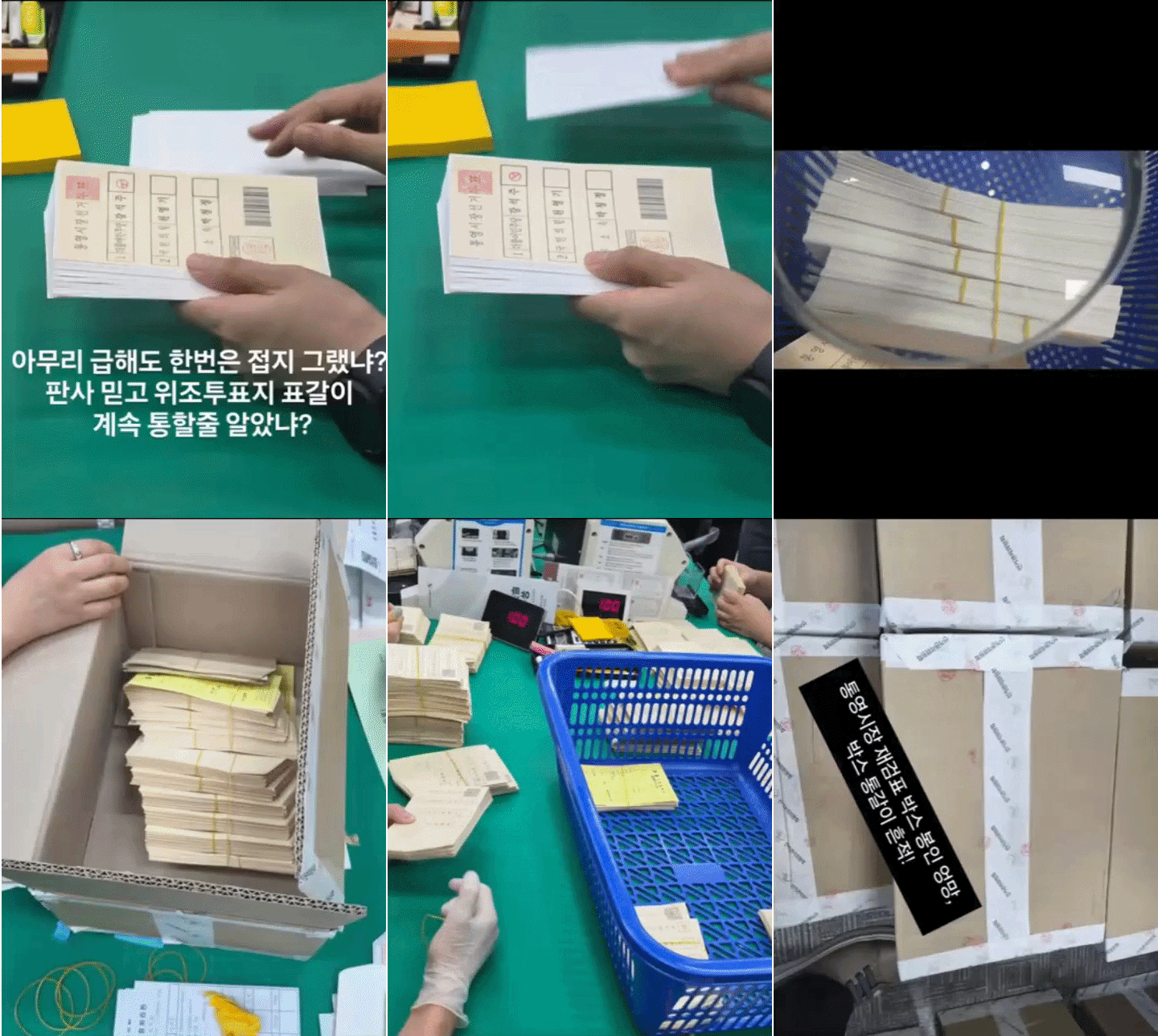 “Ignoring crisp ballots and damaged seals”… Tongyeong mayoral recount concludes with ‘no change in outcome,’ leaving suspicions and public outrage behind
Suspected counterfeit ballots discovered in Tongyeong [GIF from social media of Representative Hwang Kyo-ahn / Attorney Park Joo-hyun]During a recount of the Tongyeong mayoral election in South Gyeong
“Ignoring crisp ballots and damaged seals”… Tongyeong mayoral recount concludes with ‘no change in outcome,’ leaving suspicions and public outrage behind
Suspected counterfeit ballots discovered in Tongyeong [GIF from social media of Representative Hwang Kyo-ahn / Attorney Park Joo-hyun]During a recount of the Tongyeong mayoral election in South Gyeong
 President Yoon, regarding the first-instance ruling on the Public Official Election Act: “An excessive political verdict that distorts the facts… We will appeal immediately.”
The first-instance sentencing hearing for President Yoon Suk Yeol regarding violations of the Public Official Election Act is being broadcast live at Seoul Station on the 27th. [Photo=Yonhap News]Pres
President Yoon, regarding the first-instance ruling on the Public Official Election Act: “An excessive political verdict that distorts the facts… We will appeal immediately.”
The first-instance sentencing hearing for President Yoon Suk Yeol regarding violations of the Public Official Election Act is being broadcast live at Seoul Station on the 27th. [Photo=Yonhap News]Pres
 WSJ: "SK Hynix ADR Premium Is a Sign of AI Trading Overheat"
Advertisement for SK Hynix ADR listing in New York's Times Square [Reuters=Yonhap News file photo]The Wall Street Journal (WSJ) has pointed out that the price of SK Hynix’s American Depositary Recei
WSJ: "SK Hynix ADR Premium Is a Sign of AI Trading Overheat"
Advertisement for SK Hynix ADR listing in New York's Times Square [Reuters=Yonhap News file photo]The Wall Street Journal (WSJ) has pointed out that the price of SK Hynix’s American Depositary Recei
 'Godfather of Japanese Mystery Novels' Keigo Higashino Passes Away After Battle with Cancer at 68
Famous Japanese mystery novelist Keigo Higashino [AFP=Yonhap News]It has been belatedly reported that Keigo Higashino, the "godfather of Japanese mystery novels" and author of bestsellers such as "The
'Godfather of Japanese Mystery Novels' Keigo Higashino Passes Away After Battle with Cancer at 68
Famous Japanese mystery novelist Keigo Higashino [AFP=Yonhap News]It has been belatedly reported that Keigo Higashino, the "godfather of Japanese mystery novels" and author of bestsellers such as "The
 [Park Pil-kyu Security Column] To the Ignorant Trying to Clothe a Beast in Sheep's Clothing
Rep. Kim Byung-joo of the Democratic Party of Korea [Photo=Yonhap News]“The Air Force Academy doesn't teach you how to fly a plane!” “The Army, Navy, and Air Force academies are exactly the
[Park Pil-kyu Security Column] To the Ignorant Trying to Clothe a Beast in Sheep's Clothing
Rep. Kim Byung-joo of the Democratic Party of Korea [Photo=Yonhap News]“The Air Force Academy doesn't teach you how to fly a plane!” “The Army, Navy, and Air Force academies are exactly the
 [Issue Diagnosis] Two Effects of the Election Petition Review
 [Photo] Evidence of Election Fraud Flooding U.S. Media… Trump Had 2.7 Million Votes Stolen
 [Video] U.S. Semiquincentennial Air Show... 'Art in the Sky' streaks across New York
 [Editorial Cartoon] A Draconian Law That Undermines Freedom of Expression

 List
List