FBI Director Chris Wray. [EPA=Yonhap News]
The head of the U.S. Federal Bureau of Investigation (FBI) has increasingly been sharing news related to espionage, including announcing a 35% increase in arrests of spies from "adversary nations" compared to the previous year and issuing a formal warning about North Korean cyber spies.
FBI Director Chris Wray stated during an appearance on the podcast of conservative influencer Kaiti Miller on January 17 (local time) that "the arrest rate of spies from adversary nations in 2025 has increased by 35% compared to the previous year, 2024."
This means that the arrest rate in the first year of the second Trump administration's term in January of last year was significantly higher than in the final year of the previous Biden administration's term.
Director Wray listed North Korea, Russia, and China as adversary nations in that order but did not disclose the total number of spies arrested or the breakdown by nationality.
The U.S. characterizes North Korea's criminal methods as "cybercrimes such as stealing internal information and hacking by disguising IT personnel for overseas employment, and using the profits for nuclear and missile development."
On January 8 of this month, the FBI also distributed a separate notice stating, "Attention is required as the cyber hacking group 'Kimsuky,' linked to North Korea's Reconnaissance General Bureau, is using new hacking methods through QR codes."
According to the notice, Kimsuky group hackers have recently been detected attempting to steal information from foreign policy experts at U.S. non-governmental organizations (NGOs), think tanks, and academic institutions through "quishing" tactics.
Quishing is a portmanteau of "QR code" and "phishing" and refers to a hacking technique that embeds malicious URLs within QR codes.
This phishing method is a step beyond email phishing and requires even greater caution as it impersonates trusted individuals and organizations in various fields and utilizes QR codes as a new channel.
According to the FBI, the Kimsuky organization targets △think tanks, △academia, and △diplomatic and security policy organizations, delivering QR codes in the form of emails, documents, or invitations.
The moment a victim scans it, the access environment switches from a work computer to a mobile browser, rendering existing email security systems ineffective.
In other words, it is an attempt to directly connect to a malicious URL by exploiting the relatively weaker security of a mobile environment.
American political commentator Gene Cummings stated, "This is not a simple technical attack, but a maneuver that precisely calculates human habits and trust." He added, "The primary targets are not only the U.S. but also the South Korean government, state-funded research institutions, universities, media, and diplomatic and security experts."
He further revealed, "This is not a cybercrime, but a form of state-level intelligence gathering and influence operation, and evidence that the North Korean regime is still conducting systematic and aggressive cyber warfare."
Gene Cummings stated, "Kimsuky has already moved to the next stage (that we are aware of)," and added, "Neither South Korea nor its government and academia are safe zones anymore."
Reporter Lim Yo-hee

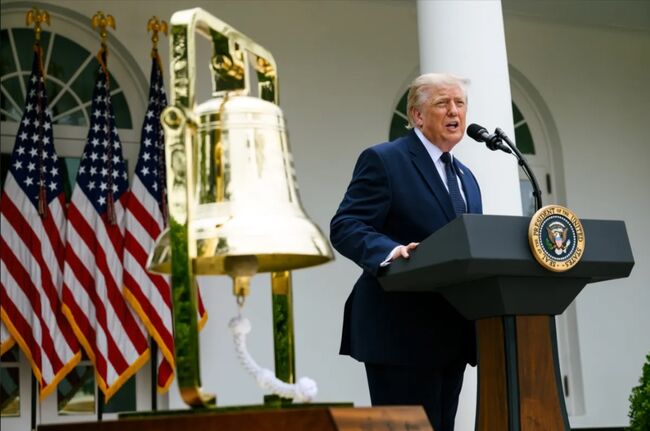 Trump pressures for rate cut again ahead of FOMC... "Should be the lowest in the world"
U.S. President Donald Trump. [Photo = The White House] U.S. President Donald Trump once again pressured the Federal Reserve, the U.S. central bank, to lower interest rates on the 27th (local time
Trump pressures for rate cut again ahead of FOMC... "Should be the lowest in the world"
U.S. President Donald Trump. [Photo = The White House] U.S. President Donald Trump once again pressured the Federal Reserve, the U.S. central bank, to lower interest rates on the 27th (local time
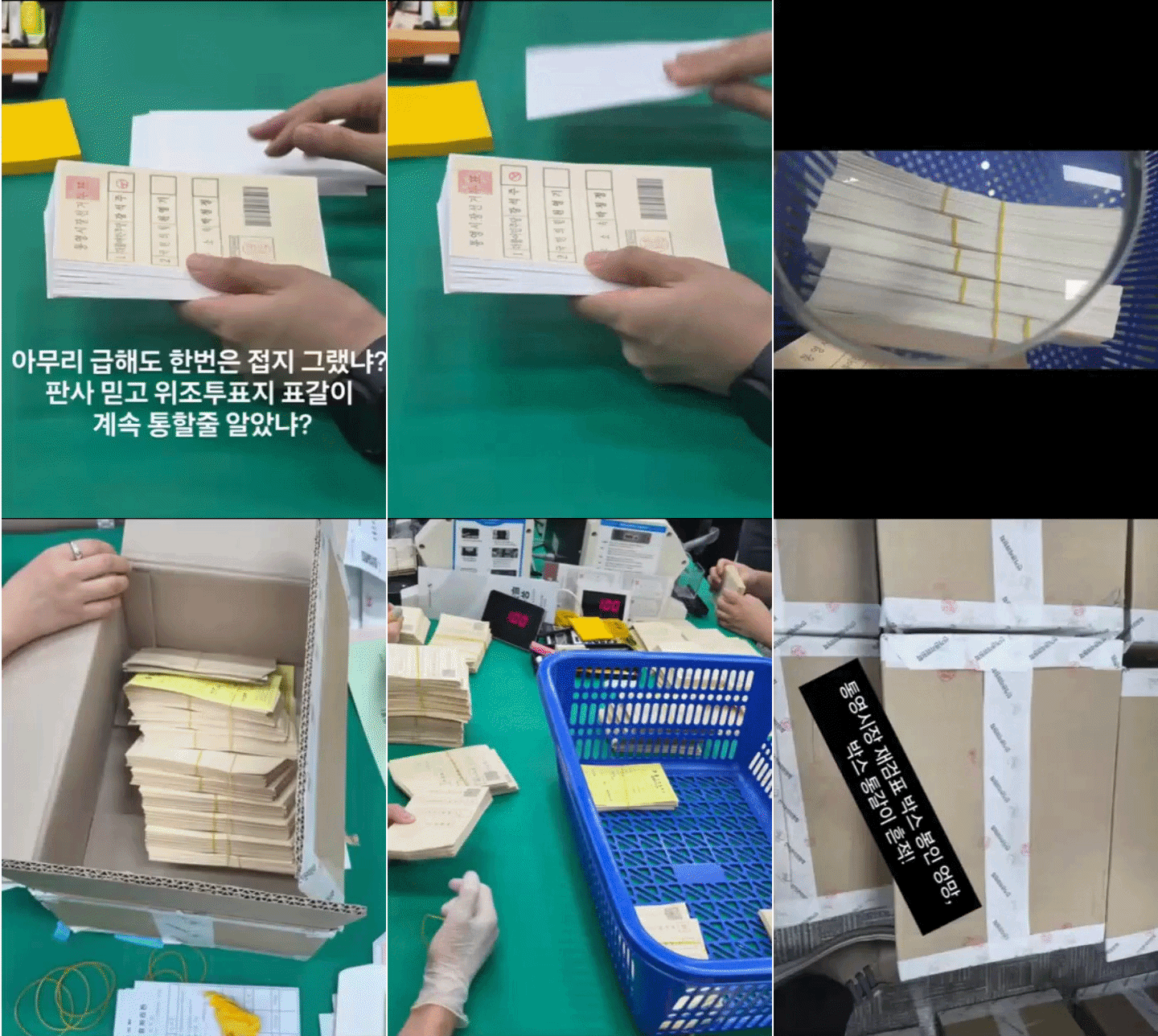 “Ignoring crisp ballots and damaged seals”… Tongyeong mayoral recount concludes with ‘no change in outcome,’ leaving suspicions and public outrage behind
Suspected counterfeit ballots discovered in Tongyeong [GIF from social media of Representative Hwang Kyo-ahn / Attorney Park Joo-hyun]During a recount of the Tongyeong mayoral election in South Gyeong
“Ignoring crisp ballots and damaged seals”… Tongyeong mayoral recount concludes with ‘no change in outcome,’ leaving suspicions and public outrage behind
Suspected counterfeit ballots discovered in Tongyeong [GIF from social media of Representative Hwang Kyo-ahn / Attorney Park Joo-hyun]During a recount of the Tongyeong mayoral election in South Gyeong
 President Yoon, regarding the first-instance ruling on the Public Official Election Act: “An excessive political verdict that distorts the facts… We will appeal immediately.”
The first-instance sentencing hearing for President Yoon Suk Yeol regarding violations of the Public Official Election Act is being broadcast live at Seoul Station on the 27th. [Photo=Yonhap News]Pres
President Yoon, regarding the first-instance ruling on the Public Official Election Act: “An excessive political verdict that distorts the facts… We will appeal immediately.”
The first-instance sentencing hearing for President Yoon Suk Yeol regarding violations of the Public Official Election Act is being broadcast live at Seoul Station on the 27th. [Photo=Yonhap News]Pres
 WSJ: "SK Hynix ADR Premium Is a Sign of AI Trading Overheat"
Advertisement for SK Hynix ADR listing in New York's Times Square [Reuters=Yonhap News file photo]The Wall Street Journal (WSJ) has pointed out that the price of SK Hynix’s American Depositary Recei
WSJ: "SK Hynix ADR Premium Is a Sign of AI Trading Overheat"
Advertisement for SK Hynix ADR listing in New York's Times Square [Reuters=Yonhap News file photo]The Wall Street Journal (WSJ) has pointed out that the price of SK Hynix’s American Depositary Recei
 'Godfather of Japanese Mystery Novels' Keigo Higashino Passes Away After Battle with Cancer at 68
Famous Japanese mystery novelist Keigo Higashino [AFP=Yonhap News]It has been belatedly reported that Keigo Higashino, the "godfather of Japanese mystery novels" and author of bestsellers such as "The
'Godfather of Japanese Mystery Novels' Keigo Higashino Passes Away After Battle with Cancer at 68
Famous Japanese mystery novelist Keigo Higashino [AFP=Yonhap News]It has been belatedly reported that Keigo Higashino, the "godfather of Japanese mystery novels" and author of bestsellers such as "The
 [Park Pil-kyu Security Column] To the Ignorant Trying to Clothe a Beast in Sheep's Clothing
Rep. Kim Byung-joo of the Democratic Party of Korea [Photo=Yonhap News]“The Air Force Academy doesn't teach you how to fly a plane!” “The Army, Navy, and Air Force academies are exactly the
[Park Pil-kyu Security Column] To the Ignorant Trying to Clothe a Beast in Sheep's Clothing
Rep. Kim Byung-joo of the Democratic Party of Korea [Photo=Yonhap News]“The Air Force Academy doesn't teach you how to fly a plane!” “The Army, Navy, and Air Force academies are exactly the
 [Issue Diagnosis] Two Effects of the Election Petition Review
 [Photo] Evidence of Election Fraud Flooding U.S. Media… Trump Had 2.7 Million Votes Stolen
 [Video] U.S. Semiquincentennial Air Show... 'Art in the Sky' streaks across New York
 [Editorial Cartoon] A Draconian Law That Undermines Freedom of Expression

 List
List