지금 필요한 것은 보여주기식 선언이 아니라 냉정한 현실 인식과 힘의 균형을 고려한 전략적 판단이다. 안보와 외교는 정치적 수사가 아니라 국가 생존의 문제이며, 그 무게를 직시할 때만 대한민국은 흔들리지 않는다. 민심과 군심은 굴욕적인 9·19 군사합의 복원보다 현 안보 지도부 전면 교체를 촉구한다.
 The Ministry of Unification stated on the 13th that compared to her past remarks, Kim Yo Jong, Deputy Director of the Workers' Party of Korea Central Committee, has lowered her rhetoric, saying things like "we will see the appearance of numerous flying objects released by civilian organizations," and assessed that "there is room for easing tensions and communication between the South and the North." [Photo=Korean Central Television, Yonhap News]
The military and diplomatic environment surrounding the Korean Peninsula is rapidly changing. The government's humiliating response to North Korean official Kim Yo Jong's remarks on drones, the discussion on restoring the reversible September 19th Military Agreement, and the sudden proposal for 'South Korea-China-Japan communication' may seem like issues from different fields, but a common structural problem underlies them. This is the lack of strategic sense in the security leadership and the phenomenon where populist politics weakens the effectiveness of security and diplomacy.
North Korea heightened tensions by shifting the responsibility for drone infiltrations to us. It is also pointed out that the security leadership lacked strategic judgment considering provocation patterns, responding to North Korea's aggressive claims with defensive explanations.
North Korea has violated our airspace more than ten times since 2014 without ever apologizing. This time, immediately after North Korea raised the issue, our government hastily issued explanations and ordered investigations, appearing to be dragged along by North Korea. In particular, even the Ministry of National Defense failed to demonstrate strategic deterrence and exposed military secrets with the remark, "It is not one of our military's aircraft models," disappointing the public by prioritizing politics over military measures.
Restoring the September 19th Military Agreement is a Humiliating Choice
National Security Advisor Cho Tae-yong's mention of restoring the September 19th Military Agreement also revealed a lack of strategic sense. While the government claims to be pursuing de-escalation and resuming dialogue, examining both the full restoration and phased restoration of the September 19th Military Agreement, North Korea has already rendered the military agreement ineffective by effectively making the area along the Military Demarcation Line its border, returning artillery, reconnaissance, and drone activities to pre-agreement levels.
In such a situation, South Korea accepting military restrictions first is a humiliating choice that ignores reality. Despite the anticipated negative consequences of restoring the September 19th Military Agreement, such as weakened surveillance and reconnaissance capabilities, reduced deterrence against provocations, and acceleration of North Korea's fait accompli strategy, the government is unable to implement strategic responses, focusing instead on political peace messages.
Restoring the military agreement is only meaningful when the condition of North Korea's change is met. However, North Korea has never faithfully implemented the agreement; rather, it has used the agreement for its strategic interests. If we appear to accept restrictions first, North Korea will perceive this as a weakness and attempt greater pressure. Ultimately, the discussion on restoring the September 19th Military Agreement disregards the military principle of "an eye for an eye" and prioritizes political symbolism, representing another submission and surrender born out of a lack of strategic sense.
Proposal for 'South Korea-China-Japan Communication'... A Case Revealing Lack of Strategic Sense
The proposal for 'South Korea-China-Japan communication' also demonstrated a lack of strategic sense. President Lee Jae-myung's proposal at the summit with Japan to restore a framework for Northeast Asian cooperation could be an expression of new diplomatic will. However, following the South Korea-China meeting, where the tone was reminiscent of a Chinese spokesperson, proposing 'South Korea-China-Japan communication' is no different from appearing to be firmly caught by China.
China is strengthening its power-based diplomacy and concentrating on countering the United States, while Japan maintains a strategy of prioritizing South Korea-US-Japan security cooperation to counter China. Although South Korea aims for balanced diplomacy, in an environment where the US-China hegemonic competition is intensifying, leaning towards China narrows the scope of self-choice and destiny.
With the Middle East fracturing due to the Iran situation, and both China and North Korea facing difficulties, proposing a political message of 'South Korea-China-Japan communication' at a time when 'South Korea-US-Japan cooperation' is more crucial than ever is merely a discourse that leaves only declarations and lacks practical momentum. There is even a risk of providing an excuse to realize the unseen 'FAFO (Fuck Around and Find Out)' and leading to security collapse, which is inwardly unsettling.
What is Needed is Strategic Judgment, Not Showy Declarations
Diplomacy values conditions over will, and cooperation prioritizes interests over declarations. However, the government is proposing only a framework of "rebellious cooperation" without sufficiently considering these structural constraints. This approach appears to prioritize political symbols of peace over a sober analysis of diplomatic realities and is another instance of a lack of strategic sense threatening national survival.
Ultimately, the humiliating response to Kim Yo Jong's drone remarks, the discussions on restoring the September 19th Military Agreement, and the proposal for 'South Korea-China-Japan communication' all demonstrate the problems that arise when political messages precede the security of power. Security and diplomacy are not driven by will or declarations alone. They require a sober analysis of the opponent's strategy, the interests of neighboring countries, and military dynamics, and the formulation of appropriate practical responses.
However, the recent series of responses is difficult to escape criticism for increasing international political debt due to a lack of strategic thinking and for merely spewing symbolic rhetoric that the other party finds immediately pleasing, moving from place to place without strategic consistency.
The absence of strategic sense in the security leadership and populist politics focused on garnering popularity ultimately endanger national survival and leave only the outcome of ceding initiative to the enemy.
What is needed now is not showy declarations but sober recognition of reality and strategic judgment that considers the balance of power. Security and diplomacy are not political rhetoric but matters of national survival, and only by facing their gravity can the Republic of Korea remain unwavering. Public and military sentiment calls for a complete change of the current security leadership rather than a humiliating restoration of the September 19th Military Agreement.
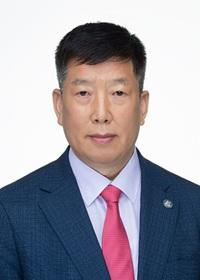
◆ Park Pil-gyu, Editorial Writer
Editorial Writer, Hankook Ilbo
40th graduating class, Korea Military Academy

 Iranian Foreign Ministry: "Continuing Message Exchanges with the U.S. and Activities of Mediating Countries"
Esmaeil Baghaei, Spokesperson for the Iranian Ministry of Foreign Affairs [Xinhua, Yonhap News file photo]Esmaeil Baghaei, spokesperson for the Iranian Ministry of Foreign Affairs, stated on the 26th
Iranian Foreign Ministry: "Continuing Message Exchanges with the U.S. and Activities of Mediating Countries"
Esmaeil Baghaei, Spokesperson for the Iranian Ministry of Foreign Affairs [Xinhua, Yonhap News file photo]Esmaeil Baghaei, spokesperson for the Iranian Ministry of Foreign Affairs, stated on the 26th
 President Yoon: "Do You Think You Are Safe from the Special Counsel?"... Final Statement Video Released
President Yoon Suk Yeol rebuking the special prosecutor on the 24th. [Court video / @birds_justice X account subtitle GIF] A video of President Yoon Suk Yeol's closing statement at his trial rega
President Yoon: "Do You Think You Are Safe from the Special Counsel?"... Final Statement Video Released
President Yoon Suk Yeol rebuking the special prosecutor on the 24th. [Court video / @birds_justice X account subtitle GIF] A video of President Yoon Suk Yeol's closing statement at his trial rega
 President Yoon, regarding the first-instance ruling on the Public Official Election Act: “An excessive political verdict that distorts the facts… We will appeal immediately.”
The first-instance sentencing hearing for President Yoon Suk Yeol regarding violations of the Public Official Election Act is being broadcast live at Seoul Station on the 27th. [Photo=Yonhap News]Pres
President Yoon, regarding the first-instance ruling on the Public Official Election Act: “An excessive political verdict that distorts the facts… We will appeal immediately.”
The first-instance sentencing hearing for President Yoon Suk Yeol regarding violations of the Public Official Election Act is being broadcast live at Seoul Station on the 27th. [Photo=Yonhap News]Pres
 WSJ: "SK Hynix ADR Premium Is a Sign of AI Trading Overheat"
Advertisement for SK Hynix ADR listing in New York's Times Square [Reuters=Yonhap News file photo]The Wall Street Journal (WSJ) has pointed out that the price of SK Hynix’s American Depositary Recei
WSJ: "SK Hynix ADR Premium Is a Sign of AI Trading Overheat"
Advertisement for SK Hynix ADR listing in New York's Times Square [Reuters=Yonhap News file photo]The Wall Street Journal (WSJ) has pointed out that the price of SK Hynix’s American Depositary Recei
 'Godfather of Japanese Mystery Novels' Keigo Higashino Passes Away After Battle with Cancer at 68
Famous Japanese mystery novelist Keigo Higashino [AFP=Yonhap News]It has been belatedly reported that Keigo Higashino, the "godfather of Japanese mystery novels" and author of bestsellers such as "The
'Godfather of Japanese Mystery Novels' Keigo Higashino Passes Away After Battle with Cancer at 68
Famous Japanese mystery novelist Keigo Higashino [AFP=Yonhap News]It has been belatedly reported that Keigo Higashino, the "godfather of Japanese mystery novels" and author of bestsellers such as "The
 [Park Pil-kyu Security Column] To the Ignorant Trying to Clothe a Beast in Sheep's Clothing
Rep. Kim Byung-joo of the Democratic Party of Korea [Photo=Yonhap News]“The Air Force Academy doesn't teach you how to fly a plane!” “The Army, Navy, and Air Force academies are exactly the
[Park Pil-kyu Security Column] To the Ignorant Trying to Clothe a Beast in Sheep's Clothing
Rep. Kim Byung-joo of the Democratic Party of Korea [Photo=Yonhap News]“The Air Force Academy doesn't teach you how to fly a plane!” “The Army, Navy, and Air Force academies are exactly the
 [Issue Diagnosis] Two Effects of the Election Petition Review
 [Photo] Evidence of Election Fraud Flooding U.S. Media… Trump Had 2.7 Million Votes Stolen
 [Video] U.S. Semiquincentennial Air Show... 'Art in the Sky' streaks across New York
 [Editorial Cartoon] A Draconian Law That Undermines Freedom of Expression

 List
List









