정부의 계획에 따르면 2030년까지 산업 부문 이산화탄소 배출량을 2018년 대비 40% 감축하게 될 것이며, 수소·풍력·태양광 같은 아직 검증되지 않은 기술에 국가의 운명을 걸게 된다. 이는 합리적인 전환이 아니라 국가 생존을 위태롭게 하는 무모한 녹색 미덕 과시일 뿐이다.
 The Lee Jae-myung government is risking the nation's destiny on unproven technologies such as hydrogen, wind, and solar power.
Despite precedents in the UK and Germany where carbon-neutral policies have led to economic collapse, economically powerful Korea is turning a blind eye, declaring war on coal and liquefied natural gas (LNG) in its aggressive push to reduce greenhouse gas emissions.
Lee Jae-myung Administration's Abandonment of Key Energy Sources... National Self-Harm
The newly inaugurated Lee Jae-myung administration is abandoning key energy sources that have not only powered its economy but also underpinned global industrial civilization alongside oil. This move is akin to national self-harm.
According to government plans, the share of LNG and coal in power generation will be drastically reduced from the current 60% to 20% by 2038, while the proportion of so-called renewable energies like wind and solar power is set to increase from the current 9% to 33%.
Until November 2025, the situation was relatively sensible. The Korean government expanded investment in regional LNG projects, increased strategic oil reserves, and directed energy conglomerates like SK Innovation and Korea Gas Corporation (KOGAS) to secure natural gas from Indonesia and Australia.
However, the government has since replaced this strategy with irrational targets. According to the government's plan, industrial sector carbon emissions will be reduced by 40% by 2030 compared to 2018, risking the nation's destiny on unproven technologies like hydrogen, wind, and solar power. This is not a rational transition but a reckless display of green virtue that jeopardizes national survival.
Replacing LNG with Hydrogen... A Dangerous Illusion of Falling into a 'Hydrogen Graveyard'
The most dangerous part of the government's new plan is the idea of replacing LNG with hydrogen. The plan to meet 7% of electricity needs with hydrogen and fuel cells is nothing but an illusion. The failed case studies, dubbed 'Hydrogen Graveyards' and published in 2025, attest to this.
Australia's $14 billion Central Queensland Hydrogen Project, a flagship project aimed at exports, collapsed this year after government support was withdrawn.
The UK multinational BP (British Petroleum) withdrew from Australia's 26-gigawatt (GW) renewable energy hub in the Pilbara region. Fortescue, a major cheerleader for green hydrogen in Australia, has also abandoned its project in Arizona, USA, and domestic projects.
In Germany, the LEAG (Lausitz Energie Bergbau AG) project, promoted as Europe's largest green energy hub, has been indefinitely postponed. ArcelorMittal's green steel plant in Bremen has also been halted despite offers of billions of euros in subsidies.
Foolish Environmental Policies... Will Lead to Job Losses and Factory Closures
If Korea pursues its new policies, the cost of this foolishness will manifest as job losses and factory closures. Over 30% of Korea's Gross Domestic Product (GDP) comes from the industrial sector, nearly double that of the UK.
Continuous and stable power is essential for the production of steel, petrochemicals, and semiconductors. Wind and solar power, which rely on weather conditions, cannot provide this.
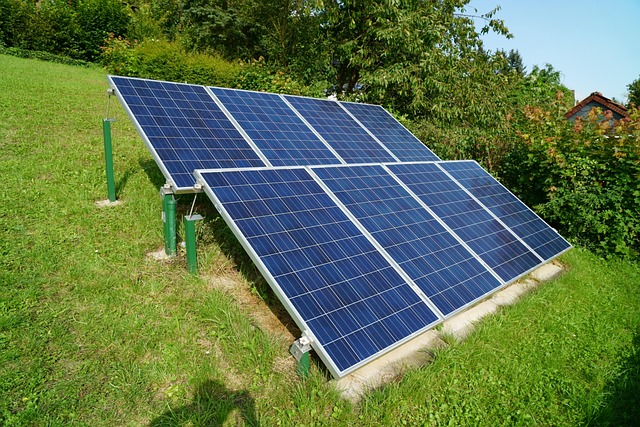 The Lee Jae-myung government is risking the nation's destiny on unproven technologies such as hydrogen, wind, and solar power.
If green energy is introduced into the power grid, industries will have to bear the additional cost of backup power sources or, worse, scale back operations. We have already seen the outcome of this charade in Europe.
Germany, dubbed a green model nation, is facing a crisis of de-industrialization, with its industrial base collapsing at a rate of 4.5% as of 2024, coinciding with a multi-year trend of economic decline.
In the same year, industrial energy consumption in the UK decreased by 1.2% compared to 2023, reaching what the government described as "the lowest level of industrial consumption in 50 years."
The Bank of England has warned that "carbon-neutral policies are slowing down the global economy." The World Bank forecasts that the 2020s will be the decade with the lowest global growth rate since records began in the 1960s.
Whether this decline is intentional or a result of incompetence, the effects are predictable. Under a renewable energy-centric Korean power grid, large-scale materials industries such as POSCO's steel mills and Lotte's petrochemical plants, which compete on a low-margin, high-volume basis, could be the first to be sacrificed.
The approval of the Shinul 3 reactor and progress on small modular reactors (SMRs) are positive signs. Nuclear power is the only non-fossil fuel energy source that can provide the energy density and reliability required by the industrial economy.
However, let's face reality. It is impossible to bring nuclear power plants online fast enough to fill the enormous void created by the government's drastic reduction in fossil fuel use.
It is not too late. A change of direction is still possible. Korea achieved the 'Miracle on the Han River' by disregarding ideological trends and focusing on ruthless economic efficiency.
Now, the question the new administration must answer is: "Will they govern for the people, or will they cede sovereignty to international pseudo-scientific ideological groups that benefit neither workers nor manufacturers?" And they must realize that their new policies will not even benefit the 'Earth' they claim to be saving.
This column was first published on January 21, 2026, in the California Globe (www.californiaglobe.com) and was translated and revised in collaboration with the author by Park Seok-soon, Professor Emeritus at Ewha Womans University and a member of the CO2 Coalition.
Professor Park Seok-soon is currently serving as the Korean Ambassador for the Global Center for Climate Solutions (Clintel), Chairman of the Free Environment Forum, and operates the YouTube channel "Park Seok-soon's Environment TV."

◆ Vijay Jayaraj, Research Fellow at the CO2 Coalition
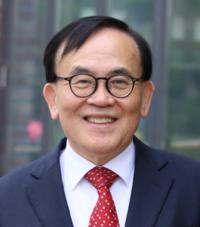
◆ Professor Emeritus Park Seok-soon, Ewha Womans University, Former Director of the National Institute of Environmental Research
Professor Park Seok-soon is currently serving as the Korean Ambassador for Clintel (Global Center for Climate Solutions), Chairman of the Free Environment Forum, and operates the YouTube channel "Park Seok-soon's Environment TV."

 Iranian Foreign Ministry: "Continuing Message Exchanges with the U.S. and Activities of Mediating Countries"
Esmaeil Baghaei, Spokesperson for the Iranian Ministry of Foreign Affairs [Xinhua, Yonhap News file photo]Esmaeil Baghaei, spokesperson for the Iranian Ministry of Foreign Affairs, stated on the 26th
Iranian Foreign Ministry: "Continuing Message Exchanges with the U.S. and Activities of Mediating Countries"
Esmaeil Baghaei, Spokesperson for the Iranian Ministry of Foreign Affairs [Xinhua, Yonhap News file photo]Esmaeil Baghaei, spokesperson for the Iranian Ministry of Foreign Affairs, stated on the 26th
 President Yoon: "Do You Think You Are Safe from the Special Counsel?"... Final Statement Video Released
President Yoon Suk Yeol rebuking the special prosecutor on the 24th. [Court video / @birds_justice X account subtitle GIF] A video of President Yoon Suk Yeol's closing statement at his trial rega
President Yoon: "Do You Think You Are Safe from the Special Counsel?"... Final Statement Video Released
President Yoon Suk Yeol rebuking the special prosecutor on the 24th. [Court video / @birds_justice X account subtitle GIF] A video of President Yoon Suk Yeol's closing statement at his trial rega
 President Yoon, regarding the first-instance ruling on the Public Official Election Act: “An excessive political verdict that distorts the facts… We will appeal immediately.”
The first-instance sentencing hearing for President Yoon Suk Yeol regarding violations of the Public Official Election Act is being broadcast live at Seoul Station on the 27th. [Photo=Yonhap News]Pres
President Yoon, regarding the first-instance ruling on the Public Official Election Act: “An excessive political verdict that distorts the facts… We will appeal immediately.”
The first-instance sentencing hearing for President Yoon Suk Yeol regarding violations of the Public Official Election Act is being broadcast live at Seoul Station on the 27th. [Photo=Yonhap News]Pres
 WSJ: "SK Hynix ADR Premium Is a Sign of AI Trading Overheat"
Advertisement for SK Hynix ADR listing in New York's Times Square [Reuters=Yonhap News file photo]The Wall Street Journal (WSJ) has pointed out that the price of SK Hynix’s American Depositary Recei
WSJ: "SK Hynix ADR Premium Is a Sign of AI Trading Overheat"
Advertisement for SK Hynix ADR listing in New York's Times Square [Reuters=Yonhap News file photo]The Wall Street Journal (WSJ) has pointed out that the price of SK Hynix’s American Depositary Recei
 'Godfather of Japanese Mystery Novels' Keigo Higashino Passes Away After Battle with Cancer at 68
Famous Japanese mystery novelist Keigo Higashino [AFP=Yonhap News]It has been belatedly reported that Keigo Higashino, the "godfather of Japanese mystery novels" and author of bestsellers such as "The
'Godfather of Japanese Mystery Novels' Keigo Higashino Passes Away After Battle with Cancer at 68
Famous Japanese mystery novelist Keigo Higashino [AFP=Yonhap News]It has been belatedly reported that Keigo Higashino, the "godfather of Japanese mystery novels" and author of bestsellers such as "The
 [Park Pil-kyu Security Column] To the Ignorant Trying to Clothe a Beast in Sheep's Clothing
Rep. Kim Byung-joo of the Democratic Party of Korea [Photo=Yonhap News]“The Air Force Academy doesn't teach you how to fly a plane!” “The Army, Navy, and Air Force academies are exactly the
[Park Pil-kyu Security Column] To the Ignorant Trying to Clothe a Beast in Sheep's Clothing
Rep. Kim Byung-joo of the Democratic Party of Korea [Photo=Yonhap News]“The Air Force Academy doesn't teach you how to fly a plane!” “The Army, Navy, and Air Force academies are exactly the
 [Issue Diagnosis] Two Effects of the Election Petition Review
 [Photo] Evidence of Election Fraud Flooding U.S. Media… Trump Had 2.7 Million Votes Stolen
 [Video] U.S. Semiquincentennial Air Show... 'Art in the Sky' streaks across New York
 [Editorial Cartoon] A Draconian Law That Undermines Freedom of Expression

 List
List









