 Kim Jong Un, Chairman of the State Affairs Commission, walks between Jang Chang Ha, Director of the National Defense Science Academy (left), and Kim Jong Sik, Deputy Director of the Munitions Industry Department (right). [Korean Central News Agency=Yonhap News]
The movie "Don't Look Up" starkly portrays the ignorance and powerlessness of a society where politicians calculate approval ratings, the media crafts sensational narratives, and citizens ignore reality, even as a giant comet hurtles towards Earth.
The more scientists cry out, "Look up at the sky," the more power suppresses the truth with the slogan, "Don't look." This bizarre scene, while cinematic fiction, bears a striking resemblance to the security reality facing South Korea today.
Speaking uncomfortable truths is labeled as 'inciting anxiety.'
The threats have already arrived before our eyes: North Korea's tactical shifts centered on nuclear weapons, the return of its troops trained in modern warfare from the Russian front, North Korea's cyberattacks on national infrastructure, and information warfare that manipulates and shakes public opinion.
Despite this, an unspoken pressure operates more strongly in South Korean society: "Don't speak uncomfortable security truths." The slogan from the movie, "Don't look up at the sky," is 변주 (varied/transformed) in Korea into accusations that "speaking uncomfortable truths incites anxiety."
Ultimately, the question posed by "Don't Look Up" is not mere satire. It asks, "Do we have the will to face and confront the approaching disaster and calamity?" This question resonates like a warning to the security reality South Korea currently faces.
Just as humanity in the movie descends into division and powerlessness before a comically impending comet, we are squandering time on partisan conflict, factional confrontation, and complacent evasion in the face of security threats.
North Korea's nuclear and missile capabilities have already advanced to the stage of practical deployment, enemy cyberattacks are routine, and the US-China strategic competition has become a structural variable shaking South Korea's diplomacy, economy, and overall security.
The situation is such that it would not be surprising if an incident occurred at any moment. However, South Korean society is letting this enormous change pass by with vague expectations of "someone will solve it someday," much like the crowd in the movie dealing with the approaching comet.
Don't frame the reduction of joint exercises as 'peace.'
The scene in the movie where the president delays even responding to the comically impending comet due to political calculations is not unfamiliar in Korea.
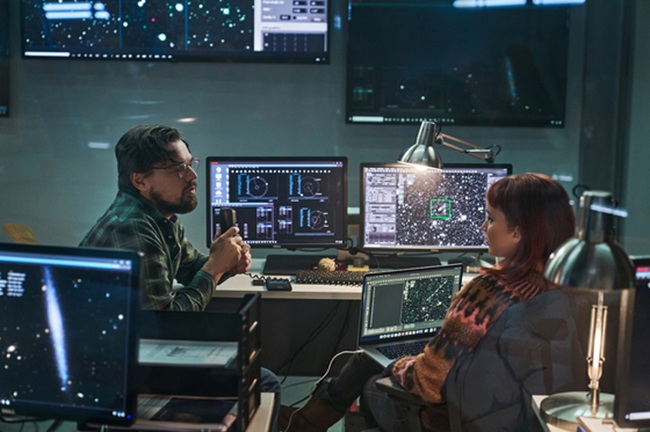 The movie 'Don't Look Up' starkly portrays the ignorance and powerlessness of a society where politicians calculate approval ratings, the media crafts sensational narratives, and citizens ignore reality, even as a giant comet hurtles towards Earth. [Photo=Netflix]
With every North Korean provocation, there emerges a narrative that explains it away by saying, "We made North Korea anxious," while ignoring North Korea's violations and discussing the restoration of the September 19th military agreement, which was essentially a surrender, and only criticizing our defenses.
There is an atmosphere of justifying the weakening of deterrence by framing the reduction of joint exercises as 'peace.' This is structurally similar to the scenes in the movie where power delays crisis management with political calculations.
Even security issues are exploited as 'political assets' and consumed as 'tools for partisan conflict.' Expert warnings are exaggerated or downplayed based on factional logic, and the public responds to factional frames rather than facts. Even North Korea's provocations are consumed as 'responsibility of the previous administration,' blurring the essence of the threat.
South Korean society remains fixated on 'traditional military threats' and is insensitive to new forms of danger. It's no different from the characters in the movie who ignore reality, saying, "The economy is more important right now," or "Let's see after the election," as a comet approaches.
Security threats have already evolved into comprehensive threats. The era of defending a nation solely with military power is over.
The undermining of democratic foundations by dismissing election system controversies as mere conspiracy theories without public disclosure, North Korean-linked cyberattacks targeting KEPCO and public institutions, online public opinion manipulation, and repeated failures in responding to disasters such as malicious fires and large-scale wildfires—all of these are non-military security threats that endanger national survival.
Despite this, the government and political circles are failing to adequately respond to these changes.
The ending of "Don't Look Up" is uncomfortable. Scientists' well-founded warnings are ridiculed, politicians evade responsibility, and citizens are swept away by emotion rather than truth.
Ultimately, humanity faces catastrophe unprepared. This scene is fiction, but it prompts reflection on Korea's security reality. The threat is already upon us, yet our response is delayed. A prime example is the controversy surrounding amendments to the Spyware Control Act.
Despite North Korea's rapid evolution in its methods of South Korean infiltration—including △cyber infiltration △public opinion manipulation △utilization of front organizations—legislative amendments reflecting these changes have been stalled in the National Assembly for years.
North Korea's online espionage activities are becoming more sophisticated.
Partisan conflict over the investigative powers of intelligence agencies, coupled with attempts to silence those who speak uncomfortable truths and debates over 'infringement of freedom of expression,' have repeatedly pushed substantive improvements to the back burner.
Meanwhile, North Korea has further sophisticated its espionage and information-gathering activities through online channels, and we are losing response time in a legal vacuum. The scene in the movie where power delays the comet response for political calculations is replicated in Korea in the form of delays in legislative and institutional reforms.
"Don't Look Up" ultimately states: "Crises always arrive silently, and the moment they are ignored, they become disasters."
If South Korean society succumbs to its familiar security complacency and dismisses crisis warnings, the movie's ending may no longer be fiction. Humanity could have survived if it had faced the crisis without political calculations before the comet collided with Earth. The same applies to Korea.
What Korea needs now is not fear, but the insight to face the crisis, the courage to speak uncomfortable truths, national strategies that transcend short-term political calculations, and the ears of politicians who can listen to those voices.
This is a time that requires the conscience and maturity of politicians who view security not as a tool for partisan conflict but as a matter of national survival; the security awareness of citizens who do not turn away from uncomfortable truths; and the activation of the military's multidimensional intelligence network, the establishment of an 'early warning system,' and a state of perfect real-time readiness.
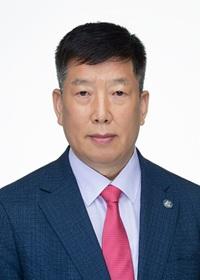
◆ Park Pil-gyu
Editor, The Hankook Ilbo
ROK Army Academy Class of '84 (40th graduating class)

 Iranian Foreign Ministry: "Continuing Message Exchanges with the U.S. and Activities of Mediating Countries"
Esmaeil Baghaei, Spokesperson for the Iranian Ministry of Foreign Affairs [Xinhua, Yonhap News file photo]Esmaeil Baghaei, spokesperson for the Iranian Ministry of Foreign Affairs, stated on the 26th
Iranian Foreign Ministry: "Continuing Message Exchanges with the U.S. and Activities of Mediating Countries"
Esmaeil Baghaei, Spokesperson for the Iranian Ministry of Foreign Affairs [Xinhua, Yonhap News file photo]Esmaeil Baghaei, spokesperson for the Iranian Ministry of Foreign Affairs, stated on the 26th
 President Yoon: "Do You Think You Are Safe from the Special Counsel?"... Final Statement Video Released
President Yoon Suk Yeol rebuking the special prosecutor on the 24th. [Court video / @birds_justice X account subtitle GIF] A video of President Yoon Suk Yeol's closing statement at his trial rega
President Yoon: "Do You Think You Are Safe from the Special Counsel?"... Final Statement Video Released
President Yoon Suk Yeol rebuking the special prosecutor on the 24th. [Court video / @birds_justice X account subtitle GIF] A video of President Yoon Suk Yeol's closing statement at his trial rega
 President Yoon, regarding the first-instance ruling on the Public Official Election Act: “An excessive political verdict that distorts the facts… We will appeal immediately.”
The first-instance sentencing hearing for President Yoon Suk Yeol regarding violations of the Public Official Election Act is being broadcast live at Seoul Station on the 27th. [Photo=Yonhap News]Pres
President Yoon, regarding the first-instance ruling on the Public Official Election Act: “An excessive political verdict that distorts the facts… We will appeal immediately.”
The first-instance sentencing hearing for President Yoon Suk Yeol regarding violations of the Public Official Election Act is being broadcast live at Seoul Station on the 27th. [Photo=Yonhap News]Pres
 WSJ: "SK Hynix ADR Premium Is a Sign of AI Trading Overheat"
Advertisement for SK Hynix ADR listing in New York's Times Square [Reuters=Yonhap News file photo]The Wall Street Journal (WSJ) has pointed out that the price of SK Hynix’s American Depositary Recei
WSJ: "SK Hynix ADR Premium Is a Sign of AI Trading Overheat"
Advertisement for SK Hynix ADR listing in New York's Times Square [Reuters=Yonhap News file photo]The Wall Street Journal (WSJ) has pointed out that the price of SK Hynix’s American Depositary Recei
 'Godfather of Japanese Mystery Novels' Keigo Higashino Passes Away After Battle with Cancer at 68
Famous Japanese mystery novelist Keigo Higashino [AFP=Yonhap News]It has been belatedly reported that Keigo Higashino, the "godfather of Japanese mystery novels" and author of bestsellers such as "The
'Godfather of Japanese Mystery Novels' Keigo Higashino Passes Away After Battle with Cancer at 68
Famous Japanese mystery novelist Keigo Higashino [AFP=Yonhap News]It has been belatedly reported that Keigo Higashino, the "godfather of Japanese mystery novels" and author of bestsellers such as "The
 [Park Pil-kyu Security Column] To the Ignorant Trying to Clothe a Beast in Sheep's Clothing
Rep. Kim Byung-joo of the Democratic Party of Korea [Photo=Yonhap News]“The Air Force Academy doesn't teach you how to fly a plane!” “The Army, Navy, and Air Force academies are exactly the
[Park Pil-kyu Security Column] To the Ignorant Trying to Clothe a Beast in Sheep's Clothing
Rep. Kim Byung-joo of the Democratic Party of Korea [Photo=Yonhap News]“The Air Force Academy doesn't teach you how to fly a plane!” “The Army, Navy, and Air Force academies are exactly the
 [Issue Diagnosis] Two Effects of the Election Petition Review
 [Photo] Evidence of Election Fraud Flooding U.S. Media… Trump Had 2.7 Million Votes Stolen
 [Video] U.S. Semiquincentennial Air Show... 'Art in the Sky' streaks across New York
 [Editorial Cartoon] A Draconian Law That Undermines Freedom of Expression

 List
List









