이 기사는 실제 재판을 대신해 결론을 제시하기 위한 것이 아니라, 같은 사실관계라도 법원이 어떤 법리를 선택하느냐에 따라 판결이 얼마나 달라질 수 있는지를 독자와 함께 살펴보기 위해 구성된 분석 기사입니다. 아래 제시된 세 가지 가상 판결문은 서로 다른 법적 해석의 가능성을 보여주기 위한 것으로, 독자 여러분이 직접 판단의 기준을 고민해 보길 바라는 취지에서 마련됐습니다. <편집자 주>
 President Yoon Suk Yeol, released from Seoul Detention Center following the Seoul Central District Court's decision to revoke his detention order, salutes his supporters on March 8. 2025.3.8. [Photo=Yonhap News]
"What needs to be proven for a 3-hour martial law to constitute rebellion?"
The duration of martial law, whether long or short, is not a direct criterion for establishing rebellion. Under criminal law, rebellion is judged based on its purpose, actions, and level of execution rather than its length. In other words, the key is not how many hours it lasted, but whether it actually shook the constitutional order during that time.
First, the court examines whether the martial law was a mere act of governance or if it had the purpose of subverting the constitutional order. Even if there was a justification of responding to a political crisis, the threshold for judging rebellion is lowered if evidence shows an intent to effectively neutralize the power structure of state institutions.
Second, the exercise of force is crucial. The critical issue is whether coercive measures such as the mobilization of military and police, physical control, and restriction of institutional functions were actually exercised. If it was merely a declaration and state functions were maintained normally, it is difficult to establish rebellion; however, the judgment can change if organized mobilization is confirmed, even for a short period.
Third, the question is whether the action progressed beyond planning to execution. Courts focus on what measures were taken in reality and who acted, rather than mere statements or political attempts. Ultimately, the standard of judgment becomes not the timeline of "3 hours," but how state power was used during that time.
This is why the focus of the trial is divided. The prosecution aims to prove a structure of "rebellion accomplices" by emphasizing prior collusion and awareness of execution, while the defense counters with a "management failure" frame by stressing confusion in the reporting chain and misjudgment of the situation. The question the court must ultimately decide is simple.
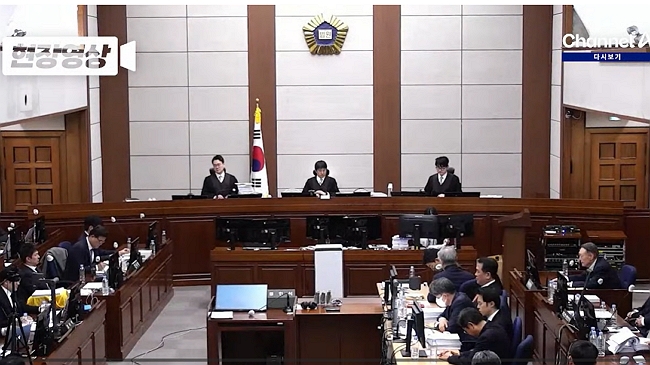 Former President Yoon Suk Yeol delivers his closing statement at the criminal trial for leading a rebellion in Courtroom 417 of the Seoul Central District Court in Seocho-gu, Seoul, on January 13. 2026.1.14 [Photo=Channel A screen capture]
Was it an attempt to shake the constitution, or a failed act of governance?
Whether martial law was long or short is not the essence of this trial. The court's focus is not on the number "3 hours," but on how state power was exercised during that time. Rebellion under criminal law is not established by mere political misjudgment or overreaction.
Given that proof of intent to nullify the constitutional order and actions taken during the execution phase are required, the question of this trial ultimately converges into one.
The prosecution is emphasizing that the martial law was not a simple crisis response but a pre-planned exercise of power. The key points of contention are what reports were made during the declaration of martial law, who took what roles, and how the military and police actually mobilized.
The logic is that if intent to restrict the functions of state institutions or suppress political opposition is confirmed, it can be evaluated as an execution phase of rebellion, even if it was for a short period.
Conversely, the defense argues that martial law was an act of governance within the scope of constitutional authority and that even if confusion occurred as a result, it does not immediately lead to intent to rebel. They argue that inconsistent reporting chains and differing on-site responses suggest it was closer to management failure rather than prior collusion.
Ultimately, the court must judge the effect, not the declaration.
The criteria for judgment will be whether state functions actually ceased the moment martial law was declared, whether the balance of power was disrupted, and whether there was an intent to change the constitutional order in the process. The 3-hour timeline is merely symbolic of the event, not an absolute criterion for determining rebellion.
How to interpret the "force" in a riot
The core of a riot in the context of rebellion is "force," not "chaos."
Here, "force" is not limited to mere physical clashes or violent acts. The court rather focuses on whether there was real power that effectively constrained the free decision-making of the other party, in other words, whether a state was created where state institutions could not function normally.
The existence of a command structure, phased delivery of orders, and division of roles serve as criteria for judging organization. Furthermore, situations such as the deployment of military personnel or control of access to institutions can be evaluated as coercive power, and even without actual clashes, if "unavoidable pressure" was formed, it can be recognized as force.
The key is realistic danger. It is important whether the functions of constitutional institutions such as the National Assembly, judiciary, and executive branch were restricted or if there was an immediate risk of restriction. If it was only a declaration and the state system operated normally, a determination of "insufficient force" is possible, but if organized control is confirmed, it can approach the concept of a riot, even for a short period.
Cases where force is difficult to recognize vs. cases where it can be recognized
Cases where force is difficult to recognize are when state functions did not substantially cease. If the command structure was unclear and each institution acted independently, it is highly likely to be interpreted as a failure of governance or a misjudgment of the situation.
Conversely, if the chain of command was clear and actions targeting specific institutions were actually carried out, the judgment changes. Even without physical clashes, if there was access control or restriction of activities, it can be evaluated as "unavoidable power."
Ultimately, the criterion for judging force is not the presence or absence of violence, but what kind of pressure state power actually created. The court judges not the length of martial law, but how effectively it operated with real force during that time.
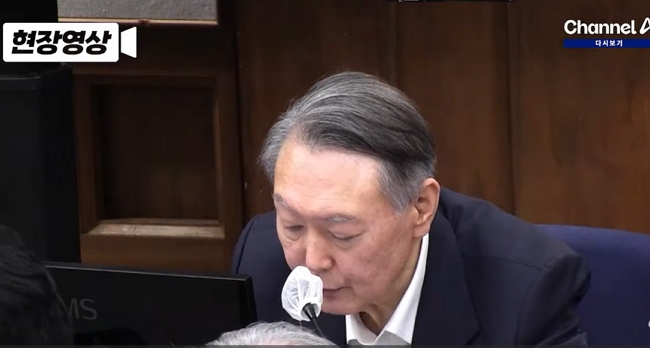 Former President Yoon Suk Yeol delivers his closing statement at the criminal trial for leading a rebellion in Courtroom 417 of the Seoul Central District Court in Seocho-gu, Seoul, on January 13. 2026.1.14 [Photo=Channel A screen capture]
Subscribe to Weekly Hanmiilbo in advance
Inquiries: 02-2088-1201
[Three Hypothetical Verdicts]
The conclusion can vary even with the same facts.
Please compare the three hypothetical verdicts and share your most reasonable judgment in the comments.
Hypothetical Verdict ①… Full Acquittal Structure
Seoul Central District Court, Criminal Division
Order
The defendant is acquitted.
Reason
1. Summary of Charges
The prosecution alleges that the defendant is guilty of leading a rebellion under Article 87 of the Criminal Act by attempting to suppress the functions of constitutional institutions through the declaration of martial law and mobilization of the military and police.
2. Judgment
a. Purpose of Subverting the Constitutional Order
For rebellion to be established, the intent to substantially destroy or paralyze the functions of the constitutional order must be recognized. The records indicate circumstances of error in political judgment or overreaction during the martial law declaration, but it cannot be proven beyond a reasonable doubt that there was an intent to deny the existence of constitutional institutions.
b. Force of Riot
The riot mentioned in the rebellion charge must reach the extent of substantially suppressing the functions of constitutional institutions through the organized force of multiple individuals. While some movement of the military and police occurred in this case, it is insufficient to conclude that state institutions were actually suspended or that decision-making was forcibly constrained.
c. Relationship of Control and Domination
The evidence presented is insufficient to definitively conclude that the defendant consistently controlled and directed the entire operation.
3. Conclusion
The evidence presented by the prosecution is insufficient to prove the charges beyond a reasonable doubt. Therefore, a verdict of not guilty is rendered pursuant to the latter part of Article 325 of the Criminal Procedure Act.
4. Sentencing Rationale
Not applicable.
Hypothetical Verdict ②… Guilty of Leading a Rebellion Structure
Seoul Central District Court, Criminal Division
Order
The defendant is sentenced to life imprisonment.
Reason
1. Summary of Charges
The prosecution alleges that the defendant attempted to suppress the functions of constitutional institutions through the declaration of martial law and organized mobilization.
2. Judgment
a. Purpose of Subverting the Constitutional Order
Considering the defendant's instructions and statements, and the content and scope of the martial law measures, it is recognized that there was an intent to halt the normal functioning of the constitutional order, beyond mere misjudgment in governance.
b. Force of Riot
Force should be judged irrespective of the presence of physical clashes. Given the confirmed movement of military personnel, attempts to control access to institutions, and the operation of a phased command structure, organized force by multiple individuals is recognized.
c. Relationship of Control and Domination
According to the records, the defendant substantially led the overall martial law measures, controlled key decision-making, and it is judged that each institution acted based on the defendant's directives during the execution process.
3. Conclusion
The defendant is deemed to have led the rebellion.
4. Sentencing Rationale
The act of threatening the constitutional order from the position of the nation's highest authority carries grave responsibility. Considering the social impact and the infringement of constitutional values, severe punishment is unavoidable.
Hypothetical Verdict ③… Rebellion Recognized, Leader Not Recognized (Person Engaged in Important Duty)
Seoul Central District Court, Criminal Division
Order
The defendant is sentenced to 7 years in prison.
Reason
1. Summary of Charges
The prosecution alleges that the defendant was involved in actions to restrict the functions of constitutional institutions during the execution of martial law measures.
2. Judgment
a. Purpose of Subverting the Constitutional Order
It is recognized that the martial law measures created a significant risk of impact on the constitutional order.
b. Force of Riot
Given the confirmed organized mobilization of the military and police and the potential for restriction of institutional activities, the force of a riot is recognized.
c. Relationship of Control and Domination
However, the evidence presented is insufficient to definitively conclude that the defendant consistently controlled and directed the overall plan and execution.
3. Conclusion
While it is insufficient to consider the defendant as the leader of the rebellion, responsibility as a person engaged in important duties who played a significant role in the execution process is recognized.
4. Sentencing Rationale
The danger of rebellion is serious, but the sentence is determined considering that the duration of the martial law measures was relatively short, no actual physical clashes or casualties occurred, and state functions were not completely paralyzed.

 Iranian Foreign Ministry: "Continuing Message Exchanges with the U.S. and Activities of Mediating Countries"
Esmaeil Baghaei, Spokesperson for the Iranian Ministry of Foreign Affairs [Xinhua, Yonhap News file photo]Esmaeil Baghaei, spokesperson for the Iranian Ministry of Foreign Affairs, stated on the 26th
Iranian Foreign Ministry: "Continuing Message Exchanges with the U.S. and Activities of Mediating Countries"
Esmaeil Baghaei, Spokesperson for the Iranian Ministry of Foreign Affairs [Xinhua, Yonhap News file photo]Esmaeil Baghaei, spokesperson for the Iranian Ministry of Foreign Affairs, stated on the 26th
 President Yoon: "Do You Think You Are Safe from the Special Counsel?"... Final Statement Video Released
President Yoon Suk Yeol rebuking the special prosecutor on the 24th. [Court video / @birds_justice X account subtitle GIF] A video of President Yoon Suk Yeol's closing statement at his trial rega
President Yoon: "Do You Think You Are Safe from the Special Counsel?"... Final Statement Video Released
President Yoon Suk Yeol rebuking the special prosecutor on the 24th. [Court video / @birds_justice X account subtitle GIF] A video of President Yoon Suk Yeol's closing statement at his trial rega
 President Yoon, regarding the first-instance ruling on the Public Official Election Act: “An excessive political verdict that distorts the facts… We will appeal immediately.”
The first-instance sentencing hearing for President Yoon Suk Yeol regarding violations of the Public Official Election Act is being broadcast live at Seoul Station on the 27th. [Photo=Yonhap News]Pres
President Yoon, regarding the first-instance ruling on the Public Official Election Act: “An excessive political verdict that distorts the facts… We will appeal immediately.”
The first-instance sentencing hearing for President Yoon Suk Yeol regarding violations of the Public Official Election Act is being broadcast live at Seoul Station on the 27th. [Photo=Yonhap News]Pres
 WSJ: "SK Hynix ADR Premium Is a Sign of AI Trading Overheat"
Advertisement for SK Hynix ADR listing in New York's Times Square [Reuters=Yonhap News file photo]The Wall Street Journal (WSJ) has pointed out that the price of SK Hynix’s American Depositary Recei
WSJ: "SK Hynix ADR Premium Is a Sign of AI Trading Overheat"
Advertisement for SK Hynix ADR listing in New York's Times Square [Reuters=Yonhap News file photo]The Wall Street Journal (WSJ) has pointed out that the price of SK Hynix’s American Depositary Recei
 'Godfather of Japanese Mystery Novels' Keigo Higashino Passes Away After Battle with Cancer at 68
Famous Japanese mystery novelist Keigo Higashino [AFP=Yonhap News]It has been belatedly reported that Keigo Higashino, the "godfather of Japanese mystery novels" and author of bestsellers such as "The
'Godfather of Japanese Mystery Novels' Keigo Higashino Passes Away After Battle with Cancer at 68
Famous Japanese mystery novelist Keigo Higashino [AFP=Yonhap News]It has been belatedly reported that Keigo Higashino, the "godfather of Japanese mystery novels" and author of bestsellers such as "The
 [Park Pil-kyu Security Column] To the Ignorant Trying to Clothe a Beast in Sheep's Clothing
Rep. Kim Byung-joo of the Democratic Party of Korea [Photo=Yonhap News]“The Air Force Academy doesn't teach you how to fly a plane!” “The Army, Navy, and Air Force academies are exactly the
[Park Pil-kyu Security Column] To the Ignorant Trying to Clothe a Beast in Sheep's Clothing
Rep. Kim Byung-joo of the Democratic Party of Korea [Photo=Yonhap News]“The Air Force Academy doesn't teach you how to fly a plane!” “The Army, Navy, and Air Force academies are exactly the
 [Issue Diagnosis] Two Effects of the Election Petition Review
 [Photo] Evidence of Election Fraud Flooding U.S. Media… Trump Had 2.7 Million Votes Stolen
 [Video] U.S. Semiquincentennial Air Show... 'Art in the Sky' streaks across New York
 [Editorial Cartoon] A Draconian Law That Undermines Freedom of Expression

 List
List










