Iranian nationals hacked into Alaska's voter registration system during the 2020 elections, exposing vulnerabilities in states' voter registration systems, particularly those related to overseas voters and ballots, prompting calls for the Department of Justice to investigate and address these vulnerabilities nationwide, Just The News reported.
Alaska acknowledged its voter registration system was hacked in 2020, while the federal government stated it was aware of "at least one state" that was hacked by Iran. The Department of Justice later revealed that "approximately 11 states' voter websites" were targeted.
A new report from the Election Research Institute, titled "Department of Justice's Failure to Weaponize Against Protecting U.S. Election Systems," shows a significant increase in overseas absentee and mail-in ballot requests in 2020, as Iranian hackers revealed how they used data from Alaska's compromised voter registration system to create these applications and ballots.
On September 28, 2020, the FBI and the Cybersecurity and Infrastructure Security Agency (CISA) under the Department of Homeland Security announced, "There is a potential threat due to attempts to spread disinformation related to cyberattacks on U.S. voter registration databases or election systems."
During the 2020 election cycle, "foreign actors and cybercriminals attempted to manipulate public opinion, undermine confidence in the electoral process, and erode trust in American democratic institutions by spreading false and inconsistent information through various online platforms."
The FBI and CISA stated, "These malicious actors may also use these forums to propagate false information that election infrastructure has been compromised by successful cyber operations and that 'hacking' and 'leaks' of U.S. voter registration data have been facilitated."
While cyber attackers have obtained this data in recent years because most of the U.S. voter information is available through publicly accessible sources, the agencies stated this did not "affect the integrity of the voting process or election results."
Furthermore, the FBI and CISA had no information that cyberattacks on U.S. election infrastructure resulted in elections not being held, the accuracy of voter registration information being compromised, registered voters being unable to vote, or the integrity of ballots being compromised.
However, one month later, the agencies announced they were aware of Iranian hackers targeting election websites.
CISA and the FBI announced that they observed the attacker attempting to exploit websites to obtain copies of voter registration data between September 29 and October 17, 2020.
The agencies added, "We can confirm that this actor successfully obtained voter registration data from at least one state."
Additionally, the ERI report stated, "CISA and the FBI assess that this actor distributed a large volume of voter intimidation emails to U.S. citizens and disseminated disinformation related to U.S. elections in mid-October 2020."
The state of Alaska was the state that admitted to being hacked during the 2020 election.
On December 3, 2020, after the 2020 election, the office of then-Lt. Gov. Kevin Meyer (R-Alaska) explained that his state had "experienced data exposure damage from external actors who targeted the election commission’s online voter registration system, which is built and maintained by an external vendor and operated by the election commission."
Meyer's office added that he first became aware of the issue on October 27, three days before the FBI and CISA announced that Iranian hackers had stolen the state's voter registration data.
At the time, the Lt. Gov.'s office stated, "The department, in conjunction with our contractor, has confirmed personal information of 113,000 voter candidates has been exposed, including their date of birth and driver's license number."
Nearly a year later, on November 18, 2021, the U.S. Attorney's Office for the Southern District of New York announced it was indicting two Iranian hackers.
The federal prosecutor's office stated, "In September and October 2020, members of the conspiracy attempted to probe and compromise approximately 11 states' voter websites, including state voter registration websites and state voter information websites."
The hackers also impersonated members of a "Proud Boys volunteer group" and sent Facebook messages and emails to Republican senators, Republican representatives, Donald J. Trump presidential campaign officials, White House advisors, and journalists.
The ERI report notes that absentee and mail-in ballot requests are primarily verified by cross-referencing driver's license numbers or social security numbers provided on the ballot applications with government records.
Given that hackers stole voters' personal information, the report stated, "(if the IRGC) used the data obtained from the hacking to submit fraudulent applications or ballots to Alaskan election officials, the Social Security or driver's license numbers would have checked out as accurate in the matching process."
Videos shared by hackers showed "how hackers used breached data to fill out Federal Write-In Absentee Ballot (FWAB) or Federal Post Card Application (FPCA) forms," the report stated.
The ERI report states, "The videos include valid voter information that was copied and pasted into fields used to create PDFs for at least three FWABs, which can be used as emergency backup ballots by individuals eligible to vote under the Uniformed and Overseas Citizens Absentee Voting Act (UOCAVA)."
An FPCA is how a UOCAVA voter requests to vote from overseas.
UOCAVA voters include military personnel and non-military U.S. citizens residing abroad. According to the U.S. Election Assistance Commission's (EAC) 2024 Election Administration and Voting Survey report, only 26.3% of UOCAVA ballots last year were sent to military personnel, while about 70.7% were sent to overseas students, U.S. citizens who have acquired permanent residency abroad, and non-military voters who have never lived in the U.S.
According to the EAC report, in the 2020 election, 39.4% of UOCAVA voters were military personnel, and 60.1% were non-military.
The ERI report states that videos shared by Iranian hackers also included "video showing computer files from 40 states and at least some of those state folders containing multiple UOCAVA FWAB ballot or FPCA ballot application PDF documents." While there is no evidence the FWABs generated in the video were submitted to a state, there is ample evidence of vulnerability.
The ERI report stated, "Each state reported receiving 41% more FWABs in 2020 than in 2016," adding, "Nationally, 33,027 FWABs were submitted to election offices for the 2020 general election. This represents nearly 10,000 more FWABs submitted in 2020 when travel restrictions were in place and there were far fewer U.S. citizens abroad."
According to the ERI report, Alaska saw a 60% increase in UOCAVA ballots from 2016 to 2020, with 16,466 ballots delivered online in the 2020 election. UOCAVA ballots can be submitted via email, mail, or online systems.
The EAC's 2020 Election Administration and Voting Survey Report stated, "Election offices nationwide reported receiving 764,691 FPCAs for the 2020 general election, nearly double the 420,861 FPCAs reported by states for the 2016 general election."
The ERI report argues that despite the significant reduction in the number of U.S. citizens traveling, studying, or working abroad due to the global pandemic in the 2020 election, the substantial increase in UOCAVA ballots was not investigated by the Department of Justice.
The ERI report concluded, "To prevent IRGC and other adversarial forces from interfering in future elections, the existing vulnerabilities in the UOCAVA ballot system must be addressed. There is an urgent need for the FBI to thoroughly investigate the potential for exploitation of UOCAVA ballot vulnerabilities. In addition, the Department of Justice must adhere to federal requirements for the verification of voter registration information of individuals applying to register to vote in federal elections."
Cleta Mitchell, founder of the Election Integrity Network, told Just The News, "I hope that Senator Grassley [R-Iowa] and the new leadership at the FBI will immediately add this to their list of 2020 election incidents to investigate and hold accountable."
U.S. NNP=Sung Ku Hong Chief Reporter info@newsandpost.com

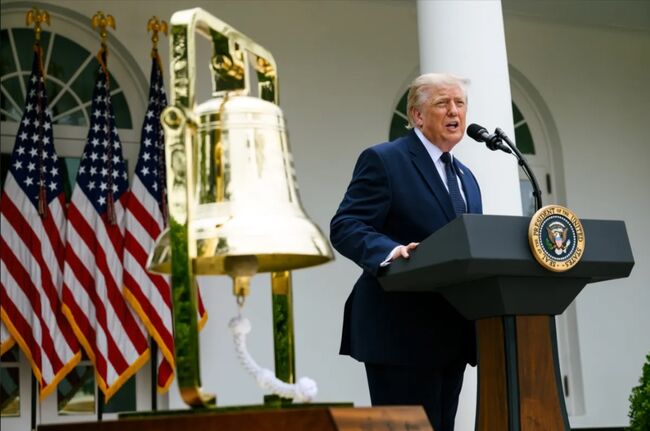 Trump pressures for rate cut again ahead of FOMC... "Should be the lowest in the world"
U.S. President Donald Trump. [Photo = The White House] U.S. President Donald Trump once again pressured the Federal Reserve, the U.S. central bank, to lower interest rates on the 27th (local time
Trump pressures for rate cut again ahead of FOMC... "Should be the lowest in the world"
U.S. President Donald Trump. [Photo = The White House] U.S. President Donald Trump once again pressured the Federal Reserve, the U.S. central bank, to lower interest rates on the 27th (local time
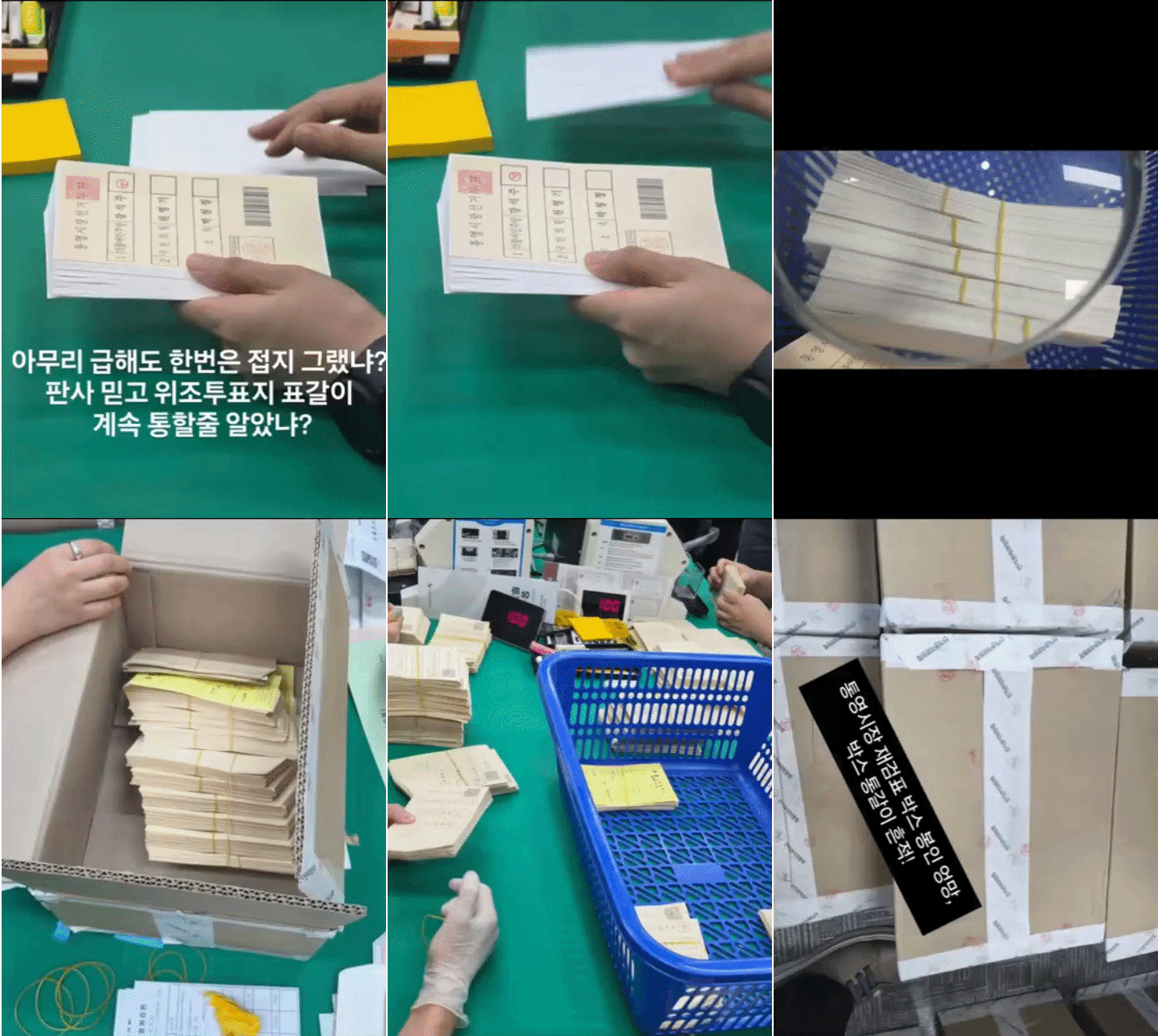 “Ignoring crisp ballots and damaged seals”… Tongyeong mayoral recount concludes with ‘no change in outcome,’ leaving suspicions and public outrage behind
Suspected counterfeit ballots discovered in Tongyeong [GIF from social media of Representative Hwang Kyo-ahn / Attorney Park Joo-hyun]During a recount of the Tongyeong mayoral election in South Gyeong
“Ignoring crisp ballots and damaged seals”… Tongyeong mayoral recount concludes with ‘no change in outcome,’ leaving suspicions and public outrage behind
Suspected counterfeit ballots discovered in Tongyeong [GIF from social media of Representative Hwang Kyo-ahn / Attorney Park Joo-hyun]During a recount of the Tongyeong mayoral election in South Gyeong
 President Yoon, regarding the first-instance ruling on the Public Official Election Act: “An excessive political verdict that distorts the facts… We will appeal immediately.”
The first-instance sentencing hearing for President Yoon Suk Yeol regarding violations of the Public Official Election Act is being broadcast live at Seoul Station on the 27th. [Photo=Yonhap News]Pres
President Yoon, regarding the first-instance ruling on the Public Official Election Act: “An excessive political verdict that distorts the facts… We will appeal immediately.”
The first-instance sentencing hearing for President Yoon Suk Yeol regarding violations of the Public Official Election Act is being broadcast live at Seoul Station on the 27th. [Photo=Yonhap News]Pres
 WSJ: "SK Hynix ADR Premium Is a Sign of AI Trading Overheat"
Advertisement for SK Hynix ADR listing in New York's Times Square [Reuters=Yonhap News file photo]The Wall Street Journal (WSJ) has pointed out that the price of SK Hynix’s American Depositary Recei
WSJ: "SK Hynix ADR Premium Is a Sign of AI Trading Overheat"
Advertisement for SK Hynix ADR listing in New York's Times Square [Reuters=Yonhap News file photo]The Wall Street Journal (WSJ) has pointed out that the price of SK Hynix’s American Depositary Recei
 'Godfather of Japanese Mystery Novels' Keigo Higashino Passes Away After Battle with Cancer at 68
Famous Japanese mystery novelist Keigo Higashino [AFP=Yonhap News]It has been belatedly reported that Keigo Higashino, the "godfather of Japanese mystery novels" and author of bestsellers such as "The
'Godfather of Japanese Mystery Novels' Keigo Higashino Passes Away After Battle with Cancer at 68
Famous Japanese mystery novelist Keigo Higashino [AFP=Yonhap News]It has been belatedly reported that Keigo Higashino, the "godfather of Japanese mystery novels" and author of bestsellers such as "The
 [Park Pil-kyu Security Column] To the Ignorant Trying to Clothe a Beast in Sheep's Clothing
Rep. Kim Byung-joo of the Democratic Party of Korea [Photo=Yonhap News]“The Air Force Academy doesn't teach you how to fly a plane!” “The Army, Navy, and Air Force academies are exactly the
[Park Pil-kyu Security Column] To the Ignorant Trying to Clothe a Beast in Sheep's Clothing
Rep. Kim Byung-joo of the Democratic Party of Korea [Photo=Yonhap News]“The Air Force Academy doesn't teach you how to fly a plane!” “The Army, Navy, and Air Force academies are exactly the
 [Issue Diagnosis] Two Effects of the Election Petition Review
 [Photo] Evidence of Election Fraud Flooding U.S. Media… Trump Had 2.7 Million Votes Stolen
 [Video] U.S. Semiquincentennial Air Show... 'Art in the Sky' streaks across New York
 [Editorial Cartoon] A Draconian Law That Undermines Freedom of Expression

 List
List