 General Kim Chang-ryong during his lifetime. His third daughter, Kim Mi-young, prepared a video of his life and released it on the 27th.
Around 7:30 AM on January 30, 1956, an unidentified vehicle blocked the road in front of Jahye Hospital in Wonyo-ro 1-ga, Yongsan-gu, where Army Security Command Chief Kim Chang-ryong was heading to work.
Immediately, two assailants approached and began firing pistols. Kim Chang-ryong was hit by five shots and died at the scene. The perpetrators were active Army Colonel Heo Tae-yeong and his associates, who were sentenced to death in a court-martial in August.
The incident seemed to be concluded at that point, but in November of the same year, a new phase emerged when Heo Tae-yeong's wife, Hwang Un-ha, filed a petition for retrial, claiming that "a high-ranking general was behind the incident."
This led to the arrest of several high-ranking officers, including Lieutenant General Kang Moon-bong, and the event was concluded with the execution of Heo Tae-yeong and Lee Yu-hoe in September 1957, and Song Yong-go and Shin Cho-sik in May 1958.
Kim Chang-ryong, President Rhee Syngman's Right-Hand Man
General Kim Chang-ryong (1920-1956) served as the chief of the Army Security Command (the precursor to the Defense Security Command) in the early days of the Republic of Korea. He acted as President Rhee Syngman's "right-hand man," playing a frontline role in monitoring and thwarting forces that threatened the regime's security.
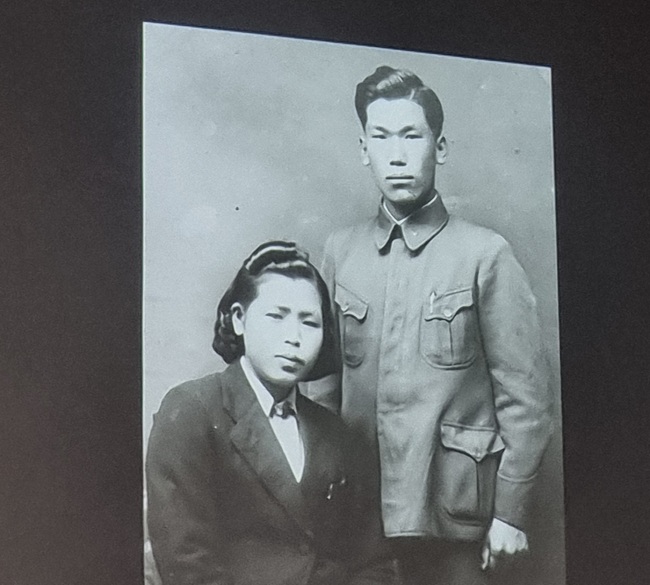 General Kim Chang-ryong with his wife, Do Sang-won (left).
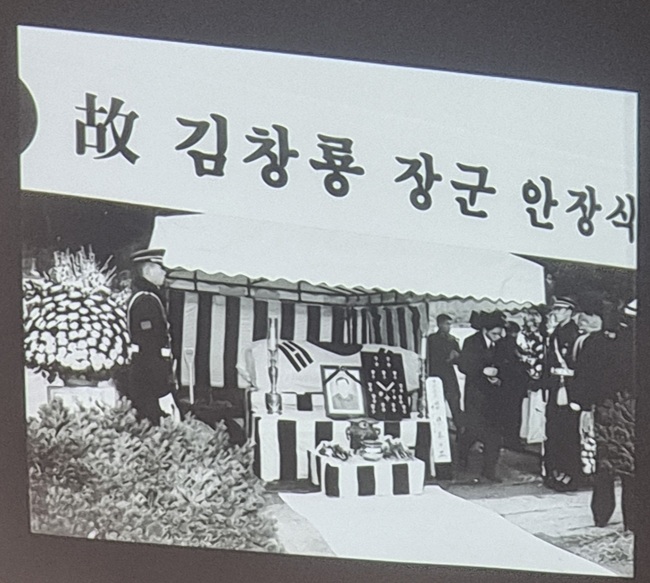 General Kim Chang-ryong's funeral was held as the first state funeral for the military.
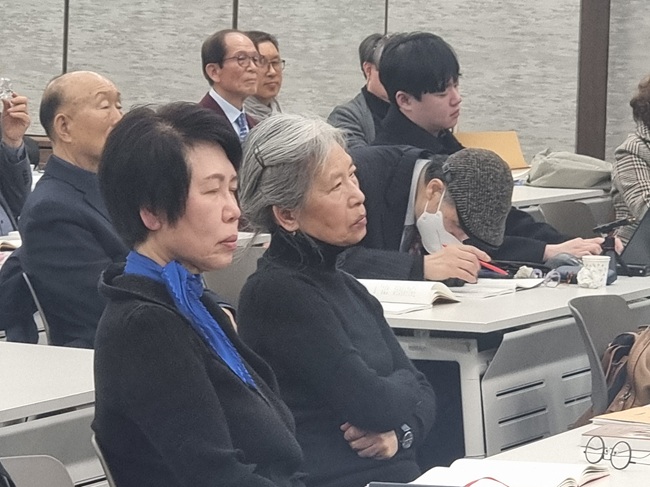 Kim Mi-young (left), the posthumous third daughter of General Kim Chang-ryong, and her second daughter, Kim Mi-kyung. [Photo by Lim Yo-hee]After liberation, Kim led the purge of leftist sympathizers who had infiltrated the military, establishing the early identity of the ROK Army. In 1949 alone, 1,500 leftist soldiers were purged.
Furthermore, utilizing the investigative techniques he acquired while serving in the gendarmerie of the Kwantung Army of the Japanese Imperial Army during the Japanese colonial era, he excelled in counter-espionage. He uncovered Soviet officers' espionage activities during the US-Soviet Joint Commission and apprehended spies and collaborators.
He was at the forefront of eradicating leftist forces within the military, earning him the nickname "Ghost who Catches Communists." However, he met an untimely end at the age of 40, struck down by Heo Tae-yeong's bullets. Subsequently, with the rise of leftist governments, his legacy was often tarnished by accusations of pro-Japanese activities and human rights abuses.
Most recently, in June of last year, a leftist civic group staged a grave-exhumation performance, demanding that his remains, buried in the Daejeon National Cemetery, be relocated.
Academic Conference: 'Re-examining Kim Chang-ryong'
To commemorate the 70th anniversary of General Kim Chang-ryong's death, an academic conference titled "Re-examining Kim Chang-ryong," hosted by the Rhee Syngman Academy, was held from 2:00 PM to 5:30 PM on the 27th at the International Conference Room of the Korea Exchange Bank Building in Euljiro, Seoul.
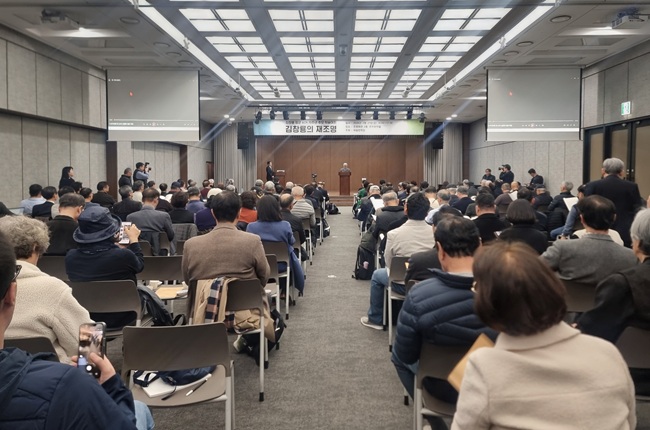 This academic conference served as an opportunity to look back at the life of General Kim Chang-ryong, who spearheaded the purge operation and counter-espionage activities in the early days of nation-building, and to re-evaluate his historical achievements and contributions from a modern perspective. Attendees filled the venue without a single empty seat. [Photo by Lim Yo-hee]This event, organized to mourn the 70th anniversary of General Kim Chang-ryong's death and to correct misunderstandings and distortions about him, began with congratulatory remarks from Chairman Heo Hwa-pyeong of the Mirae Korea Foundation, followed by a keynote lecture by Professor Lee Young-hoon of the Rhee Syngman Academy, and then proceeded to the second part, an academic discussion.
In his congratulatory speech, Chairman Heo Hwa-pyeong stated, "Although 70 years have passed since General Kim Chang-ryong's death, the controversies surrounding him continue because his death is not merely an individual matter but is directly linked to the era, ideology, history, and the current political and social environment." He lamented, "In today's political climate, which is leaning to the left, a bizarre phenomenon is occurring where, instead of truths being confirmed and his honor being restored, new defamation is being attempted."
In his keynote lecture, Professor Lee Young-hoon, head of the Rhee Syngman Academy, which hosted the academic conference, analyzed, "For the past 70 years, Korean political history has demonized General Kim Chang-ryong and slandered our founding president, Rhee Syngman, as corrupt, a long-term ruler, and anti-nationalistic. This reflects a immaturity in establishing justice commensurate with a modern nation-state." He further stated, "This is the fundamental reason why politics continues to be a struggle of moral justifications and righteousness rather than a competition of public policies."
He added, "General Kim Chang-ryong, who was very upright and incorruptible and did not compromise with corrupt forces in the military, was assassinated by those corrupt forces for precisely that reason. This academic conference was organized with the realization that the past 78 years of Korean history, especially its political history, must be reconstructed comprehensively."
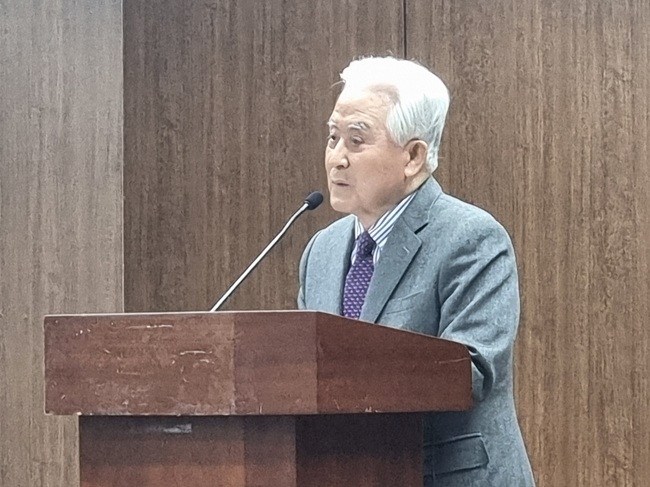 Heo Hwa-pyeong, Chairman of the Mirae Korea Foundation, delivering congratulatory remarks. [Photo by Lim Yo-hee]
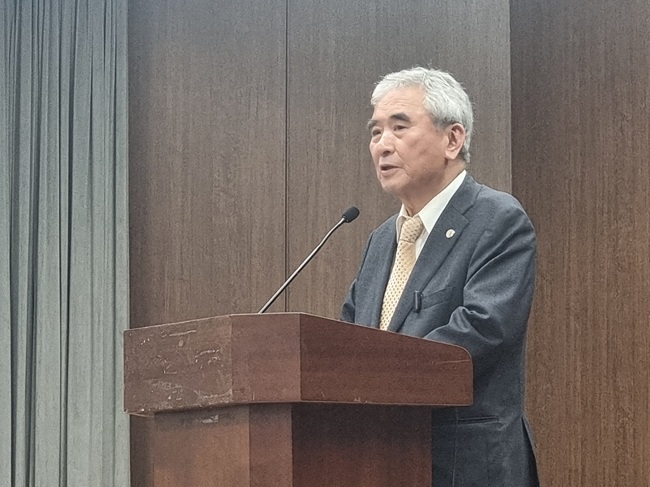 Professor Lee Young-hoon of the Rhee Syngman Academy delivering the keynote lecture. [Photo by Lim Yo-hee]
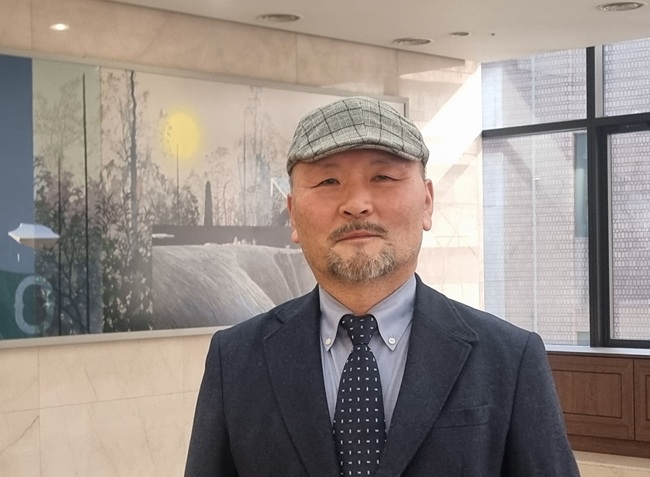 Jeong An-ki, research fellow at the Nakseongdae Institute of Economics, presenting at the academic discussion. [Photo by Lim Yo-hee]In the subsequent academic discussion, Jeong An-ki, a research fellow at the Nakseongdae Institute of Economics, under the theme of "The Truth of the 1956 Assassination of Army Security Command Chief Kim Chang-ryong," thoroughly investigated △ the shock and repercussions of the assassination △ the interrogation, indictment, and trial of Heo Tae-yeong △ the investigation, trial, and verdict of Kang Moon-bong △ and the reality of the Jeong Il-kwon alleged mastermind theory, delivering a scathing critique of the so-called "righteous deed theory" that justified Kim Chang-ryong's assassination.
The righteous deed theory, which characterized Kim Chang-ryong as a malignant presence hindering the normal development of the military and glorified his assassination as an act of justice, was sharply exposed as a fabrication by politically impure forces, eliciting much sympathy from the attendees.
Additionally, Joo Ik-jong, a professor at the Rhee Syngman Academy, criticized certain political forces in his paper titled "Kim Chang-ryong, Villain of Modern Korean History," for manipulating an exemplary soldier into a villain of modern history.
Notably, Kim Mi-young, the posthumous third daughter of General Kim Chang-ryong, and her second daughter, Kim Mi-kyung, attended the event today and expressed their gratitude. A video, featuring photos and a commemorative poem cherished by the daughters of their father, deeply moved the attendees.
Reporter Lim Yo-hee

 Iranian Foreign Ministry: "Continuing Message Exchanges with the U.S. and Activities of Mediating Countries"
Esmaeil Baghaei, Spokesperson for the Iranian Ministry of Foreign Affairs [Xinhua, Yonhap News file photo]Esmaeil Baghaei, spokesperson for the Iranian Ministry of Foreign Affairs, stated on the 26th
Iranian Foreign Ministry: "Continuing Message Exchanges with the U.S. and Activities of Mediating Countries"
Esmaeil Baghaei, Spokesperson for the Iranian Ministry of Foreign Affairs [Xinhua, Yonhap News file photo]Esmaeil Baghaei, spokesperson for the Iranian Ministry of Foreign Affairs, stated on the 26th
 President Yoon: "Do You Think You Are Safe from the Special Counsel?"... Final Statement Video Released
President Yoon Suk Yeol rebuking the special prosecutor on the 24th. [Court video / @birds_justice X account subtitle GIF] A video of President Yoon Suk Yeol's closing statement at his trial rega
President Yoon: "Do You Think You Are Safe from the Special Counsel?"... Final Statement Video Released
President Yoon Suk Yeol rebuking the special prosecutor on the 24th. [Court video / @birds_justice X account subtitle GIF] A video of President Yoon Suk Yeol's closing statement at his trial rega
 President Yoon, regarding the first-instance ruling on the Public Official Election Act: “An excessive political verdict that distorts the facts… We will appeal immediately.”
The first-instance sentencing hearing for President Yoon Suk Yeol regarding violations of the Public Official Election Act is being broadcast live at Seoul Station on the 27th. [Photo=Yonhap News]Pres
President Yoon, regarding the first-instance ruling on the Public Official Election Act: “An excessive political verdict that distorts the facts… We will appeal immediately.”
The first-instance sentencing hearing for President Yoon Suk Yeol regarding violations of the Public Official Election Act is being broadcast live at Seoul Station on the 27th. [Photo=Yonhap News]Pres
 WSJ: "SK Hynix ADR Premium Is a Sign of AI Trading Overheat"
Advertisement for SK Hynix ADR listing in New York's Times Square [Reuters=Yonhap News file photo]The Wall Street Journal (WSJ) has pointed out that the price of SK Hynix’s American Depositary Recei
WSJ: "SK Hynix ADR Premium Is a Sign of AI Trading Overheat"
Advertisement for SK Hynix ADR listing in New York's Times Square [Reuters=Yonhap News file photo]The Wall Street Journal (WSJ) has pointed out that the price of SK Hynix’s American Depositary Recei
 'Godfather of Japanese Mystery Novels' Keigo Higashino Passes Away After Battle with Cancer at 68
Famous Japanese mystery novelist Keigo Higashino [AFP=Yonhap News]It has been belatedly reported that Keigo Higashino, the "godfather of Japanese mystery novels" and author of bestsellers such as "The
'Godfather of Japanese Mystery Novels' Keigo Higashino Passes Away After Battle with Cancer at 68
Famous Japanese mystery novelist Keigo Higashino [AFP=Yonhap News]It has been belatedly reported that Keigo Higashino, the "godfather of Japanese mystery novels" and author of bestsellers such as "The
 [Park Pil-kyu Security Column] To the Ignorant Trying to Clothe a Beast in Sheep's Clothing
Rep. Kim Byung-joo of the Democratic Party of Korea [Photo=Yonhap News]“The Air Force Academy doesn't teach you how to fly a plane!” “The Army, Navy, and Air Force academies are exactly the
[Park Pil-kyu Security Column] To the Ignorant Trying to Clothe a Beast in Sheep's Clothing
Rep. Kim Byung-joo of the Democratic Party of Korea [Photo=Yonhap News]“The Air Force Academy doesn't teach you how to fly a plane!” “The Army, Navy, and Air Force academies are exactly the
 [Issue Diagnosis] Two Effects of the Election Petition Review
 [Photo] Evidence of Election Fraud Flooding U.S. Media… Trump Had 2.7 Million Votes Stolen
 [Video] U.S. Semiquincentennial Air Show... 'Art in the Sky' streaks across New York
 [Editorial Cartoon] A Draconian Law That Undermines Freedom of Expression

 List
List









