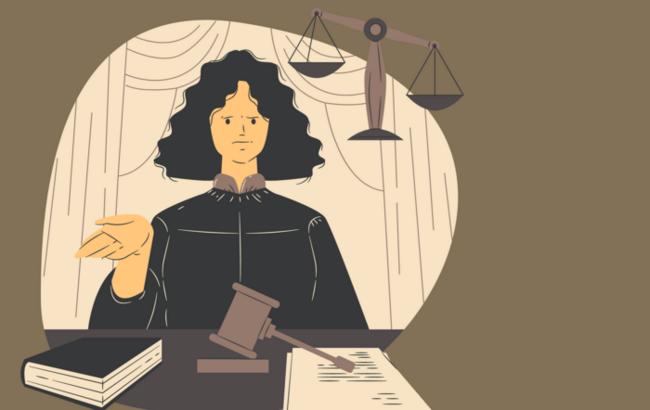
Last month, Chief Justice Cho Hee-dae nominated Supreme Court Justice Chun Dae-yeop as the successor to Noh Tae-ak, the Chairperson of the National Election Commission. Once the appointment process for Justice Chun is finalized, he is expected to assume the position of NEC Chairperson through the election of commissioners.
The Constitution of the Republic of Korea stipulates that the National Election Commission shall be composed of three members appointed by the President, three elected by the National Assembly, and three nominated by the Chief Justice of the Supreme Court. The Chairperson is elected from among these commissioners. Historically, a Supreme Court Justice nominated by the Chief Justice has served as the Chairperson. Here, we must pay attention to the term "elected." This implies it is a convention, not a legal basis.
For city/provincial and district/city/county election commissions, one judge recommended by the head of the court overseeing that area is included as a commissioner, and these judges conventionally assume the role of the election commission chairperson. In other words, there is no wording in South Korean law stating that "a judge must be the chairperson."
There is no particular reason for this. It is merely based on unfounded optimism that having Supreme Court Justices or court presidents as chairpersons of election commissions at all levels will help ensure fairness and neutrality in election management. So, are court presidents truly neutral and impartial?
Unfortunately, wake up and smell the coffee. As seen in the election fraud lawsuit filed by former lawmaker Min Kyung-wook of the United Future Party, and in various trials related to allegations of fraudulent elections, courts have uniformly ruled in favor of the integrity of election commissions.
The reason? Because judges also serve as chairpersons of election commissions at various levels, they may be concerned that if election fraud is revealed, it could lead to their own accountability.
In Korea, this rather acts as an obstacle that makes it more difficult to uncover election fraud. It is becoming a fundamental cause for the entrenchment of a mutual protection cartel between election commissions and courts, rather than ensuring the independence or fairness of election management. To reiterate, this engenders the structural contradiction of a self-judging system.
Under the current system, when an election lawsuit is filed, it is common for a Supreme Court Justice or appellate court judge presiding over the trial to be simultaneously a decision-maker (chairperson) of the election commission or their colleague.
For example, in an election nullification lawsuit, the court is the entity that accepts applications for preservation of evidence, and the election commission, headed by judges, is the entity that manages evidence such as ballots and servers. Therefore, to conclude practical errors or allegations of fraud by an organization for which they are the chairperson, in the name of the judiciary, is an act of self-negation.
This is not theoretical analysis. In reality, such incidents occur frequently. The lawsuit seeking to nullify the 21st general election (Incheon Yeon-su B) filed by former lawmaker Min Kyung-wook is one of the most controversial cases in South Korean election history.
Election nullification lawsuits are handled as a single instance by the Supreme Court, and the presiding judge for former lawmaker Min Kyung-wook's case was Supreme Court Justice Cho Jae-yeon. Justice Cho had served as Chairperson of the National Election Commission since 2019.
Former lawmaker Min Kyung-wook's side argued that "it is unfair to have someone who administered an election preside over its trial" and filed a motion to recuse Justice Cho. However, the Supreme Court summarily dismissed it. Ultimately, the final verdict, rendered by the presiding judge in a case concerning an election he himself managed, was "no fraud."
The structure where the election management authority (NEC Chairperson) returns as the adjudicator (Supreme Court Justice) to legitimize their own administrative actions is an act that severely undermines the neutrality of judicial proceedings, regardless of the correctness of the outcome.
Beyond evaluating Supreme Court Justice Cho Jae-yeon as an individual, this trial process serves as a symbolic example of how the principle of checks and balances has been neutralized in Korea.
Alexander Hamilton and others, in their co-authored work "The Federalist Papers," state the following:
"The people are constantly tempted by the machinations of flatterers, by the deception of the ambitious, the greedy, and the extremists, by the stratagems of those who are trusted beyond their deserts, and by the conspiracies of those who seek a monopoly and manipulation of trust beyond their just deserts."
Therefore, the authors of this book embedded thorough checks and balances as the fundamental spirit of the U.S. Constitution, arguing that greed must be countered by greed.
Co-author James Madison even defined the concentration of power in one place as "tyranny." Nevertheless, the union of the National Election Commission and the judiciary in Korea is severely undermining the principle of "checks and balances." This model is a typical design flaw that ignores Madison's insight that "men are not angels."
When the judiciary is deeply involved in election administration and even holds concurrent positions, the judiciary is no longer an objective external observer but a party with vested interests. This directly violates the legal maxim that "no one can be a judge in their own case."
The practice of judges concurrently serving as election commission chairpersons, lacking any legal basis, should now be abolished. Election commission chairpersons should be completely replaced with external experts such as IT security specialists, statisticians, legal scholars, political scientists, and respected figures in society, thereby severing the personnel link with the judiciary.
If that is impossible, election lawsuits should be exclusively handled by a third special tribunal, such as the ancient Greek popular assembly (Demosia), to prevent the judiciary from engaging in the practice of protecting its own.
The secretariat of South Korea's National Election Commission is one of the most closed groups among national civil servants, with very little personnel exchange. Furthermore, individuals from specific regions constitute an absolute majority within the secretariat, and they form an even more secretive organization through inbreeding among themselves.
This organizational characteristic, combined with the symbiotic relationship between the courts and the election commission, is evolving into a malignant entity. While outwardly professing independence, it is using this as a pretext to create a zone of complete extraterritoriality. The Supreme Court's responsibility in allowing this to happen, acting as an impenetrable shield, cannot be ignored.
Currently, the Supreme Court is barely resisting the Democratic Party's proposed amendments to the three judicial laws aimed at controlling the judiciary. Its posture is comically subservient. Yet, the Supreme Court's greed in seeking to maintain privileges without any legal basis is shameful.
Former Editorial Writer, Munhwa Ilbo

 Iranian Foreign Ministry: "Continuing Message Exchanges with the U.S. and Activities of Mediating Countries"
Esmaeil Baghaei, Spokesperson for the Iranian Ministry of Foreign Affairs [Xinhua, Yonhap News file photo]Esmaeil Baghaei, spokesperson for the Iranian Ministry of Foreign Affairs, stated on the 26th
Iranian Foreign Ministry: "Continuing Message Exchanges with the U.S. and Activities of Mediating Countries"
Esmaeil Baghaei, Spokesperson for the Iranian Ministry of Foreign Affairs [Xinhua, Yonhap News file photo]Esmaeil Baghaei, spokesperson for the Iranian Ministry of Foreign Affairs, stated on the 26th
 President Yoon: "Do You Think You Are Safe from the Special Counsel?"... Final Statement Video Released
President Yoon Suk Yeol rebuking the special prosecutor on the 24th. [Court video / @birds_justice X account subtitle GIF] A video of President Yoon Suk Yeol's closing statement at his trial rega
President Yoon: "Do You Think You Are Safe from the Special Counsel?"... Final Statement Video Released
President Yoon Suk Yeol rebuking the special prosecutor on the 24th. [Court video / @birds_justice X account subtitle GIF] A video of President Yoon Suk Yeol's closing statement at his trial rega
 President Yoon, regarding the first-instance ruling on the Public Official Election Act: “An excessive political verdict that distorts the facts… We will appeal immediately.”
The first-instance sentencing hearing for President Yoon Suk Yeol regarding violations of the Public Official Election Act is being broadcast live at Seoul Station on the 27th. [Photo=Yonhap News]Pres
President Yoon, regarding the first-instance ruling on the Public Official Election Act: “An excessive political verdict that distorts the facts… We will appeal immediately.”
The first-instance sentencing hearing for President Yoon Suk Yeol regarding violations of the Public Official Election Act is being broadcast live at Seoul Station on the 27th. [Photo=Yonhap News]Pres
 WSJ: "SK Hynix ADR Premium Is a Sign of AI Trading Overheat"
Advertisement for SK Hynix ADR listing in New York's Times Square [Reuters=Yonhap News file photo]The Wall Street Journal (WSJ) has pointed out that the price of SK Hynix’s American Depositary Recei
WSJ: "SK Hynix ADR Premium Is a Sign of AI Trading Overheat"
Advertisement for SK Hynix ADR listing in New York's Times Square [Reuters=Yonhap News file photo]The Wall Street Journal (WSJ) has pointed out that the price of SK Hynix’s American Depositary Recei
 'Godfather of Japanese Mystery Novels' Keigo Higashino Passes Away After Battle with Cancer at 68
Famous Japanese mystery novelist Keigo Higashino [AFP=Yonhap News]It has been belatedly reported that Keigo Higashino, the "godfather of Japanese mystery novels" and author of bestsellers such as "The
'Godfather of Japanese Mystery Novels' Keigo Higashino Passes Away After Battle with Cancer at 68
Famous Japanese mystery novelist Keigo Higashino [AFP=Yonhap News]It has been belatedly reported that Keigo Higashino, the "godfather of Japanese mystery novels" and author of bestsellers such as "The
 [Park Pil-kyu Security Column] To the Ignorant Trying to Clothe a Beast in Sheep's Clothing
Rep. Kim Byung-joo of the Democratic Party of Korea [Photo=Yonhap News]“The Air Force Academy doesn't teach you how to fly a plane!” “The Army, Navy, and Air Force academies are exactly the
[Park Pil-kyu Security Column] To the Ignorant Trying to Clothe a Beast in Sheep's Clothing
Rep. Kim Byung-joo of the Democratic Party of Korea [Photo=Yonhap News]“The Air Force Academy doesn't teach you how to fly a plane!” “The Army, Navy, and Air Force academies are exactly the
 [Issue Diagnosis] Two Effects of the Election Petition Review
 [Photo] Evidence of Election Fraud Flooding U.S. Media… Trump Had 2.7 Million Votes Stolen
 [Video] U.S. Semiquincentennial Air Show... 'Art in the Sky' streaks across New York
 [Editorial Cartoon] A Draconian Law That Undermines Freedom of Expression

 List
List










