
Depression refers to a state of mental distress characterized by feelings of worthlessness, guilt, alienation, and emptiness.
If depressive moods persist for more than two weeks, accompanied by a loss of interest and pleasure, lethargy, and insomnia or hypersomnia, depression may be suspected. In severe cases, negative thinking can be amplified, leading to suicidal impulses. Physical symptoms may include headaches, constipation, and indigestion.
Depression, often called "the common cold of the mind," can affect anyone at any time. However, just because it's called a "common cold of the mind" doesn't mean its cause should only be sought in psychological issues or brain problems.
In other words, depression is a "happiness hormone deficiency." The gut lining, not the brain, is where the happiness hormone, serotonin, is secreted. If the gut environment is poor, serotonin secretion can be disrupted, leading to depression.
It's not a coincidence that depression patients generally suffer from diarrhea, constipation, indigestion, and irritable bowel syndrome. The higher incidence of depression in women compared to men is also attributed to frequent dieting and a generally poor gut environment.
In a similar vein, Parkinson's disease, a brain disorder, often originates from gut problems. Constipation is a major symptom of Parkinson's disease, implying that severe constipation can, conversely, lead to Parkinson's disease.
Furthermore, depression can also manifest as a side effect of taking medications such as antihypertensives, anti-anxiety drugs, and central nervous system stimulants.
The paradox that medications taken to treat depression can actually cause depression lies in the fact that while these drugs may offer temporary relief, they continuously worsen the gut environment, thus failing to provide a fundamental cure.
Before resorting to medication, why not start by addressing the most basic aspects? To improve the gut environment, it's essential to increase the intake of foods rich in dietary fiber and enzymes, as well as fermented foods. Examples include various vegetables, sea vegetables, mushrooms, cheonggukjang, natto, and doenjang.
In addition to dietary changes, warming the abdomen and getting plenty of sunlight can help activate serotonin secretion.
Vitamin D from sunlight aids in calcium absorption, which facilitates smooth metabolism. When metabolism is smooth, metabolic enzymes are conserved, allowing for the promotion of digestive enzyme secretion, which naturally improves the gut environment.
There are limitations to symptomatic treatment for depression, and it requires managing the body's organic relationships as a whole. And the first step in this process is taking care of the gut.
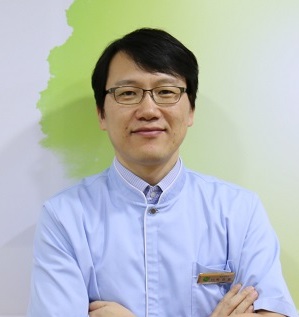
◆ Director Park Chan-young
Director of Eoseongcho Korean Medicine Clinic in Sadang-dong, Seoul. Doctor of Korean Medicine from Dongguk University. He sparked a detoxification sensation in Korea by appearing on health programs such as MBN's "Umjiui Jawang" (King of Thumbs). His books include "Atopic Dermatitis and Acne Healed with Eoseongcho," "Seasoning is Medicine," and "The Miracle of Detoxification."

 Iranian Foreign Ministry: "Continuing Message Exchanges with the U.S. and Activities of Mediating Countries"
Esmaeil Baghaei, Spokesperson for the Iranian Ministry of Foreign Affairs [Xinhua, Yonhap News file photo]Esmaeil Baghaei, spokesperson for the Iranian Ministry of Foreign Affairs, stated on the 26th
Iranian Foreign Ministry: "Continuing Message Exchanges with the U.S. and Activities of Mediating Countries"
Esmaeil Baghaei, Spokesperson for the Iranian Ministry of Foreign Affairs [Xinhua, Yonhap News file photo]Esmaeil Baghaei, spokesperson for the Iranian Ministry of Foreign Affairs, stated on the 26th
 President Yoon: "Do You Think You Are Safe from the Special Counsel?"... Final Statement Video Released
President Yoon Suk Yeol rebuking the special prosecutor on the 24th. [Court video / @birds_justice X account subtitle GIF] A video of President Yoon Suk Yeol's closing statement at his trial rega
President Yoon: "Do You Think You Are Safe from the Special Counsel?"... Final Statement Video Released
President Yoon Suk Yeol rebuking the special prosecutor on the 24th. [Court video / @birds_justice X account subtitle GIF] A video of President Yoon Suk Yeol's closing statement at his trial rega
 President Yoon, regarding the first-instance ruling on the Public Official Election Act: “An excessive political verdict that distorts the facts… We will appeal immediately.”
The first-instance sentencing hearing for President Yoon Suk Yeol regarding violations of the Public Official Election Act is being broadcast live at Seoul Station on the 27th. [Photo=Yonhap News]Pres
President Yoon, regarding the first-instance ruling on the Public Official Election Act: “An excessive political verdict that distorts the facts… We will appeal immediately.”
The first-instance sentencing hearing for President Yoon Suk Yeol regarding violations of the Public Official Election Act is being broadcast live at Seoul Station on the 27th. [Photo=Yonhap News]Pres
 WSJ: "SK Hynix ADR Premium Is a Sign of AI Trading Overheat"
Advertisement for SK Hynix ADR listing in New York's Times Square [Reuters=Yonhap News file photo]The Wall Street Journal (WSJ) has pointed out that the price of SK Hynix’s American Depositary Recei
WSJ: "SK Hynix ADR Premium Is a Sign of AI Trading Overheat"
Advertisement for SK Hynix ADR listing in New York's Times Square [Reuters=Yonhap News file photo]The Wall Street Journal (WSJ) has pointed out that the price of SK Hynix’s American Depositary Recei
 'Godfather of Japanese Mystery Novels' Keigo Higashino Passes Away After Battle with Cancer at 68
Famous Japanese mystery novelist Keigo Higashino [AFP=Yonhap News]It has been belatedly reported that Keigo Higashino, the "godfather of Japanese mystery novels" and author of bestsellers such as "The
'Godfather of Japanese Mystery Novels' Keigo Higashino Passes Away After Battle with Cancer at 68
Famous Japanese mystery novelist Keigo Higashino [AFP=Yonhap News]It has been belatedly reported that Keigo Higashino, the "godfather of Japanese mystery novels" and author of bestsellers such as "The
 [Park Pil-kyu Security Column] To the Ignorant Trying to Clothe a Beast in Sheep's Clothing
Rep. Kim Byung-joo of the Democratic Party of Korea [Photo=Yonhap News]“The Air Force Academy doesn't teach you how to fly a plane!” “The Army, Navy, and Air Force academies are exactly the
[Park Pil-kyu Security Column] To the Ignorant Trying to Clothe a Beast in Sheep's Clothing
Rep. Kim Byung-joo of the Democratic Party of Korea [Photo=Yonhap News]“The Air Force Academy doesn't teach you how to fly a plane!” “The Army, Navy, and Air Force academies are exactly the
 [Issue Diagnosis] Two Effects of the Election Petition Review
 [Photo] Evidence of Election Fraud Flooding U.S. Media… Trump Had 2.7 Million Votes Stolen
 [Video] U.S. Semiquincentennial Air Show... 'Art in the Sky' streaks across New York
 [Editorial Cartoon] A Draconian Law That Undermines Freedom of Expression

 List
List









