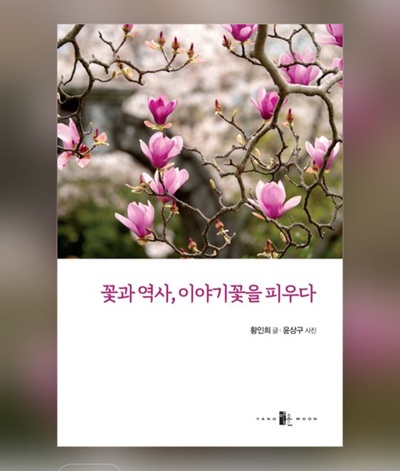
The wife writes, and the husband takes photographs. Their seamless teamwork has resulted in several books published by the couple. Their latest release, “Flowers and History, Blooming with Stories,” is another collaborative work by author Hwang In-hee (writing) and photographer Yoon Sang-gu.
“Flowers and History, Blooming with Stories” explores the human history related to flowers in an easy and engaging way.
The book contains historical narratives where flowers are either the main subject or part of the backdrop. Flowers are not merely objects that bloom in fields or greenhouses to please our eyes. According to the authors, flowers are "meaningful" entities that have significantly influenced human history.
Humans have experienced joy and sorrow with flowers since ancient times. Flowers have consistently been present at weddings, funerals, visits to the sick, graduations, and various celebratory parties.
Thus, flowers, irrespective of East or West, ancient or modern times, have been used to express blessings and condolences, gratitude and love, prayers and comfort, and have symbolized wealth and luxury. Having been a constant companion through the spectrum of human emotions, there are few things that encompass as many human stories as flowers do.
However, until now, the approach to flowers has been primarily biological, with little consideration for the human stories associated with them.
Upon closer examination, flowers are intertwined with numerous humanities-related stories. They have been extensively used as symbols for the insignia of kings and emperors, as well as for revolutions and wars. Furthermore, flowers have formed countless historical connections and relationships, from individuals who uniquely loved certain flowers to those who passionately incorporated those flowers into their works.
Reading this book and reflecting more deeply on the meaning of flowers will allow you to see the flowers blooming around you with a different perspective as the seasons change, and subsequently, to view the world with a much broader outlook.
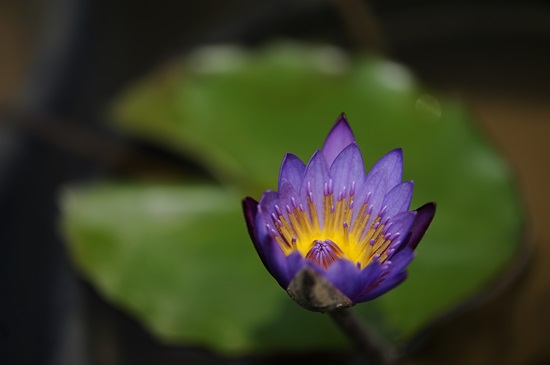 The character '수' (su) in '수련' (suryeon, water lily) does not mean 'water' (水), but 'sleep' (睡). Unlike lotus flowers, which bloom fully in the morning and close or wither during the day, water lilies begin to open in the midday sun and close in the evening. This is why they are called 'sleeping lotus flowers'.
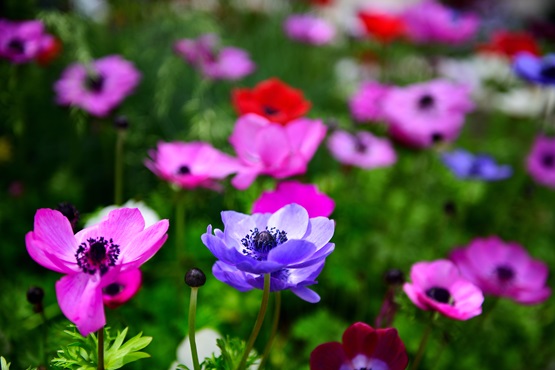 Anemones are also called 'windflowers' because their delicate petals tremble easily in the wind.
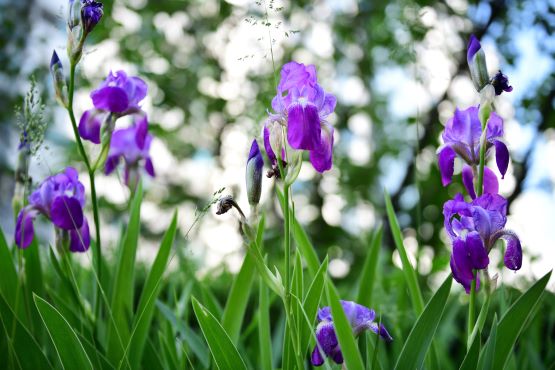 The name '붓꽃' (buchkkot, iris) comes from its flower bud resembling a brush dipped in ink.
By Lim Yo-hee

 Iranian Foreign Ministry: "Continuing Message Exchanges with the U.S. and Activities of Mediating Countries"
Esmaeil Baghaei, Spokesperson for the Iranian Ministry of Foreign Affairs [Xinhua, Yonhap News file photo]Esmaeil Baghaei, spokesperson for the Iranian Ministry of Foreign Affairs, stated on the 26th
Iranian Foreign Ministry: "Continuing Message Exchanges with the U.S. and Activities of Mediating Countries"
Esmaeil Baghaei, Spokesperson for the Iranian Ministry of Foreign Affairs [Xinhua, Yonhap News file photo]Esmaeil Baghaei, spokesperson for the Iranian Ministry of Foreign Affairs, stated on the 26th
 President Yoon: "Do You Think You Are Safe from the Special Counsel?"... Final Statement Video Released
President Yoon Suk Yeol rebuking the special prosecutor on the 24th. [Court video / @birds_justice X account subtitle GIF] A video of President Yoon Suk Yeol's closing statement at his trial rega
President Yoon: "Do You Think You Are Safe from the Special Counsel?"... Final Statement Video Released
President Yoon Suk Yeol rebuking the special prosecutor on the 24th. [Court video / @birds_justice X account subtitle GIF] A video of President Yoon Suk Yeol's closing statement at his trial rega
 President Yoon, regarding the first-instance ruling on the Public Official Election Act: “An excessive political verdict that distorts the facts… We will appeal immediately.”
The first-instance sentencing hearing for President Yoon Suk Yeol regarding violations of the Public Official Election Act is being broadcast live at Seoul Station on the 27th. [Photo=Yonhap News]Pres
President Yoon, regarding the first-instance ruling on the Public Official Election Act: “An excessive political verdict that distorts the facts… We will appeal immediately.”
The first-instance sentencing hearing for President Yoon Suk Yeol regarding violations of the Public Official Election Act is being broadcast live at Seoul Station on the 27th. [Photo=Yonhap News]Pres
 WSJ: "SK Hynix ADR Premium Is a Sign of AI Trading Overheat"
Advertisement for SK Hynix ADR listing in New York's Times Square [Reuters=Yonhap News file photo]The Wall Street Journal (WSJ) has pointed out that the price of SK Hynix’s American Depositary Recei
WSJ: "SK Hynix ADR Premium Is a Sign of AI Trading Overheat"
Advertisement for SK Hynix ADR listing in New York's Times Square [Reuters=Yonhap News file photo]The Wall Street Journal (WSJ) has pointed out that the price of SK Hynix’s American Depositary Recei
 'Godfather of Japanese Mystery Novels' Keigo Higashino Passes Away After Battle with Cancer at 68
Famous Japanese mystery novelist Keigo Higashino [AFP=Yonhap News]It has been belatedly reported that Keigo Higashino, the "godfather of Japanese mystery novels" and author of bestsellers such as "The
'Godfather of Japanese Mystery Novels' Keigo Higashino Passes Away After Battle with Cancer at 68
Famous Japanese mystery novelist Keigo Higashino [AFP=Yonhap News]It has been belatedly reported that Keigo Higashino, the "godfather of Japanese mystery novels" and author of bestsellers such as "The
 [Park Pil-kyu Security Column] To the Ignorant Trying to Clothe a Beast in Sheep's Clothing
Rep. Kim Byung-joo of the Democratic Party of Korea [Photo=Yonhap News]“The Air Force Academy doesn't teach you how to fly a plane!” “The Army, Navy, and Air Force academies are exactly the
[Park Pil-kyu Security Column] To the Ignorant Trying to Clothe a Beast in Sheep's Clothing
Rep. Kim Byung-joo of the Democratic Party of Korea [Photo=Yonhap News]“The Air Force Academy doesn't teach you how to fly a plane!” “The Army, Navy, and Air Force academies are exactly the
 [Issue Diagnosis] Two Effects of the Election Petition Review
 [Photo] Evidence of Election Fraud Flooding U.S. Media… Trump Had 2.7 Million Votes Stolen
 [Video] U.S. Semiquincentennial Air Show... 'Art in the Sky' streaks across New York
 [Editorial Cartoon] A Draconian Law That Undermines Freedom of Expression

 List
List









