 Angry Crowd. [Photo=Yonhap News]
Changes in political power are easily visible. Election results bring about changes in administration, the emergence of new politicians, and shifts in policy direction. Therefore, when society leans towards a particular ideology, people tend to blame politicians first.
However, political power is merely a consequence riding on the currents of society. Politics does not lead; rather, societal sentiment forms first, and politics follows suit. In this regard, the reasons why a particular ideology gains long-term influence in a society should be sought in the attitudes of citizens rather than politicians.
The reason the left-leaning forces have gained strong influence in the cultural and public opinion spheres in Korean society can be understood within the same context.
Left-wing intellectuals seized cultural dominance after the 1970s
Many people try to explain this as a problem with the political establishment. They attribute it to the fact that a certain administration was in power or that a specific political group held power. However, the cultural and public opinion structure of a society is not formed by a few changes in administration. It is the result of accumulation over a much longer period.
In reality, the core areas that determine a society's direction are culture and education, more so than politics. What is taught in schools, what stories are repeated in publishing and the media, and what values are naturally conveyed in films and dramas shape people's thinking. Who has been active longer and more consistently in these areas determines the direction of society.
In Korea's case, the activities of left-leaning intellectuals in universities, civic groups, the publishing industry, and the arts and culture sectors have continued since the 1970s.
In universities, historical interpretations and social theories centered around specific ideologies became widespread. Similar trends were repeated in the publishing and cultural spheres. Over time, this trend naturally solidified into common sense.
The problem is that the response from the right-wing civil society during this process was very weak. While there were people who supported conservative parties in elections in the political arena, they hardly participated in the long-term ideological competition within society.
The work of writing books, creating magazines, forming research groups, and engaging in cultural activities has long been left to only a small number of people.
What happens when this situation continues? The very language of society begins to change. Certain concepts become naturally accepted, and an atmosphere develops where certain thoughts are difficult to express.
By that stage, the political debate is already more than half over. Politicians ultimately follow public opinion.
From this perspective, criticizing politicians alone does not adequately explain the cause of the problem. Politicians are akin to a microcosm of society. Thoughts widely accepted in society gain traction in politics.
If a particular ideology holds strong influence throughout society, politics will naturally move in that direction.
This is precisely what the right-wing civil society has long overlooked. They have tended to believe that political participation ends with voting in elections. However, the direction of society is largely determined outside the polling booth.
What thoughts are consistently produced and disseminated in spaces like schools, books, culture, civic organizations, academia, and the media is far more important.
Culture and Ideology Preceded Politics and Economics
Left-leaning forces have systematically utilized these spaces for a long time. They continuously built networks through activities such as student movements, civic movements, and cultural movements.
 Culture and ideology precede politics.
As people who were active in universities moved to media, publishing, academia, and civic organizations after graduation, a connected network was formed. This network gradually gained more influence over time.
On the other hand, the right-wing civil society long underestimated these activities. They believed politics and economics were important and viewed culture and ideology as secondary.
However, in the long run, culture and ideology have a far greater impact than politics. Political power can change every few years, but ways of thinking formed through culture and education can last for more than a generation.
Therefore, in any society, the most important factor in an ideological competition is continuity. A citizen network that actively participates over a long period is much more important than the results of a few elections.
The accumulation of activities such as research groups, publishing, lectures, cultural events, and online writing forms an ideological foundation.
If this foundation is weak, political influence is also difficult to sustain. Politicians cannot operate for long by ignoring public opinion. Politics naturally changes when public opinion shifts. Ultimately, it is civil society that determines the direction of politics.
Therefore, if a society has tilted in a particular direction, blaming only politicians is not a sufficient explanation. It is necessary to reflect on the role civil society has played over a long period.
There is a particular tendency for citizen activity to slacken when the political forces supporting their views come into power. This is because people expect politics to solve everything for them.
However, in a democratic society, politics and citizen activity are distinct spheres. Politicians create policies and manage administration. Conversely, citizens shape the values and direction of society. Writing books, debating, researching, and spreading ideas through cultural activities are the domain of citizens.
Considering this point, it is difficult to explain why a particular ideology has gained strong influence in a society solely on the responsibility of politicians. The degree of active participation by civil society and their interest in long-term ideological competition are more crucial variables.
Society does not change overnight. The direction is formed by the accumulation of small activities over a long period. Ultimately, the true owners of society are not politicians, but citizens. Which ideas will survive in society depends on how consistently citizens participate.
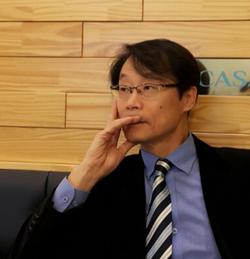
◆ Songsan
A poet and researcher of history and philosophy. Former director of the Syngman Rhee Institute. Currently serves as an advisory researcher for the Korean Modern and Contemporary History Research Society and as the representative of the philosophy forum Lyceum. He has published four poetry collections, co-translated "Heroes of Gallipoli," and published "Joseon Became Myth" (2026), a commentary on historical psychology. He is actively engaged in research and practice of liberal cultural movements. Songsan is a pen name.

 Iranian Foreign Ministry: "Continuing Message Exchanges with the U.S. and Activities of Mediating Countries"
Esmaeil Baghaei, Spokesperson for the Iranian Ministry of Foreign Affairs [Xinhua, Yonhap News file photo]Esmaeil Baghaei, spokesperson for the Iranian Ministry of Foreign Affairs, stated on the 26th
Iranian Foreign Ministry: "Continuing Message Exchanges with the U.S. and Activities of Mediating Countries"
Esmaeil Baghaei, Spokesperson for the Iranian Ministry of Foreign Affairs [Xinhua, Yonhap News file photo]Esmaeil Baghaei, spokesperson for the Iranian Ministry of Foreign Affairs, stated on the 26th
 President Yoon: "Do You Think You Are Safe from the Special Counsel?"... Final Statement Video Released
President Yoon Suk Yeol rebuking the special prosecutor on the 24th. [Court video / @birds_justice X account subtitle GIF] A video of President Yoon Suk Yeol's closing statement at his trial rega
President Yoon: "Do You Think You Are Safe from the Special Counsel?"... Final Statement Video Released
President Yoon Suk Yeol rebuking the special prosecutor on the 24th. [Court video / @birds_justice X account subtitle GIF] A video of President Yoon Suk Yeol's closing statement at his trial rega
 President Yoon, regarding the first-instance ruling on the Public Official Election Act: “An excessive political verdict that distorts the facts… We will appeal immediately.”
The first-instance sentencing hearing for President Yoon Suk Yeol regarding violations of the Public Official Election Act is being broadcast live at Seoul Station on the 27th. [Photo=Yonhap News]Pres
President Yoon, regarding the first-instance ruling on the Public Official Election Act: “An excessive political verdict that distorts the facts… We will appeal immediately.”
The first-instance sentencing hearing for President Yoon Suk Yeol regarding violations of the Public Official Election Act is being broadcast live at Seoul Station on the 27th. [Photo=Yonhap News]Pres
 WSJ: "SK Hynix ADR Premium Is a Sign of AI Trading Overheat"
Advertisement for SK Hynix ADR listing in New York's Times Square [Reuters=Yonhap News file photo]The Wall Street Journal (WSJ) has pointed out that the price of SK Hynix’s American Depositary Recei
WSJ: "SK Hynix ADR Premium Is a Sign of AI Trading Overheat"
Advertisement for SK Hynix ADR listing in New York's Times Square [Reuters=Yonhap News file photo]The Wall Street Journal (WSJ) has pointed out that the price of SK Hynix’s American Depositary Recei
 'Godfather of Japanese Mystery Novels' Keigo Higashino Passes Away After Battle with Cancer at 68
Famous Japanese mystery novelist Keigo Higashino [AFP=Yonhap News]It has been belatedly reported that Keigo Higashino, the "godfather of Japanese mystery novels" and author of bestsellers such as "The
'Godfather of Japanese Mystery Novels' Keigo Higashino Passes Away After Battle with Cancer at 68
Famous Japanese mystery novelist Keigo Higashino [AFP=Yonhap News]It has been belatedly reported that Keigo Higashino, the "godfather of Japanese mystery novels" and author of bestsellers such as "The
 [Park Pil-kyu Security Column] To the Ignorant Trying to Clothe a Beast in Sheep's Clothing
Rep. Kim Byung-joo of the Democratic Party of Korea [Photo=Yonhap News]“The Air Force Academy doesn't teach you how to fly a plane!” “The Army, Navy, and Air Force academies are exactly the
[Park Pil-kyu Security Column] To the Ignorant Trying to Clothe a Beast in Sheep's Clothing
Rep. Kim Byung-joo of the Democratic Party of Korea [Photo=Yonhap News]“The Air Force Academy doesn't teach you how to fly a plane!” “The Army, Navy, and Air Force academies are exactly the
 [Issue Diagnosis] Two Effects of the Election Petition Review
 [Photo] Evidence of Election Fraud Flooding U.S. Media… Trump Had 2.7 Million Votes Stolen
 [Video] U.S. Semiquincentennial Air Show... 'Art in the Sky' streaks across New York
 [Editorial Cartoon] A Draconian Law That Undermines Freedom of Expression

 List
List









