
The international financial order has undergone two major transformations in the past half-century. One was the collapse of the gold dollar system, and the other was the emergence of the petrodollar system.
Recently, another potential change has been cautiously discussed in international political economy. It is analyzed that a new monetary order, dubbed 'Dollar 3.0,' may be forming, driven by the convergence of technological hegemony competition and changes in financial infrastructure.
In August 1971, U.S. President Richard Nixon announced measures to suspend the convertibility of the dollar into gold. This decision, known as the 'Nixon Shock,' effectively ended the Bretton Woods system and marked the close of the gold dollar era.
However, the dollar's hegemony itself did not collapse. The United States soon reshaped the international financial order in a different way.

The so-called petrodollar system emerged in the mid-1970s.
Through cooperation primarily between the United States and Saudi Arabia, international oil transactions were effectively fixed to be settled in dollars. The dollars accumulated by oil-exporting countries then flowed back into the U.S. financial market, with a significant portion used to purchase U.S. Treasury bonds.
Within this structure, where dollars earned from oil trade returned to the U.S. Treasury market, the dollar's hegemony was maintained for decades.
Recent analyses suggest that this structure is once again undergoing a transformation in the international financial market.
This is due to discussions of 'de-dollarization,' as some oil-producing countries permit non-dollar settlements or China attempts to expand Yuan settlements.
However, not all perspectives in the financial market view this as a simple weakening of dollar hegemony. Some argue that the dollar system is not collapsing but is likely to be reshaped in a new way.
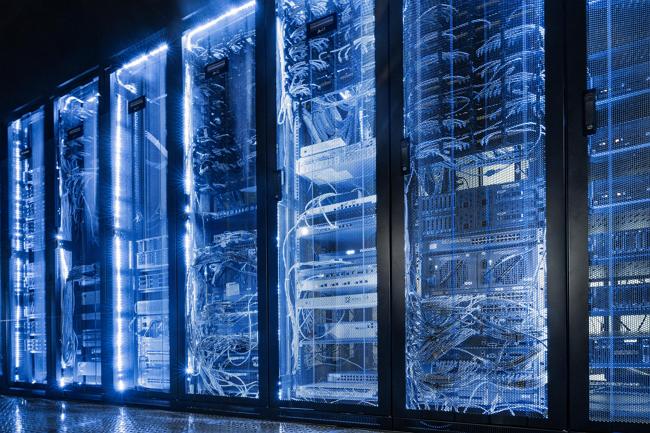
Digital financial technology lies at the heart of this change.
One of the most notable recent developments in international finance is stablecoins. Stablecoins are digital tokens pegged to the value of the dollar and traded on blockchain networks.
The crucial aspect is the reserve asset structure. Most stablecoins use U.S. Treasury bonds as collateral, along with dollar deposits.
This signifies that despite being digital tokens, their underlying assets are ultimately U.S. Treasury bonds.
If this structure expands, a financial framework could emerge where global payment systems are directly linked to the U.S. Treasury market.
In the existing petrodollar system, dollars acquired from oil sales flowed into the Treasury market. However, in a digital dollar system, the possibility arises that the global payment network itself could be linked to U.S. Treasury bonds.
This structure eliminates the intermediate step of oil and directly connects financial infrastructure with the Treasury market.
This transformation cannot be explained solely by innovations in financial technology.
Recently, the U.S. has been simultaneously pursuing policies to support the semiconductor industry, reorganize supply chains, and implement manufacturing reshoring policies.
At the core of these initiatives is the competition for AI hegemony. The AI industry is akin to a comprehensive industry that simultaneously requires various sectors such as semiconductors, data centers, power infrastructure, cloud computing, and telecommunications networks.
Therefore, the reshoring efforts pursued by the U.S. are interpreted not merely as a return of manufacturing but as a strategy to redeploy the core infrastructure of the AI era within its own borders.
As advanced semiconductors, GPUs, data centers, and power grids become intertwined with national security issues, it is analyzed that changes in the financial order are difficult to separate from this trend.
Amidst ongoing technological hegemony competition and industrial restructuring, the financial order is also placed within the flow of change.
Considering this background, the recent U.S. foreign policy can be interpreted from a slightly different angle, making more sense of the flow of various seemingly disconnected events.
It is necessary to understand these events not as short-term policies or the impulsive decisions of specific leaders, but within the context of the structural changes the U.S. is pursuing.

For instance, looking at the situation in the Middle East, it is difficult to see the U.S. treating the Iran issue as a mere regional conflict.
From the perspective of energy supply chains, maritime control, and the reshaping of the Middle Eastern order, it is analyzed that the U.S. is unlikely to withdraw without any strategic gains.
The containment of China is also understood in a similar context.
The strengthening of regulations in advanced technology sectors such as semiconductors and artificial intelligence is interpreted not as a simple trade dispute but as part of the technological hegemony competition.
Within this trend, projections suggest that U.S. pressure on China is more likely to expand in various forms rather than ease in the short term.
Trade policy also falls within the same framework.
The recurrent tariff pressures in recent U.S. political discourse are analyzed by many not as simple protectionist policies but as tools used in the process of supply chain reorganization and industrial structure adjustment.
Ultimately, these policies, rather than being independent events, can be seen as movements occurring within the larger trend of securing technological hegemony, industrial reshoring, and financial structure transformation.
The discussion of a new financial order, dubbed 'Dollar 3.0,' is also evaluated as being closely related to these structural changes.
The global monetary order, which transitioned from gold dollars to petrodollars, is now facing another potential transformation.
It is still difficult to definitively state the form that the U.S.'s prepared 'Dollar 3.0' will take within this new order, which combines AI hegemony competition, industrial restructuring, and digital financial infrastructure.
However, it is clear that the hegemonic power is the first to read and act upon the signs of change.

 Iranian Foreign Ministry: "Continuing Message Exchanges with the U.S. and Activities of Mediating Countries"
Esmaeil Baghaei, Spokesperson for the Iranian Ministry of Foreign Affairs [Xinhua, Yonhap News file photo]Esmaeil Baghaei, spokesperson for the Iranian Ministry of Foreign Affairs, stated on the 26th
Iranian Foreign Ministry: "Continuing Message Exchanges with the U.S. and Activities of Mediating Countries"
Esmaeil Baghaei, Spokesperson for the Iranian Ministry of Foreign Affairs [Xinhua, Yonhap News file photo]Esmaeil Baghaei, spokesperson for the Iranian Ministry of Foreign Affairs, stated on the 26th
 President Yoon: "Do You Think You Are Safe from the Special Counsel?"... Final Statement Video Released
President Yoon Suk Yeol rebuking the special prosecutor on the 24th. [Court video / @birds_justice X account subtitle GIF] A video of President Yoon Suk Yeol's closing statement at his trial rega
President Yoon: "Do You Think You Are Safe from the Special Counsel?"... Final Statement Video Released
President Yoon Suk Yeol rebuking the special prosecutor on the 24th. [Court video / @birds_justice X account subtitle GIF] A video of President Yoon Suk Yeol's closing statement at his trial rega
 President Yoon, regarding the first-instance ruling on the Public Official Election Act: “An excessive political verdict that distorts the facts… We will appeal immediately.”
The first-instance sentencing hearing for President Yoon Suk Yeol regarding violations of the Public Official Election Act is being broadcast live at Seoul Station on the 27th. [Photo=Yonhap News]Pres
President Yoon, regarding the first-instance ruling on the Public Official Election Act: “An excessive political verdict that distorts the facts… We will appeal immediately.”
The first-instance sentencing hearing for President Yoon Suk Yeol regarding violations of the Public Official Election Act is being broadcast live at Seoul Station on the 27th. [Photo=Yonhap News]Pres
 WSJ: "SK Hynix ADR Premium Is a Sign of AI Trading Overheat"
Advertisement for SK Hynix ADR listing in New York's Times Square [Reuters=Yonhap News file photo]The Wall Street Journal (WSJ) has pointed out that the price of SK Hynix’s American Depositary Recei
WSJ: "SK Hynix ADR Premium Is a Sign of AI Trading Overheat"
Advertisement for SK Hynix ADR listing in New York's Times Square [Reuters=Yonhap News file photo]The Wall Street Journal (WSJ) has pointed out that the price of SK Hynix’s American Depositary Recei
 'Godfather of Japanese Mystery Novels' Keigo Higashino Passes Away After Battle with Cancer at 68
Famous Japanese mystery novelist Keigo Higashino [AFP=Yonhap News]It has been belatedly reported that Keigo Higashino, the "godfather of Japanese mystery novels" and author of bestsellers such as "The
'Godfather of Japanese Mystery Novels' Keigo Higashino Passes Away After Battle with Cancer at 68
Famous Japanese mystery novelist Keigo Higashino [AFP=Yonhap News]It has been belatedly reported that Keigo Higashino, the "godfather of Japanese mystery novels" and author of bestsellers such as "The
 [Park Pil-kyu Security Column] To the Ignorant Trying to Clothe a Beast in Sheep's Clothing
Rep. Kim Byung-joo of the Democratic Party of Korea [Photo=Yonhap News]“The Air Force Academy doesn't teach you how to fly a plane!” “The Army, Navy, and Air Force academies are exactly the
[Park Pil-kyu Security Column] To the Ignorant Trying to Clothe a Beast in Sheep's Clothing
Rep. Kim Byung-joo of the Democratic Party of Korea [Photo=Yonhap News]“The Air Force Academy doesn't teach you how to fly a plane!” “The Army, Navy, and Air Force academies are exactly the
 [Issue Diagnosis] Two Effects of the Election Petition Review
 [Photo] Evidence of Election Fraud Flooding U.S. Media… Trump Had 2.7 Million Votes Stolen
 [Video] U.S. Semiquincentennial Air Show... 'Art in the Sky' streaks across New York
 [Editorial Cartoon] A Draconian Law That Undermines Freedom of Expression

 List
List










