A North Korea-Russia IT product exhibition held in Pyongyang last year. Yonhap News
The BBC reported on the 2nd (local time) the story of an IT worker from North Korea who, after being dispatched to China, worked for companies in the United States and Europe under 'multi-layered disguised identities' to earn foreign currency remotely.
The BBC stated that it directly interviewed this individual via video call and used the pseudonym 'Jin-su' in the article to protect his identity.
Jin-su said that while working in China, he secured work from companies in the US and Europe through remote work, earning at least $5,000 (7 million won) per month. He also mentioned that some of his colleagues earned significantly more.
Jin-su stated that he and his colleagues usually worked in teams of ten.
Jin-su said that 85% of the money he earned went to North Korea, adding, "We know it feels like robbery, but we just accept it as our fate," and "It's still much better than when I was in North Korea."
It is known that thousands of North Korean IT workers are dispatched to China, Russia, Africa, or other overseas regions and mobilized for foreign currency earnings through such methods. According to a UN Security Council report released in March 2024, the amount they earn for North Korea is estimated to be between $250 million and $600 million (350 billion to 830 billion won) annually.
There are several reasons why North Korea sends its IT workers abroad to work. Internet access is limited within North Korea, but it is more accessible abroad, making it easier to work.
Also, to secure remote work contracts from US and European companies, it is practically essential for applicants to pretend to be from and live in Western countries. Not only are the salaries much higher, but they also have to do so to avoid Western sanctions.
The identity laundering process involves multiple stages.
First, they disguise themselves as Chinese and ask individuals living in countries like Hungary and Turkey to borrow their identities in exchange for a percentage of their income.
After borrowing the identities of Eastern Europeans or Turks, they use these 'first-layer disguised identities' to borrow the identities of Western Europeans through a similar method, creating 'second-layer disguised identities'.
Subsequently, if necessary, they may create 'third and fourth-layer disguised identities' as British or US citizens or residents.
They then use these multi-layered disguised identities to get hired by companies in the US and Europe.
During the process of submitting application documents, colleagues who are proficient in English assist them.
Jin-su said, "If you put an 'Asian face' on your profile, you will never get hired."
He stated that after residing in China for several years, his dissatisfaction with the poor working conditions gradually grew, and the feeling of "being imprisoned" intensified.
He explained, "We were forbidden to go out and always had to stay indoors. We couldn't exercise or do the things we wanted to do."
However, Jin-su said that living abroad makes it easier to access Western media compared to living in North Korea. "You get to see the real world. When we are outside North Korea, we realize that something is wrong with the country," he said.
However, Jin-su explained that not many people attempt to escape the clutches of the North Korean regime, unlike his case.
He said, "Most people just return home with the money, and very few think about defecting."
Jin-su explained that these days, he earns less when working for the North Korean authorities than before because he doesn't engage in multiple jobs simultaneously using various fake identities, but he has more money in his own pocket.
He said, "I've become accustomed to earning money through illegal means, but now I earn money honestly through hard work."
Meanwhile, it is reported that North Korea sends approximately 100,000 foreign currency earners abroad to China, Russia, and other countries to work in factories and restaurants.
Yonhap News

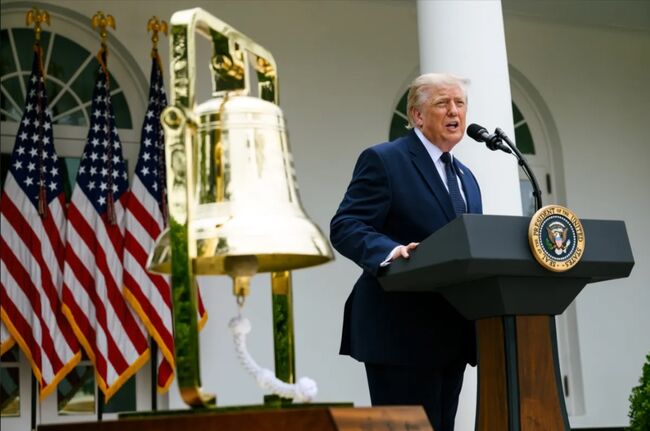 Trump pressures for rate cut again ahead of FOMC... "Should be the lowest in the world"
U.S. President Donald Trump. [Photo = The White House] U.S. President Donald Trump once again pressured the Federal Reserve, the U.S. central bank, to lower interest rates on the 27th (local time
Trump pressures for rate cut again ahead of FOMC... "Should be the lowest in the world"
U.S. President Donald Trump. [Photo = The White House] U.S. President Donald Trump once again pressured the Federal Reserve, the U.S. central bank, to lower interest rates on the 27th (local time
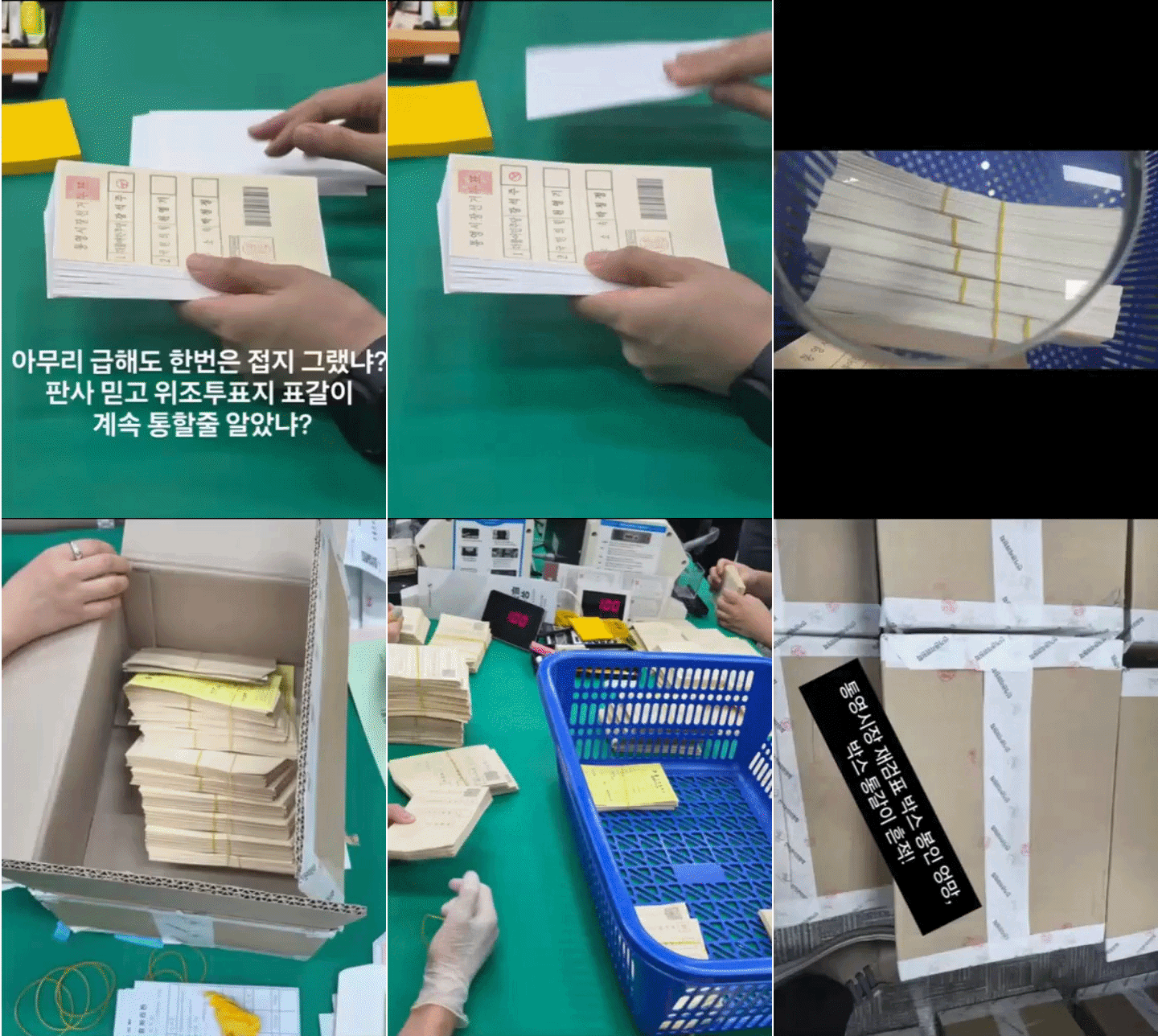 “Ignoring crisp ballots and damaged seals”… Tongyeong mayoral recount concludes with ‘no change in outcome,’ leaving suspicions and public outrage behind
Suspected counterfeit ballots discovered in Tongyeong [GIF from social media of Representative Hwang Kyo-ahn / Attorney Park Joo-hyun]During a recount of the Tongyeong mayoral election in South Gyeong
“Ignoring crisp ballots and damaged seals”… Tongyeong mayoral recount concludes with ‘no change in outcome,’ leaving suspicions and public outrage behind
Suspected counterfeit ballots discovered in Tongyeong [GIF from social media of Representative Hwang Kyo-ahn / Attorney Park Joo-hyun]During a recount of the Tongyeong mayoral election in South Gyeong
 President Yoon, regarding the first-instance ruling on the Public Official Election Act: “An excessive political verdict that distorts the facts… We will appeal immediately.”
The first-instance sentencing hearing for President Yoon Suk Yeol regarding violations of the Public Official Election Act is being broadcast live at Seoul Station on the 27th. [Photo=Yonhap News]Pres
President Yoon, regarding the first-instance ruling on the Public Official Election Act: “An excessive political verdict that distorts the facts… We will appeal immediately.”
The first-instance sentencing hearing for President Yoon Suk Yeol regarding violations of the Public Official Election Act is being broadcast live at Seoul Station on the 27th. [Photo=Yonhap News]Pres
 WSJ: "SK Hynix ADR Premium Is a Sign of AI Trading Overheat"
Advertisement for SK Hynix ADR listing in New York's Times Square [Reuters=Yonhap News file photo]The Wall Street Journal (WSJ) has pointed out that the price of SK Hynix’s American Depositary Recei
WSJ: "SK Hynix ADR Premium Is a Sign of AI Trading Overheat"
Advertisement for SK Hynix ADR listing in New York's Times Square [Reuters=Yonhap News file photo]The Wall Street Journal (WSJ) has pointed out that the price of SK Hynix’s American Depositary Recei
 'Godfather of Japanese Mystery Novels' Keigo Higashino Passes Away After Battle with Cancer at 68
Famous Japanese mystery novelist Keigo Higashino [AFP=Yonhap News]It has been belatedly reported that Keigo Higashino, the "godfather of Japanese mystery novels" and author of bestsellers such as "The
'Godfather of Japanese Mystery Novels' Keigo Higashino Passes Away After Battle with Cancer at 68
Famous Japanese mystery novelist Keigo Higashino [AFP=Yonhap News]It has been belatedly reported that Keigo Higashino, the "godfather of Japanese mystery novels" and author of bestsellers such as "The
 [Park Pil-kyu Security Column] To the Ignorant Trying to Clothe a Beast in Sheep's Clothing
Rep. Kim Byung-joo of the Democratic Party of Korea [Photo=Yonhap News]“The Air Force Academy doesn't teach you how to fly a plane!” “The Army, Navy, and Air Force academies are exactly the
[Park Pil-kyu Security Column] To the Ignorant Trying to Clothe a Beast in Sheep's Clothing
Rep. Kim Byung-joo of the Democratic Party of Korea [Photo=Yonhap News]“The Air Force Academy doesn't teach you how to fly a plane!” “The Army, Navy, and Air Force academies are exactly the
 [Issue Diagnosis] Two Effects of the Election Petition Review
 [Photo] Evidence of Election Fraud Flooding U.S. Media… Trump Had 2.7 Million Votes Stolen
 [Video] U.S. Semiquincentennial Air Show... 'Art in the Sky' streaks across New York
 [Editorial Cartoon] A Draconian Law That Undermines Freedom of Expression

 List
List