 The Chinese Communist Party slogan "Follow the Party" (永远跟党走) seen on a Chinese street. Grammar is ignored, and only the Party's acronym is capitalized. [Photo: AFP]
Each fingertip has unique curved patterns called 'fingerprints,' which serve as a strong means of identification. As fingerprints are unique biological information, they are far more difficult to forge than signatures or seals. Some artists even leave their fingerprints on their work instead of signing it.
Similarly, hackers leave their fingerprints. Hackers are individuals whose computer skills have reached an artistic level, and they are proficient in advanced computer technologies such as program code, server environments, databases, and network security.
They possess the capability to breach systems of corporations or nations with robust security measures, access data, and even halt operations, and thus, they take great pride in their abilities.
Circumstantial Evidence of the Chinese Communist Party's Interference in South Korean Elections
A 'hacker's fingerprint' refers to a maker's mark left by the hacker who created a manipulated program, in an attempt to boast about their 'creation.' Specifically, it refers to 'follow the party (ftp),' which was derived from the election results data published on the National Election Commission's website after the April 15, 2020 general election.
 A sculpture in front of Tencent's headquarters in Shenzhen, China, bears the phrase "Follow our party, Start your business." [Photo: The New York Times]
The phrase 'Follow the Party' is a shortened version of the Chinese Communist Party's (CCP) slogan 'Yongyuan Gen Dang Zou' (永遠跟黨走), which means 'Follow the Party Forever.' The hacker designed a special algorithm using the sequence numbers of the 253 electoral districts nationwide, such that this phrase would be generated when the target values of the election data were achieved.
Those who track election fraud claim that "inserting the Chinese Communist Party's slogan 'follow_the_party' is nothing less than an ambition to seize control of the election and gain possession of the Korean Peninsula."
The individual who discovered this encoded message is computer expert Roy Kim. He majored in accounting at California State University, Long Beach, and has worked as a senior researcher at Seoul National University and Sungkyunkwan University.
Roy Kim, immediately after the vote count for the April 15 general election, was examining the correlation between early voting rates and election day voting rates in each district by converting the vote share of each district into a percentage of the total vote share. During this process, he coincidentally discovered a fingerprint, presumably left by a programmer.
The Hacker's Artistic Arrogance and the CCP's Ambition
According to Roy Kim's book, "The Discovery of the Hacker's Fingerprint: How I Discovered Follow+The_Party" (2023), he states, "When the array of numbers within the election system was decoded into binary and then converted into characters by adding a leading zero, the sentence 'follow the party' emerged."
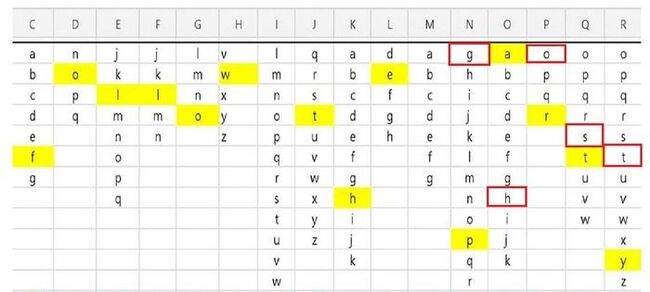 The code 'follow the party' derived from the election results data published by the National Election Commission after the April 15, 2020 general election. [Photo: Sage]
Each of the 253 electoral districts has a number, such as Jongno 1, Jung-gu 2, and so on. By utilizing these numbers, the string 'ftp' was inserted as characters.
Opponents of election fraud argue that this was a case of fitting data to a predetermined outcome. However, the 'ftp' marker is recognized as irrefutable evidence due to the discovery of additional traces, such as vote shifts made in the second and third rounds of adjustments to insert the 'ftp' worker's mark, and the adjustment of numbers to ensure that all 253 electoral districts received at least 15% of the vote, allowing the Democratic Party to fully recover its election expenses.
Furthermore, Roy Kim explains that programmers were compelled to use lowercase ASCII codes because they had to insert the phrase "Follow the Chinese Communist Party"—represented as 'ftp'—into the data, which was a collection of numbers, announced by the National Election Commission after the April 15 general election.
Kim Mi-young, CEO of VON, states in her book "Understanding the Hacker's Fingerprint Follow_The_Party with 100 Puzzles" (2025), "Follow_The_Party is the only indelible evidence and the best proof of the Chinese Communist Party's interference in South Korean elections. By understanding the 'follow_the_party' algorithm embedded in the results data of the April 15, 2020 general election, one can see the larger picture of election fraud."
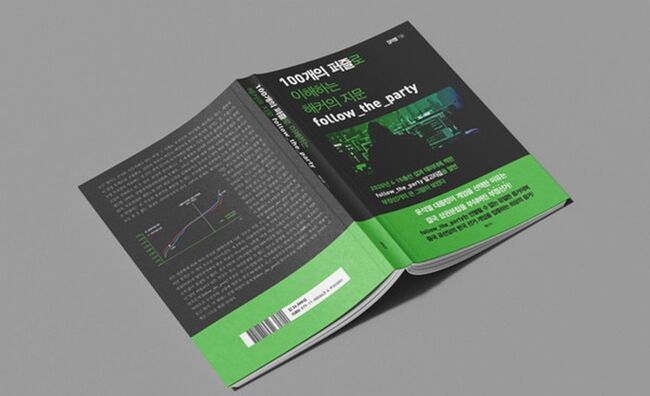 Kim Mi-young, CEO of VON's "Understanding the Hacker's Fingerprint Follow_The_Party with 100 Puzzles" (2025)
Reporter Lim Yo-hee

 Iranian Foreign Ministry: "Continuing Message Exchanges with the U.S. and Activities of Mediating Countries"
Esmaeil Baghaei, Spokesperson for the Iranian Ministry of Foreign Affairs [Xinhua, Yonhap News file photo]Esmaeil Baghaei, spokesperson for the Iranian Ministry of Foreign Affairs, stated on the 26th
Iranian Foreign Ministry: "Continuing Message Exchanges with the U.S. and Activities of Mediating Countries"
Esmaeil Baghaei, Spokesperson for the Iranian Ministry of Foreign Affairs [Xinhua, Yonhap News file photo]Esmaeil Baghaei, spokesperson for the Iranian Ministry of Foreign Affairs, stated on the 26th
 President Yoon: "Do You Think You Are Safe from the Special Counsel?"... Final Statement Video Released
President Yoon Suk Yeol rebuking the special prosecutor on the 24th. [Court video / @birds_justice X account subtitle GIF] A video of President Yoon Suk Yeol's closing statement at his trial rega
President Yoon: "Do You Think You Are Safe from the Special Counsel?"... Final Statement Video Released
President Yoon Suk Yeol rebuking the special prosecutor on the 24th. [Court video / @birds_justice X account subtitle GIF] A video of President Yoon Suk Yeol's closing statement at his trial rega
 President Yoon, regarding the first-instance ruling on the Public Official Election Act: “An excessive political verdict that distorts the facts… We will appeal immediately.”
The first-instance sentencing hearing for President Yoon Suk Yeol regarding violations of the Public Official Election Act is being broadcast live at Seoul Station on the 27th. [Photo=Yonhap News]Pres
President Yoon, regarding the first-instance ruling on the Public Official Election Act: “An excessive political verdict that distorts the facts… We will appeal immediately.”
The first-instance sentencing hearing for President Yoon Suk Yeol regarding violations of the Public Official Election Act is being broadcast live at Seoul Station on the 27th. [Photo=Yonhap News]Pres
 WSJ: "SK Hynix ADR Premium Is a Sign of AI Trading Overheat"
Advertisement for SK Hynix ADR listing in New York's Times Square [Reuters=Yonhap News file photo]The Wall Street Journal (WSJ) has pointed out that the price of SK Hynix’s American Depositary Recei
WSJ: "SK Hynix ADR Premium Is a Sign of AI Trading Overheat"
Advertisement for SK Hynix ADR listing in New York's Times Square [Reuters=Yonhap News file photo]The Wall Street Journal (WSJ) has pointed out that the price of SK Hynix’s American Depositary Recei
 'Godfather of Japanese Mystery Novels' Keigo Higashino Passes Away After Battle with Cancer at 68
Famous Japanese mystery novelist Keigo Higashino [AFP=Yonhap News]It has been belatedly reported that Keigo Higashino, the "godfather of Japanese mystery novels" and author of bestsellers such as "The
'Godfather of Japanese Mystery Novels' Keigo Higashino Passes Away After Battle with Cancer at 68
Famous Japanese mystery novelist Keigo Higashino [AFP=Yonhap News]It has been belatedly reported that Keigo Higashino, the "godfather of Japanese mystery novels" and author of bestsellers such as "The
 [Park Pil-kyu Security Column] To the Ignorant Trying to Clothe a Beast in Sheep's Clothing
Rep. Kim Byung-joo of the Democratic Party of Korea [Photo=Yonhap News]“The Air Force Academy doesn't teach you how to fly a plane!” “The Army, Navy, and Air Force academies are exactly the
[Park Pil-kyu Security Column] To the Ignorant Trying to Clothe a Beast in Sheep's Clothing
Rep. Kim Byung-joo of the Democratic Party of Korea [Photo=Yonhap News]“The Air Force Academy doesn't teach you how to fly a plane!” “The Army, Navy, and Air Force academies are exactly the
 [Issue Diagnosis] Two Effects of the Election Petition Review
 [Photo] Evidence of Election Fraud Flooding U.S. Media… Trump Had 2.7 Million Votes Stolen
 [Video] U.S. Semiquincentennial Air Show... 'Art in the Sky' streaks across New York
 [Editorial Cartoon] A Draconian Law That Undermines Freedom of Expression

 List
List









