 Jean Cummings, referring to the Hankooki Ilbo's April 2nd article "May it be a starting point where freedom of speech is protected...", uploaded a photo taken by our reporter and stated on Facebook on the 5th that "Witnessing the Kim Gyu-na case has reaffirmed the essence of the crisis facing Korean society today." [Photo=Reporter Lim Yo-hee, Jean Cummings' Facebook]
American political commentator Jean Cummings has sharply analyzed the reality South Korea faces while observing the case of artist Kim Gyu-na.
Jean Cummings, referring to the Hankooki Ilbo's April 2nd article "May it be a starting point where freedom of speech is protected...", uploaded a photo taken by our reporter and stated on Facebook on the 5th that "Witnessing the Kim Gyu-na case has reaffirmed the essence of the crisis facing Korean society today."
He defined this issue not as a matter confined to the narrow framework of a single artist's personal remarks and her punishment, but as a problem where the law directly intervenes in the interpretation of history itself, nationally enforcing a specific narrative, and attempting to punish other perspectives as 'falsehoods' or 'distortions'.
He further criticized, "The fact that raising questions about May 18th from a different perspective can be subject to criminal punishment shows that democracy in Korean society is still not firmly established and is severely damaged."
History is essentially an academic domain, and it is something that lives and moves through continuous debate and reinterpretation. The moment it becomes a fixed 'national doctrine' by law, history can no longer be an object of inquiry but is inevitably transformed into a mandated answer.
Jean Cummings also stated, "In the United States, even horrific events like the 9/11 terrorist attacks have various claims and perspectives, such as that the government orchestrated the event, differing from the explanation officially provided by the government." He added, "As a democratic nation, the U.S. does not punish its citizens or suppress them with law for making such interpretations or raising questions."
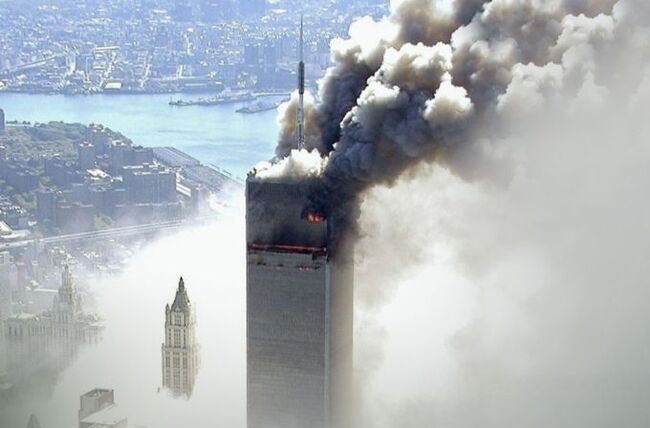 "In the United States, even horrific events like the 9/11 terrorist attacks are not punished or suppressed by law on the grounds of raising different interpretations or questions." [Photo=Yonhap News TV Capture]
This is because the right to free interpretation and to ask questions is the foundation that sustains democracy, and it is the most crucial freedom that the state must protect to the end.
However, the left-wing administrations have meticulously excluded clear historical facts such as the armed uprising led by the South Korean Labor Party in Jeju on April 3, 1948, the refusal of some units of the Army's 14th Regiment to suppress Jeju in Yeosu and Suncheon in 1948 and their armed rebellion, and the suspected North Korean involvement and the role of armed forces during the May 18th Gwangju Uprising in 1980. Instead, they have reconstructed history solely through the lens of 'state violence'. As a result, today's younger generation in Korea has naturally internalized a distorted historical perspective, viewing the founding generation of the Republic of Korea and the anti-communist system as 'murderers,' and the communist and left-wing forces as 'victims.'
Jean Cummings argued, "South Korea has not only allowed politics to deeply intervene in the realm of historical interpretation but is still unwilling to abandon its attempts to nationally enforce a specific narrative using the coercive force of law." He added, "Regarding the May 18th issue as well, citizens have the right to hold different views on the identity of the armed forces and the meaning of the suppression process."
The following is the full text of Jean Cummings' Facebook post.
I have delved deeply into South Korea's industrialization miracle, its democratization process, and the tragedy of division, and have always believed that liberal democracy and the rule of law have been the key drivers of this nation's global success.
However, witnessing an event that began on October 13, 2024, has allowed me to reaffirm the essence of the crisis currently facing Korean society.
Artist Kim Gyu-na posted on her social media following the Nobel Prize in Literature award for author Han Kang. She expressed a critical view that the historical narrative contained in Han Kang's works, particularly the descriptions related to the May 18th Gwangju Uprising, constituted "historical distortion."
Furthermore, she characterized the May 18th event, which was then called the "Gwangju Incident," as an "armed rebellion by numerous individuals whose names cannot be disclosed and unknown entities," and pointed out the process by which this event was transformed into the "sacrosanct domain of a democratization movement."
Her statement, "Without the successful suppression, there would be no free Republic of Korea today," directly conflicted with the established official narrative surrounding the May 18th Gwangju Uprising. Because of this post, she was reported by the head of a civic group for allegedly violating the Special Act on the May 18th Democratic Uprising.
Following a police investigation, a prosecution, a summary order of 1 million won in August 2025, a request for formal trial, the first trial was held on April 2, 2026, and a verdict is scheduled for May 28.
She is currently standing in court under the name of "defendant," laboriously defending her interpretation of history.
I believe this case is by no means a matter confined to the narrow framework of a single artist's personal remarks and her punishment. It transcends freedom of expression, as it is an issue where the law directly intervenes in the interpretation of history itself, nationally enforcing a specific narrative, and attempting to punish other perspectives as 'falsehoods' or 'distortions.'
The fact that artist Kim Gyu-na's expression of opposition to Han Kang's work and her raising questions about the May 18th Gwangju Uprising from a different perspective can be subject to criminal punishment is a point that reveals democracy in Korean society is still not firmly established and is severely damaged.
History is essentially an academic domain and is a living entity that evolves through continuous debate and reinterpretation. The moment it becomes a fixed 'national doctrine' by law, history can no longer be an object of inquiry but is inevitably transformed into a mandated answer.
All humans have the right and freedom to hold different perspectives on history.
The U.S., Which Does Not Punish Even 9/11 Conspiracy Theories
In fact, in the United States, even horrific events like the 9/11 terrorist attacks have various claims and perspectives, such as that the government orchestrated the event, differing from the explanation officially provided by the government.
However, as a democratic nation, the U.S. does not punish its citizens or suppress them with law for making such interpretations or raising questions. This is because the right to free interpretation and to ask questions is the foundation that sustains democracy, and it is the most crucial freedom that the state must protect to the end.
In contrast, South Korea not only allows politics to deeply intervene in the realm of historical interpretation but is still unwilling to abandon its attempts to nationally enforce a specific narrative using the coercive force of law.
In a structure where the law reigns over history, defining and controlling the scope of interpretation, it is difficult to say that freedom of expression in its true sense and democracy are fully functioning.
Regarding the May 18th Gwangju Uprising issue as well, citizens have the right to hold different views on the identity of the armed forces and the meaning of the suppression process.
This diversity in viewing history is, rather, the foundation for maintaining a healthy democracy. Criminalizing it is an issue that can never be tolerated in a democratic country.
If the state begins to legally define the scope of historical interpretation through the tool of special legislation and punishes thoughts outside of it, this goes beyond a mere 'infringement of freedom of expression' and shakes the very foundation of the freedom of thought, academia, and expression, which are the pillars of democracy.
It is at this very point that deep concern arises regarding Korean society.
Can a society where the law reigns over history truly be called a free democratic society? Can a society that does not even ask itself that question be said to be moving in the right direction?
The case of artist Kim Gyu-na is not just a controversy over the remarks of one artist. It is merely an expression of a much more fundamental and dangerous problem that Korean society as a whole is facing.
History is an area of living debate that can never be fixed to a single 'correct answer.'
In liberal democracies like the United States, there are fierce differences in interpretation among scholars, citizens, and politicians even regarding the Civil War, the Vietnam War, or policies towards Native Americans.
These differences are tested within freedom of expression and academic freedom, and they become the driving force for societal maturation.
However, in Korea, starting with the May 18th Democratic Uprising, followed by the Jeju April 3rd Incident, and the Yeosu-Suncheon October 19th Incident, the state has established an 'official history' through special legislation and brands interpretations outside of it as 'dissemination of false information' or 'distortion,' making them subject to legal punishment.
This is not simply an 'infringement of freedom of expression' but a clear act of undermining democracy, where power attempts to control citizens' memories and narratives.
The Roots of Distortion in Modern Korean History - Systematic Indoctrination Through Public Education
The roots of this phenomenon lie in the overall flow of modern Korean history and the process of systematically 'reinterpreting' that flow through public education.
After liberation in 1945, the Korean peninsula was divided by the joint occupation of the US and Soviet armies.
The South adopted liberal democracy and capitalism, while the North adopted Soviet-style communism.
The Korean War, which began with North Korea's invasion on June 25, 1950, resulted in over 3 million casualties, and the civilian massacres in areas occupied by communist forces (e.g., the Daejeon Prison Incident, the Geochang Massacre) starkly demonstrated the brutality of communist ideology.
Nevertheless, after the democratization movement in the 1980s, this history began to be gradually reconstructed in Korean public education and academia within a simplistic frame of "state violence vs. popular resistance."
This distortion has been systematically carried out, particularly in elementary, middle, and high school history textbooks.
During the left-wing administrations of the 2000s (Kim Dae-jung, Roh Moo-hyun, Moon Jae-in governments), during textbook revisions, the Jeju April 3rd Incident was emphasized as a 'peaceful popular uprising,' the May 18th Gwangju Uprising as a 'symbol of democratization,' and the Yeosu-Suncheon Incident as a 'democratic struggle that began with insubordination.' In contrast, suspicions about the armed uprising by the South Korean Labor Party behind these events, North Korean directives or support, or the reality of initial violence were diluted or omitted.
Korean students have grown up being systematically instilled with the victim narrative that "the state (South Korean government) oppressed the people" from their elementary, middle, and high school years.
This was not merely a level of 'left-leaning education' but was a form of indoctrination that implicitly glorified and justified ideologies aligned with communism and Juche ideology.
As a result, today's younger generation in Korea has naturally internalized a distorted historical perspective, viewing the founding generation of the Republic of Korea and the anti-communist system as 'murderers,' and the communist and left-wing forces as 'victims.'
Clear historical facts such as the armed uprising led by the South Korean Labor Party in Jeju on April 3, 1948, the refusal of some units of the Army's 14th Regiment to suppress Jeju in Yeosu and Suncheon in 1948 and their armed rebellion, and the suspected North Korean involvement and the role of armed forces during the May 18th Gwangju Uprising in 1980 have been meticulously excluded and reconstructed solely through the lens of 'state violence.'
And a systematic framework has been established whereby any questioning or critical examination of this official narrative can be subject to legal punishment under the guise of "historical distortion."
This is a clear act of undermining democracy that can never be tolerated in a democratic country, an act where the state directly suppresses the freedoms of thought, expression, and academia of its citizens.
Legal Enforcement of Historical Interpretation Through Special Legislation
The initial purpose of the Special Act on the May 18th Democratic Uprising, first enacted by the Kim Young-sam administration in 1995, was the restoration of honor and compensation for the victims of the May 18th Gwangju Uprising, and the suspension of statutes of limitations for those involved in the December 12 military coup and the May 18th incident (Article 2).
This provision allowed for the retroactive punishment of past crimes for which the statute of limitations had already expired, leading to significant debate about violations of Article 13 of the Constitution (principle of non-retroactivity of penal laws, principle of legality). Although the Constitutional Court issued some opinions in favor of its constitutionality, a strong dissenting opinion argued that "allowing prosecution after the statute of limitations has expired is unconstitutional" (Constitutional Court Decision 96Hun-ga2, etc.).
Subsequently, in August 2020, through the addition and revision of Article 8 of the Special Act during the Moon Jae-in administration, it was stipulated that individuals who disseminate "false information regarding the May 18th Democratic Uprising" through newspapers, broadcasting, the internet, or assemblies could be punished with imprisonment of up to five years or a fine of up to 50 million won.
While academic, research, and journalistic purposes were exempted, the core problem lies in the extremely ambiguous and subjective criteria for judging 'false information.'
The crux of the problem is the extreme double standard. While the left-wing forces are not subject to any legal restrictions when they distort historical facts or spread all sorts of false narratives and news, they engage in selective oppression by using special legislation to punish the opposing side, which raises questions or presents different perspectives, under the name of 'historical distortion.'
The law has abandoned its duty to remain neutral and guarantee citizens' free historical interpretation, becoming a tool that protects only one side's ideology and suppresses the other.
This imbalance is the fundamental cause of continuous conflict and division in Korean society and is a phenomenon that can never be tolerated in a truly democratic society. It is a typical manifestation of 'thought control by power' seen in communist regimes, and it is precisely the reason why criticism arises that the current government is turning Korea into a communist state.
Consequently, as in the case of artist Kim Gyu-na, acts by citizens of presenting different perspectives or raising questions about historical events are being transformed into 'historical distortion' that anyone can sue for, making them subject to punishment.
If lawsuits are filed against citizens simply because they "think differently," using special legislation, and if courts accept these lawsuits, then Korean law can no longer be an impartial arbiter but will inevitably be reduced to a political weapon that protects only a specific ideological group and can punish citizens with opposing views at any time.
How can this be called a democratic society?
The moment the law intervenes to suppress citizens' free historical interpretation and expression of thought and sides with the accuser, Korean society will inevitably become a society of fear and surveillance where anyone can use the law to report and punish citizens who oppose left-wing ideology, point out the dangers of communist ideology, or present different historical perspectives and raise questions.
This is so dangerous that it evokes the situation during the Korean War when countless South Korean citizens were branded as 'counter-revolutionaries' and taken away to be executed based on denunciations by their neighbors in areas occupied by North Korean forces.
Furthermore, the left-wing Democratic Party intends to impose penalties for 'dissemination of false information' modeled after Article 8 of the May 18th Act on special laws concerning the Jeju April 3rd Incident and the Yeosu-Suncheon October 19th Incident in 1948. This is also a process of legally codifying a specific narrative under the guise of clarifying the truth.
South Korean Society Where the State Monopolizes Historical Interpretation
The common problem with these special laws is their unconstitutional retroactivity and their control over citizens' expression.
Article 13, Paragraph 1 of the Constitution clearly states, "No person shall be prosecuted for an act that does not constitute a crime under the law in force at the time of the act," proclaiming the principle of non-retroactivity of penal laws (principle of legality). Punishing historical interpretations that were not 'false' at the time with current laws is a clear case of retroactive legislation.
Moreover, Articles 21 (Freedom of Speech and Expression) and 22 (Freedom of Academia and Research) of the Constitution are explicitly designed to prevent the state from monopolizing the 'truth' of specific historical facts. Despite this, some factions are currently attempting to strip citizens of their right to raise questions about the communist background of these events and to hold different opinions.
Defining this as 'historical distortion' and legally punishing it is an act of making history a 'national doctrine' rather than a living area of debate, and it is a serious threat that directly destroys the pluralism of civil society and the foundation of democracy.
What is even more concerning is that these special laws operate in close cooperation between state power and civic organizations.
When civic organizations lead the reporting of cases, prosecutors and courts will treat the 'official narrative' as the absolute standard for judgment, thus greatly increasing the danger.
Originally, civil society and civic organizations are meant to check power and protect diverse opinions and minority voices. However, the current situation in Korea is that civic organizations have completely degenerated into 'history police' that reinforce only a specific ideology and exclude other interpretations.
If civic organizations are allowed to monitor and report on citizens' thoughts and remarks in this manner, our society will inevitably degenerate into a society of oppression and surveillance, where one must repeat only the predetermined 'correct answers,' rather than a space where one can freely think and question.
I assert that this is an act of suicide for liberal democracy, and I am deeply concerned because the moment history is fixed by law, the pursuit of truth stops, and the manipulation of memory by power begins.
For the sake of preserving democracy in South Korea, the law must never allow such attempts.
The reason Korean citizens must seriously confront this issue is not that only one artist, Kim Gyu-na, is being tried for her remarks today, but that tomorrow, your thoughts, your children's free questions and criticisms, scholars' research and questioning of doubts, and all of these could become subject to punishment.
In particular, the current Lee Jae-myung administration is indiscriminately filing lawsuits and reports against Korean YouTubers whenever they criticize the government or voice doubts, under the pretext of 'dissemination of false information.'
This is a clear anti-democratic act where the government systematically suppresses citizens' freedom of expression, and the Trump administration and various overseas media outlets are also recognizing this as a serious problem.
Even major Canadian media outlets with strong social democratic leanings are now strongly criticizing Korea for attempting a dictatorial communism.
The history of the 20th century clearly shows how communism failed.
Historical interpretation must be freely open to everyone.
The moment the state controls it, and the law binds history to a single 'correct answer,' that society loses its freedom, can no longer be called a democratic country, and such a state's attempt is ultimately a shortcut to a communist dictatorship.
For South Korea to maintain and grow the freedom and prosperity that the world envies, protecting the diversity of historical interpretation through law must be the top priority, and we must not forget that this is the starting point of true democracy.

 Iranian Foreign Ministry: "Continuing Message Exchanges with the U.S. and Activities of Mediating Countries"
Esmaeil Baghaei, Spokesperson for the Iranian Ministry of Foreign Affairs [Xinhua, Yonhap News file photo]Esmaeil Baghaei, spokesperson for the Iranian Ministry of Foreign Affairs, stated on the 26th
Iranian Foreign Ministry: "Continuing Message Exchanges with the U.S. and Activities of Mediating Countries"
Esmaeil Baghaei, Spokesperson for the Iranian Ministry of Foreign Affairs [Xinhua, Yonhap News file photo]Esmaeil Baghaei, spokesperson for the Iranian Ministry of Foreign Affairs, stated on the 26th
 President Yoon: "Do You Think You Are Safe from the Special Counsel?"... Final Statement Video Released
President Yoon Suk Yeol rebuking the special prosecutor on the 24th. [Court video / @birds_justice X account subtitle GIF] A video of President Yoon Suk Yeol's closing statement at his trial rega
President Yoon: "Do You Think You Are Safe from the Special Counsel?"... Final Statement Video Released
President Yoon Suk Yeol rebuking the special prosecutor on the 24th. [Court video / @birds_justice X account subtitle GIF] A video of President Yoon Suk Yeol's closing statement at his trial rega
 President Yoon, regarding the first-instance ruling on the Public Official Election Act: “An excessive political verdict that distorts the facts… We will appeal immediately.”
The first-instance sentencing hearing for President Yoon Suk Yeol regarding violations of the Public Official Election Act is being broadcast live at Seoul Station on the 27th. [Photo=Yonhap News]Pres
President Yoon, regarding the first-instance ruling on the Public Official Election Act: “An excessive political verdict that distorts the facts… We will appeal immediately.”
The first-instance sentencing hearing for President Yoon Suk Yeol regarding violations of the Public Official Election Act is being broadcast live at Seoul Station on the 27th. [Photo=Yonhap News]Pres
 WSJ: "SK Hynix ADR Premium Is a Sign of AI Trading Overheat"
Advertisement for SK Hynix ADR listing in New York's Times Square [Reuters=Yonhap News file photo]The Wall Street Journal (WSJ) has pointed out that the price of SK Hynix’s American Depositary Recei
WSJ: "SK Hynix ADR Premium Is a Sign of AI Trading Overheat"
Advertisement for SK Hynix ADR listing in New York's Times Square [Reuters=Yonhap News file photo]The Wall Street Journal (WSJ) has pointed out that the price of SK Hynix’s American Depositary Recei
 'Godfather of Japanese Mystery Novels' Keigo Higashino Passes Away After Battle with Cancer at 68
Famous Japanese mystery novelist Keigo Higashino [AFP=Yonhap News]It has been belatedly reported that Keigo Higashino, the "godfather of Japanese mystery novels" and author of bestsellers such as "The
'Godfather of Japanese Mystery Novels' Keigo Higashino Passes Away After Battle with Cancer at 68
Famous Japanese mystery novelist Keigo Higashino [AFP=Yonhap News]It has been belatedly reported that Keigo Higashino, the "godfather of Japanese mystery novels" and author of bestsellers such as "The
 [Park Pil-kyu Security Column] To the Ignorant Trying to Clothe a Beast in Sheep's Clothing
Rep. Kim Byung-joo of the Democratic Party of Korea [Photo=Yonhap News]“The Air Force Academy doesn't teach you how to fly a plane!” “The Army, Navy, and Air Force academies are exactly the
[Park Pil-kyu Security Column] To the Ignorant Trying to Clothe a Beast in Sheep's Clothing
Rep. Kim Byung-joo of the Democratic Party of Korea [Photo=Yonhap News]“The Air Force Academy doesn't teach you how to fly a plane!” “The Army, Navy, and Air Force academies are exactly the
 [Issue Diagnosis] Two Effects of the Election Petition Review
 [Photo] Evidence of Election Fraud Flooding U.S. Media… Trump Had 2.7 Million Votes Stolen
 [Video] U.S. Semiquincentennial Air Show... 'Art in the Sky' streaks across New York
 [Editorial Cartoon] A Draconian Law That Undermines Freedom of Expression

 List
List










