 From abacuses to supercomputers. Throughout human civilization, computational power has always been the key technology determining power and productivity.ALO Knowledge Powerhouse - A Report on Reading the Structures of Technology and Civilization
Looking at the history of human civilization from a different perspective reveals a common thread: the advancement of computational power.
When commerce began to grow in agrarian societies, one of the first tools to emerge was the abacus. Accurately handling numbers was necessary to record quantities of grain and calculate transactions. Individuals capable of calculation naturally took on roles in commerce and administration.
The officials who managed taxes and military provisions in ancient states were also, ultimately, people with computational skills. The ability to calculate crop yields, troop numbers, and tax amounts was a core technology for running a state.
In other words, computational power was administrative capacity, and administrative capacity was power.
This trend did not significantly change with the Industrial Revolution. While the steam engine powered factories, it was calculation that operated them. The processes of calculating production volumes, managing logistics, and investing capital all relied on the ability to handle numbers.
Statistics, which emerged in the late 19th century, can be understood in the same context. As states began to survey populations and manage economies, attempts to understand society as a whole through numbers began. Statistics were not merely collections of numbers but a method for states to understand and manage society.
The Emergence of Calculating Machines
In the 20th century, computational power began to move from human hands into the realm of machines.
Early computers were built for military and scientific research. They were devices for calculating artillery trajectories, decrypting codes, and performing complex scientific computations. However, the true impact of computers emerged later.
As computers were introduced into businesses and financial systems, the economic structure itself began to change. Financial transactions were processed through computer systems, and the supply chains of global corporations were managed by computers. Key societal systems, including production, logistics, finance, and communication, began to operate on calculating devices.
From this point on, computational power became not just a technology but societal infrastructure.
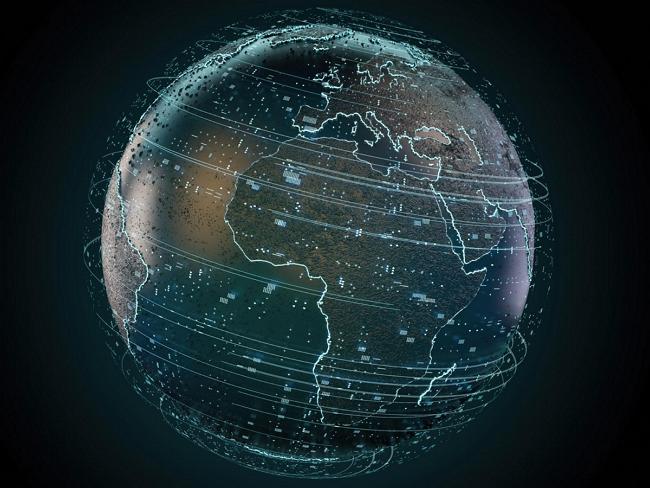 Modern society's financial, communication, and logistics systems all operate on large-scale computer networks. Computational power has now become the core infrastructure of civilization.The advent of the internet marked another leap forward for computational power. As countless computers became interconnected, computational power expanded beyond individual machines to encompass entire networks.
E-commerce, global financial transactions, air traffic control systems, and satellite communications—almost all modern societal systems operate on computer networks. Even a single message sent from our smartphones involves numerous computational processes.
Now, computational power has become an invisible foundation that drives society as a whole, though it remains unseen.
The Explosion of Computational Power
In the 21st century, computational power is undergoing another rapid expansion.
Artificial intelligence is a technology that calculates complex patterns based on vast amounts of data. As computers can now discover rules within data without humans having to create them directly, the scope of computational power's application has exploded.
Quantum computing is also a technology that has emerged within this trend. It is a new type of calculating device capable of solving problems that are difficult for conventional computers much faster. Although still in the research phase, it is considered a technology that foreshadows another leap in computational power.
The semiconductor industry, too, is ultimately a technology for expanding computational power. The performance of chips has been continuously enhanced to process more data faster.
Viewed in this light, AI, quantum computing, and semiconductors, though distinct technologies, are all pursuing a common goal:
to perform more calculations faster.
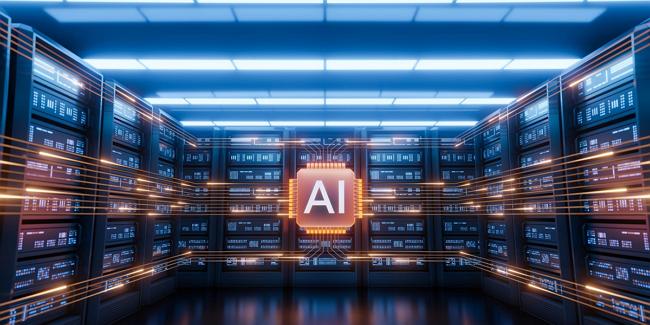 AI and supercomputers require immense computational power. Data centers have become a core infrastructure of modern civilization.Why Calculation Becomes Power
The importance of computational power is not solely because it can process numbers rapidly; it is because calculation forms the basis for prediction and judgment.
Companies analyze data to predict markets, and governments design policies through statistics. In financial markets, algorithms make investment decisions, and logistics companies manage global shipping routes through calculation systems.
As computational power increases, more data can be processed, and more sophisticated predictions become possible. And more accurate predictions lead to greater economic and political influence.
This is why countries worldwide now consider semiconductor and AI technologies as strategic industries. These technologies are not merely industries but foundational technologies that determine a civilization's computational power.
Civilization Built on Calculation
21st-century civilization operates on a vast, invisible system of computation.
From messages sent via smartphones, online financial transactions, air traffic control systems, to global logistics networks—almost all societal activities are managed through computer calculations.
Understanding this structure offers a slightly different perspective on the meaning of technology.
Quantum computers are not just new computers.
AI is not a simple program.
Semiconductors are not limited to a single industry.
These technologies are all tools for expanding a civilization's computational power.
And with every expansion of computational power, the structure of civilization has also changed.
This is why the technological competition of the 21st century ultimately boils down to a competition for computational power.
Civilization has always advanced on new energy and new technologies. And in the era we live in today, the foundation for this is, above all, computational power.
And at the center of that transformation has always been computational power.
ALO Knowledge Powerhouse aims to view technology not as mere industrial news but within the structure of civilization.
Technology is not just an invention.
It is a force that changes the structure of society and the flow of power.

 Iranian Foreign Ministry: "Continuing Message Exchanges with the U.S. and Activities of Mediating Countries"
Esmaeil Baghaei, Spokesperson for the Iranian Ministry of Foreign Affairs [Xinhua, Yonhap News file photo]Esmaeil Baghaei, spokesperson for the Iranian Ministry of Foreign Affairs, stated on the 26th
Iranian Foreign Ministry: "Continuing Message Exchanges with the U.S. and Activities of Mediating Countries"
Esmaeil Baghaei, Spokesperson for the Iranian Ministry of Foreign Affairs [Xinhua, Yonhap News file photo]Esmaeil Baghaei, spokesperson for the Iranian Ministry of Foreign Affairs, stated on the 26th
 President Yoon: "Do You Think You Are Safe from the Special Counsel?"... Final Statement Video Released
President Yoon Suk Yeol rebuking the special prosecutor on the 24th. [Court video / @birds_justice X account subtitle GIF] A video of President Yoon Suk Yeol's closing statement at his trial rega
President Yoon: "Do You Think You Are Safe from the Special Counsel?"... Final Statement Video Released
President Yoon Suk Yeol rebuking the special prosecutor on the 24th. [Court video / @birds_justice X account subtitle GIF] A video of President Yoon Suk Yeol's closing statement at his trial rega
 President Yoon, regarding the first-instance ruling on the Public Official Election Act: “An excessive political verdict that distorts the facts… We will appeal immediately.”
The first-instance sentencing hearing for President Yoon Suk Yeol regarding violations of the Public Official Election Act is being broadcast live at Seoul Station on the 27th. [Photo=Yonhap News]Pres
President Yoon, regarding the first-instance ruling on the Public Official Election Act: “An excessive political verdict that distorts the facts… We will appeal immediately.”
The first-instance sentencing hearing for President Yoon Suk Yeol regarding violations of the Public Official Election Act is being broadcast live at Seoul Station on the 27th. [Photo=Yonhap News]Pres
 WSJ: "SK Hynix ADR Premium Is a Sign of AI Trading Overheat"
Advertisement for SK Hynix ADR listing in New York's Times Square [Reuters=Yonhap News file photo]The Wall Street Journal (WSJ) has pointed out that the price of SK Hynix’s American Depositary Recei
WSJ: "SK Hynix ADR Premium Is a Sign of AI Trading Overheat"
Advertisement for SK Hynix ADR listing in New York's Times Square [Reuters=Yonhap News file photo]The Wall Street Journal (WSJ) has pointed out that the price of SK Hynix’s American Depositary Recei
 'Godfather of Japanese Mystery Novels' Keigo Higashino Passes Away After Battle with Cancer at 68
Famous Japanese mystery novelist Keigo Higashino [AFP=Yonhap News]It has been belatedly reported that Keigo Higashino, the "godfather of Japanese mystery novels" and author of bestsellers such as "The
'Godfather of Japanese Mystery Novels' Keigo Higashino Passes Away After Battle with Cancer at 68
Famous Japanese mystery novelist Keigo Higashino [AFP=Yonhap News]It has been belatedly reported that Keigo Higashino, the "godfather of Japanese mystery novels" and author of bestsellers such as "The
 [Park Pil-kyu Security Column] To the Ignorant Trying to Clothe a Beast in Sheep's Clothing
Rep. Kim Byung-joo of the Democratic Party of Korea [Photo=Yonhap News]“The Air Force Academy doesn't teach you how to fly a plane!” “The Army, Navy, and Air Force academies are exactly the
[Park Pil-kyu Security Column] To the Ignorant Trying to Clothe a Beast in Sheep's Clothing
Rep. Kim Byung-joo of the Democratic Party of Korea [Photo=Yonhap News]“The Air Force Academy doesn't teach you how to fly a plane!” “The Army, Navy, and Air Force academies are exactly the
 [Issue Diagnosis] Two Effects of the Election Petition Review
 [Photo] Evidence of Election Fraud Flooding U.S. Media… Trump Had 2.7 Million Votes Stolen
 [Video] U.S. Semiquincentennial Air Show... 'Art in the Sky' streaks across New York
 [Editorial Cartoon] A Draconian Law That Undermines Freedom of Expression

 List
List









