President Trump Responds to Reporters' Questions [AFP Yonhap News]
Tensions are escalating as U.S. President Donald Trump issued another "ultimatum" message to Iran two days before the expiration of the ceasefire.
This is a repetition of the message he sent to Iran on the 7th, just before the announcement of a two-week ceasefire, stating "I will blow up all their power plants and bridges." This is an attempt to increase pressure in the final negotiations with Iran.
President Trump announced on social media platform Truth Social on the same day that his negotiation team with Iran would be in Islamabad, Pakistan, the mediator, on the 20th.
This negotiation is likely to be the de facto final showdown before the ceasefire ends. President Trump stated that if an agreement is not reached this time, he "will no longer play the role of a nice guy."
He added, "We have made a very fair and reasonable offer and we hope they will accept it. If not, the United States will bring down all of Iran's power plants and bridges. They will be brought down in an instant, easily," he warned.
Regarding attacks on civilian infrastructure such as power plants and bridges, U.S. Ambassador to the UN Mike Waltz defended the action on ABC News, stating that "the attack and destruction of infrastructure that has been used for dual military purposes is not a war crime."
The United States and Iran seemed to be finding a compromise for peace with the ceasefire between Israel and Lebanon taking effect on the 17th and Iran's announcement of the opening of the Strait of Hormuz.
However, President Trump decided to maintain the maritime blockade against Iran centered around Hormuz, which Iran defined as a violation of the ceasefire agreement, and resumed the blockade of Hormuz. Indian ships attempting to pass through this area were attacked by the Iranian Revolutionary Guard Corps Navy and turned back.
President Trump claimed, "Iran decided to fire into the Strait of Hormuz yesterday, and this is a complete violation of our ceasefire agreement."
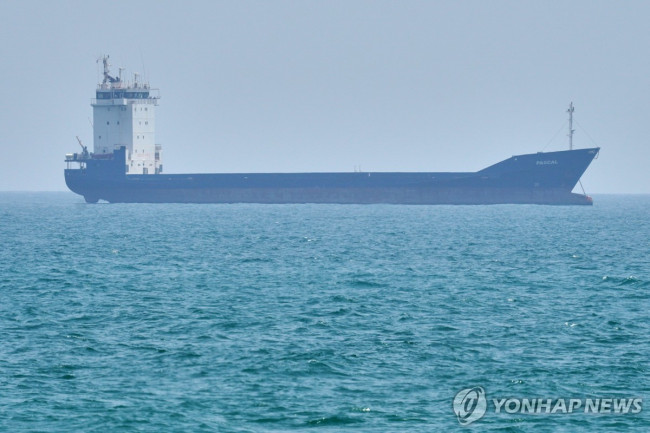 Strait of Hormuz [AP Yonhap News]
As both sides blame each other for "violating the ceasefire agreement," if the United States proceeds with attacks on Iranian infrastructure, the war, now in its eighth week, could escalate.
Iran could also launch retaliatory attacks on the oil infrastructure of Gulf countries that cooperate with the United States, and could use the Houthi, an Iran-backed rebel group in Yemen, to blockade the Bab el-Mandeb Strait, the entrance to the Red Sea and another international maritime transport route.
Ultimately, the world's attention is once again focused on the second round of U.S.-Iran negotiations, which are expected to take place in Islamabad. There is keen interest in whether a dramatic breakthrough can be achieved here.
The continuation of Iran's nuclear program and the export of nuclear materials are considered the biggest contentious issues. There are also expected to be ongoing tug-of-war negotiations over the opening of the Strait of Hormuz and the lifting of the U.S. maritime blockade.
Originally, President Trump announced that Iran had agreed to permanently halt its nuclear program and export nuclear materials to the United States, but Iran dismissed the notion of exporting nuclear materials, revealing a gap in their perceptions.
Ambassador Waltz urged Iran to abandon its nuclear program, stating, "Iran is more isolated than ever. Its economy is in freefall. Iran has no bargaining chips, and the President's goals and red lines are very clear."
Conversely, Mohammad Bagher Ghalibaf, Speaker of the Iranian Parliament, said in a speech broadcast on Iranian state television, "There has been progress in negotiations, but there are still many disagreements. We are far from a final agreement."
Regarding Iran's blockade of the Strait of Hormuz and the U.S.'s counter-blockade (maritime blockade against Iran), President Trump stated, "The maritime blockade will be lifted when the peace agreement is signed," but Iran maintains that there will be no opening of the Strait of Hormuz or negotiations with the U.S. if the U.S. maritime blockade is not lifted.
Tasnim News, representing the Iranian military and hardliners, reported, citing internal sources, that "Iran has not yet decided to send a delegation to Pakistan. There will be no negotiations as long as the [U.S.] maritime blockade continues."
The Israel-Lebanon ceasefire, another pillar of the peace negotiations, is also precarious. There have been incidents where UN peacekeepers (UNIFIL) stationed in Lebanon were injured by gunfire from forces presumed to be the Iran-backed armed group Hezbollah.
Given the complex tangle of difficult issues that the U.S. and Iran must resolve to reach a peace agreement, some observers suggest that the two sides may extend the ceasefire once more rather than reach an agreement within a day or two.
Hakan Fidan, the Turkish Foreign Minister, one of the mediators, stated, "No one wants a new war to break out after the ceasefire ends next week. We hope the ceasefire will be extended, and I am optimistic."
When asked about a ceasefire extension in an interview with NBC News, U.S. Ambassador to the UN Mike Waltz replied that everything is on the table, but ultimately it is a decision for President Trump.

 Iranian Foreign Ministry: "Continuing Message Exchanges with the U.S. and Activities of Mediating Countries"
Esmaeil Baghaei, Spokesperson for the Iranian Ministry of Foreign Affairs [Xinhua, Yonhap News file photo]Esmaeil Baghaei, spokesperson for the Iranian Ministry of Foreign Affairs, stated on the 26th
Iranian Foreign Ministry: "Continuing Message Exchanges with the U.S. and Activities of Mediating Countries"
Esmaeil Baghaei, Spokesperson for the Iranian Ministry of Foreign Affairs [Xinhua, Yonhap News file photo]Esmaeil Baghaei, spokesperson for the Iranian Ministry of Foreign Affairs, stated on the 26th
 President Yoon: "Do You Think You Are Safe from the Special Counsel?"... Final Statement Video Released
President Yoon Suk Yeol rebuking the special prosecutor on the 24th. [Court video / @birds_justice X account subtitle GIF] A video of President Yoon Suk Yeol's closing statement at his trial rega
President Yoon: "Do You Think You Are Safe from the Special Counsel?"... Final Statement Video Released
President Yoon Suk Yeol rebuking the special prosecutor on the 24th. [Court video / @birds_justice X account subtitle GIF] A video of President Yoon Suk Yeol's closing statement at his trial rega
 President Yoon, regarding the first-instance ruling on the Public Official Election Act: “An excessive political verdict that distorts the facts… We will appeal immediately.”
The first-instance sentencing hearing for President Yoon Suk Yeol regarding violations of the Public Official Election Act is being broadcast live at Seoul Station on the 27th. [Photo=Yonhap News]Pres
President Yoon, regarding the first-instance ruling on the Public Official Election Act: “An excessive political verdict that distorts the facts… We will appeal immediately.”
The first-instance sentencing hearing for President Yoon Suk Yeol regarding violations of the Public Official Election Act is being broadcast live at Seoul Station on the 27th. [Photo=Yonhap News]Pres
 WSJ: "SK Hynix ADR Premium Is a Sign of AI Trading Overheat"
Advertisement for SK Hynix ADR listing in New York's Times Square [Reuters=Yonhap News file photo]The Wall Street Journal (WSJ) has pointed out that the price of SK Hynix’s American Depositary Recei
WSJ: "SK Hynix ADR Premium Is a Sign of AI Trading Overheat"
Advertisement for SK Hynix ADR listing in New York's Times Square [Reuters=Yonhap News file photo]The Wall Street Journal (WSJ) has pointed out that the price of SK Hynix’s American Depositary Recei
 'Godfather of Japanese Mystery Novels' Keigo Higashino Passes Away After Battle with Cancer at 68
Famous Japanese mystery novelist Keigo Higashino [AFP=Yonhap News]It has been belatedly reported that Keigo Higashino, the "godfather of Japanese mystery novels" and author of bestsellers such as "The
'Godfather of Japanese Mystery Novels' Keigo Higashino Passes Away After Battle with Cancer at 68
Famous Japanese mystery novelist Keigo Higashino [AFP=Yonhap News]It has been belatedly reported that Keigo Higashino, the "godfather of Japanese mystery novels" and author of bestsellers such as "The
 [Park Pil-kyu Security Column] To the Ignorant Trying to Clothe a Beast in Sheep's Clothing
Rep. Kim Byung-joo of the Democratic Party of Korea [Photo=Yonhap News]“The Air Force Academy doesn't teach you how to fly a plane!” “The Army, Navy, and Air Force academies are exactly the
[Park Pil-kyu Security Column] To the Ignorant Trying to Clothe a Beast in Sheep's Clothing
Rep. Kim Byung-joo of the Democratic Party of Korea [Photo=Yonhap News]“The Air Force Academy doesn't teach you how to fly a plane!” “The Army, Navy, and Air Force academies are exactly the
 [Issue Diagnosis] Two Effects of the Election Petition Review
 [Photo] Evidence of Election Fraud Flooding U.S. Media… Trump Had 2.7 Million Votes Stolen
 [Video] U.S. Semiquincentennial Air Show... 'Art in the Sky' streaks across New York
 [Editorial Cartoon] A Draconian Law That Undermines Freedom of Expression

 List
List