 AI Generated Image
“The greatest power in this nation resides at the intersection of the two words, ‘democracy’ and ‘labor.’ Any issue becomes a sanctuary immune from criticism once it's labeled as democratization, and any illegal act is glorified as a sacred struggle under the banner of labor.”
In "A World Like a Novel, Episode 304," currently serialized on Facebook, author Kim Kyu-na pointedly describes the Korean Confederation of Trade Unions (KCTU) as appearing to be "the de facto supreme power group in this country."
The De Facto Supreme Power Group in This Country
She cited the following reasons: △ they pushed ahead with large-scale rallies even amidst the fear of a pandemic; △ they freely chanted political slogans despite court rulings indicating their executives acted under North Korean directives; △ they demanded hereditary hiring practices from corporations; △ they face allegations of assaulting police officers and journalists during protests; and △ they are accused of covering up sexual assault within the organization. She even pointed out that they attempted to disrupt Coupang's dawn delivery service, which is used by the entire nation.
Furthermore, Ms. Kim stated, "The recent tragedy at the CU logistics center symbolically illustrates how this immense power has degenerated into inhumanity," citing the fact that "a fatal accident occurred amidst chaos as they blocked trucks driven by non-union members, rushing at them."
As a result, the driver who tried to avoid them was burdened with the harsh accusation of 'homicide,' and the desperate escape of a breadwinner who gripped the steering wheel with the sole aim of feeding his family became a crime.
Low Desires Brought on by a Society of Plenty
“People these days don't realize how good a time they are living in. The past was a horrific tragedy for most people. The further back in time you go, the more severe the situation becomes. For 50,000 years, up until just before the Industrial Revolution, human civilization was for one thing, and one thing only: food. All civilizations that have ever existed have dedicated most of their time, energy, manpower, and resources to food. Hunting, gathering, farming, raising livestock, storing food, distributing it... it was all about food problems.”
Author Kim Kyu-na reminds us of the paramount issue facing humanity by quoting a passage from Andy Weir's novel "Project Hail Mary."
In "Project Hail Mary," Earth is on the brink of human extinction. A plan is executed to save the planet, involving global consensus among nations and the mobilization of scientists' expertise. Dr. Stratt, shouldering all responsibility, astutely observes that with the impending doomsday, war would also erupt.
“There were excuses, whether religious or matters of honor, but the real issue was always food,”
the author says. Today, we live in the most prosperous era in human history. However, this abundance has brought about baser desires and more intricate conflicts. Ample capital and a free-market economy have saved humanity from starvation, but the void of longing left by scarcity has been filled by new monsters: political conflict and labor-management disputes.
Moreover, Kim Kyu-na diagnoses the current era with the following insight:
“They too fight for food. Not because they are hungry. They eat more than anyone else, yet they always cry out for more and raise their voices demanding more. These so-called conglomerate unions go on strike at the forefront of greed, demanding higher performance bonuses. They trample on the right to survival of their less fortunate colleagues to protect their vested interests. While past hunger might have fostered neighborly sharing, their satiety only cultivates selfishness, looking only to 'my pocket, my side' to be filled.”
Politics Creating a Lawless Playground for Specific Groups
Without companies, there is no labor, and without laborers, companies cannot exist. However, Ms. Kim emphasizes that after "labor" degenerated into "union activity," words like coexistence and trust have become mere relics preserved only in dictionaries.
Instead of finding balance between companies and labor unions, politics is creating a lawless playground where only the KCTU can freely roam.
Furthermore, the author adds, "Amidst the metallic cries of 'democratic laborers' erupting from all sides and the incitement from political opportunists, it is the convenience store owners who must sell sandwiches to pay rent each day, and the real common people, who must go to work silently with just a triangle kimbap for a meal, who are left hungry."
She also laments, "Korea has known hunger in the past, but today it is more materially abundant than ever before. Someone is using that surplus energy to fill the coffers of their own group. They rob others of their freedom in the name of democracy, and they infringe upon others' survival in the name of labor."
“Our society is currently engaged in a grotesque war where our stomachs are full, but our souls are starving.”
Wake up, individuals!
Rise up, free Republic of Korea!
"Kim Kyu-na's World Like a Novel" is serialized on Facebook solely through readers' encouragement and support, without a fixed author fee. The suggested subscription fee is 10,000 won.
Shinhan Bank 110-072-537351 (Kim Kyu-na)
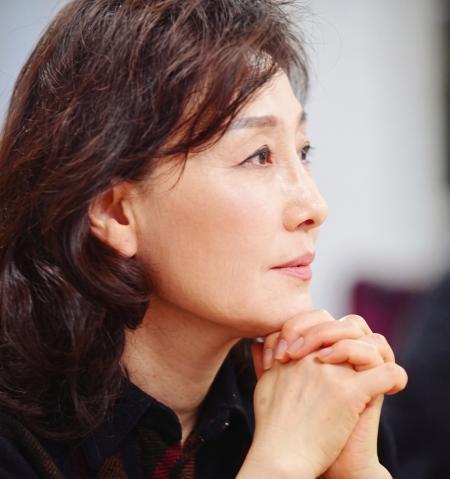
◆ Author Kim Kyu-na
She debuted in 2006 with her short story "My Man's Dream" in the Busan Ilbo New Year's Literary Contest, and in 2007 with her short story "Knife" in the Chosun Ilbo New Year's Literary Contest. She has published novels such as "Trust Me" and "Cherry Lemon Cocktail," and recently released "Reading the World Through Novels."

 Iranian Foreign Ministry: "Continuing Message Exchanges with the U.S. and Activities of Mediating Countries"
Esmaeil Baghaei, Spokesperson for the Iranian Ministry of Foreign Affairs [Xinhua, Yonhap News file photo]Esmaeil Baghaei, spokesperson for the Iranian Ministry of Foreign Affairs, stated on the 26th
Iranian Foreign Ministry: "Continuing Message Exchanges with the U.S. and Activities of Mediating Countries"
Esmaeil Baghaei, Spokesperson for the Iranian Ministry of Foreign Affairs [Xinhua, Yonhap News file photo]Esmaeil Baghaei, spokesperson for the Iranian Ministry of Foreign Affairs, stated on the 26th
 President Yoon: "Do You Think You Are Safe from the Special Counsel?"... Final Statement Video Released
President Yoon Suk Yeol rebuking the special prosecutor on the 24th. [Court video / @birds_justice X account subtitle GIF] A video of President Yoon Suk Yeol's closing statement at his trial rega
President Yoon: "Do You Think You Are Safe from the Special Counsel?"... Final Statement Video Released
President Yoon Suk Yeol rebuking the special prosecutor on the 24th. [Court video / @birds_justice X account subtitle GIF] A video of President Yoon Suk Yeol's closing statement at his trial rega
 President Yoon, regarding the first-instance ruling on the Public Official Election Act: “An excessive political verdict that distorts the facts… We will appeal immediately.”
The first-instance sentencing hearing for President Yoon Suk Yeol regarding violations of the Public Official Election Act is being broadcast live at Seoul Station on the 27th. [Photo=Yonhap News]Pres
President Yoon, regarding the first-instance ruling on the Public Official Election Act: “An excessive political verdict that distorts the facts… We will appeal immediately.”
The first-instance sentencing hearing for President Yoon Suk Yeol regarding violations of the Public Official Election Act is being broadcast live at Seoul Station on the 27th. [Photo=Yonhap News]Pres
 WSJ: "SK Hynix ADR Premium Is a Sign of AI Trading Overheat"
Advertisement for SK Hynix ADR listing in New York's Times Square [Reuters=Yonhap News file photo]The Wall Street Journal (WSJ) has pointed out that the price of SK Hynix’s American Depositary Recei
WSJ: "SK Hynix ADR Premium Is a Sign of AI Trading Overheat"
Advertisement for SK Hynix ADR listing in New York's Times Square [Reuters=Yonhap News file photo]The Wall Street Journal (WSJ) has pointed out that the price of SK Hynix’s American Depositary Recei
 'Godfather of Japanese Mystery Novels' Keigo Higashino Passes Away After Battle with Cancer at 68
Famous Japanese mystery novelist Keigo Higashino [AFP=Yonhap News]It has been belatedly reported that Keigo Higashino, the "godfather of Japanese mystery novels" and author of bestsellers such as "The
'Godfather of Japanese Mystery Novels' Keigo Higashino Passes Away After Battle with Cancer at 68
Famous Japanese mystery novelist Keigo Higashino [AFP=Yonhap News]It has been belatedly reported that Keigo Higashino, the "godfather of Japanese mystery novels" and author of bestsellers such as "The
 [Park Pil-kyu Security Column] To the Ignorant Trying to Clothe a Beast in Sheep's Clothing
Rep. Kim Byung-joo of the Democratic Party of Korea [Photo=Yonhap News]“The Air Force Academy doesn't teach you how to fly a plane!” “The Army, Navy, and Air Force academies are exactly the
[Park Pil-kyu Security Column] To the Ignorant Trying to Clothe a Beast in Sheep's Clothing
Rep. Kim Byung-joo of the Democratic Party of Korea [Photo=Yonhap News]“The Air Force Academy doesn't teach you how to fly a plane!” “The Army, Navy, and Air Force academies are exactly the
 [Issue Diagnosis] Two Effects of the Election Petition Review
 [Photo] Evidence of Election Fraud Flooding U.S. Media… Trump Had 2.7 Million Votes Stolen
 [Video] U.S. Semiquincentennial Air Show... 'Art in the Sky' streaks across New York
 [Editorial Cartoon] A Draconian Law That Undermines Freedom of Expression

 List
List









