 Rally held in front of the Samsung Electronics Pyeongtaek Campus [Yonhap News]
Tension is building across the export front as Samsung Electronics unions have announced a 18-day total strike starting on the 21st.
With semiconductors accounting for nearly 40% of total exports, concerns are rising that if Samsung Electronics, a key pillar of the semiconductor industry, is shaken by a strike, the impact will ripple throughout the national economy, given the severe concentration on semiconductors.
In particular, with growing expectations that Korea's exports will surpass Japan for the first time this year by overcoming external headwinds like the Middle East war, the strike has become a particularly painful variable.
According to the Ministry of Trade, Industry and Energy on the 3rd, April exports reached $85.89 billion, a 48.0% increase compared to the same month last year. This marks the second consecutive month that Korean exports have surpassed $80 billion, following $86.63 billion in March.
Exports in March and April are the first and second highest on record, respectively. Considering that monthly exports had not even reached $70 billion before, this is an unprecedented achievement.
This export momentum is difficult to explain without semiconductors.
In April, semiconductor exports increased by 173.5% year-on-year to $31.9 billion, exceeding $30 billion for the second consecutive month, following $32.8 billion in March.
With surging global investment in Artificial Intelligence (AI) infrastructure driving a dramatic increase in semiconductor demand, Korean semiconductor exports have been setting new monthly records for 13 consecutive months since surpassing $10 billion in April of last year ($11.7 billion).
Conversely, other major export items, excluding semiconductors, have shown relatively sluggish performance.
Automobile exports, one of the two pillars, decreased by 5.5% to $6.17 billion due to logistical disruptions caused by the Middle East war and U.S. tariffs.
As a result, the proportion of semiconductors in total exports soared to 37.1%, reaching a record high.
The proportion of semiconductor exports, which used to hover around 20%, rose to 24.4% last year and has sharply increased since the beginning of this year.
Considering that this figure was in the mid-to-high 20% range during the semiconductor supercycle of 2018, the "semiconductor concentration" of the Korean economy has deepened more than ever. The economy has transformed into a structure where the entire national economy falters if semiconductors are shaken.
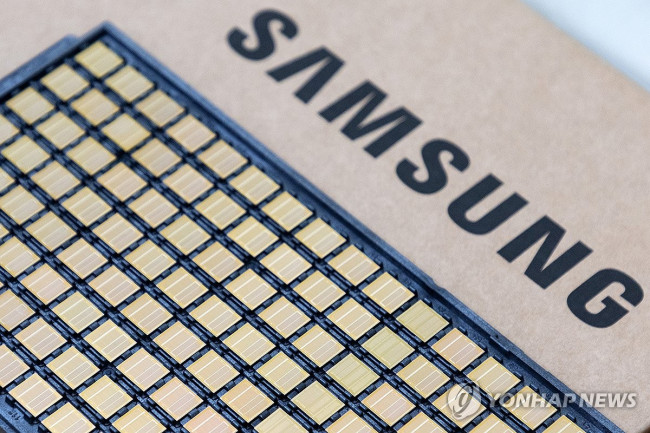 Samsung Electronics, World's First HBM4 Mass Production Shipment [Yonhap News]
The current semiconductor market is in a "seller's market" phase, where supply cannot keep up with demand.
An industry official stated, "Global buyers are desperately trying to secure volume regardless of price. Currently, Samsung Electronics and SK Hynix can only meet about 60% of their orders, indicating extremely tight supply and demand."
He added, "Last year, there were rumors of a crisis as Samsung Electronics struggled in the High Bandwidth Memory (HBM) market, but recently, the situation has completely reversed due to the explosive demand related to AI."
However, it remains questionable whether this boom period will last. This is because the Samsung Electronics labor union, which has grown to mobilize 40,000 employees, has announced a 18-day total strike starting on the 21st.
There have also been warnings from academia that the losses from the strike could exceed 30 trillion won and lead to irreparable damage to trust and supply chains.
An industry official commented, "For Samsung Electronics, this is a crucial time to maximize profits after overcoming last year's slump, so we expect that both labor and management will avoid the worst-case scenario of production stoppage, which would be self-inflicted damage."
The direction of this strike is drawing particular attention because this year is expected to be a turning point for the reversal of exports between Korea and Japan.
Last year, Korea's annual exports recorded $709.33 billion, crossing the $700 billion mark for the first time in history. Consequently, the export gap between Korea and Japan narrowed to $29.01 billion.
With Korea already surpassing Japan in the first quarter of this year, and the semiconductor boom expected to continue for some time, there are projections that Korea could surpass Japan on an annual basis for the first time this year.
Ultimately, Samsung Electronics' strike variable is expected to be a significant factor in determining the export rankings between Korea and Japan this year.
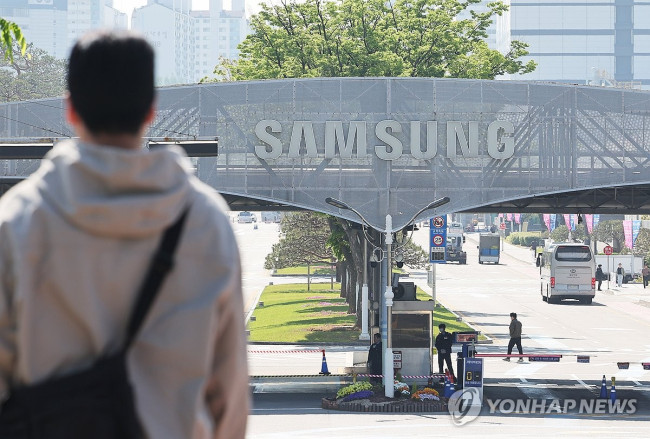 Samsung Electronics Q1 Semiconductor Operating Profit of 53.7 Trillion Won, Record High [Yonhap News]

 Iranian Foreign Ministry: "Continuing Message Exchanges with the U.S. and Activities of Mediating Countries"
Esmaeil Baghaei, Spokesperson for the Iranian Ministry of Foreign Affairs [Xinhua, Yonhap News file photo]Esmaeil Baghaei, spokesperson for the Iranian Ministry of Foreign Affairs, stated on the 26th
Iranian Foreign Ministry: "Continuing Message Exchanges with the U.S. and Activities of Mediating Countries"
Esmaeil Baghaei, Spokesperson for the Iranian Ministry of Foreign Affairs [Xinhua, Yonhap News file photo]Esmaeil Baghaei, spokesperson for the Iranian Ministry of Foreign Affairs, stated on the 26th
 President Yoon: "Do You Think You Are Safe from the Special Counsel?"... Final Statement Video Released
President Yoon Suk Yeol rebuking the special prosecutor on the 24th. [Court video / @birds_justice X account subtitle GIF] A video of President Yoon Suk Yeol's closing statement at his trial rega
President Yoon: "Do You Think You Are Safe from the Special Counsel?"... Final Statement Video Released
President Yoon Suk Yeol rebuking the special prosecutor on the 24th. [Court video / @birds_justice X account subtitle GIF] A video of President Yoon Suk Yeol's closing statement at his trial rega
 President Yoon, regarding the first-instance ruling on the Public Official Election Act: “An excessive political verdict that distorts the facts… We will appeal immediately.”
The first-instance sentencing hearing for President Yoon Suk Yeol regarding violations of the Public Official Election Act is being broadcast live at Seoul Station on the 27th. [Photo=Yonhap News]Pres
President Yoon, regarding the first-instance ruling on the Public Official Election Act: “An excessive political verdict that distorts the facts… We will appeal immediately.”
The first-instance sentencing hearing for President Yoon Suk Yeol regarding violations of the Public Official Election Act is being broadcast live at Seoul Station on the 27th. [Photo=Yonhap News]Pres
 WSJ: "SK Hynix ADR Premium Is a Sign of AI Trading Overheat"
Advertisement for SK Hynix ADR listing in New York's Times Square [Reuters=Yonhap News file photo]The Wall Street Journal (WSJ) has pointed out that the price of SK Hynix’s American Depositary Recei
WSJ: "SK Hynix ADR Premium Is a Sign of AI Trading Overheat"
Advertisement for SK Hynix ADR listing in New York's Times Square [Reuters=Yonhap News file photo]The Wall Street Journal (WSJ) has pointed out that the price of SK Hynix’s American Depositary Recei
 'Godfather of Japanese Mystery Novels' Keigo Higashino Passes Away After Battle with Cancer at 68
Famous Japanese mystery novelist Keigo Higashino [AFP=Yonhap News]It has been belatedly reported that Keigo Higashino, the "godfather of Japanese mystery novels" and author of bestsellers such as "The
'Godfather of Japanese Mystery Novels' Keigo Higashino Passes Away After Battle with Cancer at 68
Famous Japanese mystery novelist Keigo Higashino [AFP=Yonhap News]It has been belatedly reported that Keigo Higashino, the "godfather of Japanese mystery novels" and author of bestsellers such as "The
 [Park Pil-kyu Security Column] To the Ignorant Trying to Clothe a Beast in Sheep's Clothing
Rep. Kim Byung-joo of the Democratic Party of Korea [Photo=Yonhap News]“The Air Force Academy doesn't teach you how to fly a plane!” “The Army, Navy, and Air Force academies are exactly the
[Park Pil-kyu Security Column] To the Ignorant Trying to Clothe a Beast in Sheep's Clothing
Rep. Kim Byung-joo of the Democratic Party of Korea [Photo=Yonhap News]“The Air Force Academy doesn't teach you how to fly a plane!” “The Army, Navy, and Air Force academies are exactly the
 [Issue Diagnosis] Two Effects of the Election Petition Review
 [Photo] Evidence of Election Fraud Flooding U.S. Media… Trump Had 2.7 Million Votes Stolen
 [Video] U.S. Semiquincentennial Air Show... 'Art in the Sky' streaks across New York
 [Editorial Cartoon] A Draconian Law That Undermines Freedom of Expression

 List
List









