
The Professional Engineer (PE) qualification should be a globally recognized guarantee of an engineer's "caliber" and "competence," not merely a way to accumulate years of experience. However, the Ministry of Employment and Labor's proposed relaxation of experience requirements is an anachronistic administrative measure that directly contradicts these global standards. This can be clearly understood by comparing the situations in Korea and developed countries.
First, Korea's eligibility criteria for the PE exam are based on a bottom-up qualification system centered on practical experience, as stipulated by the National Technical Qualifications Act. It recognizes a combination of academic background and experience.
The primary eligibility requirements include △4 years of practical experience after obtaining a Craftsman Engineer (기사) qualification, △5 years after obtaining a Technician Engineer (산업기사), and △7 years after obtaining a Skilled Craftsman (기능사). It also requires 6 years of experience after graduating from a 4-year related university program, 7 years from a 3-year junior college, and 8 years from a 2-year junior college. For individuals with purely practical experience, at least 9 years of experience in the relevant field is required. Those with Master's or Doctoral degrees can have a portion of their graduate study period recognized as experience (e.g., up to 2 years for a Master's degree).
The current legislative proposal by the Ministry of Employment and Labor aims to relax the PE practical experience requirements by 2 to 4 years, with the stated intention to "contribute to increased lifetime earnings and improved social status for vocational high school students by enabling them to obtain higher qualifications earlier after graduation."
This is truly an incomprehensible and low-level excuse. While the impropriety of the legislative proposal is abundant, solely considering the international recognition of the PE qualification reveals that this administrative action not only falls short of international standards but also contradicts international practice.
Korea, along with developed countries, is a signatory to the Washington Accord (an international agreement). The PE (Professional Engineer/Chartered Engineer) eligibility systems in these developed countries require candidates to pass a series of examinations after obtaining engineering education accreditation and to have acquired experience through a mentoring system. However, Korea uniquely allows individuals to apply for the PE exam without regard to engineering education accreditation.
The United States and Singapore (PE - Professional Engineer) categorize PE eligibility into four stages. Stage 1 requires a degree with engineering education accreditation (ABET). Stage 2 requires passing the FE (Fundamentals of Engineering) exam, indicating Engineering in Training. Stage 3 involves accumulating at least 4 years of practical experience under the supervision of a PE after passing the FE exam. Finally, Stage 4 grants eligibility to take the PE exam (or the Professional Interview in Singapore, a four-stage process) to those with 4 years of practical experience. Ultimately, successful PE candidates in the US must register with the state government to receive their license.
In the United Kingdom (CEng - Chartered Engineer), individuals must possess at least a Master's (MEng) or Bachelor's (BEng) degree in engineering and have 4 to 6 years of practical experience through further learning. Experience is assessed based on competence rather than a fixed duration. The assessment involves a review of documents and a Professional Review Interview, which is more rigorous than a typical written examination.
Japan (Professional Engineer - PE Japan) has a system most similar to Korea. Graduates who have completed ABET-accredited engineering education are exempted from the first stage of the exam. After passing the first stage, they must register as a "Technical Intern" and gain experience. After registering as a Technical Intern, they must accumulate 4 years of practical experience under a "Supervising Engineer" (or 7 years without supervision) before being eligible to take the second stage of the exam (written and oral). Those who pass both stages are awarded the PE qualification.
Canada (P.Eng), also a signatory to the Washington Accord, mandates that candidates must hold an accredited engineering degree. Canada is one of the countries with the most stringent PE qualification processes, requiring 4 years of experience and an ethics exam. The qualification is granted through an interview after verified practical experience.
A brief comparison and review of the eligibility systems in Korea and developed countries show that Korea and Japan have an examination-based system. However, Korea's entry requirements are significantly more open compared to developed countries, while Japan's entry requirements are stricter than Korea's. Furthermore, countries like the UK, Australia, Canada, and Singapore have adopted a verification-based system and apply very rigorous standards to the assessment of practical experience.
Meanwhile, the United States, a country that thoroughly implements its engineering accreditation system, as evidenced by the Washington Accord, is known to have a moderate level of examination difficulty.
The engineering accreditation system under the Washington Accord is an international standard for guaranteeing the quality of university engineering education. Although Korea is a full member of the Washington Accord, and its engineering graduates should be recognized as having equivalent academic qualifications to those of graduates from regular engineering universities in member countries like the US and UK, the engineering accreditation system has not yet reached its full potential. Consequently, Korean engineering degrees are only recognized in Texas among the 50 US states, and not in the other 49.
Furthermore, Singapore initially recognized Korean PEs as international engineers, but due to the inadequacy of engineering accreditation, they are no longer recognized.
The US engineering accreditation system is the most basic and strong requirement for becoming a PE. Global standards include the UK's IPEC and Japan's JABEE, all of which ensure academic reciprocity through the Washington Accord.
While developed countries have strong linkages, to the extent that "one cannot apply for PE without engineering accreditation," Korea still offers a path to becoming a PE through experience without a degree, making the linkages relatively more flexible.
For Korean PEs to gain global recognition and operate internationally, especially in countries like the US and Singapore, Korea must fully expand its ABEEK-accredited degree system to join the ranks of developed nations. Realistically, instead of relaxing the verification process for experience by 2 to 4 years, given that the current verification process is incomplete, the existing experience duration should be maintained, and the verification process should be managed more thoroughly and rigorously.
The Ministry of Employment and Labor must immediately withdraw the legislative proposal to amend the Enforcement Decree of the National Technical Qualifications Act, by facing the realities of developed countries and our own situation.
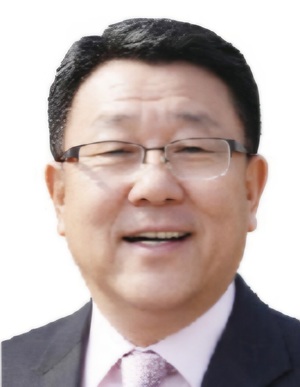
◆ Professor Park Jung-bong
Director, Korea Professional Engineers Association, Visiting Professor at Ho Chi Minh University of Technology, Doctor of Engineering

 Iranian Foreign Ministry: "Continuing Message Exchanges with the U.S. and Activities of Mediating Countries"
Esmaeil Baghaei, Spokesperson for the Iranian Ministry of Foreign Affairs [Xinhua, Yonhap News file photo]Esmaeil Baghaei, spokesperson for the Iranian Ministry of Foreign Affairs, stated on the 26th
Iranian Foreign Ministry: "Continuing Message Exchanges with the U.S. and Activities of Mediating Countries"
Esmaeil Baghaei, Spokesperson for the Iranian Ministry of Foreign Affairs [Xinhua, Yonhap News file photo]Esmaeil Baghaei, spokesperson for the Iranian Ministry of Foreign Affairs, stated on the 26th
 President Yoon: "Do You Think You Are Safe from the Special Counsel?"... Final Statement Video Released
President Yoon Suk Yeol rebuking the special prosecutor on the 24th. [Court video / @birds_justice X account subtitle GIF] A video of President Yoon Suk Yeol's closing statement at his trial rega
President Yoon: "Do You Think You Are Safe from the Special Counsel?"... Final Statement Video Released
President Yoon Suk Yeol rebuking the special prosecutor on the 24th. [Court video / @birds_justice X account subtitle GIF] A video of President Yoon Suk Yeol's closing statement at his trial rega
 President Yoon, regarding the first-instance ruling on the Public Official Election Act: “An excessive political verdict that distorts the facts… We will appeal immediately.”
The first-instance sentencing hearing for President Yoon Suk Yeol regarding violations of the Public Official Election Act is being broadcast live at Seoul Station on the 27th. [Photo=Yonhap News]Pres
President Yoon, regarding the first-instance ruling on the Public Official Election Act: “An excessive political verdict that distorts the facts… We will appeal immediately.”
The first-instance sentencing hearing for President Yoon Suk Yeol regarding violations of the Public Official Election Act is being broadcast live at Seoul Station on the 27th. [Photo=Yonhap News]Pres
 WSJ: "SK Hynix ADR Premium Is a Sign of AI Trading Overheat"
Advertisement for SK Hynix ADR listing in New York's Times Square [Reuters=Yonhap News file photo]The Wall Street Journal (WSJ) has pointed out that the price of SK Hynix’s American Depositary Recei
WSJ: "SK Hynix ADR Premium Is a Sign of AI Trading Overheat"
Advertisement for SK Hynix ADR listing in New York's Times Square [Reuters=Yonhap News file photo]The Wall Street Journal (WSJ) has pointed out that the price of SK Hynix’s American Depositary Recei
 'Godfather of Japanese Mystery Novels' Keigo Higashino Passes Away After Battle with Cancer at 68
Famous Japanese mystery novelist Keigo Higashino [AFP=Yonhap News]It has been belatedly reported that Keigo Higashino, the "godfather of Japanese mystery novels" and author of bestsellers such as "The
'Godfather of Japanese Mystery Novels' Keigo Higashino Passes Away After Battle with Cancer at 68
Famous Japanese mystery novelist Keigo Higashino [AFP=Yonhap News]It has been belatedly reported that Keigo Higashino, the "godfather of Japanese mystery novels" and author of bestsellers such as "The
 [Park Pil-kyu Security Column] To the Ignorant Trying to Clothe a Beast in Sheep's Clothing
Rep. Kim Byung-joo of the Democratic Party of Korea [Photo=Yonhap News]“The Air Force Academy doesn't teach you how to fly a plane!” “The Army, Navy, and Air Force academies are exactly the
[Park Pil-kyu Security Column] To the Ignorant Trying to Clothe a Beast in Sheep's Clothing
Rep. Kim Byung-joo of the Democratic Party of Korea [Photo=Yonhap News]“The Air Force Academy doesn't teach you how to fly a plane!” “The Army, Navy, and Air Force academies are exactly the
 [Issue Diagnosis] Two Effects of the Election Petition Review
 [Photo] Evidence of Election Fraud Flooding U.S. Media… Trump Had 2.7 Million Votes Stolen
 [Video] U.S. Semiquincentennial Air Show... 'Art in the Sky' streaks across New York
 [Editorial Cartoon] A Draconian Law That Undermines Freedom of Expression

 List
List










