 Raul Castro [Reuters=Yonhap News]
Attention is focused on the fate of the Cuban regime and its top leader, as the U.S. Department of Justice has indicted Raul Castro, the de facto power broker and revolutionary elder of Cuba and former president, and subsequently deployed an aircraft carrier to the Caribbean.
In particular, given the precedent of the United States extraditing former Venezuelan President Nicolás Maduro to stand trial after his indictment, the biggest question is whether Raul Castro will face the same fate. The Trump administration previously referred to the extradition of Maduro as "a law-enforcement operation."
The United States has continuously pressured former President Maduro since indicting him on charges of conspiracy to traffic narcotics and terrorism. In particular, just before the extradition, the U.S. escalated its pressure to the highest level by positioning an aircraft carrier off the coast of Venezuela. The U.S. moves towards Cuba are a mirror image of this.
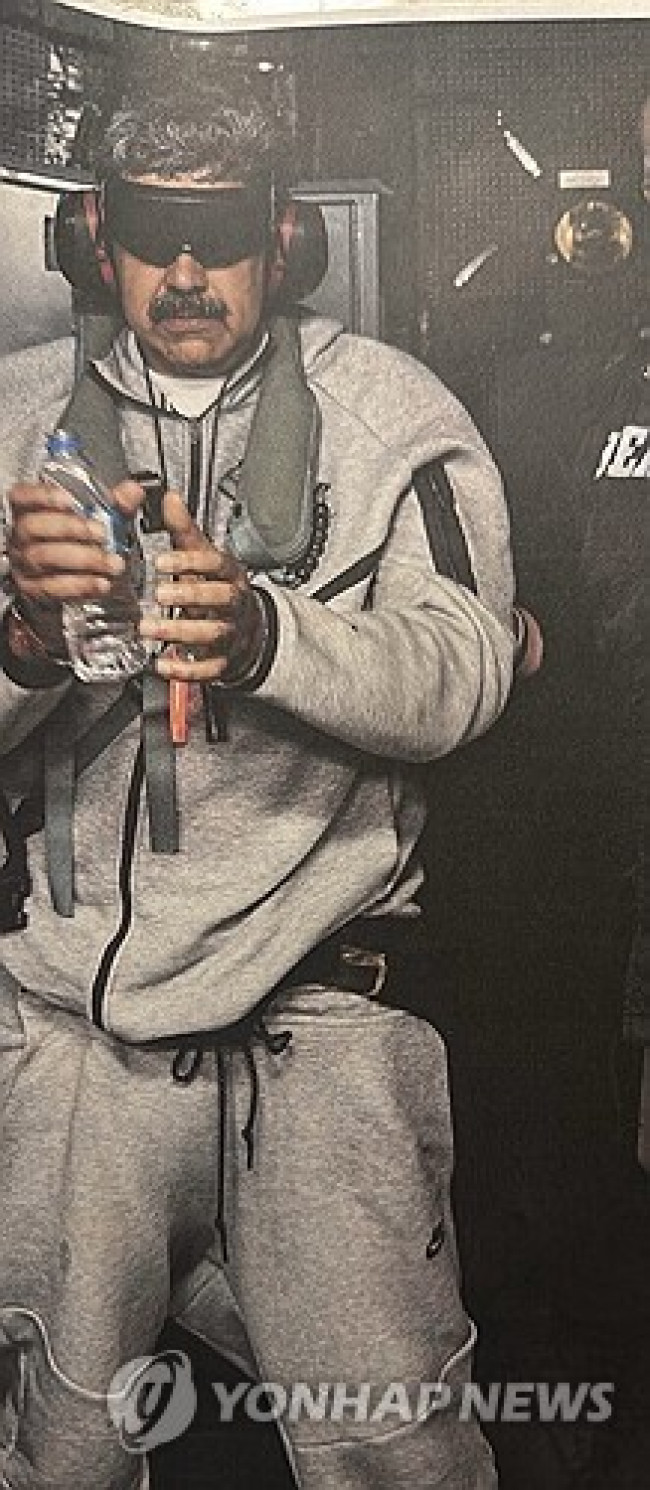 Former Venezuelan President Nicolás Maduro [UPI=Yonhap News]
It is known that the United States had prepared to indict Raul Castro, who was the Minister of Defense during the "Brothers to the Rescue" aircraft shootdown incident in 1996. However, as the U.S. sought to improve relations with Cuba, the indictment did not lead to actual prosecution.
However, the indictment unsealed by the U.S. Department of Justice on the 20th (local time) against Raul Castro is specific and carries heavy charges. Seven charges have been applied, including conspiracy to murder a U.S. national, destruction of an aircraft, and murder. As murder charges are included, a conviction could lead to the death penalty or life imprisonment.
Immediately after the indictment, an aircraft carrier strike group was deployed to the Caribbean Sea, off the coast of Cuba. The scenario that pressured former President Maduro is being replayed. Moreover, unlike Venezuela, which is quite distant from the United States, Cuba is only 145 km from the U.S. mainland, and it takes just over an hour to fly from Miami to Havana, the Cuban capital, making it geographically close. As it is within striking distance for the U.S. to launch a surprise military operation or an extradition attempt at any time if it so chooses, the physical pressure felt by the Cuban regime is inevitably greater than that experienced during the Venezuelan situation.
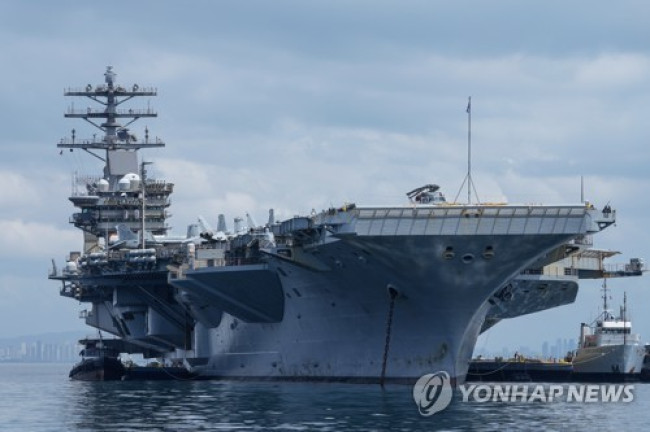 U.S. Aircraft Carrier Nimitz [AP=Yonhap News file photo]
In a message released on Cuban Independence Day on the 20th (local time), President Trump warned, "The indictment and removal of Maduro send a clear message to his socialist allies in Havana. This is our hemisphere, and those who destabilize it and threaten the United States will pay the price."
It is reported that John Ratcliffe, Director of the Central Intelligence Agency (CIA), who visited Cuba last week, met with Guillermo Rodríguez Castro, a grandson of Raul and a negotiator, and warned Cuban officials that they must take President Trump's words seriously, urging them to open their closed political system and economy, referencing the case of Maduro.
Marco Rubio, the U.S. Secretary of State, whose ancestors are from Cuba, also did not hide the possibility of an actual operation to arrest and extradite Raul, while being cautious about the specific methods of apprehension on the 21st.
When asked by reporters how Castro would be brought to a U.S. court, he replied, "There is no reason to disclose specific operational plans to the media in advance. The important point is that from the moment of indictment, he has become a fugitive pursued by U.S. law enforcement authorities." He added, "If an arrest is announced, it will be after the fact, not before."
However, experts believe that the possibility of the United States extraditing Raul, similar to Maduro, is low.
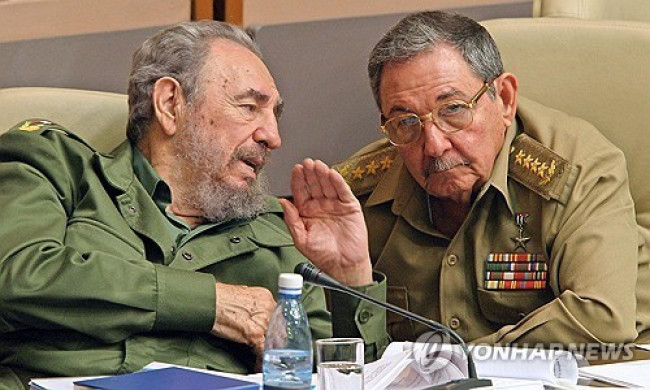 Fidel and Raul Castro [AFP=Yonhap News]
The biggest obstacle is his age. Raul, born on June 3, 1931, is 95 years old. Even if the U.S. were to arrest Raul, handcuffing a 95-year-old man would not yield as dramatic a political victory as the arrest of Maduro, according to analyses by the U.S. daily Wall Street Journal (WSJ) and the British weekly The Economist.
Furthermore, his symbolic significance and the weight of his power are in a different league compared to Maduro. Maduro is the successor to Hugo Chávez, an administrator, and a former labor activist. Behind him, there were always strong internal rivals from the Chávez era, such as Interior Minister Diosdado Cabello, and opposition forces like Nobel Peace Prize laureate María Corina Machado.
In contrast, Raul Castro is a key figure in the successful Cuban Revolution of 1959 and has been the sole Army General in Cuban history to have had complete control of the military for half a century as Minister of Defense. Moreover, the military conglomerate "GAESA," which controls the Cuban economy, is also monopolized by the Castro family. His power, encompassing military authority, finances, and revolutionary legitimacy, is absolute within Cuba.
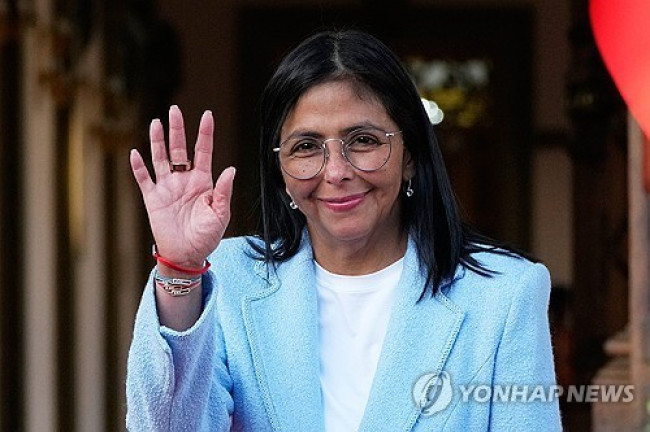 Venezuelan Interim President Delcy Rodríguez [AP=Yonhap News]
Even if he were arrested, finding a replacement for Castro, such as Delcy Rodríguez, the interim president of Venezuela and a former confidant of Maduro who maintains a close relationship with Trump, is not easy, which is a concern for the United States.
Jorge Castañeda, former Mexican Foreign Minister and author of a book on Che Guevara, a revolutionary comrade of Raul, told the WSJ, "I don't think they (the U.S.) will be able to find a 'Cuban Delcy' in Havana." He added that the possibility of Raul Castro surrendering willingly to the U.S. is slim, stating, "Castro is the kind of person who would shoot himself rather than surrender."
Furthermore, the totalitarian tendencies of Cuba are incomparable to Venezuela, where anti-government protests were frequent. Cuba has been a strictly totalitarian state that has allowed almost no space for civil society for 67 years. The core pillars of the Cuban system—the Ministry of the Interior, the military, and the Communist Party—are highly cohesive.
Moreover, the regime has a long history of meticulously controlling all strata of society, from workplaces to schools and performance venues. Currently, there is no internal rift that would allow for someone like Delcy Rodríguez of Venezuela, whom the U.S. could support, to emerge, according to WSJ analysis.
Ricardo Zuñiga, who was in charge of negotiations with Cuba during the Obama administration, also diagnosed, "If the U.S. intends to create internal rifts, it won't work in Cuba. The Cuban regime, with no way out, will choose the best option: to lock down and endure."
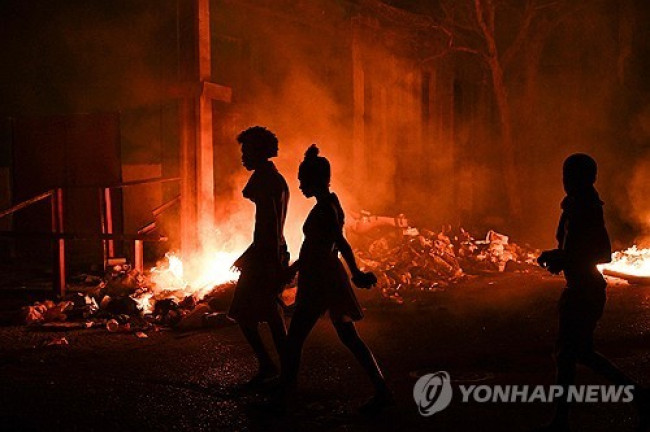 Protests in Cuba [AFP=Yonhap News]
Nevertheless, some observers suggest that the dire internal divisions caused by power shortages and economic hardship could instead act as a catalyst for the possibility of a "sudden raid operation" by the U.S., similar to the "Maduro extradition."
The Economist points out that the economy, mired in negative growth, and the electricity crisis, which has reached a critical point, are shaking the foundations of the Cuban regime. In fact, the protest against a power outage in the heart of Havana on the 13th was an unprecedented event in Cuba's tightly controlled society and is seen as a signal of the public's breaking point.
With the U.S. recently announcing that it would provide $100 million (approximately 110 million USD) in humanitarian aid directly to the Cuban people, the Cuban regime is now at a critical juncture. Accepting the $100 million aid offer from the U.S. would be an admission of the regime's bankruptcy, while rejecting it would make it impossible to manage the public's anger that could erupt amidst heatwaves, famine, and darkness.
The Economist analyzes that regardless of whether it accepts or rejects the offer, the Cuban regime is running out of cards to refuse the U.S. demands.
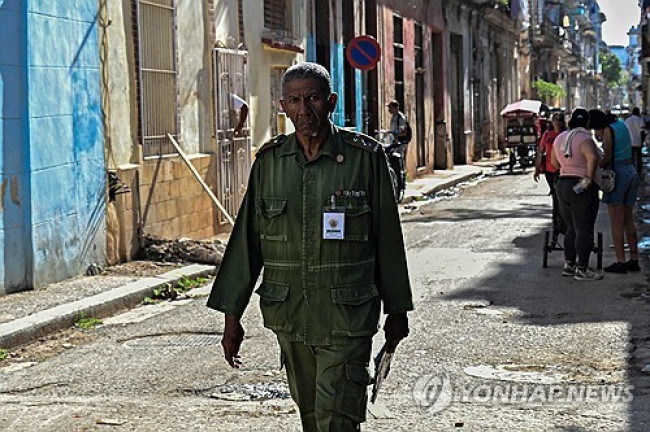 Street in Cuba [AFP=Yonhap News]

 Iranian Foreign Ministry: "Continuing Message Exchanges with the U.S. and Activities of Mediating Countries"
Esmaeil Baghaei, Spokesperson for the Iranian Ministry of Foreign Affairs [Xinhua, Yonhap News file photo]Esmaeil Baghaei, spokesperson for the Iranian Ministry of Foreign Affairs, stated on the 26th
Iranian Foreign Ministry: "Continuing Message Exchanges with the U.S. and Activities of Mediating Countries"
Esmaeil Baghaei, Spokesperson for the Iranian Ministry of Foreign Affairs [Xinhua, Yonhap News file photo]Esmaeil Baghaei, spokesperson for the Iranian Ministry of Foreign Affairs, stated on the 26th
 President Yoon: "Do You Think You Are Safe from the Special Counsel?"... Final Statement Video Released
President Yoon Suk Yeol rebuking the special prosecutor on the 24th. [Court video / @birds_justice X account subtitle GIF] A video of President Yoon Suk Yeol's closing statement at his trial rega
President Yoon: "Do You Think You Are Safe from the Special Counsel?"... Final Statement Video Released
President Yoon Suk Yeol rebuking the special prosecutor on the 24th. [Court video / @birds_justice X account subtitle GIF] A video of President Yoon Suk Yeol's closing statement at his trial rega
 President Yoon, regarding the first-instance ruling on the Public Official Election Act: “An excessive political verdict that distorts the facts… We will appeal immediately.”
The first-instance sentencing hearing for President Yoon Suk Yeol regarding violations of the Public Official Election Act is being broadcast live at Seoul Station on the 27th. [Photo=Yonhap News]Pres
President Yoon, regarding the first-instance ruling on the Public Official Election Act: “An excessive political verdict that distorts the facts… We will appeal immediately.”
The first-instance sentencing hearing for President Yoon Suk Yeol regarding violations of the Public Official Election Act is being broadcast live at Seoul Station on the 27th. [Photo=Yonhap News]Pres
 WSJ: "SK Hynix ADR Premium Is a Sign of AI Trading Overheat"
Advertisement for SK Hynix ADR listing in New York's Times Square [Reuters=Yonhap News file photo]The Wall Street Journal (WSJ) has pointed out that the price of SK Hynix’s American Depositary Recei
WSJ: "SK Hynix ADR Premium Is a Sign of AI Trading Overheat"
Advertisement for SK Hynix ADR listing in New York's Times Square [Reuters=Yonhap News file photo]The Wall Street Journal (WSJ) has pointed out that the price of SK Hynix’s American Depositary Recei
 'Godfather of Japanese Mystery Novels' Keigo Higashino Passes Away After Battle with Cancer at 68
Famous Japanese mystery novelist Keigo Higashino [AFP=Yonhap News]It has been belatedly reported that Keigo Higashino, the "godfather of Japanese mystery novels" and author of bestsellers such as "The
'Godfather of Japanese Mystery Novels' Keigo Higashino Passes Away After Battle with Cancer at 68
Famous Japanese mystery novelist Keigo Higashino [AFP=Yonhap News]It has been belatedly reported that Keigo Higashino, the "godfather of Japanese mystery novels" and author of bestsellers such as "The
 [Park Pil-kyu Security Column] To the Ignorant Trying to Clothe a Beast in Sheep's Clothing
Rep. Kim Byung-joo of the Democratic Party of Korea [Photo=Yonhap News]“The Air Force Academy doesn't teach you how to fly a plane!” “The Army, Navy, and Air Force academies are exactly the
[Park Pil-kyu Security Column] To the Ignorant Trying to Clothe a Beast in Sheep's Clothing
Rep. Kim Byung-joo of the Democratic Party of Korea [Photo=Yonhap News]“The Air Force Academy doesn't teach you how to fly a plane!” “The Army, Navy, and Air Force academies are exactly the
 [Issue Diagnosis] Two Effects of the Election Petition Review
 [Photo] Evidence of Election Fraud Flooding U.S. Media… Trump Had 2.7 Million Votes Stolen
 [Video] U.S. Semiquincentennial Air Show... 'Art in the Sky' streaks across New York
 [Editorial Cartoon] A Draconian Law That Undermines Freedom of Expression

 List
List









