Columnist Park Pil-kyu
ROKMA Class of 40, Guest Editorial Writer
The security of the Republic of Korea is precarious, characterized by uncertainty about the future, a result of the current government's missteps and external challenges. North Korea's threat has been further sophisticated with the constitutionalization of its nuclear capabilities and the declaration of a "two-state" theory. Concerns are mounting that North Korea may acquire key military technologies, such as nuclear-powered submarine and ballistic missile technology, from Russia, especially as its troops are deployed to the Russian front. However, the response from the Lee Jae-myung administration is a confusing blend of complacency and strangeness.
With its loudspeaker removal measure, the Lee Jae-myung administration signaled its intention to elicit a change in North Korea's attitude by first demonstrating 'sincerity' and seeking a breakthrough in stalled inter-Korean relations. Yet, North Korea has shown no change whatsoever. It appears the last card for controlling North Korea has been discarded without purpose.
About half of the outdoor maneuver training (FTX) for 'Ulchi Freedom Shield (UFS),' the first combined ROK-US training exercise since the inauguration of the Lee Jae-myung administration, has been postponed to September due to heatwaves. While this may be seen as a conciliatory gesture to improve inter-Korean relations, it weakens the combined operational capabilities that are the core strength of the ROK-US alliance and appears to be an act of security sabotage that hinders preparedness for actual combat in case of emergency.
In a security environment characterized by the escalation of North Korea's nuclear threat, US-China competition, and complex non-traditional threats such as terrorism and cyber attacks, the United States is proposing a new alliance model where South Korea takes the lead in defending the Korean Peninsula, and US forces concentrate on containing China.
Elbridge Colby, former US Deputy Assistant Secretary of Defense for Strategy, Planning and Capabilities, often referred to as the "architect of the security strategy" under the Trump administration, has emphasized that "South Korea must take a leading role in defending against North Korea and increase its defense spending, while the role of US Forces Korea should shift from deterring North Korea to containing China," citing the US's insufficient military capacity to respond simultaneously to China and North Korea. This foreshadows a fundamental change in the ROK-US alliance, which should be interpreted not merely as an issue of increased defense cost-sharing but as a signal and opportunity for strategic readjustment to ensure the alliance's sustainability.
The ROK-US summit scheduled for August 25th must make the strengthening of extended deterrence against North Korean threats and the establishment of combined ROK-US defense posture core agenda items. The current government must demonstrate through various channels that it has decisively shed its pro-China stance. Through the modernization of the ROK-US alliance, South Korea must move beyond strategic ambiguity to become a leading ally, and use any form of security demand as an opportunity for 'self-reliance' to enhance its defense capabilities. To derive our desired security agreement at the ROK-US summit, we urge relevant ministries to prepare for the negotiations with all their might, referencing the three areas below for the national interest.
1. Public Discourse on Strategic Re-adjustment and Role Division of the ROK-US Alliance
Rather than passively accepting the US's demand for a 'new alliance model,' South Korea must proactively redefine the alliance's role in line with the changing security environment on the Korean Peninsula. While clearly recognizing that North Korea's threat is one we must respond to first and committing to a proactive response, we must strengthen consultation bodies to ensure the reliability of US extended deterrence (nuclear umbrella) and publicly discuss the option of independent nuclear armament. This will reduce uncertainty in Korean Peninsula security, ensure the sustainability of the ROK-US alliance, and develop the alliance relationship into a reciprocal one.
2. Establishment of a System to Counter Non-Traditional Security Threats
We must strengthen deterrence based on the ROK-US alliance and increase the defense R&D budget, focusing on future capabilities such as AI-based weapon systems, unmanned aerial vehicles (drones), and hyper-precision missile technology. By concentrating investment on asymmetric capabilities, we must foster groundbreaking defense and defense industry capabilities. This represents the establishment of independent deterrence to counter North Korea's nuclear threat, military solidarity with the West through defense industry technology, and efforts to enhance our military's response capabilities to non-traditional threats.
3. Security is a Survival Issue Directly Linked to People's Lives; National Consensus is Necessary
The security environment we face today and the corresponding security policies are not merely defense issues; they are survival issues directly linked to the freedom and happiness of every citizen. In the face of North Korea's escalating threats and rapidly changing international dynamics, strengthening the security of the Republic of Korea is not just about national survival but is a responsibility for all of us to pass on a foundation of peace and prosperity to future generations.
We must transcend specific ideologies, opportunistic security calculations, and the rigid logic of partisan camps. Policymakers and security officials must reflect on and understand that the public desires 'to maintain peace through robust security and a strong ROK-US alliance, and contribute to global peace,' and that 90% of the population has an emotional aversion to China.
Politics gains legitimacy when it contributes to the survival of the many, not the calculated interests of the few.
To ensure that the ROK-US summit is one where we preemptively address the US's security demands, give what we must, and confidently ask for what we require, we must reflect on the security history of the Philippines, which has regressed due to 'security apathy.'
The decline of the Philippines began when its 'anti-US leftist government' forced the withdrawal of US troops. This led to economic collapse and severe security crises, including China's territorial seizures in the South China Sea. This case serves as a cautionary tale, demonstrating the harsh 'logic of power' in international relations, not just an ideological issue.
Through the downfall of the Philippines, we hope for an ROK-US summit that reaffirms the importance of the ROK-US alliance and safeguards the nation's security and economy based on a clear-eyed perception of reality, rather than emotional judgments.

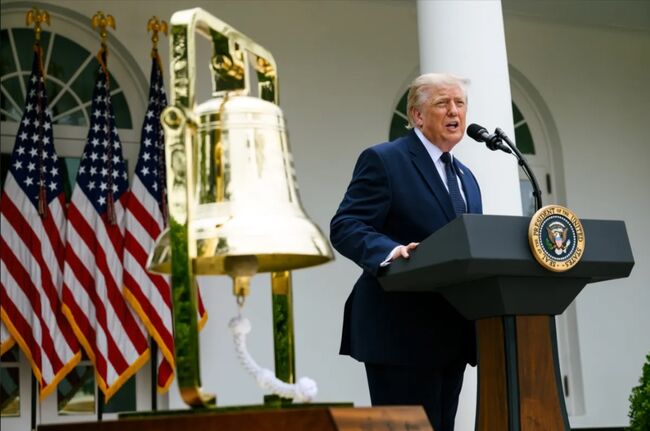 Trump pressures for rate cut again ahead of FOMC... "Should be the lowest in the world"
U.S. President Donald Trump. [Photo = The White House] U.S. President Donald Trump once again pressured the Federal Reserve, the U.S. central bank, to lower interest rates on the 27th (local time
Trump pressures for rate cut again ahead of FOMC... "Should be the lowest in the world"
U.S. President Donald Trump. [Photo = The White House] U.S. President Donald Trump once again pressured the Federal Reserve, the U.S. central bank, to lower interest rates on the 27th (local time
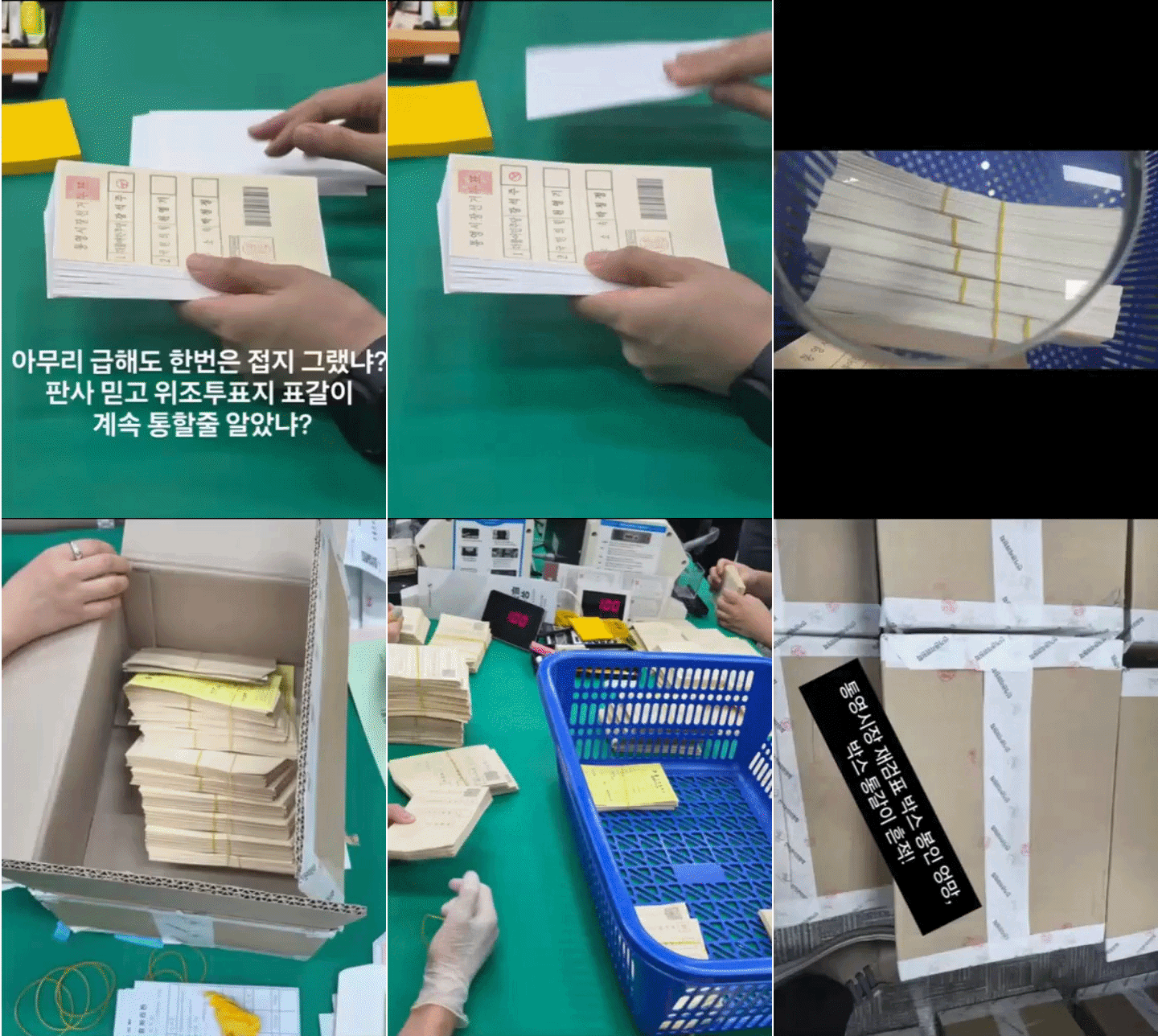 “Ignoring crisp ballots and damaged seals”… Tongyeong mayoral recount concludes with ‘no change in outcome,’ leaving suspicions and public outrage behind
Suspected counterfeit ballots discovered in Tongyeong [GIF from social media of Representative Hwang Kyo-ahn / Attorney Park Joo-hyun]During a recount of the Tongyeong mayoral election in South Gyeong
“Ignoring crisp ballots and damaged seals”… Tongyeong mayoral recount concludes with ‘no change in outcome,’ leaving suspicions and public outrage behind
Suspected counterfeit ballots discovered in Tongyeong [GIF from social media of Representative Hwang Kyo-ahn / Attorney Park Joo-hyun]During a recount of the Tongyeong mayoral election in South Gyeong
 President Yoon, regarding the first-instance ruling on the Public Official Election Act: “An excessive political verdict that distorts the facts… We will appeal immediately.”
The first-instance sentencing hearing for President Yoon Suk Yeol regarding violations of the Public Official Election Act is being broadcast live at Seoul Station on the 27th. [Photo=Yonhap News]Pres
President Yoon, regarding the first-instance ruling on the Public Official Election Act: “An excessive political verdict that distorts the facts… We will appeal immediately.”
The first-instance sentencing hearing for President Yoon Suk Yeol regarding violations of the Public Official Election Act is being broadcast live at Seoul Station on the 27th. [Photo=Yonhap News]Pres
 WSJ: "SK Hynix ADR Premium Is a Sign of AI Trading Overheat"
Advertisement for SK Hynix ADR listing in New York's Times Square [Reuters=Yonhap News file photo]The Wall Street Journal (WSJ) has pointed out that the price of SK Hynix’s American Depositary Recei
WSJ: "SK Hynix ADR Premium Is a Sign of AI Trading Overheat"
Advertisement for SK Hynix ADR listing in New York's Times Square [Reuters=Yonhap News file photo]The Wall Street Journal (WSJ) has pointed out that the price of SK Hynix’s American Depositary Recei
 'Godfather of Japanese Mystery Novels' Keigo Higashino Passes Away After Battle with Cancer at 68
Famous Japanese mystery novelist Keigo Higashino [AFP=Yonhap News]It has been belatedly reported that Keigo Higashino, the "godfather of Japanese mystery novels" and author of bestsellers such as "The
'Godfather of Japanese Mystery Novels' Keigo Higashino Passes Away After Battle with Cancer at 68
Famous Japanese mystery novelist Keigo Higashino [AFP=Yonhap News]It has been belatedly reported that Keigo Higashino, the "godfather of Japanese mystery novels" and author of bestsellers such as "The
 [Park Pil-kyu Security Column] To the Ignorant Trying to Clothe a Beast in Sheep's Clothing
Rep. Kim Byung-joo of the Democratic Party of Korea [Photo=Yonhap News]“The Air Force Academy doesn't teach you how to fly a plane!” “The Army, Navy, and Air Force academies are exactly the
[Park Pil-kyu Security Column] To the Ignorant Trying to Clothe a Beast in Sheep's Clothing
Rep. Kim Byung-joo of the Democratic Party of Korea [Photo=Yonhap News]“The Air Force Academy doesn't teach you how to fly a plane!” “The Army, Navy, and Air Force academies are exactly the
 [Issue Diagnosis] Two Effects of the Election Petition Review
 [Photo] Evidence of Election Fraud Flooding U.S. Media… Trump Had 2.7 Million Votes Stolen
 [Video] U.S. Semiquincentennial Air Show... 'Art in the Sky' streaks across New York
 [Editorial Cartoon] A Draconian Law That Undermines Freedom of Expression

 List
List