Guest Editorial Writer. Korea Military Academy Class 40. In recent Korea-US tariff negotiations, Samsung Electronics contributed to successful talks by investing in advanced semiconductor packaging plants, Hyundai Motor Company by expanding its US electric vehicle plants and investing in parts suppliers, and Hanwha Ocean by promoting the 'MASGA' project, a collaboration in the shipbuilding industry. All of these appear to be investments deeply related to or made with the defense industry in mind.
The South Korean defense industry has recently experienced unprecedented growth, emerging as a new powerhouse in the global market. With exports reaching $17.3 billion in 2022 and projected to exceed $20 billion by 2025, Korea has firmly established itself among the world's top 10 defense exporters.
Equipped with superior performance and price competitiveness, Korean weapons such as the K9 self-propelled howitzer, FA-50 light attack aircraft, and Cheongung missiles have signed a series of large-scale contracts, primarily in European, Middle Eastern, and Southeast Asian markets, elevating the brand value of "K-Defense."
However, beneath this dazzling growth lie challenges that must be addressed with a cool head. We must not overlook the fact that our current success relies heavily on the unique geopolitical circumstances of the Russia-Ukraine war. To achieve sustainable growth beyond mere weapon sales, we must evolve from "weapons sellers" into "global security solution providers."
1. Securing Sustainability of Growth Engines
Current large-scale export contracts depend heavily on relationships with specific countries like Poland, and policy support—particularly financial assistance—has played a major role. This poses a risk that growth could falter if we fail to diversify our markets, and excessive reliance on financial support could act as a potential fiscal risk in the future. The Democratic Party's push for an amendment to the Defense Acquisition Program Act, which would require parliamentary consent for defense material exports, also presents a risk to the momentum of defense industry growth.
2. Securing Core Technological Capabilities is Key to the Future of K-Defense.
While the current strength of Korea's defense industry lies in its "value for money" and "rapid delivery," structural weaknesses in supply chain stability remain, as core components such as engines and avionics still heavily rely on overseas imports. In an era where countries worldwide are competing fiercely in future technologies like unmanned weapon systems, AI-based combat systems, and space defense, we will inevitably lose our competitive edge if we fail to move beyond simple assembly production and secure original core technologies.
For the future of K-Defense, it is time for a national strategic approach that includes: ▲innovating business models from simple weapon sales to AI-based "security consulting," ▲building a "civil-military dual-use technology ecosystem" that shares military and civilian technologies, ▲establishing an "integrated export-diplomacy control tower" to consolidate functions currently dispersed across various ministries, and ▲securing long-term revenue streams through maintenance services utilizing "digital twin" technology.
3. Strategic Expansion of Global Partnerships.
Moves to keep the rise of K-Defense in check have been detected in some European countries. This is evidence that Korea is being perceived not just as a competitor, but as a threat to the existing defense order. To overcome this resistance, we must approach the industry from the perspective of "cooperation" rather than just "exports." In other words, we must create a sustainable cooperative ecosystem by moving beyond selling weapons to building strategic partnerships with purchasing countries through technology transfer, local production, and joint research and development.
Hanwha Ocean’s entry into the US shipbuilding industry is a prime example of the importance of "strategic partnerships" that goes beyond simple overseas market expansion. By acquiring a shipyard in the US to enter the American submarine construction and maintenance market, Hanwha Ocean has created synergy by combining US advanced technology with Korean production efficiency. This strategic achievement has secured long-term business stability through close cooperation with the US government and corporations, while simultaneously enhancing mutual trust by strengthening defense cooperation within the framework of the Korea-US alliance.
4. Fulfilling the Role of a 'Solution Provider'
K-Defense must evolve into a "solution provider" that addresses the complexities of the global security environment, moving beyond the status of a mere weapon exporter. This requires a simultaneous pursuit of a "win-win strategy" that contributes to strengthening the security capabilities of partner countries and creating mutual benefits, and an "innovation strategy" to secure core technological prowess, transcending the short-term gains of simply selling weapons.
I hope that K-Defense will truly leap forward to become one of the world's top four defense powerhouses.

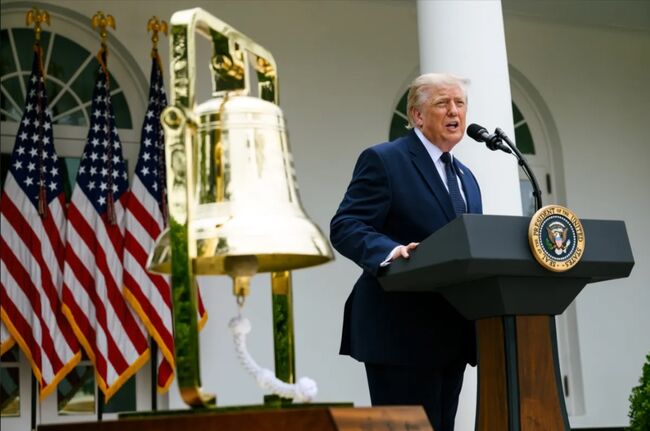 Trump pressures for rate cut again ahead of FOMC... "Should be the lowest in the world"
U.S. President Donald Trump. [Photo = The White House] U.S. President Donald Trump once again pressured the Federal Reserve, the U.S. central bank, to lower interest rates on the 27th (local time
Trump pressures for rate cut again ahead of FOMC... "Should be the lowest in the world"
U.S. President Donald Trump. [Photo = The White House] U.S. President Donald Trump once again pressured the Federal Reserve, the U.S. central bank, to lower interest rates on the 27th (local time
 “Ignoring crisp ballots and damaged seals”… Tongyeong mayoral recount concludes with ‘no change in outcome,’ leaving suspicions and public outrage behind
Suspected counterfeit ballots discovered in Tongyeong [GIF from social media of Representative Hwang Kyo-ahn / Attorney Park Joo-hyun]During a recount of the Tongyeong mayoral election in South Gyeong
“Ignoring crisp ballots and damaged seals”… Tongyeong mayoral recount concludes with ‘no change in outcome,’ leaving suspicions and public outrage behind
Suspected counterfeit ballots discovered in Tongyeong [GIF from social media of Representative Hwang Kyo-ahn / Attorney Park Joo-hyun]During a recount of the Tongyeong mayoral election in South Gyeong
 President Yoon, regarding the first-instance ruling on the Public Official Election Act: “An excessive political verdict that distorts the facts… We will appeal immediately.”
The first-instance sentencing hearing for President Yoon Suk Yeol regarding violations of the Public Official Election Act is being broadcast live at Seoul Station on the 27th. [Photo=Yonhap News]Pres
President Yoon, regarding the first-instance ruling on the Public Official Election Act: “An excessive political verdict that distorts the facts… We will appeal immediately.”
The first-instance sentencing hearing for President Yoon Suk Yeol regarding violations of the Public Official Election Act is being broadcast live at Seoul Station on the 27th. [Photo=Yonhap News]Pres
 WSJ: "SK Hynix ADR Premium Is a Sign of AI Trading Overheat"
Advertisement for SK Hynix ADR listing in New York's Times Square [Reuters=Yonhap News file photo]The Wall Street Journal (WSJ) has pointed out that the price of SK Hynix’s American Depositary Recei
WSJ: "SK Hynix ADR Premium Is a Sign of AI Trading Overheat"
Advertisement for SK Hynix ADR listing in New York's Times Square [Reuters=Yonhap News file photo]The Wall Street Journal (WSJ) has pointed out that the price of SK Hynix’s American Depositary Recei
 'Godfather of Japanese Mystery Novels' Keigo Higashino Passes Away After Battle with Cancer at 68
Famous Japanese mystery novelist Keigo Higashino [AFP=Yonhap News]It has been belatedly reported that Keigo Higashino, the "godfather of Japanese mystery novels" and author of bestsellers such as "The
'Godfather of Japanese Mystery Novels' Keigo Higashino Passes Away After Battle with Cancer at 68
Famous Japanese mystery novelist Keigo Higashino [AFP=Yonhap News]It has been belatedly reported that Keigo Higashino, the "godfather of Japanese mystery novels" and author of bestsellers such as "The
 [Park Pil-kyu Security Column] To the Ignorant Trying to Clothe a Beast in Sheep's Clothing
Rep. Kim Byung-joo of the Democratic Party of Korea [Photo=Yonhap News]“The Air Force Academy doesn't teach you how to fly a plane!” “The Army, Navy, and Air Force academies are exactly the
[Park Pil-kyu Security Column] To the Ignorant Trying to Clothe a Beast in Sheep's Clothing
Rep. Kim Byung-joo of the Democratic Party of Korea [Photo=Yonhap News]“The Air Force Academy doesn't teach you how to fly a plane!” “The Army, Navy, and Air Force academies are exactly the
 [Issue Diagnosis] Two Effects of the Election Petition Review
 [Photo] Evidence of Election Fraud Flooding U.S. Media… Trump Had 2.7 Million Votes Stolen
 [Video] U.S. Semiquincentennial Air Show... 'Art in the Sky' streaks across New York
 [Editorial Cartoon] A Draconian Law That Undermines Freedom of Expression

 List
List