Floor leaders of the ruling and opposition parties announce agreement details (Seoul=Yonhap News) Reporter Shin Hyun-woo = Democratic Party Floor Leader Han Byung-do (right) and People Power Party Floor Leader Song Eon-seok are announcing the details of their agreement at the National Assembly Steering Committee room on May 19 after agreeing to hold a plenary session on the 5th of next month to elect the Speaker and Vice Speakers for the second half of the 22nd National Assembly. 2026.5.19 nowwego@yna.co.kr
The first half of the 22nd National Assembly concluded on the 29th.
The ruling and opposition parties will elect the Speaker of the National Assembly, a vacant position due to the expiration of Speaker Woo Won-sik's term, at a plenary session on the 5th of next month, two days after the June 3rd local elections.
Cho Jeong-sik, the Democratic Party's nominee for Speaker, and Nam In-soon, the Democratic Party's nominee for Vice Speaker, as well as Park Deok-heum, the People Power Party's nominee for Vice Speaker, are expected to be elected.
While the election of the Speaker and Vice Speakers will mark the beginning of the second half of the 22nd National Assembly, there are observations that a parliamentary vacuum could continue for some time as the standing committees may not be operational due to the unresolved composition of the second half of the Assembly.
The ruling and opposition parties plan to fully engage in discussions on the Assembly's composition as soon as the local elections conclude, but preliminary skirmishes over the distribution of standing committee chairmanships suggest a rough path ahead for the Assembly's composition.
The Democratic Party plans to negotiate as much as possible with the People Power Party regarding the distribution of standing committee chairmanships, but they have also mentioned the possibility of the Democratic Party taking all standing committee chairmanships.
The Democratic Party argues that the National Assembly's operations were disrupted and the Yoon Suk-yeol administration's state affairs were hindered because the People Power Party, which held the chairmanships of some standing committees in the first half of the Assembly, did not allow them to function properly.
In a YouTube broadcast in March, Representative Chung Jin-rae stated, "I even considered whether we should take all the standing committees for the second half of the Assembly."
Conversely, the People Power Party is strongly opposing what they call the Democratic Party's monopolization of standing committee chairmanships, referring to it as "parliamentary dictatorship."
In early May, when meeting with reporters, Deputy Floor Leader Yoo Sang-bum criticized the possibility of the ruling party monopolizing standing committees, stating, "If they monopolize them, it would be a declaration of majority party dictatorship to the world."
The distribution of the chairperson of the Legislation and Judiciary Committee could become a major point of contention in the negotiations between the ruling and opposition parties.
The Democratic Party maintains that the ruling party should hold the Legislation and Judiciary Committee, which effectively serves as a gateway for the processing of major legislation, to support the government's state affairs through legislation.
The People Power Party, pointing out that the ruling party unilaterally convened the Legislation and Judiciary Committee in the first half of the Assembly and passed numerous bills, counters that the opposition party should hold the chairmanship based on the democratic principle of checks and balances.
With negotiations on the distribution of standing committee chairmanships running parallel, there is a possibility that the Assembly's composition could be delayed for a long period.
Even if the ruling and opposition parties agree on the Assembly's composition and the second half of the Assembly officially begins operations, it is highly anticipated that the extreme confrontation between the ruling and opposition parties will continue, similar to the first half.
Throughout the first half of the Assembly, a "roundabout political cycle" persisted, characterized by "bill introduction → opposition party's filibuster (legally obstructing legislative proceedings through unlimited debate) → ruling party's vote to end the filibuster and pass the bill."
Bills that passed the National Assembly after filibuster stalemates include the "Broadcasting Act," the "Yellow Envelope Act," the law establishing a special court for sedition, the comprehensive special prosecutor bill, and the law establishing a new agency for public prosecution and serious crimes.
Earlier this month, a constitutional amendment to include the spirit of the "May 18th Democratic Uprising" and the "Busan-Masan Democratic Uprising" in the preamble of the Constitution was also thwarted due to the People Power Party's opposition.
The Democratic Party may move to expedite the processing of the "Special Prosecutor Bill on Suspicions of Fabricated Investigations and Prosecutions by the Yoon Suk-yeol Administration," which has already been proposed, upon the commencement of the second half of the National Assembly.
The People Power Party criticizes the special prosecutor bill as "a special prosecutor to eliminate Chairman Lee Jae-myung's crimes."

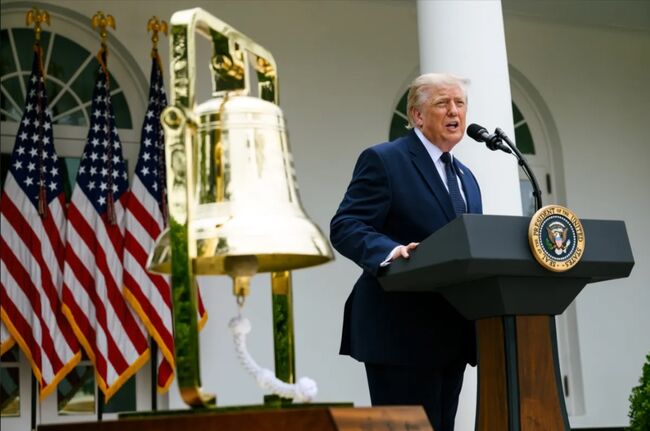 Trump pressures for rate cut again ahead of FOMC... "Should be the lowest in the world"
U.S. President Donald Trump. [Photo = The White House] U.S. President Donald Trump once again pressured the Federal Reserve, the U.S. central bank, to lower interest rates on the 27th (local time
Trump pressures for rate cut again ahead of FOMC... "Should be the lowest in the world"
U.S. President Donald Trump. [Photo = The White House] U.S. President Donald Trump once again pressured the Federal Reserve, the U.S. central bank, to lower interest rates on the 27th (local time
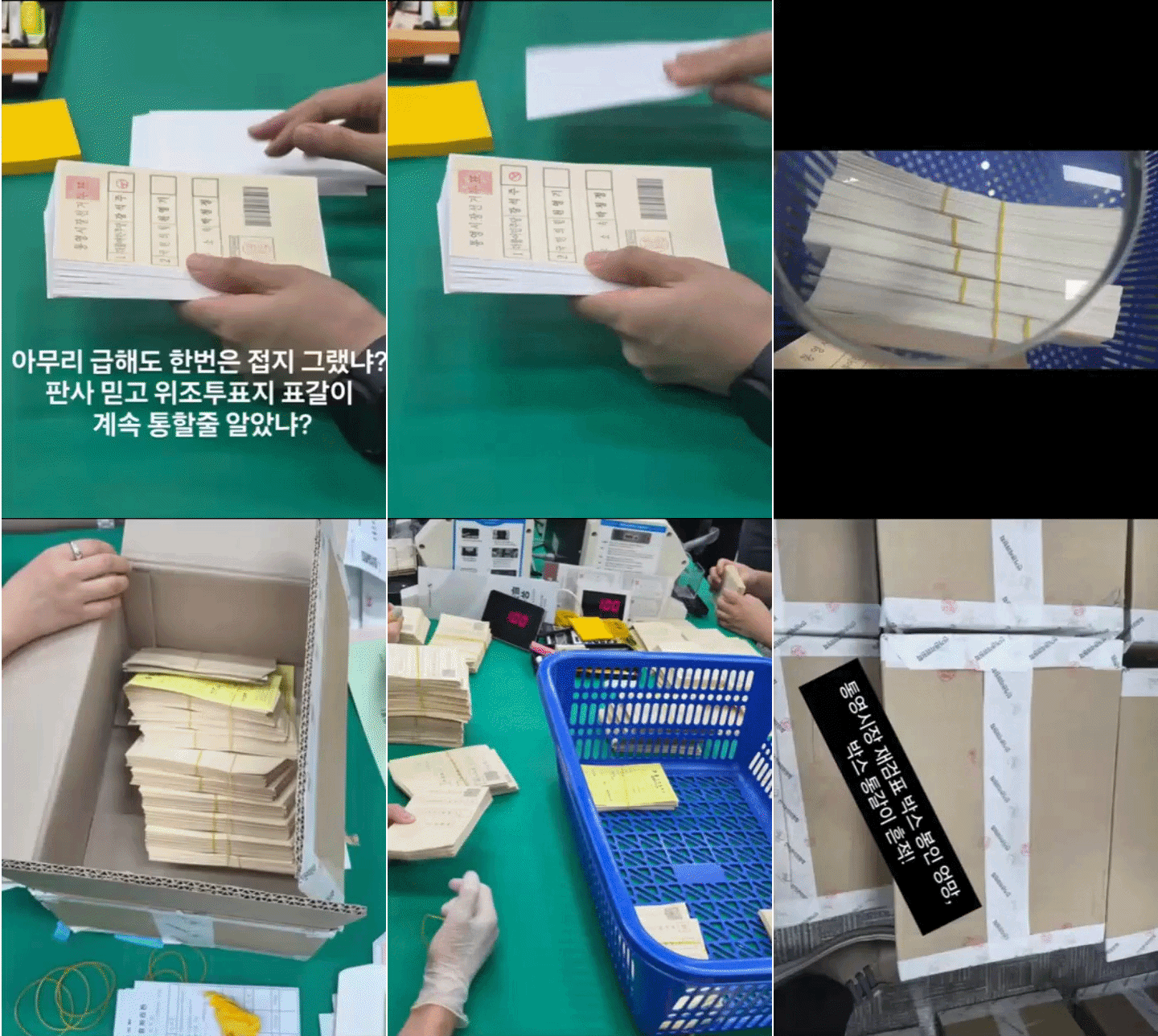 “Ignoring crisp ballots and damaged seals”… Tongyeong mayoral recount concludes with ‘no change in outcome,’ leaving suspicions and public outrage behind
Suspected counterfeit ballots discovered in Tongyeong [GIF from social media of Representative Hwang Kyo-ahn / Attorney Park Joo-hyun]During a recount of the Tongyeong mayoral election in South Gyeong
“Ignoring crisp ballots and damaged seals”… Tongyeong mayoral recount concludes with ‘no change in outcome,’ leaving suspicions and public outrage behind
Suspected counterfeit ballots discovered in Tongyeong [GIF from social media of Representative Hwang Kyo-ahn / Attorney Park Joo-hyun]During a recount of the Tongyeong mayoral election in South Gyeong
 President Yoon, regarding the first-instance ruling on the Public Official Election Act: “An excessive political verdict that distorts the facts… We will appeal immediately.”
The first-instance sentencing hearing for President Yoon Suk Yeol regarding violations of the Public Official Election Act is being broadcast live at Seoul Station on the 27th. [Photo=Yonhap News]Pres
President Yoon, regarding the first-instance ruling on the Public Official Election Act: “An excessive political verdict that distorts the facts… We will appeal immediately.”
The first-instance sentencing hearing for President Yoon Suk Yeol regarding violations of the Public Official Election Act is being broadcast live at Seoul Station on the 27th. [Photo=Yonhap News]Pres
 WSJ: "SK Hynix ADR Premium Is a Sign of AI Trading Overheat"
Advertisement for SK Hynix ADR listing in New York's Times Square [Reuters=Yonhap News file photo]The Wall Street Journal (WSJ) has pointed out that the price of SK Hynix’s American Depositary Recei
WSJ: "SK Hynix ADR Premium Is a Sign of AI Trading Overheat"
Advertisement for SK Hynix ADR listing in New York's Times Square [Reuters=Yonhap News file photo]The Wall Street Journal (WSJ) has pointed out that the price of SK Hynix’s American Depositary Recei
 'Godfather of Japanese Mystery Novels' Keigo Higashino Passes Away After Battle with Cancer at 68
Famous Japanese mystery novelist Keigo Higashino [AFP=Yonhap News]It has been belatedly reported that Keigo Higashino, the "godfather of Japanese mystery novels" and author of bestsellers such as "The
'Godfather of Japanese Mystery Novels' Keigo Higashino Passes Away After Battle with Cancer at 68
Famous Japanese mystery novelist Keigo Higashino [AFP=Yonhap News]It has been belatedly reported that Keigo Higashino, the "godfather of Japanese mystery novels" and author of bestsellers such as "The
 [Park Pil-kyu Security Column] To the Ignorant Trying to Clothe a Beast in Sheep's Clothing
Rep. Kim Byung-joo of the Democratic Party of Korea [Photo=Yonhap News]“The Air Force Academy doesn't teach you how to fly a plane!” “The Army, Navy, and Air Force academies are exactly the
[Park Pil-kyu Security Column] To the Ignorant Trying to Clothe a Beast in Sheep's Clothing
Rep. Kim Byung-joo of the Democratic Party of Korea [Photo=Yonhap News]“The Air Force Academy doesn't teach you how to fly a plane!” “The Army, Navy, and Air Force academies are exactly the
 [Issue Diagnosis] Two Effects of the Election Petition Review
 [Photo] Evidence of Election Fraud Flooding U.S. Media… Trump Had 2.7 Million Votes Stolen
 [Video] U.S. Semiquincentennial Air Show... 'Art in the Sky' streaks across New York
 [Editorial Cartoon] A Draconian Law That Undermines Freedom of Expression

 List
List