Minister Hegseth delivers a speech at the Asia Security Summit (Shangri-La Dialogue) held in Singapore on May 30 (local time).
Some domestic media outlets are excessively highlighting the issue of transferring wartime operational control (OPCON) in relation to the remarks made by U.S. Defense Secretary Pete Hegseth at the 2026 Shangri-La Dialogue on the 30th.
While reports have emerged interpreting U.S. support for President Lee Jae-myung's OPCON transfer plan, the actual focus of the remarks was not OPCON.
What Secretary Hegseth emphasized was the U.S.'s new alliance calculus, which requires allies to bear more defense costs and military responsibilities within the framework of deterring China.
This is evident in the difference in focus between foreign and domestic media reporting.
Foreign media generally interpreted Secretary Hegseth's remarks as a call for deterring China and for Asian allies to increase their defense spending. They emphasized the message that for the U.S. to maintain a balance of power with China in the Indo-Pacific, allies like South Korea and Japan must bear more costs and military capabilities.
This is also why the Chinese Defense Minister's absence from the Shangri-La Dialogue, the U.S.'s measured remarks towards China, and the demand for increased defense spending from allies were discussed together.
In contrast, some domestic reports led with remarks about OPCON transfer.
The statement that Secretary Hegseth described South Korea's willingness to transfer OPCON as “encouraging” was placed at the center of headlines and lead paragraphs. Of course, the remark itself is factual.
However, that remark was a secondary issue that emerged during the Q&A session, not the core message of the speech.
Furthermore, alongside his positive assessment, Secretary Hegseth stated the need to find a "balance" that respects U.S. operational plans and the responsibilities that U.S. soldiers have undertaken for decades.
Omitting or downplaying this part can lead to the interpretation that the U.S. has effectively endorsed an early OPCON transfer.
In his speech at the Shangri-La Dialogue in Singapore on the 30th (local time), Secretary Hegseth strongly addressed China's military buildup.
He cautioned against the historical military buildup and expanding military activities in the region by China, stating that no country can exert hegemony in the Indo-Pacific and undermine the security and prosperity of the U.S. and its allies.
The overarching theme of the speech was deterring China and burden-sharing among allies, not OPCON.
The part mentioning South Korea also fell within this context.
Secretary Hegseth said, "To see what burden sharing looks like, look at the Republic of Korea." He added that because South Korea is on the front lines, it cannot afford to treat war as an academic exercise and has therefore been building up its actual combat power.
He also praised President Lee Jae-myung's decision to increase defense spending to 3.5% of GDP and take on greater responsibility for conventional defense as a clear recognition of the threat environment.
This remark was less a pure compliment to South Korea and more of a pressure.
In the same speech, Secretary Hegseth implied that the U.S. would no longer subsidize the defense of wealthy nations. He also conveyed a message that the U.S. needs partners, not protectorates.
Citing South Korea as an exemplary case was not just rhetoric to praise South Korea, but a public comparison urging other allies to bear more defense costs and military roles, just as South Korea has.
Remarks related to OPCON should be reread within this framework.
Secretary Hegseth's statement that South Korea's desire to exercise more control, more quickly, was a fresh and encouraging development.
However, he simultaneously stated the need to find a balance that respects U.S. operational plans and the responsibilities that U.S. soldiers have undertaken for decades.
This is not a blank check for early OPCON transfer, but a reiteration of the existing U.S. position with conditions and a demand for balance.
The U.S. stance on OPCON transfer has long been a conditional transfer theory of "transfer when conditions are met." This statement did not deviate from that framework.
What has changed is not OPCON itself, but the broader strategic environment of deterring China, increasing defense spending, and expanding allied defense responsibilities.
The U.S. views South Korea's increased defense spending and expanded conventional defense responsibilities not solely in the context of responding to North Korea, but within the Indo-Pacific deterrence framework.
In that regard, some domestic media reports interpreted the remarks with a narrow scope of context.
What foreign media saw was the U.S.'s strategy towards China and the readjustment of alliance costs. What some domestic reports prioritized was the familiar domestic political frame of OPCON transfer.
For the same remarks, foreign media interpreted them as "demands for increased defense spending from allies amidst China deterrence," while some domestic media outlets read them as "positive signals from the U.S. regarding the Lee Jae-myung administration's willingness for OPCON transfer."
While OPCON transfer is a sensitive domestic political agenda, it was not the central message conveyed by Secretary Hegseth at the Shangri-La Dialogue.
The central message was not "South Korea is welcome to take OPCON," but rather "Contribute more, take on more responsibilities, and build actual combat power, like South Korea."
The reason the U.S. mentioned South Korea was not to bless the OPCON transfer, but to present it as an example of burden-sharing within the framework of deterring China.
Interpreting this statement as a signal of support for OPCON transfer is an old-media misreading.
The U.S. has not given political carte blanche to the Lee Jae-myung administration's OPCON transfer plan.
Regarding OPCON, it reiterated the existing conditional transfer theory, and the actual focus was on demanding an increase in South Korea's defense spending and expansion of defense responsibilities within the context of deterring China.
What Korean media should be observing is not the familiar domestic frame of OPCON, but the new structure of alliance costs that the U.S. has begun to demand from South Korea.
Secretary Hegseth's words, "Look at South Korea," were not just a round of applause for South Korea.
It was a statement that demonstrated the U.S. is repositioning South Korea as a combat partner that must bear greater costs and responsibilities within its Indo-Pacific strategy.

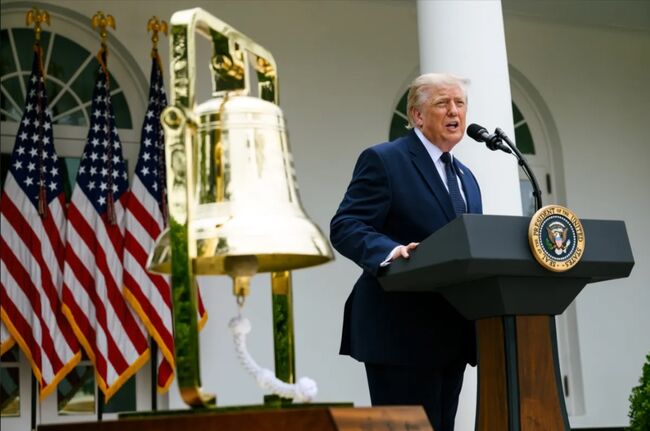 Trump pressures for rate cut again ahead of FOMC... "Should be the lowest in the world"
U.S. President Donald Trump. [Photo = The White House] U.S. President Donald Trump once again pressured the Federal Reserve, the U.S. central bank, to lower interest rates on the 27th (local time
Trump pressures for rate cut again ahead of FOMC... "Should be the lowest in the world"
U.S. President Donald Trump. [Photo = The White House] U.S. President Donald Trump once again pressured the Federal Reserve, the U.S. central bank, to lower interest rates on the 27th (local time
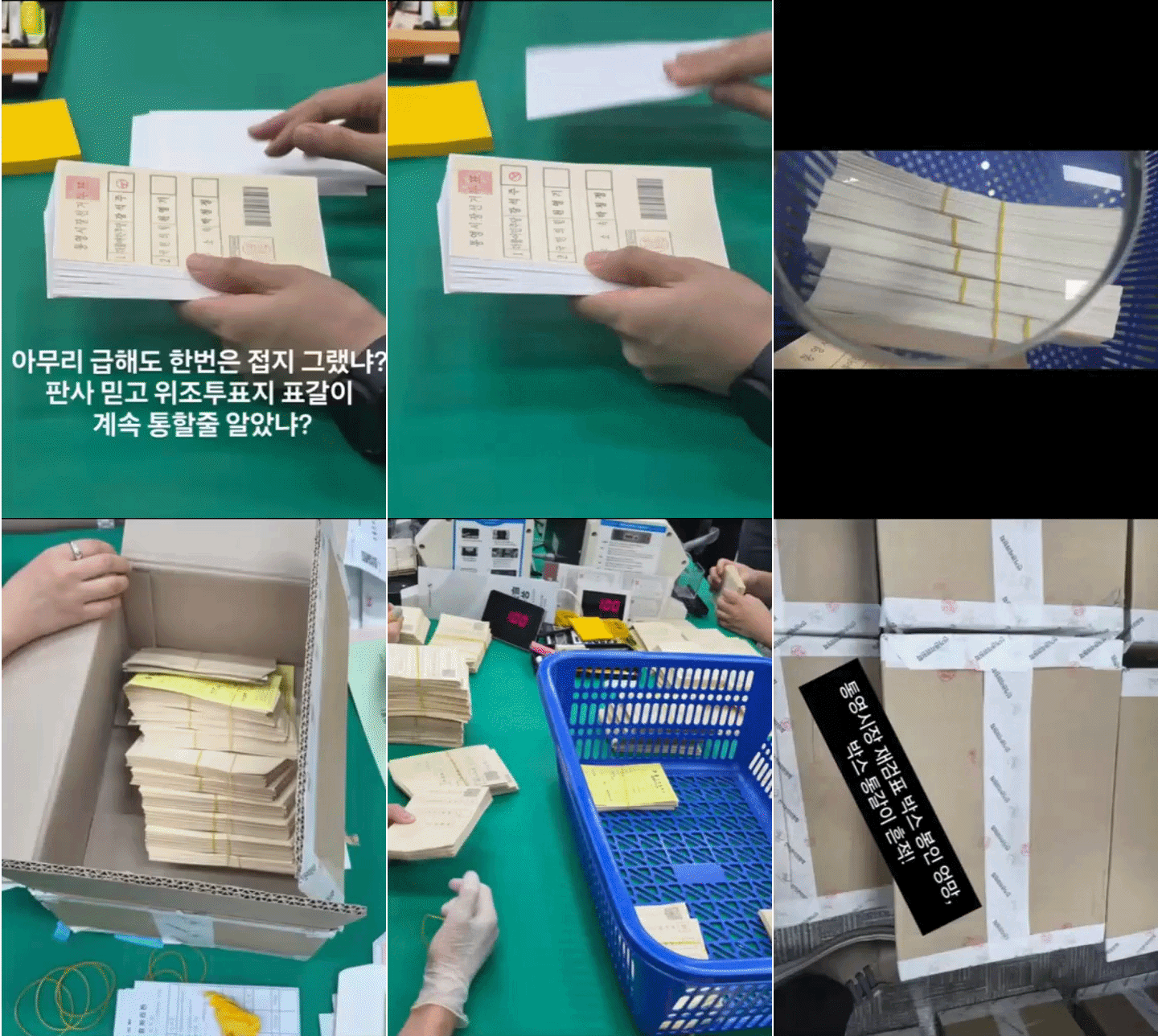 “Ignoring crisp ballots and damaged seals”… Tongyeong mayoral recount concludes with ‘no change in outcome,’ leaving suspicions and public outrage behind
Suspected counterfeit ballots discovered in Tongyeong [GIF from social media of Representative Hwang Kyo-ahn / Attorney Park Joo-hyun]During a recount of the Tongyeong mayoral election in South Gyeong
“Ignoring crisp ballots and damaged seals”… Tongyeong mayoral recount concludes with ‘no change in outcome,’ leaving suspicions and public outrage behind
Suspected counterfeit ballots discovered in Tongyeong [GIF from social media of Representative Hwang Kyo-ahn / Attorney Park Joo-hyun]During a recount of the Tongyeong mayoral election in South Gyeong
 President Yoon, regarding the first-instance ruling on the Public Official Election Act: “An excessive political verdict that distorts the facts… We will appeal immediately.”
The first-instance sentencing hearing for President Yoon Suk Yeol regarding violations of the Public Official Election Act is being broadcast live at Seoul Station on the 27th. [Photo=Yonhap News]Pres
President Yoon, regarding the first-instance ruling on the Public Official Election Act: “An excessive political verdict that distorts the facts… We will appeal immediately.”
The first-instance sentencing hearing for President Yoon Suk Yeol regarding violations of the Public Official Election Act is being broadcast live at Seoul Station on the 27th. [Photo=Yonhap News]Pres
 WSJ: "SK Hynix ADR Premium Is a Sign of AI Trading Overheat"
Advertisement for SK Hynix ADR listing in New York's Times Square [Reuters=Yonhap News file photo]The Wall Street Journal (WSJ) has pointed out that the price of SK Hynix’s American Depositary Recei
WSJ: "SK Hynix ADR Premium Is a Sign of AI Trading Overheat"
Advertisement for SK Hynix ADR listing in New York's Times Square [Reuters=Yonhap News file photo]The Wall Street Journal (WSJ) has pointed out that the price of SK Hynix’s American Depositary Recei
 'Godfather of Japanese Mystery Novels' Keigo Higashino Passes Away After Battle with Cancer at 68
Famous Japanese mystery novelist Keigo Higashino [AFP=Yonhap News]It has been belatedly reported that Keigo Higashino, the "godfather of Japanese mystery novels" and author of bestsellers such as "The
'Godfather of Japanese Mystery Novels' Keigo Higashino Passes Away After Battle with Cancer at 68
Famous Japanese mystery novelist Keigo Higashino [AFP=Yonhap News]It has been belatedly reported that Keigo Higashino, the "godfather of Japanese mystery novels" and author of bestsellers such as "The
 [Park Pil-kyu Security Column] To the Ignorant Trying to Clothe a Beast in Sheep's Clothing
Rep. Kim Byung-joo of the Democratic Party of Korea [Photo=Yonhap News]“The Air Force Academy doesn't teach you how to fly a plane!” “The Army, Navy, and Air Force academies are exactly the
[Park Pil-kyu Security Column] To the Ignorant Trying to Clothe a Beast in Sheep's Clothing
Rep. Kim Byung-joo of the Democratic Party of Korea [Photo=Yonhap News]“The Air Force Academy doesn't teach you how to fly a plane!” “The Army, Navy, and Air Force academies are exactly the
 [Issue Diagnosis] Two Effects of the Election Petition Review
 [Photo] Evidence of Election Fraud Flooding U.S. Media… Trump Had 2.7 Million Votes Stolen
 [Video] U.S. Semiquincentennial Air Show... 'Art in the Sky' streaks across New York
 [Editorial Cartoon] A Draconian Law That Undermines Freedom of Expression

 List
List