 Inhyukdang Incident Sentencing Trial, 1975
The 1974 incident of the Korean Federation of University and College Student Councils (often referred to as Mincheonghakryeon) became one of the political assets that the leftist student movement most frequently utilized in later years. They have consistently framed this incident solely as a narrative of "democratic forces versus dictatorial power." However, when examining historical records and statistics, it becomes clear that this incident was not merely a persecution of a purely democratic movement, as the left claims.
The Left Must Acknowledge Radical Anti-Establishment Lines within the Student Movement
On April 3, 1974, the Park Chung-hee administration declared Emergency Measure No. 4. This measure prohibited activities related to the Korean Federation of University and College Student Councils (Mincheonghakryeon) and stipulated that violators could be arrested, detained, searched, and seized without a warrant. It also mandated trial by emergency military court. The penalties were severe, allowing for capital punishment, life imprisonment, or fixed-term imprisonment of five years or more.
The government's perception of the seriousness of the issue at the time is confirmed by the numbers. According to data from the National Archives, the Korean Central Intelligence Agency investigated 1,024 individuals, of whom 180 were referred to emergency military courts.
In 2018, the National Archives received a total of 105 volumes of related records. These included 98 volumes detailing approximately 140 individuals indicted and 7 volumes for 42 individuals who were not indicted. The records contained arrest warrants, indictments, trial records, investigation reports, statements, suspect interrogation records, and evidence.
The left typically interprets these numbers solely as "the scale of oppression." However, the conservative right should not stop at this point. It is necessary to consider why the state acted with such magnitude.
The core of the government's announcement at the time was its judgment that Mincheonghakryeon was not merely a student protest organization but was intertwined with the Inhyukdang Reconstruction Committee, the General Association of Korean Residents in Japan (Chochongryon), the Japanese Communist Party, and domestic leftist reformist factions. On April 25, 1974, Shin Hyok-soo, Director of the Korean Central Intelligence Agency, announced that the communist illegal organization Inhyukdang was behind Mincheonghakryeon.
Certainly, subsequent retrials and historical investigations largely acknowledged the fabricated nature of the Inhyukdang Reconstruction Committee case. This is a factual point. However, it is another distortion for the left to use this single fact to reframe the entire radical student movement of the 1970s as a purely "democratic movement."
Separate from the issues of the trial, the investigation, and torture, it is also true that there were radical anti-establishment lines within the student movement at the time. Mincheonghakryeon-related materials confirm that in February 1974, students from Seoul National University and Kyungpook National University met at the Gangchang ferry crossing in Dalseong-gun, Daegu, to discuss preparations for simultaneous nationwide protests, and agreed to establish communication networks divided by region: Seoul/Central, Yeongnam, and Honam.
This point is crucial. The left always talks about "fabrication." However, organized protest planning, nationwide communication networks, the politicization of the anti-Yushin struggle, and the alliance of religious groups, students, and civil society were indeed realities. Regardless of any excesses in the government's investigation, it is difficult to deny that the student movement at the time was expanding beyond mere on-campus grievances to become a movement for the overthrow of the regime.
Anti-Republic of Korea Sentiment Hidden Behind the Victims' Narrative
The problem lies in what followed. The leftist student movement transformed the Mincheonghakryeon incident not into an opportunity for "ideological validation" but into a "moral license." They experienced imprisonment, were placed on wanted lists, and underwent trials. Therefore, they were deemed correct. This formula was established.
However, the fact of being persecuted does not prove the legitimacy of one's ideology. Fighting against a dictatorship does not automatically make one a liberal democrat. Engaging in anti-government activities does not mean one respected the constitutional order of the Republic of Korea. In fact, a significant portion of the student movement in the 1980s leaned towards theories of national liberation, anti-Americanism, and pro-North Korean worldviews, rather than liberalism.
The Mincheonghakryeon incident became the repository of that memory. The investigations and trials of 1974 provided the left with the narrative that "we were victims." Within this narrative, they concealed their radical ideology, anti-Republic of Korea sentiments, silence on North Korea, and animosity towards liberal democracy.
The right must read this incident differently. This does not mean that all measures taken by the Park Chung-hee administration were flawless. However, the Republic of Korea at the time was a divided nation confronting North Korea. Following the January 21 infiltration incident of the Blue House in 1968, the Uljin-Samcheok armed infiltration, and the Pueblo incident, the security threat was not abstract.
Emphasis on Tears Without Records, Numbers, Organizations, Ideologies, or Results
The collapse of South Vietnam was imminent in the early 1970s, and on the Korean Peninsula, the ideological competition was a matter of survival. In this context, the government's perception of the combination of student activism and leftist revolutionary ideology as dangerous was an understandable security judgment.
The left has erased this context. They then subsumed all their ideological failures into a "history of oppression." As a result, Mincheonghakryeon became not a historical event but a political myth. The specific numbers—105 volumes of investigation records, 1,024 individuals investigated, and 180 referred to military court—disappeared, leaving only the symbol of "fighters for democracy."
That symbol subsequently became a shield for the Korean left. When questioned about North Korea, they presented their credentials as democracy activists. When criticized for their anti-Americanism, they responded by stating they had fought against dictatorship. When their remarks challenging the legitimacy of the Republic of Korea were pointed out, they cited their experiences of having been imprisoned. In this manner, the memory of Mincheonghakryeon became a device for the left to evade self-scrutiny.
History should not be written solely through the tears of victims. It must consider records, numbers, organizations, ideologies, and outcomes. The 1974 Mincheonghakryeon incident was not solely a pure democratic movement as the left claims. It was a student movement that opposed the Yushin regime, and at the same time, it was the starting point for the left to package its radical ideology as a myth of democratization.
What the conservative right must do is not to be drawn into the debate over oppression and merely defend itself. The questions must be reframed. What did they dream of? Was their ideology one of liberal democracy? Why did their memories always fall silent on the issue of North Korea?
The moment these questions are posed, the Mincheonghakryeon incident is no longer a sanctuary for the left. It is re-read as a prime example of how the student movement of the 1970s covered up its failed ideology with a "history of oppression."
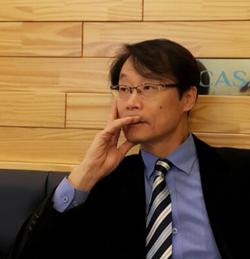
◆ Songsan
Poet and researcher of history and philosophy. Former director of the Syngman Rhee Institute. Currently serves as a research advisor for the Korean Modern and Contemporary History Research Society and as the representative of the philosophy forum Rikeion. He has published four collections of poetry, co-translated "Heroes of the Chosun," and authored the humanities books "Joseon That Became Myth," "Humanities on a Tatami," and "A Liberal's Reading of Gramsci." Songsan is a pen name.

 Iranian Foreign Ministry: "Continuing Message Exchanges with the U.S. and Activities of Mediating Countries"
Esmaeil Baghaei, Spokesperson for the Iranian Ministry of Foreign Affairs [Xinhua, Yonhap News file photo]Esmaeil Baghaei, spokesperson for the Iranian Ministry of Foreign Affairs, stated on the 26th
Iranian Foreign Ministry: "Continuing Message Exchanges with the U.S. and Activities of Mediating Countries"
Esmaeil Baghaei, Spokesperson for the Iranian Ministry of Foreign Affairs [Xinhua, Yonhap News file photo]Esmaeil Baghaei, spokesperson for the Iranian Ministry of Foreign Affairs, stated on the 26th
 President Yoon: "Do You Think You Are Safe from the Special Counsel?"... Final Statement Video Released
President Yoon Suk Yeol rebuking the special prosecutor on the 24th. [Court video / @birds_justice X account subtitle GIF] A video of President Yoon Suk Yeol's closing statement at his trial rega
President Yoon: "Do You Think You Are Safe from the Special Counsel?"... Final Statement Video Released
President Yoon Suk Yeol rebuking the special prosecutor on the 24th. [Court video / @birds_justice X account subtitle GIF] A video of President Yoon Suk Yeol's closing statement at his trial rega
 President Yoon, regarding the first-instance ruling on the Public Official Election Act: “An excessive political verdict that distorts the facts… We will appeal immediately.”
The first-instance sentencing hearing for President Yoon Suk Yeol regarding violations of the Public Official Election Act is being broadcast live at Seoul Station on the 27th. [Photo=Yonhap News]Pres
President Yoon, regarding the first-instance ruling on the Public Official Election Act: “An excessive political verdict that distorts the facts… We will appeal immediately.”
The first-instance sentencing hearing for President Yoon Suk Yeol regarding violations of the Public Official Election Act is being broadcast live at Seoul Station on the 27th. [Photo=Yonhap News]Pres
 WSJ: "SK Hynix ADR Premium Is a Sign of AI Trading Overheat"
Advertisement for SK Hynix ADR listing in New York's Times Square [Reuters=Yonhap News file photo]The Wall Street Journal (WSJ) has pointed out that the price of SK Hynix’s American Depositary Recei
WSJ: "SK Hynix ADR Premium Is a Sign of AI Trading Overheat"
Advertisement for SK Hynix ADR listing in New York's Times Square [Reuters=Yonhap News file photo]The Wall Street Journal (WSJ) has pointed out that the price of SK Hynix’s American Depositary Recei
 'Godfather of Japanese Mystery Novels' Keigo Higashino Passes Away After Battle with Cancer at 68
Famous Japanese mystery novelist Keigo Higashino [AFP=Yonhap News]It has been belatedly reported that Keigo Higashino, the "godfather of Japanese mystery novels" and author of bestsellers such as "The
'Godfather of Japanese Mystery Novels' Keigo Higashino Passes Away After Battle with Cancer at 68
Famous Japanese mystery novelist Keigo Higashino [AFP=Yonhap News]It has been belatedly reported that Keigo Higashino, the "godfather of Japanese mystery novels" and author of bestsellers such as "The
 [Park Pil-kyu Security Column] To the Ignorant Trying to Clothe a Beast in Sheep's Clothing
Rep. Kim Byung-joo of the Democratic Party of Korea [Photo=Yonhap News]“The Air Force Academy doesn't teach you how to fly a plane!” “The Army, Navy, and Air Force academies are exactly the
[Park Pil-kyu Security Column] To the Ignorant Trying to Clothe a Beast in Sheep's Clothing
Rep. Kim Byung-joo of the Democratic Party of Korea [Photo=Yonhap News]“The Air Force Academy doesn't teach you how to fly a plane!” “The Army, Navy, and Air Force academies are exactly the
 [Issue Diagnosis] Two Effects of the Election Petition Review
 [Photo] Evidence of Election Fraud Flooding U.S. Media… Trump Had 2.7 Million Votes Stolen
 [Video] U.S. Semiquincentennial Air Show... 'Art in the Sky' streaks across New York
 [Editorial Cartoon] A Draconian Law That Undermines Freedom of Expression

 List
List









